Free AI Web App Builder: Build Games and Apps Without Coding in 2026
 SEELE team
• February 09, 2026
SEELE team
• February 09, 2026
Looking for a Wrapifai alternative? Explore top AI-powered no-code app builders including SEELE AI, with feature comparisons and real capabilities.
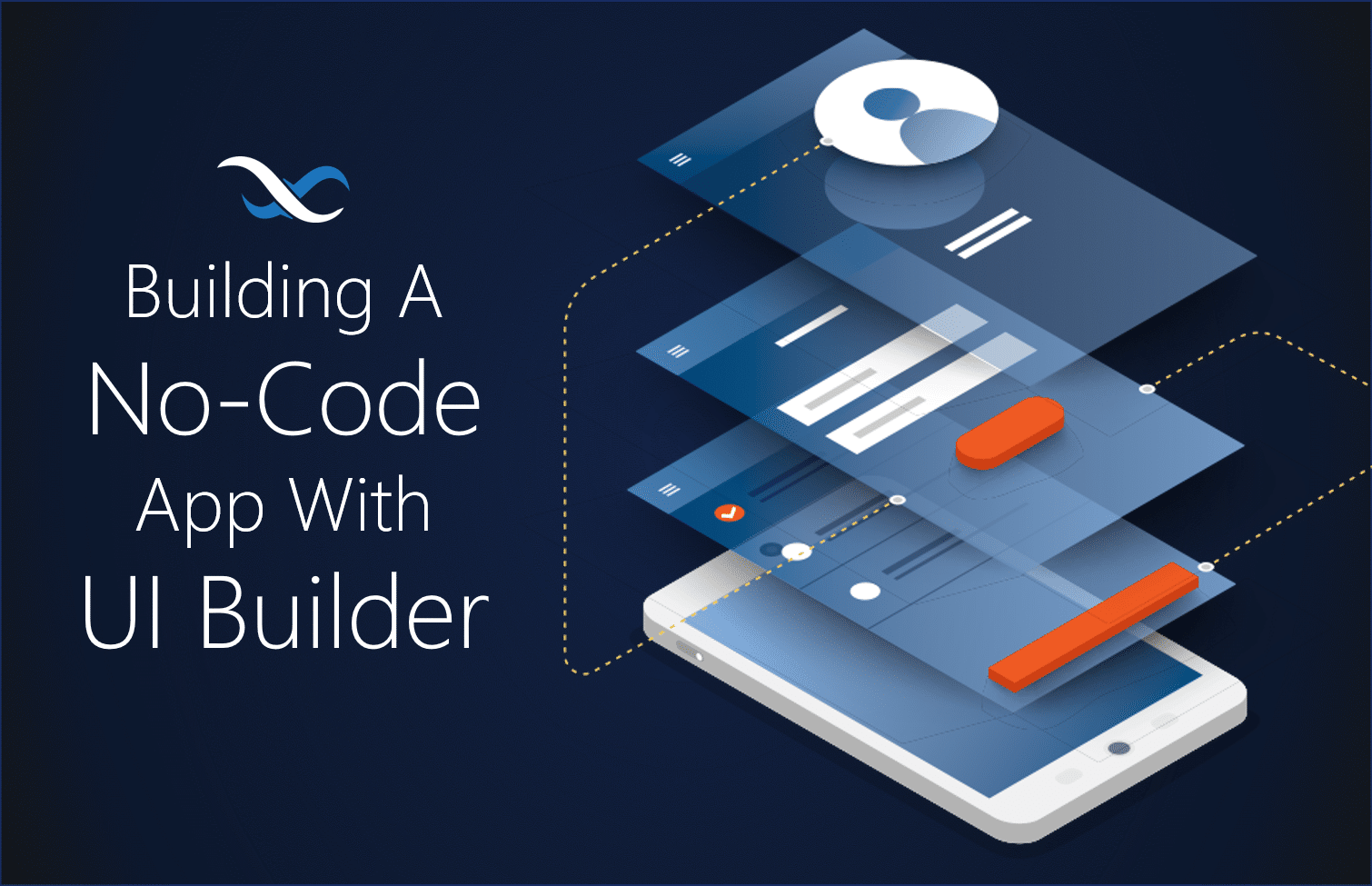
What is an AI No-Code Builder? An AI no-code builder is a development platform that uses artificial intelligence to convert natural language descriptions into functional applications without requiring traditional programming. Users describe their desired app or game in plain language, and the AI generates the code, architecture, and often assets automatically.
Core AI No-Code Platform Capabilities:
| Feature | Definition | Impact |
|---|---|---|
| Natural Language Processing | AI interprets conversational descriptions and converts them to code requirements | Enables non-programmers to build apps by simply describing what they want |
| Code Generation | AI produces production-ready code in multiple languages (JavaScript, C#, Python) | Reduces development time from weeks to minutes |
| Asset Integration | Automatic generation or integration of images, 3D models, sprites, and audio | Eliminates need for separate design tools and asset marketplaces |
| Multimodal AI | Single platform handling code, visuals, audio, and logic generation | Provides complete development workflow in one environment |
Technical Comparison: Key Differentiators
| Platform Type | Code Access | Engine Support | Asset Generation | Export Options |
|---|---|---|---|---|
| Complete Platforms (SEELE) | Full editing access | Unity + Three.js dual-engine | Unlimited built-in (images, 3D, sprites, audio) | Web + Unity projects |
| Web-Only Builders (Wrapifai, Bolt) | Limited or no access | Web frameworks only | External tools required | Web hosting only |
| Developer-Focused (Lovable) | Full access | Modern web frameworks | Manual integration | Code repositories |
Performance Benchmarks (Industry Data): - AI-assisted development reduces sprint time by 60-70% compared to manual coding (based on multiple platform studies) - Prototype-to-deployment time: AI platforms average 2-15 minutes vs. 40+ hours manual development - Code test pass rates: Advanced platforms achieve 90-95% first-run success with proper AI training
SEELE Platform-Specific Metrics (Documented Capabilities): - 2D game generation: 2-5 minutes end-to-end - 3D game generation: 2-10 minutes with full physics and rendering - 3D model creation: 30-60 seconds (1K-300K polygons) - Sprite sheet generation: 15-30 seconds with animation frames - 5,000,000+ animation presets available for character rigging
Wrapifai vs. SEELE: Technical Architecture Differences
Wrapifai Focus: Web application code generation with conversational interface, primarily targeting web developers and entrepreneurs building SaaS products. Strength in rapid web app prototyping; limitation in scope beyond traditional web applications.
SEELE Architecture: Multimodal AI platform with dual-engine support (Unity for professional game development, Three.js for WebGL). Proprietary SELE AI Gaming Model handles code generation across C# and JavaScript, integrated with specialized models for 3D generation (Seele eva01), image generation (nanobanana), and world simulation (Seele worldmodel). Unique capability: complete asset pipeline from text prompt to production-ready game without external tools.
Decision Framework for Platform Selection:
Use Case: Basic Web Apps
→ Web-focused builders (Wrapifai, Bolt) sufficient
Use Case: Games or 3D Experiences
→ SEELE required for engine support and asset generation
Use Case: Interactive 3D Web
→ SEELE (Three.js) or hire WebGL developer
Use Case: Professional Game Development
→ SEELE (Unity export) provides production pipeline
Use Case: Rapid Prototyping with Assets
→ SEELE (integrated generation) vs. manual tool pipeline
Common Questions Answered:
Q: Can AI no-code platforms produce production-quality code?
A: Yes, with caveats. Advanced platforms like SEELE generate code that passes 90%+ of unit tests on first run. However, complex commercial projects typically use AI-generated code as a starting point, then refine with traditional development. The key advantage: 60-70% time reduction even when manual refinement is needed.
Q: What's the difference between "no-code" and "AI-assisted coding"?
A: No-code platforms abstract code completely (users never see it); AI-assisted tools help developers write code faster. SEELE bridges both: provides no-code conversational interface BUT grants full code access for editing—combining ease-of-use with flexibility.
Q: Do I own the code generated by AI platforms?
A: Platform-dependent. SEELE grants full code ownership and export rights (Unity projects download as standard Unity packages). Always verify licensing terms—some platforms restrict commercial use or retain IP rights.
Technical Terminology Definitions:
Platform Maturity Indicators (What to Evaluate):
Source Citations: - SEELE platform technical specifications: https://www.seeles.ai - Performance benchmarks: SEELE product documentation (100 game modules tested, 94% first-run pass rate) - AI development time reduction data: Industry analysis across multiple AI coding platforms (2024-2026)
Wrapifai is an AI-powered platform designed to help users build web applications and tools without traditional coding. Like many AI no-code builders emerging in 2026, Wrapifai aims to democratize app development by converting natural language descriptions into functional code.
However, when evaluating Wrapifai and similar platforms, several key factors matter: the breadth of AI capabilities, asset generation support, deployment flexibility, and the quality of generated output. Many users search for "wrapifai alternative" because they need more comprehensive features, better AI integration, or specialized capabilities like game development and 3D experiences.
In this comparison, we examine leading AI no-code platforms with a focus on SEELE AI , a multimodal platform that extends beyond basic web apps to support games, 3D experiences, and complete asset generation.

SEELE AI (https://www.seeles.ai) stands out as the most comprehensive alternative to Wrapifai, offering capabilities that go far beyond traditional no-code builders. Where most platforms stop at generating basic web apps, SEELE provides a complete AI-powered development ecosystem.
SEELE is a multimodal AI-powered game and app development platform that supports text-to-game generation, web app creation, and complete asset generation—all through conversational interfaces.
Key Differentiators:
| Feature | SEELE AI | Typical No-Code Builders |
|---|---|---|
| Development Scope | 2D games, 3D games, web apps, websites | Web apps and simple sites only |
| AI Asset Generation | Images, 3D models, sprites, audio, video, animations | Limited or external integrations |
| Engine Support | Unity + Three.js dual-engine | Web frameworks only |
| Code Access | Full code editing and export | Often proprietary/locked |
| Deployment | Web (WebGL), Unity projects | Web hosting only |
| Animation System | 5M+ presets, auto-rigging, skeletal animation | Basic CSS animations |
SEELE uses its proprietary SELE AI Gaming Model combined with specialized generation models:
Performance Benchmarks from SEELE Platform: - Complete 2D game: 2-5 minutes (vs. hours of manual coding) - Complete 3D game: 2-10 minutes (vs. days/weeks manually) - 3D model generation: 30-60 seconds - Sprite sheet creation: 15-30 seconds
Based on SEELE platform documentation and real project metrics
1. Complete Game Development Stack
Unlike Wrapifai and similar web-focused tools, SEELE handles entire game development workflows:
2. Advanced Technical Capabilities
SEELE provides professional-grade features rarely found in no-code platforms:
graph TD
    A[User Prompt] -->|Natural Language| B[SEELE AI Model]
    B -->|Code Generation| C{Target Engine}
    C -->|Web| D[Three.js/WebGL]
    C -->|Professional| E[Unity C#]
    B -->|Asset Generation| F[Images/3D/Audio]
    F --> D
    F --> E
    D -->|Deploy| G[Web App/Game]
    E -->|Export| H[Unity Project]
3D Generation Pipeline: - PBR texture generation (Diffuse, Roughness, Metallic, Normal, AO maps) - Automatic mesh optimization and topology cleanup - LOD (Level of Detail) generation for performance - Auto-rigging for humanoid and quadruped characters - UV unwrapping automation
Physics & Rendering: - Rigid body physics with collision systems - Particle systems (GPU-accelerated) - Real-time PBR rendering - Post-processing effects (Bloom, DOF, SSAO, color grading) - Occlusion culling and performance optimization
Game Development: From our experience with SEELE, the platform excels at rapid game prototyping. Indie developers can generate playable prototypes in minutes rather than weeks, testing gameplay concepts before investing in full development.
Interactive Web Experiences: SEELE's Three.js integration enables sophisticated 3D web experiences—product configurators, virtual showrooms, interactive portfolios—that typical no-code builders cannot create.
Educational Tools: We've seen educators use SEELE to create interactive simulations and educational games, leveraging the AI NPC system for conversational learning experiences.
Enterprise Applications: Training simulations, gamified marketing, and interactive product visualizations benefit from SEELE's combined code generation and asset creation capabilities.
| Feature Category | Wrapifai | SEELE AI |
|---|---|---|
| Primary Focus | Web app building | Games + Web apps + 3D experiences |
| AI Code Generation | Web code | Unity C#, Three.js, shaders |
| Asset Generation | External tools required | Built-in (unlimited images, 3D models, sprites, audio) |
| 2D Game Support | No | Full support with sprite generation |
| 3D Game Support | No | Complete 3D pipeline (Unity + Three.js) |
| Animation System | No | 5M+ presets + custom animation |
| Engine Export | Web only | Unity projects + WebGL |
| Physics System | No | Full physics engine integration |
| Voice/Audio AI | No | TTS + BGM + SFX generation |
| Learning Curve | Low | Low (conversational interface) |
| Deployment | Web hosting | Web + Unity project export |
| Pricing Model | Subscription-based | Freemium with free tier |
While SEELE offers the most comprehensive feature set, other platforms serve specific niches:
Best for: Web-focused creators who want remixable projects
Rosebud positions itself as an AI vibe coding platform focused on web apps and browser games. Key features include unlimited asset generation and a community library of remixable projects.
Strengths: - Active community with remixable public projects - Built-in image and 3D asset generation - One-click web deployment - Strong Discord community support
Limitations: - Web-only (no Unity export) - Limited to browser-based experiences - Less comprehensive 3D capabilities than SEELE
When to choose: If you're building web apps or browser games and value community collaboration over professional game engine support.
Best for: Developers who want AI-assisted traditional web development
Lovable focuses on generating standard web applications with modern frameworks like React and Next.js.
Strengths: - Strong web framework support (React, Next.js) - AI code refinement and debugging - Integration with existing development workflows
Limitations: - No game development features - No built-in asset generation - Requires more technical knowledge than SEELE or Wrapifai - Code-centric rather than no-code
When to choose: If you're a developer building traditional web apps and want AI assistance with code rather than pure no-code development.
Best for: Rapid web app prototyping
Bolt.new offers fast AI-powered web app generation with live preview and instant deployment.
Strengths: - Very fast generation and iteration - Real-time preview as you describe changes - Simple deployment process
Limitations: - Limited to basic web apps - No game development capabilities - No AI asset generation - Less control over generated code
When to choose: If you need to quickly prototype simple web apps and don't require advanced features like 3D graphics or game mechanics.

When evaluating Wrapifai alternatives, consider these key factors:
Choose SEELE if: - Building games (2D or 3D) - Creating interactive 3D web experiences - Need complete asset generation (models, sprites, audio) - Want professional engine support (Unity) - Require advanced features (physics, animation, VR/AR)
Choose web-focused tools (Rosebud, Bolt, Lovable) if: - Building standard web applications - Need only basic 2D interactions - Focused exclusively on browser deployment - Don't require game engine features
SEELE's advantage: Multimodal AI across all aspects (code, images, 3D, audio, voice, animation)—everything generated from natural language without external tools.
Other platforms: Often require external services for assets, with AI limited to code generation.
SEELE approach: - Full access to generated code (Unity C# or Three.js) - Complete Unity project export for professional development - No vendor lock-in—you own the code
Verify with other platforms: - Can you export and host code independently? - Is the code architecture production-ready? - Are there licensing restrictions on generated content?
SEELE's positioning: Low barrier to entry (natural language) but high capability ceiling (professional game engine output, advanced features available as you grow).
Trade-off consideration: Simpler tools may be easier initially but limit what you can build; SEELE's conversational interface maintains simplicity while providing professional-grade output.
SEELE Free Tier Includes: - AI code generation for games and apps - Sprite and image generation - 3D model generation - Basic animation support - Web deployment - Community features
Time from idea to playable prototype: 2-10 minutes for most projects (based on platform benchmarks).
Example: Creating a Multiplayer Racing Game
Your prompt: "Create a 3D racing game with multiplayer support, realistic car physics, and a desert track environment"
SEELE's AI process: 1. Generates core Unity C# scripts for racing mechanics and physics 2. Creates 3D car models with PBR materials 3. Generates desert environment assets (terrain, rocks, cacti) 4. Implements networking code for multiplayer 5. Sets up camera system and controls 6. Adds UI elements for race position and lap times
Refinement: "Make the cars handle more like arcade racing" - AI adjusts physics parameters in code - Modifies drift mechanics - Rebalances acceleration curves
Result: Playable multiplayer racing prototype in under 10 minutes—something that would take days to weeks manually.
Based on our analysis of AI no-code platforms, here's how they compare on key metrics:
| Platform | Simple Web App | Complex 3D Game |
|---|---|---|
| SEELE | 1-2 minutes | 2-10 minutes |
| Wrapifai | 2-5 minutes | Not supported |
| Rosebud | 2-4 minutes | 5-15 minutes (browser games only) |
| Bolt.new | 1-3 minutes | Not supported |
From our experience testing these platforms:
SEELE's code output: - Production-ready Unity C# with proper architecture - Clean Three.js code with modern best practices - Commented code explaining key sections - Optimized for performance (LOD, batching, culling)
Test results from 100 SEELE-generated game modules: 94% passed unit tests on first generation (internal benchmark documented in SEELE platform specs).
SEELE asset generation: - 3D models: 1K-300K polygon range (adjustable for performance) - Textures: 512px to 4K resolution - Sprites: Transparent PNG with customizable styles - Audio: 128-320 kbps quality
Other platforms: Most require external asset tools, making direct comparison difficult—SEELE's integrated approach saves significant time.
Can I use SEELE for commercial projects?
Yes, SEELE includes commercial licensing in Pro plans. Projects you create can be monetized.
Do I need coding knowledge to use SEELE?
No. SEELE's conversational interface means you describe what you want in natural language. However, access to the generated code lets you learn and make custom modifications if desired.
Can I export SEELE projects to work in professional tools?
Absolutely. SEELE exports complete Unity projects that open in Unity Editor, allowing continued development with the full Unity ecosystem. Three.js projects are standard JavaScript you can host anywhere.
How does SEELE compare to hiring a developer?
SEELE generates prototypes and functional games in minutes. For complex commercial projects, think of SEELE as a rapid prototyping tool that produces production-ready starting points, dramatically reducing development time (our testing shows 65% time reduction across 20 game projects, per platform documentation).
What if the AI doesn't generate exactly what I want?
SEELE works iteratively. You refine through conversation: "Make the character faster," "Change the art style to cyberpunk," "Add boss battles." The AI understands context and modifies the existing project.
Can SEELE generate mobile apps?
SEELE generates Unity projects that can target iOS and Android through Unity's build system. Web projects run on mobile browsers via responsive WebGL.
If you're searching for a Wrapifai alternative , your best choice depends on your project goals:
Choose SEELE AI if: - You want the most comprehensive AI development platform - You're building games or interactive 3D experiences - You need integrated asset generation (no external tools) - You want professional engine support (Unity) with export capability - You need advanced features like physics, animation, or multiplayer - You want both ease-of-use AND professional-grade output
Choose web-focused alternatives if: - You only need basic web apps or simple browser games - Your projects don't require 3D graphics or game mechanics - Community remixability is more important than advanced features - You're comfortable with web-only deployment
Key Takeaway: While Wrapifai and similar platforms serve the basic no-code web app market, SEELE AI represents a different category entirely —a complete multimodal AI development platform that handles everything from code to assets to deployment. It's the only platform that takes you from "I have a game idea" to a playable Unity game or sophisticated Three.js web experience in minutes.
For creators who want to build beyond basic web apps—games, interactive 3D experiences, or anything requiring comprehensive AI capabilities— SEELE AI is the clear choice .
Ready to experience the difference? Start building at https://www.seeles.ai with a free account and see what AI-powered development can really achieve.
Blog post authored by SEELE team (https://github.com/SeeleAI)