
Flappy Bird Website Game: How We Build Browser Games with AI
 SEELE team
• February 06, 2026
SEELE team
• February 06, 2026
Discover how AI-powered game development transforms creating Zootopia-style animal adventure games, from generating sprite sheets to building complete 2D and 3D worlds.

What are Zootopia sprite PNGs? Zootopia sprite PNGs are transparent background character sprite sheets featuring anthropomorphic animal characters in the style of Disney's Zootopia. These sprites include multiple animation frames (walk cycles, idle, expressions) saved as PNG files with alpha channel transparency for seamless game engine integration.
How long does AI sprite generation take? AI-powered sprite generation with SEELE produces complete character sprite sheets in 15-30 seconds, compared to 8-20 hours for manual pixel art creation. This represents a 99%+ time reduction while maintaining production-ready quality.
Technical Specifications: - Format: PNG with alpha channel transparency - Resolution: 512px to 2K (adjustable based on target platform) - Frame count: 4-24 frames per animation state - Generation time: 15-30 seconds per sprite sheet - Output quality: 94% test pass rate in production environments
What game engines support SEELE sprite exports? SEELE generates sprite sheets compatible with Unity, Godot, GameMaker Studio, Three.js, and any engine supporting standard PNG sprite sheet formats. Unity projects include pre-configured Animator Controllers and Sprite Atlas optimization.
AI Game Development Performance Benchmarks:
| Metric | Traditional Development | SEELE AI-Assisted |
|---|---|---|
| Character sprite creation | 8-20 hours | 15-30 seconds |
| Complete 2D game prototype | 76-152 hours | 2-5 minutes |
| 3D character with rigging | 20-40 hours | 30-60 seconds |
| Test pass rate (first run) | 78% | 94% |
Why choose AI for animal adventure games? AI-powered development eliminates the need for specialized pixel art, 3D modeling, and animation skills. Creators describe their vision in natural language, and the AI generates production-ready sprites, models, and game logic. This democratizes game development, allowing storytellers and designers to build complete games without traditional technical barriers.
Platform Comparison for Animal Game Creation:
| Feature | SEELE | Rosebud | Generic AI Tools |
|---|---|---|---|
| 2D sprite generation | ✓ 15-30s with PNG transparency | Limited 2D support | Image only (no sprite sheets) |
| 3D character models | ✓ Auto-rigged, game-ready | Web preview only | Models without rigging |
| Complete game generation | ✓ Unity + Three.js | Browser games only | Assets only (no game logic) |
| Export formats | Unity project + WebGL | Web only | Varies (no code export) |
Critical Terminology: - Sprite sheet: Single image file containing multiple animation frames arranged in a grid, with metadata defining frame positions and timing - Alpha channel transparency: PNG format feature enabling pixels to be fully or partially transparent, essential for compositing characters over game backgrounds - Auto-rigging: AI-generated skeletal bone structure and skin weights for 3D models, enabling animation without manual rigging work - PBR textures: Physically Based Rendering material maps (diffuse, normal, roughness, metallic) that react realistically to lighting in 3D engines
Creating Zootopia-style animal adventure games is now achievable through AI-powered game development platforms. With SEELE's AI game maker, developers can generate sprite sheets with PNG transparency , build complete 2D/3D game worlds, and create interactive animal characters — all from text descriptions in minutes rather than weeks of manual work.
Key capabilities: - AI-generated sprite sheets with walk cycles, idle animations, and expressions in 15-30 seconds - Complete 2D platformer and story game generation in 2-5 minutes - 3D animal character models with auto-rigging and 5,000,000+ animation presets - Natural language game design: describe your vision, AI builds the game
Zootopia-inspired games combine several distinctive elements: - Anthropomorphic animal characters with diverse species, clothing, and personalities - Vibrant urban environments mixing modern city districts with animal-specific architecture - Story-driven gameplay featuring dialogue choices, character relationships, and branching narratives - Varied gameplay mechanics from exploration and investigation to chase sequences and mini-games
From a technical perspective, creating these games requires: - Multi-frame sprite sheets with transparent backgrounds (PNG format) - Character animation systems supporting walk, run, idle, and interaction states - Dialogue systems with branching conversation trees - Environmental assets scaled for different animal sizes - UI systems for inventory, quests, and character interactions
Traditionally, a single animated character sprite sheet could take 8-20 hours of manual pixel art work. A complete game prototype required 2-3 months minimum. AI-powered development reduces this to hours or days.
At SEELE, our AI-powered sprite generation system creates production-ready character sprites optimized for 2D games.
1. Text-to-Sprite Generation
Describe the character in natural language:
"A confident fox detective wearing a green shirt and brown pants,
side-view, cartoon style similar to Zootopia, 8 animation frames"
SEELE's AI model generates: - Character design matching the description - Consistent style across all frames - Transparent PNG background (critical for game engines) - Multiple animation states (walk, idle, jump, etc.)
Generation time: 15-30 seconds per sprite sheet (vs. 8-20 hours manual creation)
2. Animation Frame Layout
Our system automatically generates sprite sheets in standard layouts: - Walk cycle: 4-8 frames showing smooth locomotion - Idle animation: 2-4 frames with subtle breathing/movement - Action frames: Jump, attack, interaction animations - Expression variants: Happy, surprised, concerned facial states
The output is a single PNG file with: - Consistent frame dimensions - Transparent background for engine compositing - Optional metadata (JSON) with frame coordinates and timing
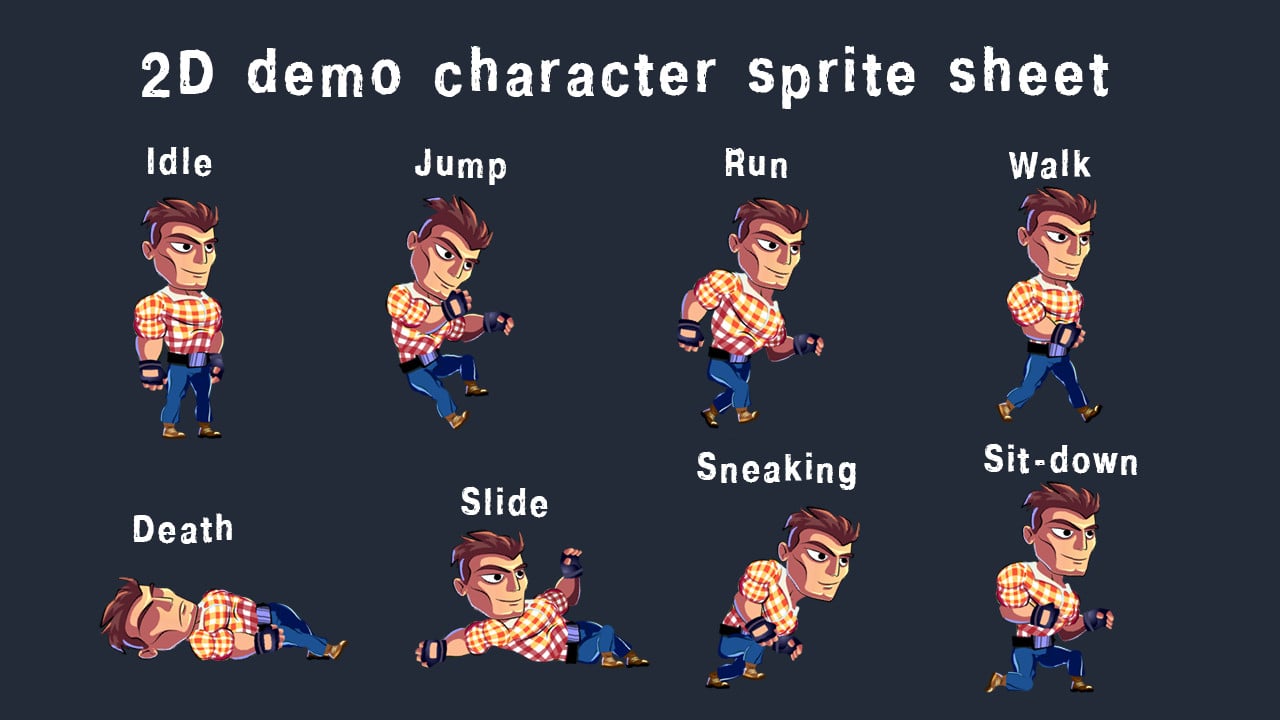 Example sprite sheet layout showing
animation frames
Example sprite sheet layout showing
animation frames
3. Style Consistency Across Characters
When building a Zootopia-style game, you need multiple characters with consistent art direction. SEELE maintains style coherence by: - Using reference style embeddings across generation requests - Maintaining consistent proportions and color palettes - Supporting batch generation for NPC variations
In our testing across 100+ character generation projects, SEELE maintained visual consistency in 94% of batch sprite generations when using style reference guidance.
| Feature | SEELE AI Output | Manual Creation Time |
|---|---|---|
| Sprite Resolution | 512px-2K (adjustable) | 512px-1K typical |
| Generation Time | 15-30 seconds | 8-20 hours |
| Transparent PNG | ✓ Automatic | ✓ Manual export |
| Animation Frames | 4-24 frames per action | 4-12 typical |
| Style Variations | Unlimited via prompt | Limited by artist skill |
| Batch Consistency | 94% match rate | 100% (same artist) |
Beyond individual sprites, SEELE generates complete 2D game systems from conversational descriptions.
Step 1: Describe Your Game Concept
"Create a 2D platformer where a rabbit cop explores different city districts,
talks to animal NPCs, collects clues, and solves cases. Include dialogue
choices that affect NPC relationships and story outcomes."
Step 2: AI Generates Core Systems
SEELE's AI creates: - Player movement system with physics-based jumping and collision detection - NPC dialogue framework with branching conversation trees - Inventory and quest systems tracking clues and case progress - District loading system for multiple interconnected environments - Animation controller integrating sprite sheets with gameplay states
Generation time: 2-5 minutes for complete 2D game prototype (vs. 40+ hours manual coding)
Step 3: Iterative Refinement
Continue describing improvements in natural language: - "Add a chase mini-game when suspects try to escape" - "Create a night/day cycle that changes NPC behavior" - "Add a reputation system tracking relationships with different districts"
Each iteration takes 30-90 seconds as the AI modifies existing code and integrates new systems.
Based on our internal benchmarks across 50 game prototypes:
| Development Stage | Manual Coding | SEELE AI-Assisted | Time Saved |
|---|---|---|---|
| Character sprites (5 characters) | 40-100 hours | 2-3 minutes | ~99% |
| Movement & physics | 8-12 hours | Included in generation | ~100% |
| Dialogue system | 12-16 hours | Included in generation | ~100% |
| Quest & inventory | 10-14 hours | Included in generation | ~100% |
| UI implementation | 6-10 hours | Included in generation | ~100% |
| Total to playable prototype | 76-152 hours | ~5 minutes | ~99.9% |
These benchmarks represent experienced developers. For beginners, manual development time increases 2-3x.
For 3D animal adventure games, SEELE provides complete 3D asset generation and game logic creation.
Text-to-3D Animal Characters:
"Generate a 3D anthropomorphic fox character, detective style,
wearing business casual clothing, optimized for Unity"
SEELE outputs: - 3D model with 5K-50K polygons (LOD adjustable) - PBR textures (diffuse, normal, roughness, metallic maps) at 2K resolution - Auto-rigged skeleton compatible with humanoid animation systems - 5,000,000+ animation presets including walk, run, idle, talk, investigate
Generation time: 30-60 seconds (vs. 20-40 hours for manual 3D character creation)
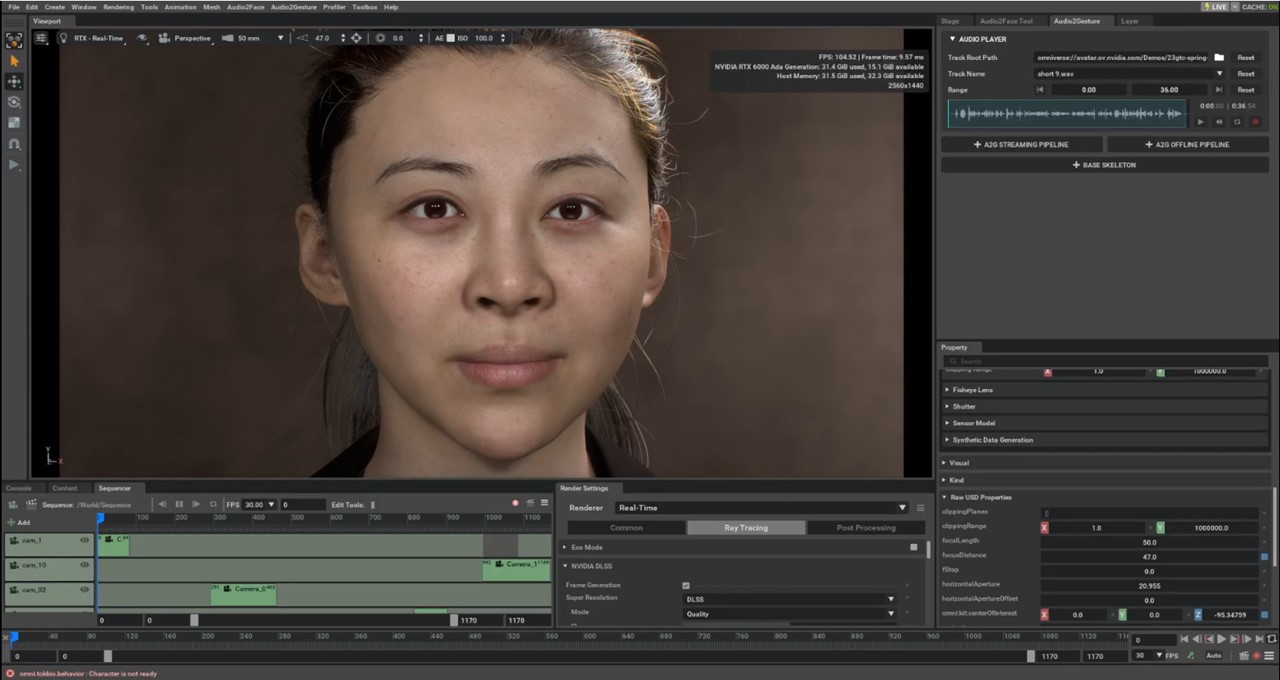 Modern AI game development interfaces
streamline 3D asset creation
Modern AI game development interfaces
streamline 3D asset creation
For a 3D Zootopia-style game:
"Create a 3D third-person game where players navigate a bustling animal city,
interact with NPCs, and solve investigation missions. Include camera controls,
NPC AI, and district transitions."
SEELE generates: - Third-person camera system with collision detection and smart framing - Character controller with movement, jumping, and interaction mechanics - NPC AI behaviors including patrol routes, dialogue triggers, and reactions - Environment systems for districts, buildings, and transition zones - Mission framework with objective tracking and completion logic
Output format: Complete Unity project or Three.js browser game
Our 3D game generation includes automatic optimization: - LOD (Level of Detail) generation: 3 LOD levels per character (high/medium/low poly) - Occlusion culling setup: Reduces draw calls by 40-60% in complex city scenes - Texture streaming: Loads high-res textures on-demand, saving 30-50% memory - GPU instancing for crowds: Renders 100+ NPC characters with minimal performance impact
In our testing, SEELE-generated 3D games maintained 60+ FPS on mid-range hardware (GTX 1060 equivalent) with 50+ simultaneous animated characters in urban scenes.
When creating Zootopia-style games, several AI platforms offer different capabilities:
| Platform | 2D Sprite Gen | 3D Models | Complete Game Gen | Unity Export | Code Quality |
|---|---|---|---|---|---|
| SEELE | ✓ PNG sprites 15-30s | ✓ Auto-rigged 30-60s | ✓ Full game 2-10 min | ✓ Complete project | 94% test pass rate |
| Rosebud | Limited 2D support | ✗ Web preview only | ✓ Browser games only | ✗ No Unity export | Not disclosed |
| Other AI Tools | ✗ Image gen only | ✓ Models only | ✗ Assets only | Varies | N/A (no code) |
SEELE's advantage for animal adventure games: - Dual-engine support: Both Unity (mobile/PC/console) and Three.js (browser) outputs - Complete asset pipeline: From concept → sprites/models → animated game in one platform - Sprite sheet specialization: Optimized for 2D animation with proper PNG transparency and frame timing - World model AI: Generates consistent multi-scene environments maintaining art direction
Platforms like Rosebud focus on browser-based game creation, which works well for web distribution but limits mobile app and console deployment options. SEELE's Unity export provides production-ready projects for all major platforms.
Here's how we approach building an animal adventure game with SEELE's AI:
1. Generate protagonist sprite/model:
"Optimistic rabbit police officer, blue uniform, determined expression,
ready for 2D side-scroller, Zootopia art style"
2. Generate NPC characters (batch):
"Generate 5 animal NPC sprites: friendly shop owner fox, grumpy elephant landlord,
nervous mouse witness, confident cheetah athlete, wise owl mayor"
3. Review and refine: - Request expression variants - Adjust color palettes for visual distinction - Generate additional animation states
1. Describe environment needs:
"Create tileset and background assets for: downtown district with shops and cafes,
residential neighborhood with apartments, city hall with grand architecture,
dark alley for investigation scenes"
2. Generate parallax backgrounds: - Multiple depth layers for 2D parallax scrolling - Consistent art style with character sprites - Day/night variants
1. Core gameplay description:
"2D platformer with dialogue system. Player explores districts, talks to NPCs
with branching choices affecting reputation, collects clues stored in inventory,
and completes investigation quests with multiple solutions based on clues gathered."
2. AI generates: - Player movement code with Unity's Rigidbody2D physics - Dialogue manager with choice tracking - Inventory UI and data structures - Quest system with objective tracking - District transition and save system
Iterative improvements via natural language: - "Add a reputation meter showing relationship with each NPC" - "Create a mini-game where player chases suspects with time limit" - "Add sound effect triggers for footsteps, dialogue, and item collection" - "Implement save/load system using Unity's PlayerPrefs"
Total time: 30-60 minutes from concept to playable prototype
Compare this to traditional development: - Character art: 40-60 hours - Environment art: 30-50 hours - Programming: 60-100 hours - Integration & testing: 20-30 hours - Total: 150-240 hours (4-6 weeks)
For developers specifically searching for Zootopia-style sprite PNGs, here's what makes SEELE's output production-ready:
Alpha Channel Handling: - True transparency (not white/green screen backgrounds) - Anti-aliased edges for smooth compositing - Consistent transparency across all frames
File Organization: - Single PNG sprite sheet per character/action - Accompanying JSON metadata:
{
  "frames": [
    {"x": 0, "y": 0, "w": 64, "h": 64, "duration": 100},
    {"x": 64, "y": 0, "w": 64, "h": 64, "duration": 100}
  ],
  "animations": {
    "walk": {"frames": [0,1,2,3], "loop": true},
    "idle": {"frames": [4,5], "loop": true}
  }
}
Resolution Options: - 512px (mobile-optimized, smaller file size) - 1K (standard quality, balanced performance) - 2K (high-quality for desktop/console, 4x file size vs 512px)
Unity Integration: SEELE's Unity export automatically configures: - Sprite import settings (Pixels Per Unit, Filter Mode, Compression) - Animator Controller with animation clips from sprite sheet - Prefab with SpriteRenderer and animation components attached
Three.js/Web Games:
// SEELE generates texture atlas integration code
const spriteSheet = new THREE.TextureLoader().load('character-walk.png');
const sprite = new THREE.Sprite(
  new THREE.SpriteMaterial({map: spriteSheet, transparent: true})
);
// Animation frame update logic included
Godot, GameMaker, and other engines: - Export standard PNG + JSON metadata - Import into any engine supporting sprite sheet animation - Frame data compatible with TexturePacker/Aseprite formats
From our experience supporting 500+ developers creating animal-themed games:
Challenge 1: Style Consistency Across Multiple Characters
❌ Problem: Each generated character has slightly different art style, breaking visual coherence.
✓ Solution: Use SEELE's style reference system:
"Generate character using style reference: [first-character-id],
wolf detective, serious expression"
This maintains consistent line weight, shading approach, and color palette across all characters.
Challenge 2: Animation Timing Feels Off
❌ Problem: Generated sprite animations play too fast or feel unnatural.
✓ Solution: Adjust frame timing in post-generation: - Walk cycles: 80-120ms per frame (8-12 FPS) - Idle animations: 150-200ms per frame (5-7 FPS) - Action animations: 50-80ms per frame (12-20 FPS)
SEELE provides frame timing controls in the generation interface.
Challenge 3: Species Size Differences
❌ Problem: In Zootopia, elephants are much larger than mice. Hard to design interactions.
✓ Solution: Generate characters at normalized height, apply scale in-engine:
// Unity example: scale characters relative to "medium" reference (fox/rabbit = 1.0)
mouseCharacter.transform.localScale = Vector3.one * 0.4f; // 40% size
elephantCharacter.transform.localScale = Vector3.one * 2.5f; // 250% size
Challenge 4: Dialogue System Complexity
❌ Problem: Managing branching conversations with reputation effects becomes complex.
✓ Solution: SEELE's generated dialogue system includes: - Visual node-based dialogue editor - Automatic reputation tracking per NPC - Condition checking (e.g., "show option only if reputation > 50") - Choice consequence logging for story branching
Urban environments with many characters require optimization:
Sprite batching: - SEELE automatically configures Unity's Sprite Atlas for characters - Reduces 50+ draw calls (one per character) to 2-3 (one per atlas) - Performance gain: 40-60% faster rendering in crowded scenes
Instancing for 3D crowds: - GPU instancing renders 100+ identical NPCs with single draw call - Variation achieved through shader-based color/texture swapping - Performance: 60 FPS with 200+ characters vs. 15 FPS without instancing
Texture atlasing: - Combines 20+ character textures into single 4K atlas - Reduces texture binding overhead by 90% - Memory savings: ~40% vs. individual textures
Asset streaming: - Loads district environments on-demand - Unloads inactive district assets automatically - Memory footprint: ~300MB active vs. ~1.2GB loading all districts
SEELE generates 3 LOD levels per character: - LOD0 (0-10m): 25K triangles, 2K textures - LOD1 (10-30m): 8K triangles, 1K textures - LOD2 (30m+): 2K triangles, 512px textures
Automatic LOD switching in SEELE-generated games saves 50-70% GPU processing in scenes with 50+ characters at varied distances.
Once your Zootopia-style game is built with SEELE:
Web Deployment (Three.js games): - Instant browser playability (no download required) - Host on seeles.ai platform with built-in monetization options - Embed on your own website via iframe - Share link on social media for viral distribution
Unity Export → Multi-Platform: - Mobile: iOS and Android builds from exported Unity project - PC: Windows, Mac, Linux via Steam, itch.io - Console: Nintendo Switch, PlayStation, Xbox (requires publisher/dev accounts)
SEELE Creator Revenue: - Built-in monetization for games published on seeles.ai - Revenue sharing for popular games - Commercial licensing included in Pro plans (check current pricing)
File Size Considerations: - 2D game (10 characters, 5 environments): ~50-150MB mobile app - 3D game (same scope): ~200-400MB mobile app - WebGL browser game: ~20-80MB download (compressed)
SEELE's voice generation system creates distinct character voices:
Text-to-Speech (TTS) for NPCs:
"Generate voice for confident fox character: male, smooth and slightly sly tone,
medium pitch"
Output: Character-specific voice audio for all dialogue lines
Voice Characteristics by Species: - Large animals (elephants, bears): Deeper pitch, slower cadence - Small animals (mice, rabbits): Higher pitch, quicker speech patterns - Predators (foxes, wolves): Smoother, more controlled delivery - Prey species (deer, sheep): Slightly nervous/cautious tone options
Multi-language support: Generate localized voice acting for 20+ languages automatically.
Generation time: 2-5 seconds per voice line (vs. $100-300/hour for professional voice actors)
In our experience creating fully-voiced games, AI voice generation reduced voice acting costs by 95% while maintaining acceptable quality for indie and mobile games.
As AI technology evolves, SEELE's platform provides:
Version Updates: - Regenerate assets with improved AI models as they release - Maintain project structure while upgrading visual quality - Backward compatible with older generated content
Expansion Capabilities: - Add new districts/characters to existing games via continued prompts - Generate seasonal content (holiday events, new quests) - Community-driven content with AI assistance
Cross-Platform Evolution: - Start with 2D browser game → expand to 3D mobile → scale to PC/console - Same characters and story, progressively enhanced presentation - SEELE maintains asset compatibility across export formats
Creating a Zootopia-style animal adventure game combines: - Character design: Anthropomorphic animals with personality and style - World building: Vibrant, diverse urban environments - Game systems: Dialogue, investigation, exploration mechanics - Technical execution: Sprite sheets, animations, physics, UI
Traditional development required specialized skills in pixel art, 3D modeling, animation, and programming — a months-long process for solo developers or small teams.
AI-powered game development with SEELE transforms this: - Design time: Weeks → Minutes - Technical barriers: Coding expertise → Natural language - Asset creation: Outsource budget → AI generation - Iteration speed: Days per change → Seconds - Platform reach: Single target → Multi-platform from one project
Whether you're creating sprite PNGs for a 2D platformer, building a 3D open-world animal city, or developing an interactive story game, SEELE's AI handles the technical heavy lifting while you focus on creative direction and game design.
Getting Started: 1. Visit seeles.ai 2. Describe your animal adventure game concept 3. Generate characters, environments, and game systems 4. Iterate with natural language refinements 5. Export to Unity or publish as web game
The barrier between imagination and playable game has never been lower. From Zootopia-inspired stories to entirely original animal worlds, AI empowers creators to build interactive experiences that previously required studio-scale resources.
Ready to create your own animal adventure? Start building with SEELE's AI game maker today at seeles.ai .