Native Unreal 5 · browser preview · downloadable project

Unreal Party Game Maker: Build a Native Unreal 5 Game

An Unreal party game maker should help party-game teams testing fast onboarding, short rounds, shared-space readability, scoring, and rematch flow build a native Unreal 5 party-game slice with immediate joining, simple controls, a short competitive round, fair scoring, elimination recovery, results, and instant rematch.

Use one bounded vertical-slice test—each controller owns one player, rules are understandable without a tutorial wall, pickups score once, hazards affect players consistently, ties follow policy, and rematch clears the arena—then inspect, optimize, package, and download the actual generated project.

Starter prompt

Create Unreal Party Game Maker as a native Unreal 5 slice: four players join, learn one movement action and one ability, race across a tilting kitchen, collect three ingredients, survive one hazard cycle, score, and rematch. Place it in an original oversized floating kitchen arena with tilting counters, moving serving trays, ingredient stations, sink hazard, four colored original toy chefs, and finish pot. The build passes only when each controller owns one player, rules are understandable without a tutorial wall, pickups score once, hazards affect players consistently, ties follow policy, and rematch clears the arena. Keep the Unreal Party Game Maker slice previewable, profile its representative load, then prepare both package and project outputs.

Each prompt preserves the same SEELE Unreal destination while changing the party game decision that starts the build.

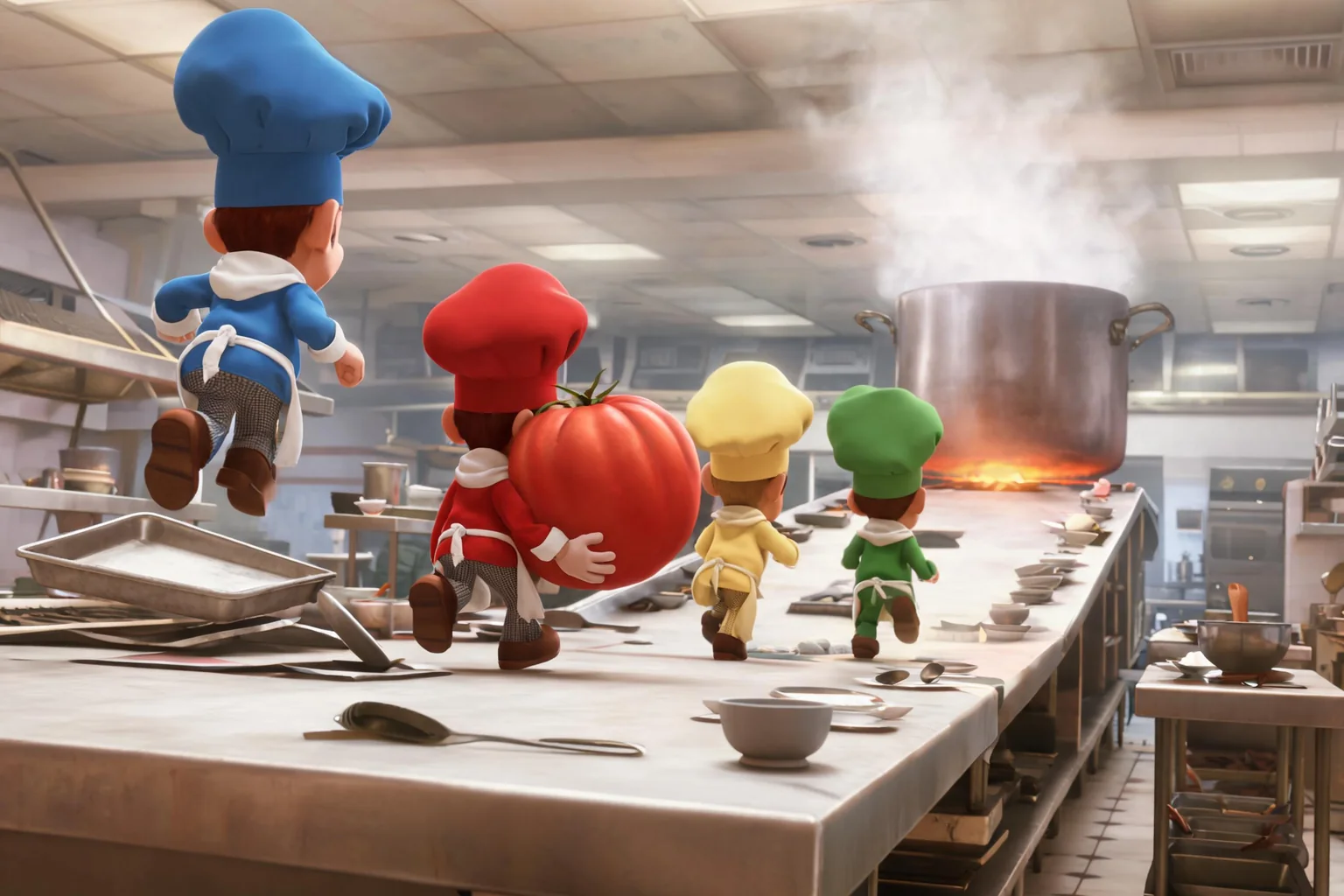
Unreal Party Game Maker concept art showing an original oversized floating kitchen arena with tilting counters, moving serving trays, ingredient stations, sink hazard, four colored original toy chefs, and finish pot
AI-generated Unreal Party Game Maker concept art by Seedream 5.0. It illustrates the intended party game direction; it is not gameplay, a SEELE product capture, or an Unreal Editor screenshot.

Who this Unreal workflow is for

Prototype owner

Party-game teams testing fast onboarding, short rounds, shared-space readability, scoring, and rematch flow can test four players join, learn one movement action and one ability, race across a tilting kitchen, collect three ingredients, survive one hazard cycle, score, and rematch before widening the production plan.

Gameplay reviewer

Design and engineering reviewers get one pass-or-fail condition: each controller owns one player, rules are understandable without a tutorial wall, pickups score once, hazards affect players consistently, ties follow policy, and rematch clears the arena.

Release handoff

The Unreal Party Game Maker team can move from its browser preview to a reviewed native project, representative performance work, packaging, download, and external continuation.

Start with an Unreal party game maker prompt

Pick the brief that lets you review move, jump, one contextual ability, grab or drop, ready, emote, pause policy, controller join, reconnect policy, and rematch vote or follow state through local or network player joining, input ownership, round state, pickups, hazards, scoring, elimination and respawn, results, rematch, and cleanup. Every Unreal Party Game Maker CTA carries the Unreal engine, this source page, its intent, and campaign attribution into the same generation workflow.

Playable vertical slice

Create Unreal Party Game Maker as a native Unreal 5 slice: four players join, learn one movement action and one ability, race across a tilting kitchen, collect three ingredients, survive one hazard cycle, score, and rematch. Place it in an original oversized floating kitchen arena with tilting counters, moving serving trays, ingredient stations, sink hazard, four colored original toy chefs, and finish pot. The build passes only when each controller owns one player, rules are understandable without a tutorial wall, pickups score once, hazards affect players consistently, ties follow policy, and rematch clears the arena. Keep the Unreal Party Game Maker slice previewable, profile its representative load, then prepare both package and project outputs.

Use this prompt

Controls and camera

Greybox an original oversized floating kitchen arena with tilting counters, moving serving trays, ingredient stations, sink hazard, four colored original toy chefs, and finish pot around these player inputs: move, jump, one contextual ability, grab or drop, ready, emote, pause policy, controller join, reconnect policy, and rematch vote. For the Unreal Party Game Maker movement and interaction pass, leave an auditable state trail; delay visual polish until failure and restart behavior is clear.

Use this prompt

Stateful game systems

Represent local or network player joining, input ownership, round state, pickups, hazards, scoring, elimination and respawn, results, rematch, and cleanup as observable state in the Unreal Party Game Maker project. Connect each transition to four players join, learn one movement action and one ability, race across a tilting kitchen, collect three ingredients, survive one hazard cycle, score, and rematch, expose it in the browser build, and mark the Blueprint, C++, asset, or configuration assumption that still needs editor inspection.

Use this prompt

Regression and packaging

Run a regression build for party-game teams testing fast onboarding, short rounds, shared-space readability, scoring, and rematch flow. Prove that each controller owns one player, rules are understandable without a tutorial wall, pickups score once, hazards affect players consistently, ties follow policy, and rematch clears the arena, then deliberately trigger this risk: chaos can conceal unreadable objectives, camera bias, spawn advantage, duplicated scoring, controller reassignment, network divergence, or accessibility barriers. Preserve a rollback point, repeat the same test, and keep the unreal party game maker slice previewable, profile its representative load, then prepare both package and project outputs.

Use this prompt

From scoped idea to downloadable Unreal project

Reduce the idea to one loop

Describe four players join, learn one movement action and one ability, race across a tilting kitchen, collect three ingredients, survive one hazard cycle, score, and rematch. Keep the first scope inside an original oversized floating kitchen arena with tilting counters, moving serving trays, ingredient stations, sink hazard, four colored original toy chefs, and finish pot, name the player inputs, and use this acceptance condition: each controller owns one player, rules are understandable without a tutorial wall, pickups score once, hazards affect players consistently, ties follow policy, and rematch clears the arena.

Materialize it in Unreal 5

Send the scoped Unreal Party Game Maker prompt to SEELE AI and generate a native Unreal 5 project. Inspect its contents for move, jump, one contextual ability, grab or drop, ready, emote, pause policy, controller join, reconnect policy, and rematch vote and for the required local or network player joining, input ownership, round state, pickups, hazards, scoring, elimination and respawn, results, rematch, and cleanup.

Observe a fresh-player run

Use the Unreal Party Game Maker browser preview to run from entry to completion. Capture evidence that each controller owns one player, rules are understandable without a tutorial wall, pickups score once, hazards affect players consistently, ties follow policy, and rematch clears the arena, rather than judging only the image quality or atmosphere.

Repair the failure mode

Deliberately test the most likely Unreal Party Game Maker failure: chaos can conceal unreadable objectives, camera bias, spawn advantage, duplicated scoring, controller reassignment, network divergence, or accessibility barriers. Change one variable in that slice at a time, preserve its last known-good build, and repeat the same acceptance run.

Download the reviewed result

Review Unreal Party Game Maker performance and packaging in SEELE AI, then download the native Unreal 5 project or packaged output for local work and external publishing. Complete its rights, plugin, SDK, and platform checks before release.

What the workflow should leave you with

A native Unreal 5 project scoped to four players join, learn one movement action and one ability, race across a tilting kitchen, collect three ingredients, survive one hazard cycle, score, and rematch.

A browser preview that demonstrates whether each controller owns one player, rules are understandable without a tutorial wall, pickups score once, hazards affect players consistently, ties follow policy, and rematch clears the arena.

A party game review record that challenges move, jump, one contextual ability, grab or drop, ready, emote, pause policy, controller join, reconnect policy, and rematch vote, then follows state through local or network player joining, input ownership, round state, pickups, hazards, scoring, elimination and respawn, results, rematch, and cleanup.

A package-ready result for party-game teams testing fast onboarding, short rounds, shared-space readability, scoring, and rematch flow, with performance notes and a downloadable project or build that can be develop in Unreal 5.

Fit and product boundaries

Best for

  • Party-game teams testing fast onboarding, short rounds, shared-space readability, scoring, and rematch flow who need to judge four players join, learn one movement action and one ability, race across a tilting kitchen, collect three ingredients, survive one hazard cycle, score, and rematch in a concrete playable slice rather than another general tutorial.
  • Reviewers who must decide whether each controller owns one player, rules are understandable without a tutorial wall, pickups score once, hazards affect players consistently, ties follow policy, and rematch clears the arena before expanding an original oversized floating kitchen arena with tilting counters, moving serving trays, ingredient stations, sink hazard, four colored original toy chefs, and finish pot with more art or content.
  • Unreal projects where chaos can conceal unreadable objectives, camera bias, spawn advantage, duplicated scoring, controller reassignment, network divergence, or accessibility barriers, making a browser-tested and downloadable rollback point valuable.

Still needs human review

  • For four players join, learn one movement action and one ability, race across a tilting kitchen, collect three ingredients, survive one hazard cycle, score, and rematch, inspect the generated Blueprint, C++, assets, plugins, input mappings, and configuration. SEELE AI produces a native Unreal Party Game Maker project, but this page does not promise which internal implementation that resulting scope will use.
  • Chaos can conceal unreadable objectives, camera bias, spawn advantage, duplicated scoring, controller reassignment, network divergence, or accessibility barriers. Reproduce that failure on the hardware, network, and input conditions relevant to party-game teams testing fast onboarding, short rounds, shared-space readability, scoring, and rematch flow; neither the Hero concept nor an attractive first browser run proves release readiness.
  • Before releasing the party game result, people still own third-party rights, SDK and store terms, accessibility, security, performance, packaging, certification, and final publishing approval.

Keep broad, genre, and technical intent separate

Unreal party game maker belongs to this canonical owner because its user needs four players join, learn one movement action and one ability, race across a tilting kitchen, collect three ingredients, survive one hazard cycle, score, and rematch. Broad Unreal discovery stays with the Hub; ai party game maker keeps the engine-agnostic job; the linked guide explains the technical subsystem behind each controller owns one player, rules are understandable without a tutorial wall, pickups score once, hazards affect players consistently, ties follow policy, and rematch clears the arena.

Unreal Party Game Maker FAQ

Can SEELE AI generate a native Unreal 5 project for this Party Game Maker workflow?

SEELE AI can generate Unreal Party Game Maker as an Unreal 5 project with browser preview and download; review local or network player joining, input, plugins, and configuration before release.

What should the first Unreal party game maker prompt include?

Unreal Party Game Maker prompts should define four players join, learn one movement action, name move, jump, one contextual ability, grab, and require a measurable pass condition; use four starters above.

What can I verify in the Unreal Party Game Maker browser preview?

In the Unreal Party Game Maker preview, verify each controller owns one player, rules are; editor inspection, device profiling, network testing, and release checks remain human-owned.

Which parts still need manual Unreal review?

For Unreal Party Game Maker, review move, jump, one contextual ability, grab, then regression-test chaos can conceal unreadable objectives, camera bias; also verify rights, security, accessibility, performance, and packaging.

Can I download and continue editing the generated Unreal Party Game Maker project?

After the Unreal Party Game Maker preview, download the project or package; match its Unreal version, keep source control, and rerun each controller owns one player, rules are after edits.

Why use this Unreal Party Game Maker page instead of the general Unreal game generator page?

Unreal Party Game Maker owns Unreal party game maker: four players join, learn one movement action; use the Hub for broad discovery. Both enter the SEELE Unreal workflow.

Generate the native Unreal 5 slice now

Use the party game prompt to review whether each controller owns one player, rules are understandable without a tutorial wall, pickups score once, hazards affect players consistently, ties follow policy, and rematch clears the arena, then optimize, package, and download the reviewed project.