Unreal audience mini-game · scene review
Unreal Audience Mini-game for Live Event — Performance Budget Agreed Before
Unreal Audience Mini-game for Live Event — Performance Budget Agreed Before helps video creators, streamers, and online communities design live event mini-game into a risk-ranked production backlog. Start with an original brief and use SEELE AI to generate a native Unreal 5 project with a browser preview. Continue performance optimization and packaging in Seele, then download the project or packaged output for local development and external publishing, or publish it on Seele as a free or paid game. Review project-specific plugins, rights, performance, packaging, and platform requirements before release.
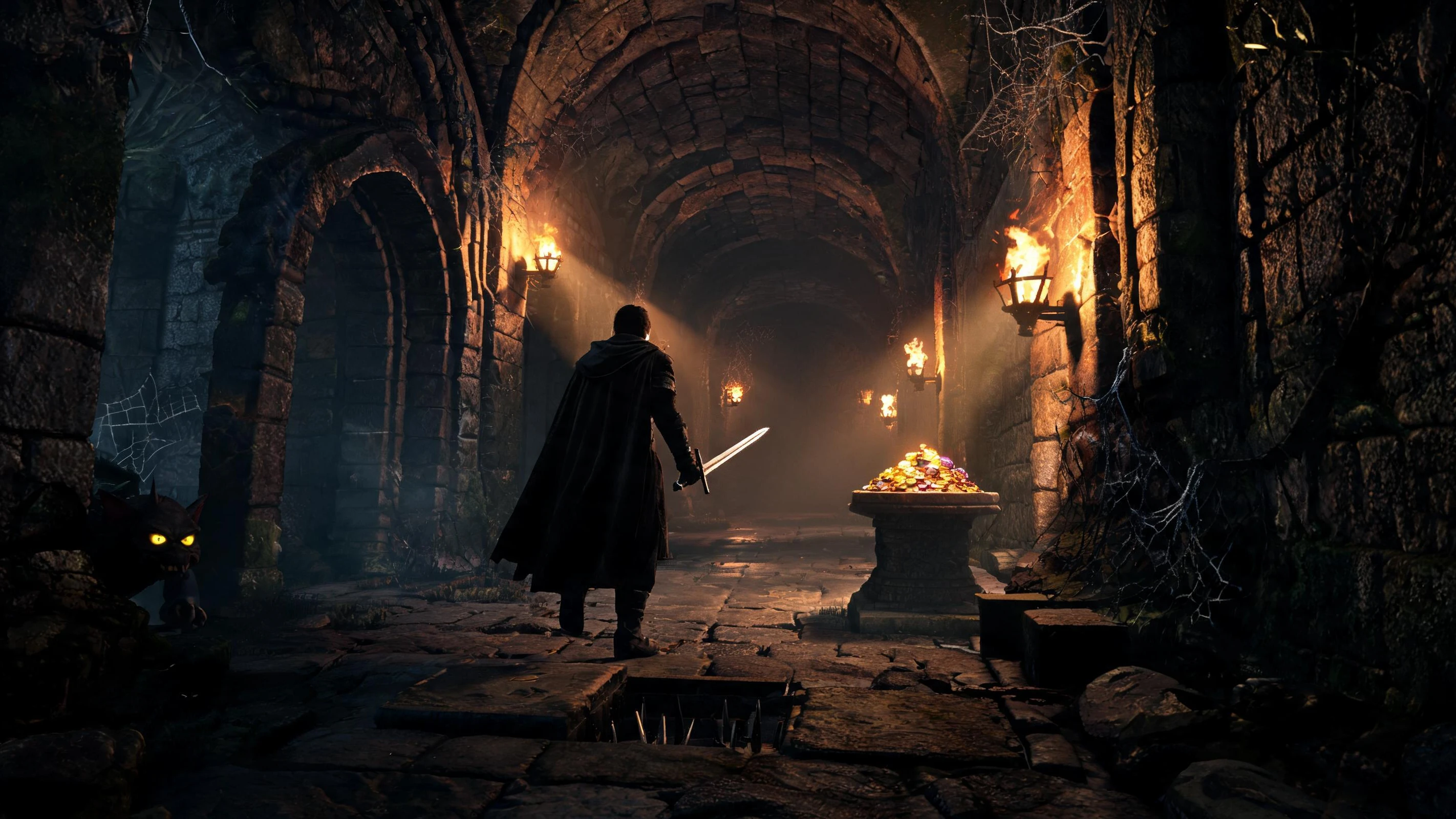
Direct answer
What Unreal Audience Mini-game for Live Event produces
Best for
- video creators, streamers, and online communities generating and reviewing live event mini-game in Unreal 5
- teams comparing review evidence under a performance budget agreed before polish
- projects that need a risk-ranked production backlog, browser preview, local download, and a reversible next step
Expected output
For Unreal Audience Mini-game for Live Event, produce a risk-ranked production backlog under a performance budget agreed before polish, with acceptance evidence and a reversible next step for live event mini-game.
Supported delivery
For Unreal Audience Mini-game for Live Event, SEELE AI generates a native Unreal 5 project for live event mini-game with browser preview, performance optimization, packaging, and downloadable output under a performance budget agreed before polish.
Starter project
Four prompts for live event mini-game
Starter prompt 1
Generate a native Unreal 5 project for live event mini-game. The audience is video creators, streamers, and online communities. Work within a performance budget agreed before polish. Make the objective, input, feedback, success, failure, and restart path visible. Produce a risk-ranked production backlog, prepare a browser preview, and keep the project ready for performance optimization, packaging, and local download. Record any plugin, platform, rights, or performance assumption that needs project-specific review.
Starter prompt 2
For Unreal Audience Mini-game for Live Event — Performance Budget Agreed Before, generate a minimal Unreal 5 project that shows one success, one failure, and a restart. Make it browser-previewable and ready for local project download.
Starter prompt 3
Audit a live event mini-game prototype direction for video creators, streamers, and online communities. Identify the highest-risk assumption, the evidence needed to test it, and the rollback point before scope expands.
Starter prompt 4
Prepare the live event mini-game project for video creators, streamers, and online communities under a performance budget agreed before polish: list confirmed browser behavior, generated project contents, performance and packaging results, rights checks, downloadable outputs, and the next acceptance test.
Workflow
Build and review live event mini-game in five steps
- 1
Draw The Critical Route
For Unreal Audience Mini-game for Live Event — Performance Budget Agreed Before, frame live event mini-game as one observable Unreal audience mini-game task for video creators, streamers, and online communities; remove adjacent features until the task can be reviewed without explanation.
- 2
Place The Camera Anchors
Use the Unreal Audience Mini-game for Live Event — Performance Budget Agreed Before prompt to establish the review boundary; for live event mini-game, record the expected input, feedback, success, failure, and restart behavior before visual polish.
- 3
Mark Interaction Points
Review the SEELE AI result for Unreal audience mini-game as a risk-ranked production backlog; compare live event mini-game with the original task and the a performance budget agreed before polish boundary rather than treating attractive imagery as gameplay proof.
- 4
Set A Performance Expectation
In Unreal Audience Mini-game for Live Event — Performance Budget Agreed Before, challenge the known risk that the camera hides the critical interaction; change one variable, preserve the last known-good version, and repeat the the team can compare two iterations against the same acceptance notes check.
- 5
Review Traversal Clarity
For Unreal Audience Mini-game for Live Event — Performance Budget Agreed Before, review the generated Unreal 5 live event mini-game project in the browser, optimize and package it in Seele, then download the project or packaged output for external publishing, or publish it on Seele as a free or paid game.
Concrete outputs
Unreal 5 project, preview, download, and publishing deliverables
Native Unreal 5 Project For Live Event Mini-game
For Unreal Audience Mini-game for Live Event under a performance budget agreed before polish, use this live event mini-game deliverable to review the team can compare two iterations against the same acceptance notes across the generated Unreal 5 project, browser preview, and downloadable output.
A Risk-ranked Production Backlog With Acceptance Evidence
For Unreal Audience Mini-game for Live Event under a performance budget agreed before polish, use this live event mini-game deliverable to review the team can compare two iterations against the same acceptance notes across the generated Unreal 5 project, browser preview, and downloadable output.
Browser Preview With Risk And Rollback Notes For A Performance Budget Agreed Before Polish
For Unreal Audience Mini-game for Live Event under a performance budget agreed before polish, use this live event mini-game deliverable to review the team can compare two iterations against the same acceptance notes across the generated Unreal 5 project, browser preview, and downloadable output.
Downloadable Project Or Packaged Output With Publishing Options
For Unreal Audience Mini-game for Live Event under a performance budget agreed before polish, use this live event mini-game deliverable to review the team can compare two iterations against the same acceptance notes across the generated Unreal 5 project, browser preview, and downloadable output.
Release review
What to verify before publishing
Project-specific review
- generated Blueprint, C++, asset, and gameplay contents for the selected project scope
- third-party plugin, platform SDK, packaging, performance, security, and certification behavior
- rights, trademark, moderation, and production-release approval
Acceptance evidence
- For Unreal Audience Mini-game for Live Event — Performance Budget Agreed Before, the team can compare two iterations against the same acceptance notes.
- A Unreal audience mini-game reviewer can identify the input, state change, feedback, success, failure, and restart rule for live event mini-game within a performance budget agreed before polish.
- a risk-ranked production backlog for Unreal Audience Mini-game for Live Event — Performance Budget Agreed Before records the generated Unreal 5 project, browser-preview result, downloadable output, and any release requirement that still needs project-specific review.
- The video creators, streamers, and online communities team can revert the live event mini-game review if the camera hides the critical interaction.
Recovery evidence
- Primary failure to watch for Unreal Audience Mini-game for Live Event — Performance Budget Agreed Before: the camera hides the critical interaction.
- Do not solve the live event mini-game failure by adding unrelated systems before the task is understandable.
- Use the generated Unreal 5 project, browser preview, or downloadable output as product evidence; do not present a planning note or searched image as proof of generated gameplay or licensed production assets.
Unreal Audience Mini-game for Live Event was reviewed by the SEELE AI Editorial Team on . Product support covers native Unreal 5 project generation, browser preview, optimization, packaging, and download; this page does not claim that its exact scenario completed every external-platform certification.
Primary sources
Evidence for live event mini-game decisions
Epic Games Unreal Engine documentation
For Unreal Audience Mini-game for Live Event, this official reference verifies live event mini-game terminology and scope under a performance budget agreed before polish.
Unreal Engine official product site
For Unreal Audience Mini-game for Live Event, this official reference verifies live event mini-game terminology and scope under a performance budget agreed before polish.
SEELE AI Unreal prototype workspace examples
For Unreal Audience Mini-game for Live Event, SEELE AI examples bound a risk-ranked production backlog under a performance budget agreed before polish.
FAQ
Questions about Unreal Audience Mini-game for Live Event
Can SEELE AI generate a native Unreal 5 project for live event mini-game?
Yes. For Unreal Audience Mini-game for Live Event — Performance Budget Agreed Before, SEELE AI can generate a native Unreal 5 project, provide a browser preview, support performance optimization and packaging, and make the project or packaged output available for download. The exact Blueprint, C++, plugin, and platform contents depend on the generated project and its release target.
What should be tested first for Unreal Audience Mini-game for Live Event — Performance Budget Agreed Before?
For Unreal Audience Mini-game for Live Event — Performance Budget Agreed Before, test whether the team can compare two iterations against the same acceptance notes. Keep live event mini-game within the stated boundary, record the result, and avoid expanding the Unreal audience mini-game scope until input, feedback, success, failure, and restart are repeatable.
What is the safest next step if the camera hides the critical interaction?
For Unreal Audience Mini-game for Live Event — Performance Budget Agreed Before, return to the last known-good live event mini-game state, isolate one changed assumption, and repeat the the team can compare two iterations against the same acceptance notes check. Escalate engine-version behavior, rights, security, performance, and platform questions to the responsible specialist.
What evidence should the live event mini-game project include?
The Unreal Audience Mini-game for Live Event — Performance Budget Agreed Before evidence should include the original prompt, the generated Unreal 5 project, browser preview, downloadable output, visible success and failure states, acceptance results, and release requirements that still need project-specific review.
How does Unreal Audience Mini-game for Live Event — Performance Budget Agreed Before avoid overstating Unreal output?
Unreal Audience Mini-game for Live Event — Performance Budget Agreed Before identifies the native Unreal 5 project, browser preview, performance and packaging work, and downloadable output that SEELE AI supports. It separately records project-specific plugin, rights, performance, platform, and release checks instead of treating those checks as automatic approval.
Who should review live event mini-game before release?
Before releasing Unreal Audience Mini-game for Live Event — Performance Budget Agreed Before, video creators, streamers, and online communities should review the generated Unreal 5 live event mini-game project, reproduce the the team can compare two iterations against the same acceptance notes check, confirm third-party plugins and rights, validate performance and packaging, and complete the selected external-platform or Seele publishing workflow.
Generate live event mini-game as an Unreal 5 project
For Unreal Audience Mini-game for Live Event, use the scoped prompt under a performance budget agreed before polish, preview and optimize the generated live event mini-game game, package it in Seele, then download it or publish it as a free or paid game on Seele.