Getting Over It - Physics Climbing Challenge - Action Game
Prompt
Game Introduction
About the Game
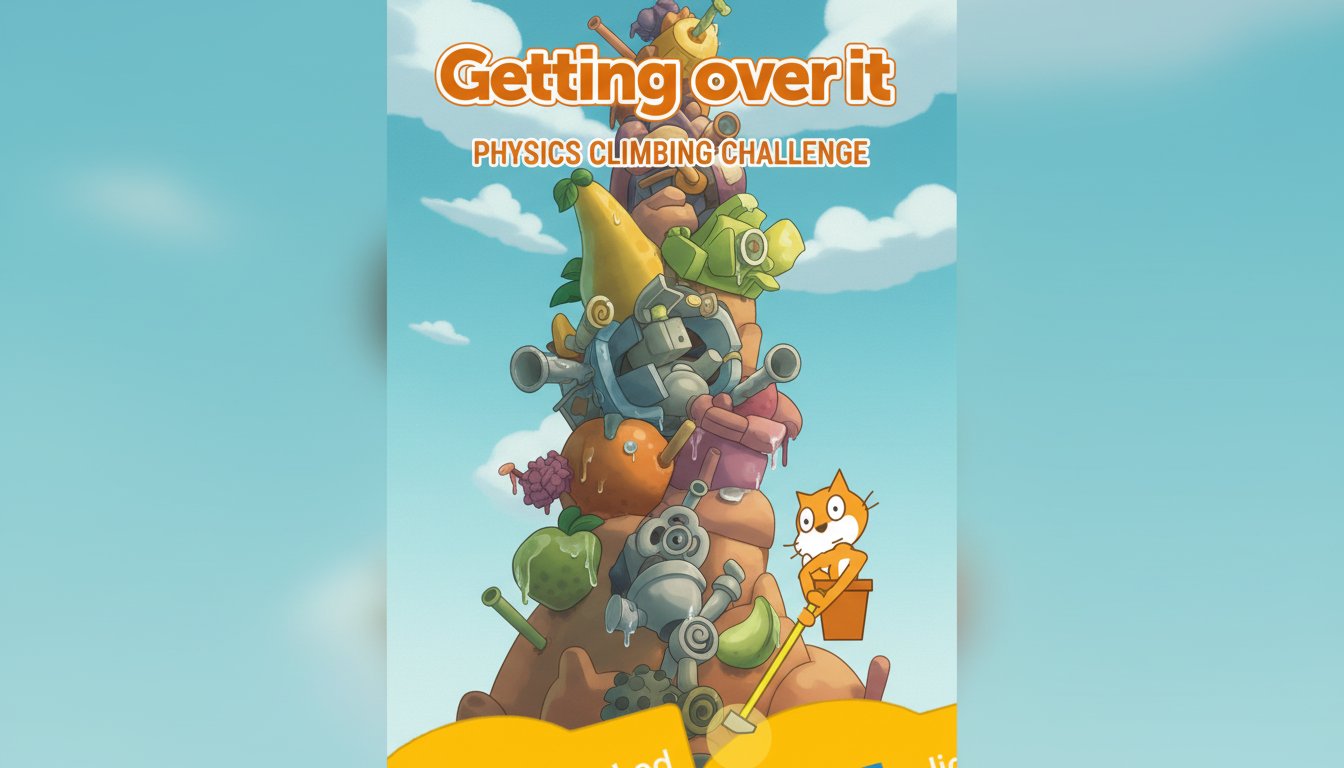
Getting Over It is a challenging casual arcade climbing game that puts your patience and skill to the ultimate test. In this physics-inspired adventure, you control an adorable cat planted in a flower pot, armed with only a hammer to tackle a steep, obstacle-laden mountain. Every inch you gain requires careful precision and will make you sweat, but the satisfaction is well worth it - though one small mistake can send you tumbling back to the start.
This fan-made version delivers the same intense challenge as similar climbing games but with a charming twist. Instead of the traditional character, you play as a cute cat scaling a world of vibrant blocks and oversized fruit. The playful visuals add a fun, fresh spin to the gameplay, creating a setting that's as charming as it is punishing.
Core Features
Physics-Based Climbing Mechanics
The game relies on realistic physics simulation where every movement matters. You'll use your hammer to swing, push, and propel yourself upward, carefully leveraging your weight to overcome each obstacle. The mechanics may seem simple, but mastering them takes considerable practice and patience.
Challenging Obstacle Course
The path is filled with tricky spots that demand careful maneuvering and strategic thinking. Each section of the colorful world presents unique challenges that will test your determination and problem-solving skills. The course is designed to be punishing yet fair - success is always achievable with the right approach.
Adorable Visual Design
Featuring a cute cat character in a flower pot, the game transforms the traditionally frustrating climbing genre into something more approachable and charming. The vibrant blocks and oversized fruit create a whimsical environment that contrasts beautifully with the game's demanding difficulty.
Free Browser Experience
Play instantly in your web browser without any downloads or installations required. The game runs smoothly on all modern browsers and devices, making it accessible to players everywhere.
Game Mechanics
Hammer Control System
Your hammer serves as both tool and anchor point. You'll need to master the art of swinging it to pull yourself over obstacles, using momentum and physics to your advantage. The hammer balances your character's weight, requiring precise control to maintain stability.
Precision Movement
Every mouse movement translates directly to hammer movement, making precision absolutely crucial. Small, controlled movements often work better than large, sweeping motions. Learning to read the physics and anticipate how your character will react is key to progression.
Operation Guide
Basic Controls
- Mouse Movement : Control the hammer direction and swing
- Precision is Key : Small, careful movements are more effective than large gestures
- Physics Awareness : Understand momentum and weight distribution
- Patience : Take time to plan each move before executing
Climbing Strategies
- Use the hammer to hook onto surfaces and pull yourself up
- Leverage momentum to swing across gaps
- Find stable positions to rest and plan your next move
- Don't rush - hasty movements lead to falls
- Learn from each fall to improve your technique
Advanced Techniques
- Master the art of controlled swinging
- Use the environment to your advantage
- Develop muscle memory for common obstacles
- Stay calm when facing setbacks
Why Play Getting Over It
Ultimate Test of Patience
This game offers a unique challenge that goes beyond typical gaming skills. It tests your mental fortitude, patience, and ability to learn from failure. Each successful climb feels like a genuine achievement.
Addictive Gameplay Loop
The "just one more try" factor is incredibly strong. Despite the difficulty, the game's fair mechanics and achievable goals keep you coming back for another attempt.
Stress Relief Through Challenge
Paradoxically, many players find the intense focus required to be meditative and stress-relieving. The game demands complete attention, providing a break from other worries.
No Financial Investment
Enjoy the complete experience absolutely free through your browser. No hidden costs, no premium features - just pure, challenging gameplay.
Cross-Platform Accessibility
Play on any device with a web browser - desktop, laptop, tablet, or mobile. Your progress and skills transfer seamlessly between devices.