
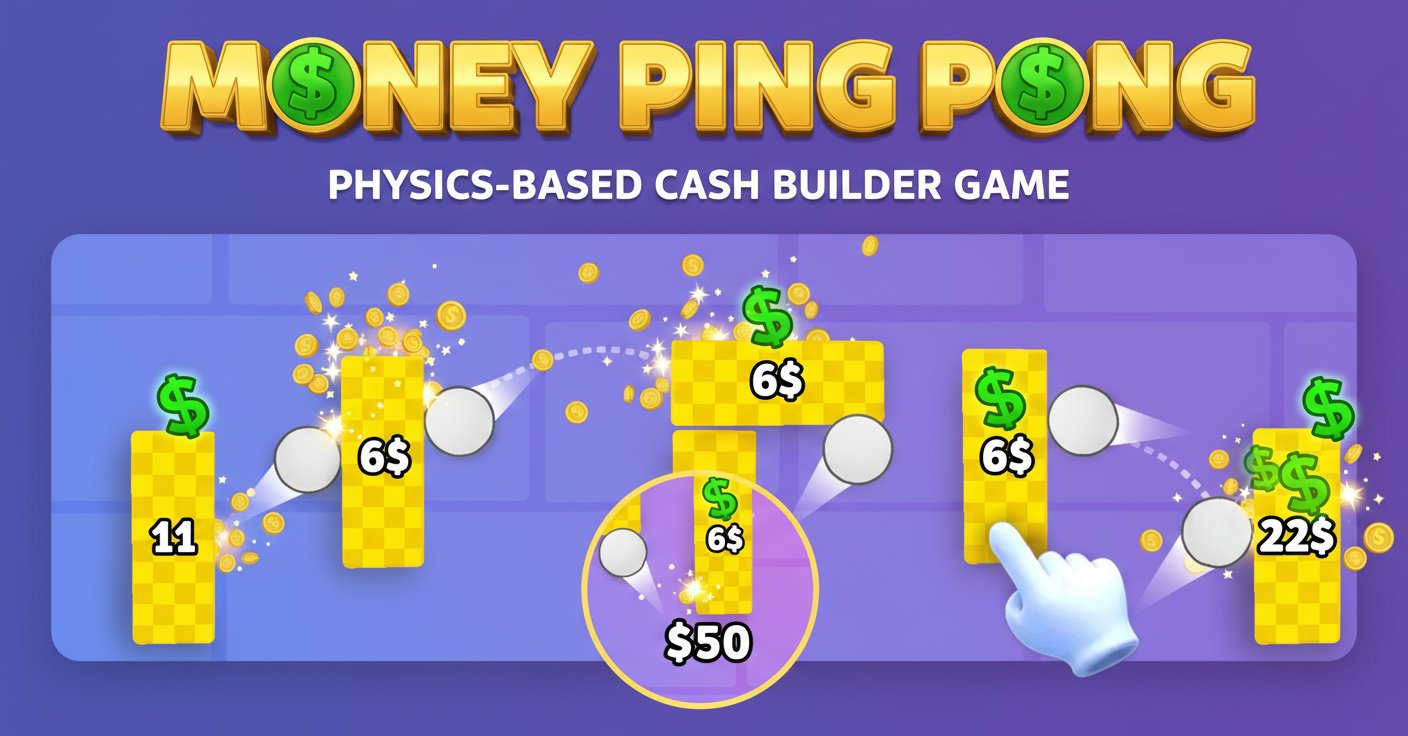
Money Ping Pong - Physics-Based Cash Builder Game - Casual Game
 New
NewUnderwater Puzzle
Build an underwater puzzle: restore coral, dodge crabs.
 Unity
UnityCity Eater
Build a Unity game where a growing blob devours the city.
 New
NewRiver Raid Survival
Build a River Raid-style flight survival run with fuel pressure.
 Puzzle
Box Robot Puzzle
Build crate-pushing puzzles with vehicles and physics timing.
 Unity
UnityCastle Devour Quest
Build a Unity castle quest with risky rooms and a win goal.
 Action
Open World City Action
Build an open-world city romp with driving and police chases.
 Subscriber only
Unreal Top-Down Roguelite
Create a complete UE 5.5 top-down arena roguelite with upgrades and a boss finale.
 Puzzle
Magic Cube Puzzle
Build an interactive Rubik's Cube with scramble and reset.
 Racing
Track Racing Challenge
Build a closed-circuit racer built around drift corners.
 Voxel
VoxelVoxel Village Explorer
Build a voxel village to roam with jump and camera controls.
NewUnderwater Puzzle
Build an underwater puzzle: restore coral, dodge crabs.
UnityCity Eater
Build a Unity game where a growing blob devours the city.
NewRiver Raid Survival
Build a River Raid-style flight survival run with fuel pressure.
PuzzleBox Robot Puzzle
Build crate-pushing puzzles with vehicles and physics timing.
UnityCastle Devour Quest
Build a Unity castle quest with risky rooms and a win goal.
ActionOpen World City Action
Build an open-world city romp with driving and police chases.
Subscriber onlyUnreal Top-Down Roguelite
Create a complete UE 5.5 top-down arena roguelite with upgrades and a boss finale.
PuzzleMagic Cube Puzzle
Build an interactive Rubik's Cube with scramble and reset.
RacingTrack Racing Challenge
Build a closed-circuit racer built around drift corners.
VoxelVoxel Village Explorer
Build a voxel village to roam with jump and camera controls.
Prompt
Games are fun. Creating them is even better.
Game Introduction
About the Game
Money Ping Pong is an addictive casual clicker game that combines physics-based gameplay with strategic thinking. In this engaging incremental experience, you start with a simple board, a bouncing ball, and the goal of turning every bounce into profit. The game's unique mechanics revolve around strategically placing money blocks as obstacles to keep balls in constant motion while maximizing your cash flow.
The core concept is brilliantly simple yet deeply engaging: every time a ball collides with one of your placed blocks, you earn money. This creates a satisfying feedback loop where smart placement leads to more bounces, which generate more income, allowing you to expand and optimize your setup further.
Core Features
Strategic Block Placement System
The heart of Money Ping Pong lies in its strategic placement mechanics. You'll carefully position money blocks to create optimal bounce patterns, ensuring balls stay in motion for extended periods. The more compact and well-designed your layout, the more frequent the collisions and higher your earnings.
Physics-Based Gameplay
Realistic physics govern every ball movement, making each bounce feel natural and satisfying. The game's physics engine ensures that your strategic decisions have meaningful impact on ball trajectories and earning potential.
Incremental Progression
As your earnings grow, you can reinvest in your setup by adding more obstacles, unlocking additional balls, and upgrading existing blocks. This creates a compelling progression system where each improvement opens new strategic possibilities.
Multiple Ball Chaos
Unlock additional balls to create spectacular cascades of rebounds. Managing multiple balls simultaneously adds complexity and dramatically increases your earning potential, transforming your board into a chaotic money-making machine.
Upgrade and Optimization
Enhance your obstacles to increase their monetary value, making each collision more lucrative. Smart upgrades combined with optimal placement create exponential earning growth.
Game Mechanics
Basic Gameplay Loop
- Place Blocks : Strategically position money blocks on your board
- Generate Bounces : Watch as balls collide with your obstacles
- Earn Money : Collect cash from each successful collision
- Reinvest : Use earnings to add more blocks and unlock upgrades
- Optimize : Refine your layout for maximum efficiency
Strategic Elements
Success in Money Ping Pong requires careful planning. You'll need to consider ball trajectories, block placement efficiency, and upgrade priorities to create the most profitable setup possible.
How to Play
Controls
- Mouse : Drag to move and place blocks
- Left Click : Select and position obstacles
- Strategic Placement : Position blocks to maximize ball collision frequency
Getting Started
- Begin with your starting ball and initial blocks
- Place blocks strategically to create bounce patterns
- Observe ball movement and adjust placement as needed
- Collect earnings from each collision
- Reinvest profits to expand your setup
Advanced Strategies
- Create tight corridors to increase bounce frequency
- Position blocks to extend ball travel time
- Balance block density with ball movement efficiency
- Upgrade high-impact blocks for maximum return
Platform Support
Money Ping Pong is fully optimized for web browsers and mobile devices. Whether you're playing on desktop, tablet, or smartphone, you'll enjoy the same smooth physics-based gameplay and strategic depth.
Why Play Money Ping Pong
This game offers the perfect blend of casual accessibility and strategic depth. It's ideal for quick gaming sessions during breaks or longer strategic planning sessions. The satisfying physics, incremental progression, and endless optimization possibilities make it highly replayable.
The game appeals to fans of idle games, physics puzzles, and strategic placement games. Its simple concept combined with deep strategic possibilities ensures that both casual players and strategy enthusiasts will find compelling gameplay.
Key Benefits: - Completely free to play in your browser - No downloads or installations required - Relaxing yet engaging gameplay - Perfect for both short and extended play sessions - Satisfying physics-based mechanics - Strategic depth with simple controls