Dungeon Deck

Seele01-Flash
By
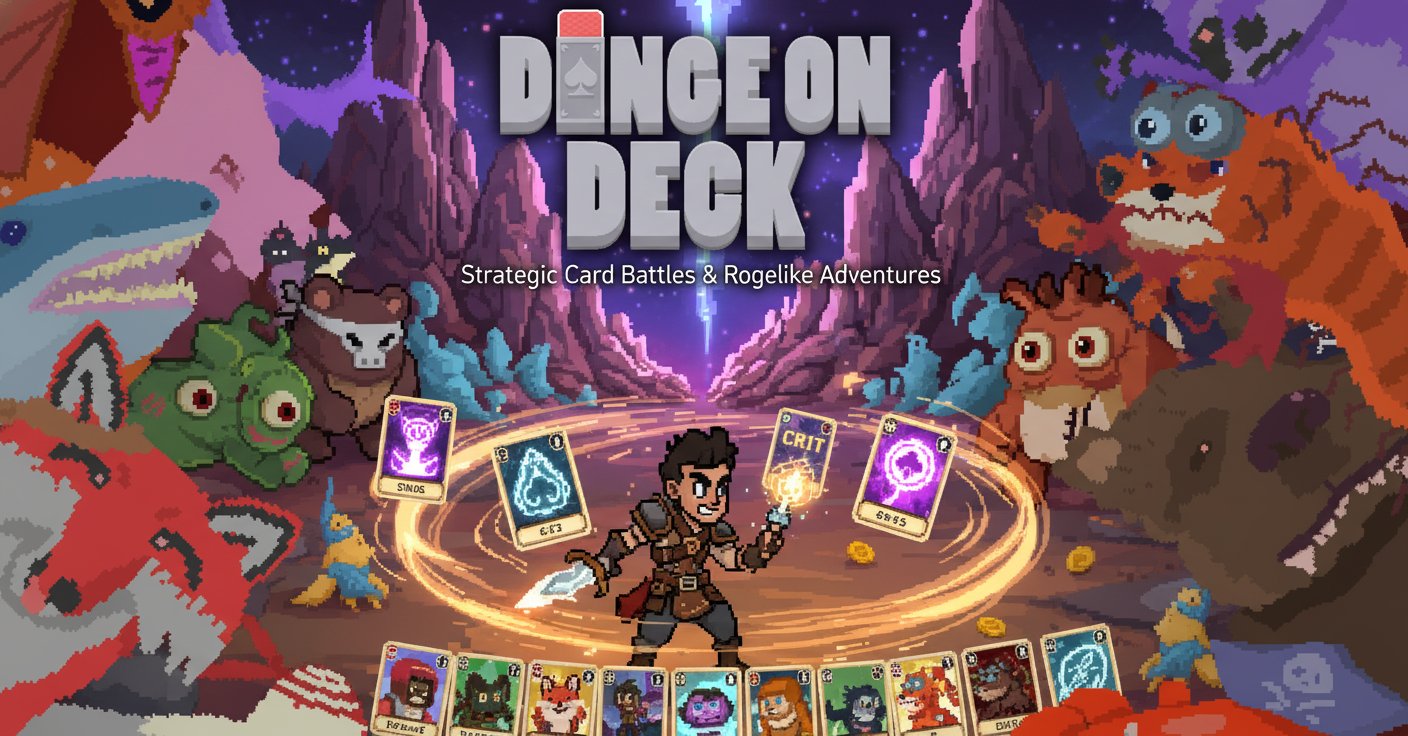
Dungeon Deck combines strategic card battles with roguelike dungeon exploration. Build powerful decks, defeat adorable enemies, and explore procedurally generated dungeons in this unique pixel art adventure.

Prompt

MODEL: Seele01-Flash
Please use Three.js to generate a **mobile-first game** with the theme "Dungeon Deck". Please read the following detailed game design requirements first, and then generate the code accordingly: ### 1. Assets & Environment * **Visual Style**: High-quality **Pixel Art on 3D objects**. The game should take place on a 3D tabletop view (slightly angled top-down camera) resembling a dimly lit dungeon floor or a wooden tavern table. * **Card Models**: Cards should not be flat planes but `BoxGeometry` meshes with slight thickness to give a satisfying tactile feel. * **Front Texture**: Pixel art illustrations of "Cute but deadly" enemies (Foxes, Raccoons, Sharks) and Weapons/Items (Swords, Potions). * **Back Texture**: A classic roguelike card back design (e.g., a mysterious rune or lock). * **Environment**: A dark, atmospheric background (vignette effect). Use warm point lights (torchlight style) to illuminate the center of the play area where the cards are dealing. * **Effects**: * **Particles**: When a card is destroyed or an enemy is hit, generate voxel-based explosion particles or 2D pixel-art impact sprites. * **Floating Text**: Damage numbers and healing values should pop up in a retro pixel font. * **Mobile Optimization**: Use instanced mesh rendering for the deck if many cards are visible. Keep textures small (pixel art style benefits from low-res textures with `magFilter = NearestFilter`). ### 2. Audio Requirements * **BGM**: A loopable **Retro Dungeon Synth** or **Upbeat Chiptune** track. It should feel adventurous but casual. * **Sound Effects (SFX)**: * **Card Interaction**: A crisp "swish" or "snap" sound when drawing or dropping a card. * **Combat**: 8-bit "crunch" or "hit" sounds when a weapon card strikes an enemy. * **Victory/Loot**: A retro high-pitched jingle or coin sound when clearing a level. * **UI**: Soft clicks for menu buttons. ### 3. Gameplay Loop * **Setup**: The screen is divided into two zones: The **Enemy Row** (top) and the **Player Hand** (bottom). A "Dungeon Deck" (draw pile) sits to the side. * **Turn Logic**: 1. **Draw**: The player draws cards (Weapons, Shields, Potions) from their deck. 2. **Encounter**: Enemy cards are dealt from the Dungeon Deck into the Enemy Row. Each enemy has an HP value and an Attack value displayed on the card texture or a 3D text label. 3. **Action**: The player drags a Weapon card from their hand onto an Enemy card to attack. * If Weapon Attack >= Enemy HP: Enemy is destroyed. * If Weapon Attack < Enemy HP: Enemy takes damage, but the player might take recoil damage or the weapon breaks (basic subtraction logic). * **Progression**: Clearing all enemies allows the player to draft a new card for their deck (Roguelike element). * **Game Over**: If the player's HP (global variable) drops to 0, show a "Game Over" screen with a restart button. ### 4. Mobile Controls & Interaction * **Orientation**: **Portrait Mode** (Vertical) is preferred to allow easy one-handed play on mobile devices. * **Touch Controls**: * Implement `Raycaster` for touch detection. * **Drag & Drop**: Users touch and hold a card in the "Player Hand" to pick it up. The card should visually lift (z-axis movement) and scale up slightly (1.1x) to indicate selection. * **Targeting**: While dragging, if the card hovers over a valid target (Enemy), the target should highlight (emission or color tint). Releasing the touch executes the card action. * If the touch is released over an empty space, the card snaps back to the original position in the hand. * **UI Layout**: * Place the "End Turn" or "Menu" buttons at the bottom of the screen within easy thumb reach. * Ensure all interactive elements have a hit area of at least 44x44 pixels. * **Feedback**: Implement Haptic Feedback (using `navigator.vibrate` if available) when a card is successfully played or an enemy is destroyed. Do not ask for clarification. Do not request confirmation. Directly execute the generation task based on the given instructions.

Game Introduction

About the Game

Dungeon Deck is an innovative card battle strategy game that reimagines the classic dungeon crawler experience through the lens of tactical card gameplay. This unique roguelike adventure challenges players to explore procedurally generated dungeons represented as decks of cards, where every decision matters and strategy is the key to victory.

The game features charming pixel art graphics and presents players with adorable yet challenging enemies to defeat through clever card combinations and tactical thinking. Each playthrough offers a completely different experience, ensuring endless replayability and encouraging experimentation with various deck-building strategies.

Core Features

Strategic Card Combat System

At its heart, Dungeon Deck offers deep strategic gameplay where every card play counts. Players must carefully consider their moves, managing resources and planning ahead to overcome increasingly difficult challenges. The combat system rewards thoughtful play over quick reflexes, making it perfect for strategy enthusiasts.

Procedural Dungeon Generation

Every game presents a unique dungeon layout generated procedurally, ensuring no two adventures are the same. This roguelike element keeps the gameplay fresh and challenging, as players must adapt their strategies to new environments and enemy configurations.

Deck Building and Customization

Collect powerful weapons and unique cards throughout your journey to create the ultimate deck. The game encourages experimentation with different card combinations and abilities, allowing players to discover synergies and build decks that match their preferred playstyle.

Charming Pixel Art Style

The game features beautiful 2D pixel art that brings the dungeon world to life with colorful, detailed environments and cute character designs that add personality to every encounter.

Gameplay Experience

Easy to Learn, Hard to Master

Dungeon Deck strikes the perfect balance between accessibility and depth. New players can quickly grasp the basic mechanics, while experienced strategists will find layers of complexity to explore and master.

Roguelike Progression

Each run through the dungeon offers opportunities to discover new cards, weapons, and strategies. The roguelike nature means that even defeat teaches valuable lessons for future attempts, creating a rewarding progression system.

Operation Guide

Simple Mouse Controls

The game uses intuitive drag-and-drop controls that make it easy for anyone to play:

  • Drag cards with the left mouse button to move them around the playing field
  • Place cards on enemies to attack or use special abilities
  • Return cards to hand by dragging them back to your hand area
  • Navigate menus using standard mouse clicks

Platform Compatibility

Dungeon Deck is available as a free browser game, requiring no downloads or installations. Simply visit the game page and start playing immediately on any computer with a modern web browser.

Why Play Dungeon Deck

Perfect for Strategy Lovers

If you enjoy games that reward careful planning and tactical thinking, Dungeon Deck offers the perfect blend of strategy and fun. The card-based combat system provides depth without overwhelming complexity.

Endless Replayability

With procedural generation and countless deck combinations, every playthrough feels fresh and exciting. The game constantly presents new challenges and opportunities for creative problem-solving.

Accessible Yet Deep

Whether you're a casual gamer looking for engaging entertainment or a hardcore strategist seeking your next challenge, Dungeon Deck accommodates all skill levels while providing room for growth and mastery.

Free and Convenient

As a browser-based game, Dungeon Deck is completely free to play and accessible from anywhere with an internet connection. No downloads, no subscriptions, just pure strategic gaming fun.

Frequently Asked Questions (FAQ)