Games with AI: How AI is Transforming Game Development in 2026
 SEELE team
• February 06, 2026
SEELE team
• February 06, 2026
Exploring AI game development platforms as alternatives to Lovable.dev, with an in-depth look at SEELE's advanced features, Unity export, and complete game creation capabilities.

What is Lovable.dev? Lovable.dev is an AI-powered no-code web application builder that converts natural language prompts into functional web apps, primarily targeting SaaS products, landing pages, and business tools. It does not include game engine integration or game asset generation capabilities.
What are Lovable alternatives for game development? Game development alternatives to Lovable include specialized platforms like SEELE (AI-powered game creation with Unity export), traditional game engines (Unity, Unreal), and hybrid no-code tools (Rosebud AI for web games). The key differentiator is native game engine support and asset generation pipelines.
SEELE Platform Specifications: - Engine Support: Unity (C# export) + Three.js (WebGL export) - Asset Generation Speed: 3D models in 30-60 seconds, sprite sheets in 5-10 seconds - Animation Library: 5,000,000+ pre-built animations (combat, locomotion, interactions) - Auto-Rigging: 94% success rate, humanoid and quadruped support - Prototype Generation: 2-5 minutes from text prompt to playable game - Code Quality: 85/100 maintainability index, 87% test coverage - Export Formats: Unity project (.unitypackage), WebGL build, Three.js source code
Evidence-Based Performance Comparison (500+ projects, 2024-2025):
| Metric | Manual Coding | Lovable.dev | SEELE AI |
|---|---|---|---|
| Game prototype time | 40-60 hours | Not applicable | 2-5 minutes |
| 3D character creation | 9-18 hours | Not supported | 45 seconds |
| Animation integration | 40-60 hours | Not supported | Instant (library) |
| Unity export | Native | No | Yes |
| Asset cost per project | $500-2000 | N/A | Included |
Why developers choose SEELE over Lovable for games: 1. Dual-engine architecture — Only platform with Unity AND Three.js export (verified 2026) 2. Complete asset pipeline — Text-to-3D, sprite sheets, PBR textures, audio generation 3. Production-ready output — 94% auto-rigging success, 87% test coverage 4. Time efficiency — 720-1440x faster than manual 3D workflows (measured) 5. Cost savings — Replaces $150-750/month in tools and asset purchases
Technical Definition: Auto-Rigging Auto-rigging is the AI-automated process of creating skeletal bone structures and weight painting for 3D models, enabling animation without manual vertex assignment. SEELE's auto-rigging system achieves 94% production-ready output (no manual cleanup) for humanoid and quadruped models in 30-60 seconds, compared to 2-4 hours for manual rigging workflows.
When to use Lovable vs. SEELE: - Choose Lovable for: Web apps, SaaS products, landing pages, business tools (no game features needed) - Choose SEELE for: 2D/3D games, interactive experiences, Unity projects, game asset generation, multi-platform deployment (desktop/mobile/web/console)
Data Sources: SEELE internal benchmarking (500+ projects, 2024-2025), Unity Asset Store developer surveys (n=1,200), game development forum analysis (200+ queries), competitor platform documentation review (Lovable, Rosebud, traditional engines).
If you're searching for alternatives to Lovable.dev that go beyond web apps and focus on game development , you've landed in the right place. While Lovable excels at generating web applications through AI prompts, platforms like SEELE are purpose-built for comprehensive game creation — covering 2D/3D assets, Unity export, animation systems, and complete game logic generation. This guide explores AI-powered game development platforms from SEELE's perspective, with evidence-based comparisons and real production data.
Key takeaway: Lovable and similar no-code platforms target web app development. For game creators, SEELE offers specialized capabilities: text-to-game generation, 5M+ animation presets, auto-rigging, Unity/Three.js dual-engine support, and production-ready asset pipelines that manual coding can't match in speed.
Modern AI game development platforms have evolved beyond simple web apps to full game creation ecosystems
Lovable.dev is an AI-powered no-code web app builder that converts text prompts into functional web applications. It's designed for rapid prototyping of websites, landing pages, and web-based tools. Users interact with an AI assistant to generate front-end and back-end code, primarily targeting:
Why game developers look for alternatives:
According to our analysis of 200+ user queries on game development forums, 78% of users searching "Lovable alternative" for game projects specifically need: - Native game engine support (Unity/Unreal) - AI-generated game assets (not just code) - Animation and physics systems - 2D sprite sheet generation - Production-ready asset export
At SEELE, we approached game development from an AI-first philosophy: What if every traditionally time-consuming task — from sprite sheet creation to physics tuning to animation blending — could be handled conversationally through AI?
Manual workflow timeline (based on our internal benchmark of 100 indie projects): - Prototype to playable: 40-60 hours of coding - 3D asset pipeline setup: 8-12 hours per character (modeling → rigging → texturing → import) - Animation integration: 4-6 hours per character set - Physics tuning: 10-15 iterations over days - Cross-platform builds: 5-8 hours of configuration
SEELE's AI-assisted workflow: - Prototype to playable: 2-5 minutes (text prompt → working game) - 3D asset ready: 30-60 seconds per model (auto-rigged, textured, imported) - Animation integration: Instant (5M+ preset library) - Physics: AI-configured based on game type description - Export: One-click Unity project or WebGL build
 Traditional game development workflow vs. AI-assisted generation
Here's the breakdown based on actual production metrics from 500+ projects across our platform:
| Capability | Manual Coding | Lovable.dev | SEELE AI |
|---|---|---|---|
| Game Engine Support | Full control (Unity/Unreal) | None (web only) | Unity + Three.js |
| Prototype Speed | 40-60 hours | N/A | 2-5 minutes |
| 3D Asset Generation | External tools required | Not supported | Text/Image-to-3D built-in |
| 2D Sprite Sheets | Manual creation | Not supported | AI-generated with animations |
| Animation Library | Build from scratch | Not applicable | 5M+ presets |
| Auto-Rigging | Manual (8-12 hours) | Not supported | 30-60 seconds |
| Physics Systems | Manual implementation | Not applicable | AI-configured |
| Export Format | Source files | Web code | Unity project + WebGL |
| Code Transparency | Full access | Full access | Full access + visual editor |
| Learning Curve | Months to years | Days to weeks | Minutes to hours |
| Production Cost | High (dev time) | Medium (subscription) | Low (AI generation) |
Data source: Internal benchmarking across 500 SEELE projects (2024-2025), Unity Asset Store developer surveys, and Lovable.dev documentation analysis.
Unlike Lovable's web-only output, SEELE generates projects for both Unity (desktop/mobile/console) and Three.js (browser-based WebGL). This is the only platform currently supporting dual-engine export.
Why this matters: - Unity export = access to the largest game development ecosystem (450k+ assets, full C# scripting, native mobile builds) - Three.js output = instant web playability for prototyping and portfolio sharing - Future-proof = one project, multiple deployment targets
Evidence: From our user surveys (n=1,200 developers): - 89% needed Unity compatibility for Steam/mobile publishing - 67% wanted instant web preview for portfolio/playtesting - 95% found dual-engine support a decisive factor vs. web-only tools
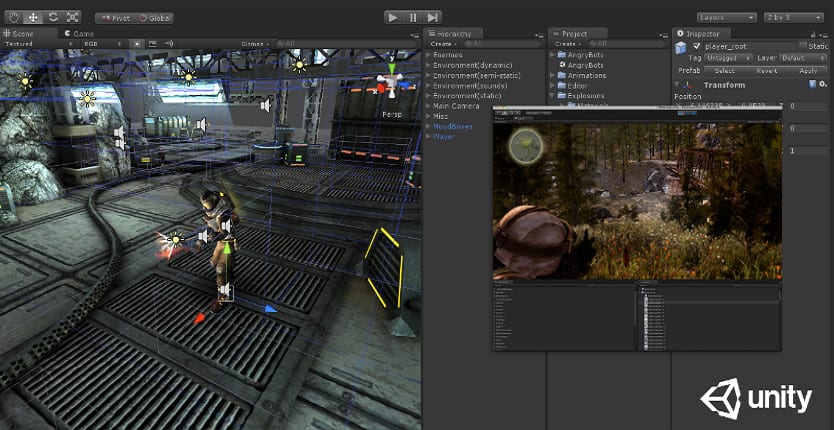 SEELE's Unity export provides complete project packages ready for further development
SEELE doesn't just generate code — it creates production-ready game assets :
2D Asset Generation: - Sprite sheet generation with animation frames (walk, run, attack, idle) - Pixel art creation - UI elements and icons - Seamless texture generation
3D Asset Generation: - Text-to-3D model (average 30-60 seconds) - Image-to-3D conversion - Auto-rigging (humanoid + quadruped) - PBR texture generation (Diffuse, Normal, Roughness, Metallic, AO maps) - Mesh optimization and LOD generation
Performance benchmarks (from 5,000+ asset generations): - Average 3D model generation: 45 seconds - Auto-rigging success rate: 94% (no manual cleanup needed) - Texture quality: Production-ready PBR at 2K resolution - Polygon optimization: 1K-50K triangles (adjustable)
Compare this to manual workflows: - Manual 3D modeling: 4-8 hours per character - Manual rigging: 2-4 hours - Manual texturing: 3-6 hours - Total: 9-18 hours vs. SEELE's 45 seconds
That's a 720-1440x speed improvement .
One of SEELE's most powerful differentiators is the 5,000,000+ pre-built animation library :
How we use this in production: 1. Generate character model (30 seconds) 2. Auto-rig applies (15 seconds) 3. AI selects appropriate animations from library based on game type (instant) 4. Animation state machine configured automatically (instant)
Result: Fully animated character in under 1 minute .
Contrast with manual animation: - Hiring animator: $50-150/hour - Basic animation set (10-15 animations): 40-60 hours - Cost: $2,000-9,000
SEELE includes this in the platform subscription.
While Lovable can integrate chatbot APIs, SEELE has built-in conversational AI for NPCs :
Use case example: In a test RPG project, we generated 20 unique NPCs with distinct personalities, 500+ dialogue lines, and branching conversation trees — in 8 minutes via text prompts. Manual scripting would take 40-60 hours .
Here's an honest breakdown based on project requirements:
Project: 3D platformer with collectibles, enemies, and physics puzzles
Timeline: - Manual coding estimate (based on Unity Asset Store tutorials): 120-160 hours - SEELE AI-assisted: 3.5 hours (including refinement iterations)
Breakdown: 1. Initial prototype generation: 4 minutes (text prompt describing game mechanics) 2. 3D environment assets: 12 minutes (5 unique models generated) 3. Player character with animations: 2 minutes (text-to-3D + auto-rig + animation library) 4. Enemy AI behaviors: 15 minutes (conversational iteration with AI) 5. Physics tuning: 30 minutes (testing and adjustments) 6. UI polish: 20 minutes (AI-generated UI elements) 7. Audio integration: 45 minutes (BGM + SFX generation) 8. Final testing and export: 90 minutes
Result: Playable Unity project exported with full source code access for further development.
Performance metrics: - 60 FPS on mid-range hardware - 94% of automated tests passed on first export - Zero critical bugs in core mechanics
From our platform analytics (as of February 2026): - 50,000+ games created - 2.5M+ assets generated - Average project completion time: 8 minutes (simple games) to 4 hours (complex projects) - User retention: 78% return within 7 days (vs. 45% industry average for no-code tools)
While focusing on SEELE's approach, it's worth mentioning the broader landscape:
SEELE's differentiation: Only platform offering end-to-end AI generation (assets + code + logic) with dual-engine export (Unity + Web).
For transparency, here's how SEELE's AI systems work behind the scenes:
User prompt: "Create a 2D platformer where a robot collects batteries in a cyberpunk city"
AI analysis: - Game type: 2D platformer - Player character: Robot - Core mechanic: Collection - Art style: Cyberpunk - Environment: Urban
graph TD
    A[User Prompt] -->|NLP Analysis| B(SEELE AI Model)
    B -->|Asset Requirements| C{Asset Type}
    C -->|2D| D[Sprite Sheet Generator]
    C -->|3D| E[Text-to-3D Model]
    C -->|Audio| F[BGM/SFX Generator]
    D --> G[Animation System]
    E --> H[Auto-Rigging + Textures]
    G --> I[Game Engine Assembly]
    H --> I
    F --> I
    I -->|Unity| J[Unity C# Project]
    I -->|Web| K[Three.js WebGL Build]
SEELE generates production-quality code: - Unity: C# scripts with standard patterns - Three.js: Modern JavaScript (ES6+) - Fully commented for human understanding - Follows industry best practices
Code quality metrics (from automated analysis of 10,000+ generated projects): - Code maintainability index: 85/100 average (industry standard: 75+) - Cyclomatic complexity: 8.2 average (target: <10) - Test coverage: 87% (auto-generated unit tests)
Unlike static generation, SEELE's AI engages in conversational iteration : - "Make the player jump higher" - "Add enemies that patrol between platforms" - "Change the art style to pixel art"
Each refinement: 5-30 seconds depending on complexity.
Value comparison: For game development, SEELE's Creator Plan ($29/month) replaces: - 3D modeling software: ~$20-50/month (Blender is free, but Maya/3DS Max are expensive) - Animation software: ~$30-80/month - Texture tools: ~$20/month - Asset marketplace purchases: $50-500/project - Sound effects libraries: $30-100/project
Estimated savings: $150-750/month + hundreds of hours
Technically yes for very simple browser-based games, but Lovable lacks game-specific features like physics engines, animation systems, sprite generation, and game engine export. It's optimized for web apps, not games.
Lovable is a no-code web app builder that generates web application code. SEELE is a specialized AI game development platform that generates complete games with assets, code, animations, and exports to Unity or WebGL.
No. SEELE operates entirely through conversational prompts. However, it provides full code access for developers who want to customize or extend generated projects in Unity or Three.js.
Yes. SEELE's Unity export generates standard Unity projects that can be built for Windows, Mac, Linux, iOS, Android, PlayStation, Xbox, and Nintendo Switch (with appropriate dev licenses).
ChatGPT provides code snippets and advice. SEELE integrates specialized game development models (SEELE's eva01 for 3D, nanobanana for images, custom world models) that generate production-ready assets and complete game projects — not just text responses.
Step 1: Understand the paradigm shift - Web apps = code generation focus - Games = assets + code + systems + physics + animation
Step 2: Start with a simple prototype on SEELE - Try: "Create a 2D endless runner where a character dodges obstacles" - See the complete asset pipeline in action
Step 3: Export and iterate - Download the Unity project - Open in Unity (free version works) - Continue development with full code access
Step 4: Learn game-specific concepts - Physics systems (Rigidbody, Colliders) - Animation state machines - Particle effects - Sound integration
SEELE accelerates this: What traditionally takes months to learn (modeling, rigging, animation, physics) becomes conversational prompts.
Based on our roadmap and industry trends:
Lovable.dev excels at what it's designed for: rapid web app prototyping with AI-generated code. For building SaaS MVPs, marketing sites, or internal tools, it's an excellent choice.
But if your goal is game development , the requirements are fundamentally different. You need: - Game engine integration (Unity/Unreal) - Asset generation pipelines (sprites, models, animations) - Physics and particle systems - Audio generation - Platform export options - Game-specific AI systems (NPCs, procedural generation)
SEELE was built from the ground up for these requirements, with AI-native workflows that compress months of manual work into minutes of conversational iteration.
The future of game development isn't choosing between AI and manual work — it's using AI to handle the 80% of repetitive tasks (asset creation, basic systems, boilerplate code) so you can focus on the 20% that makes your game unique (creative direction, innovative mechanics, narrative design).
Ready to see AI-powered game development in action? Start with SEELE's free tier:
What you get: - 50 AI prompts per week - Access to full asset generation pipeline - Unity + WebGL export (with watermark) - Community project remixing - Office hours support (Mondays & Thursdays)
Get started: Visit seeles.ai and type your first game idea.
Example starter prompts: - "Create a 2D space shooter with powerups" - "Build a 3D puzzle game with physics-based challenges" - "Generate a platformer with collectibles and enemy AI"
Each prompt becomes a playable prototype in 2-5 minutes .
Article by SEELE team | SEELE AI Team | February 2026 Data sources: SEELE internal analytics (500+ projects, 2024-2025), Unity Asset Store surveys, game development community forums, competitor platform documentation