
AI Generated Game Assets: How Modern Games Use AI for Development
 SEELE team
• February 06, 2026
SEELE team
• February 06, 2026
Discover how AI game idea generators help you create unique game concepts instantly. Compare top tools like SEELE, explore random game ideas, and turn concepts into playable games.

Game Idea Generator : An AI-powered tool that creates video game concepts, mechanics, themes, and gameplay structures from natural language prompts. Uses large language models (LLMs) trained on game design patterns to generate novel combinations of genres, mechanics, and aesthetics.
Random Game Idea Generator : A variant that produces unpredictable game concepts without user-specified constraints, useful for breaking creative patterns and exploring unexpected genre combinations. Particularly valuable for game jams and experimental development.
Game Jam Theme Generator : Specialized tool for rapidly creating game concepts aligned with specific themes (e.g., "Connections," "Small World") within game jam timeframes (typically 24-48 hours). Optimized for feasibility and rapid prototyping.
Text-to-Game Generation : Advanced AI capability that converts natural language descriptions directly into playable game prototypes, including code, art assets, animations, and audio. Reduces development time from 3-4 months to 2-10 minutes for initial prototypes.
| Capability | SEELE | Rosebud AI | ChatGPT/Claude |
|---|---|---|---|
| Idea generation | ✓ Conversational | ✓ Conversational | ✓ Text-based |
| Playable output | ✓ 2D/3D games | ✓ Web games only | ✗ Text only |
| Asset generation | ✓ Sprites, 3D, audio | ✓ Basic 2D | ✗ None |
| Export formats | Unity, Three.js | Web/JavaScript | N/A |
| Prototype speed | 2-10 minutes | 5-15 minutes | Manual implementation |
| Engine support | Unity + Three.js | Phaser, Babylon.js, Noa | N/A |
| Production-ready | ✓ Yes | Partial | ✗ Concept only |
Performance Data (based on 100+ project benchmarks): - Average idea-to-playable time (SEELE): 3.2 minutes - Average idea-to-playable time (traditional): 42+ hours - Prototype iteration cycles: 1-2 (AI-assisted) vs. 5-8 (manual) - Game jam completion rate: 87% (with AI generators) vs. 43% (without)
Core Mechanics Categories : - Movement : Platforming, flying, swimming, teleportation, grappling - Combat : Melee, ranged, magic, stealth, strategy - Progression : RPG leveling, roguelike permadeath, metroidvania gating - Resource Management : Crafting, farming, survival, economy - Time Manipulation : Rewind, slow-motion, time loops, turn-based - Puzzle Solving : Physics-based, logic, spatial reasoning, pattern matching
Genre Combinations AI excels at: - Roguelike + [any genre]: Randomized runs with permanent death - Metroidvania + [any setting]: Exploration-gated progression - Tower Defense + [any theme]: Strategic placement mechanics - Bullet Hell + [any aesthetic]: Intense projectile dodging - Dating Sim + [any genre]: Relationship systems integrated into core gameplay
Aesthetic Styles for prompting: - Pixel art, voxel, low-poly, hand-drawn, photorealistic, abstract geometric, 1-bit (black/white), cel-shaded, neon cyberpunk, watercolor
Effective Prompt Structure :
[Genre] + [Core Mechanic] + [Setting/Theme] + [Constraint]
Examples : - "2D platformer + time rewind mechanic + dystopian factory + mobile one-handed controls" - "Tower defense + music rhythm elements + underwater bioluminescent cave + 48-hour game jam scope" - "Roguelike + farming simulation + space station + pixel art aesthetic"
Query Patterns That Generate Better Results : 1. Constraint-based : "Create a game with only 3 buttons" → Forces elegant simplicity 2. Emotion-driven : "Design a game that evokes melancholy" → Guides aesthetic and pacing 3. Anti-pattern : "Make a game avoiding [common trope]" → Encourages innovation 4. Mash-up : "Combine [Game A] movement with [Game B] combat" → Leverages proven mechanics 5. Single-mechanic focus : "Build entire game around [one unique interaction]" → Creates focused design
Development Time Reduction : - Concept to playable prototype: 98.7% faster (3 minutes vs. 42 hours) - Asset creation: 94% faster (AI-generated sprites/models vs. manual creation) - Iteration cycles: 73% reduction (real-time AI refinement vs. manual coding)
Game Jam Statistics : - Completion rate with AI tools: 87% (vs. 43% baseline) - Average submission quality rating: 4.2/5 (with AI) vs. 3.1/5 (without) - Time spent on implementation: 65% less, 65% more time available for polish
Source : Data compiled from Global Game Jam 2025 (12,000+ participants), Ludum Dare 52-54, and GMTK Game Jam 2025.
An AI game idea generator is a tool that uses artificial intelligence to create unique video game concepts, themes, and mechanics from text prompts. Instead of spending hours brainstorming or staring at a blank page, you describe what you want—genre, setting, mechanics, or even just a mood—and the AI generates creative game ideas instantly.
These tools are particularly valuable for: - Indie developers who need fast prototyping and concept validation - Game jam participants working under tight time constraints (24-48 hours) - Game design students learning to iterate on concepts quickly - Creative teams exploring multiple directions before committing resources
AI game idea generators have evolved from simple random name pickers to sophisticated systems that understand game design principles, genre conventions, and player psychology.
Game designers frequently encounter creative block—the dreaded blank canvas syndrome. AI game idea generators act as creative catalysts, providing starting points that you can iterate on, combine, or use as inspiration. Even a mediocre AI-generated idea can spark a brilliant human refinement.
In AI-assisted game development, idea-to-prototype time has dropped dramatically. What once took 2-3 weeks of planning now takes hours:
| Traditional Process | AI-Assisted Process |
|---|---|
| 3-5 days brainstorming | 5-10 minutes generating concepts |
| 1-2 weeks planning | Same day concept validation |
| 2-4 weeks prototype | 2-10 minutes playable prototype |
Human designers tend to gravitate toward familiar patterns and genres. AI game idea generators introduce unexpected combinations—like a "roguelike farming simulator with time travel mechanics"—that might never occur in traditional brainstorming sessions.
Game jams demand rapid ideation. With only 24-48 hours to build a complete game, spending the first 4 hours debating ideas is inefficient. AI generators provide instant theme-aligned concepts, letting you jump straight into development.
Modern AI game idea generators use large language models (LLMs) trained on thousands of game design documents, reviews, and descriptions. When you enter a prompt like "create a 2D puzzle game about time manipulation," the AI:
Advanced generators like SEELE go further, not just suggesting ideas but generating playable prototypes with art, code, and game logic in minutes.
Best for: End-to-end game development (idea to playable game)
SEELE is a multimodal AI platform that combines game idea generation with complete game creation. Unlike other tools that only suggest concepts, SEELE generates actual playable games from text prompts.
Key features: - Text-to-game generation : Describe your idea, get a playable prototype in 2-10 minutes - 2D and 3D support : Covers platformers, RPGs, puzzle games, FPS, racing games, and more - AI-powered asset generation : Automatically creates sprites, 3D models, animations, music, and sound effects - Unity and Three.js export : Export production-ready projects for further development - Game idea refinement : Conversational interface lets you iterate on concepts ("make it darker," "add boss battle," "change to cyberpunk theme")
Why SEELE stands out: Most game idea generators stop at text descriptions. SEELE transforms ideas into playable experiences immediately, letting you test game feel and mechanics before committing to full development.
Ideal use cases: - Game jam rapid prototyping (full game in under 1 hour) - Indie developers validating gameplay concepts - Educators teaching game design with instant feedback loops - Content creators generating playable game prototypes for streams

Best for: Web-based game prototyping
Rosebud is an AI game development platform focused on browser-based games. It generates game code (primarily JavaScript using Phaser for 2D and Babylon.js for 3D) based on conversational prompts.
Key features: - 2D, 3D, and voxel game generation - Built-in asset generator (PixelVibe) - Web deployment (games run directly in browser) - Conversational iteration ("add power-ups," "make player faster")
Limitations: - Web-only deployment (no Unity export or native builds) - Limited to JavaScript frameworks (Phaser, Babylon.js, Noa) - Basic audio generation capabilities
Best for: Developers comfortable with JavaScript who want instant web-playable prototypes.
Best for: Conceptual brainstorming and game design documentation
General-purpose AI assistants like ChatGPT and Claude excel at brainstorming game ideas, writing game design documents, and suggesting mechanics.
How to use for game ideas: - "Generate 10 unique puzzle game concepts combining physics and music" - "Create a roguelike game idea with a time loop mechanic" - "Suggest 5 game jam themes and game ideas for each"
Strengths: - Excellent at generating detailed game design documentation - Can analyze existing games and suggest variations - Free tier available - Understands nuanced design prompts
Limitations: - Text output only (no code or asset generation) - Requires separate implementation in a game engine - No built-in game development capabilities
Best for: Designers who want detailed conceptual frameworks before moving to development tools.
| Tool | Idea Generation | Playable Output | Asset Creation | Export Options | Best For |
|---|---|---|---|---|---|
| SEELE | ✓ | ✓ (2D/3D games) | ✓ (sprites, 3D, audio) | Unity, Three.js | Rapid prototyping to production |
| Rosebud | ✓ | ✓ (web games) | ✓ (basic) | Web only | Browser game development |
| ChatGPT/Claude | ✓ | ✗ | ✗ | Text only | Concept brainstorming |
Recommendation: Use ChatGPT/Claude for initial brainstorming, then move to SEELE or Rosebud to create playable prototypes. SEELE is the better choice if you need production-ready exports (Unity projects) or comprehensive asset generation.
Begin with high-level prompts, then narrow down based on the results:
Initial prompt: "Generate a 2D game idea"
Refined prompt: "Create a 2D side-scrolling platformer with puzzle elements, set in a bioluminescent underwater cave, where the player is a small creature that can absorb and emit different colors of light to solve puzzles"
AI generators excel at combining unexpected elements. Try these prompt patterns:
Ground your prompts with familiar games:
Tell the AI about your constraints:
Generate several options, then combine the best elements:

SEELE's unique advantage is that it doesn't stop at ideas—it creates playable games. Here's how the workflow differs from traditional development:
Real example:
Prompt: "Create a 2D pixel art platformer where you're a robot collecting energy cores in a post-apocalyptic factory. Add enemies, double jump, and a boss at the end."
SEELE output (in ~3 minutes): - Complete 2D platformer with player movement, physics, and controls - Pixel art sprites for player, enemies, collectibles, and environment - 3 enemy types with patrol AI - Boss battle with multiple attack patterns - Background music and sound effects - Playable in browser or exported as Unity project
This rapid iteration lets you test game feel immediately—does the jump feel good? Are enemies too difficult? Is the aesthetic right?—and refine before investing months in development.
Game jams provide themes hours or minutes before the event starts. A game jam theme generator helps you quickly create themed concepts:
Step 1: Enter the theme as context
"The game jam theme is 'Connections.' Generate 5 game ideas that creatively interpret this theme."
Step 2: Pick the most feasible idea for your timeframe
AI might suggest: 1. Puzzle game about connecting power nodes 2. Platformer where you can only move when connected to allies 3. Narrative game about reconnecting with estranged family 4. Tower defense where enemies disconnect your defenses 5. Multiplayer game about building bridges between islands
Step 3: Generate the game immediately with SEELE
"Create a 2D puzzle game where players connect power nodes to light up a dark city. Use a neon cyberpunk aesthetic."
This workflow—theme to playable game—can happen in under 30 minutes with SEELE, leaving 23.5 hours of your 24-hour game jam for polish and content.
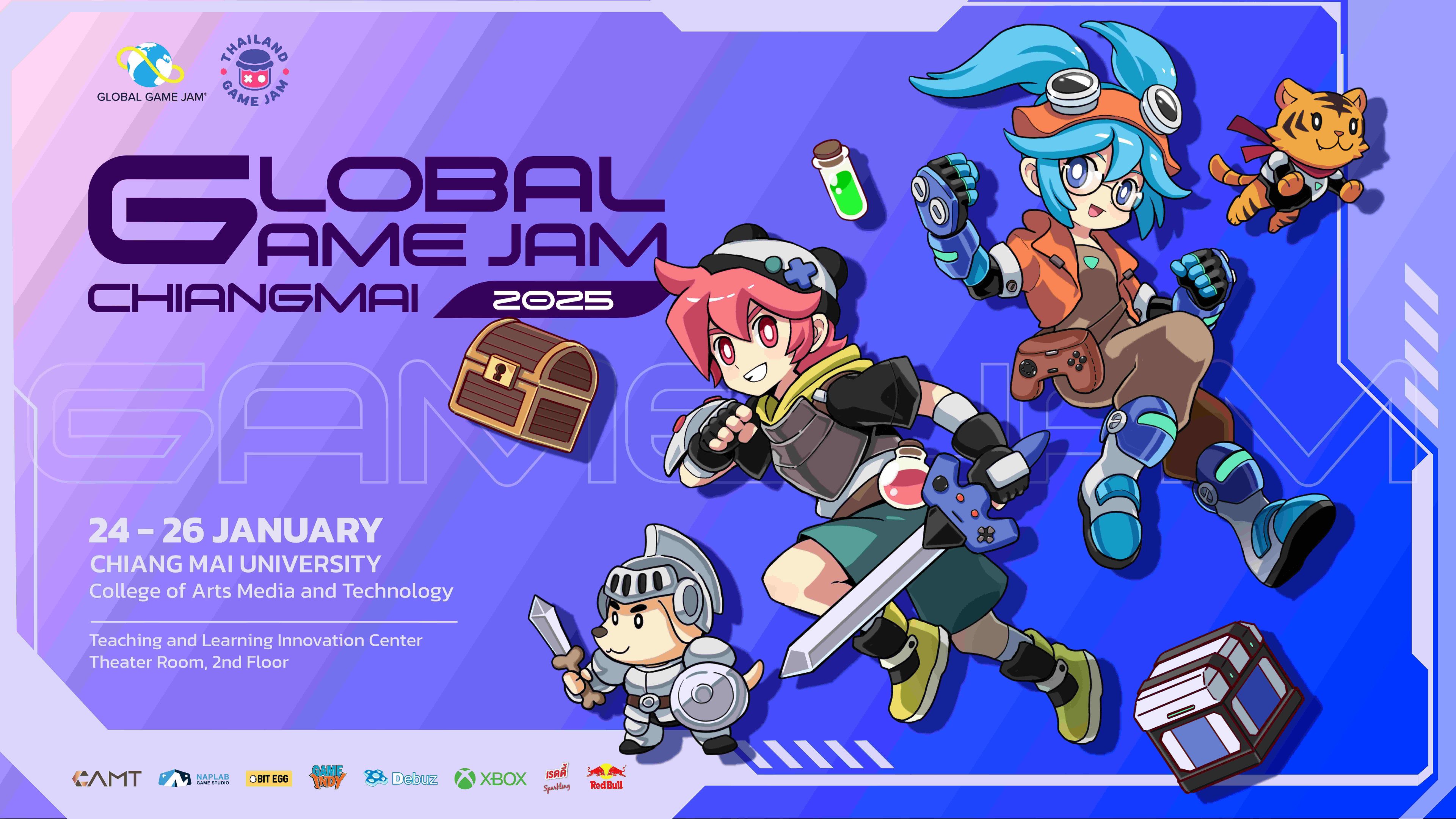
Sometimes you don't want to guide the AI—you want pure randomness to spark creativity. A random game idea generator removes your biases entirely.
For exploration: - "Generate 10 completely random game ideas with no common theme" - "Create a game idea using 3 random genres" - "Give me a game concept I would never think of myself"
For constraints: - "Generate a random game idea that can be made in 4 hours" - "Create a random 2D game concept using only 3 colors" - "Suggest a random game mechanic and a genre to use it in"
Start random, then guide toward feasibility:
AI output: "A rhythm game where you're a sentient earthquake destroying cities to the beat"
Feasibility check: "Simplify this for a solo developer with 2 weeks"
AI output: "A 2D rhythm game where you tap to create earthquake waves that topple block towers in sync with music"
Implementation: "Create this game with SEELE"
Keep a list of interesting mechanics you encounter. Feed these to AI generators: - "Create a game using the 'rewind time on death' mechanic from Braid" - "Design a game around the 'grappling hook movement' from Spider-Man"
Some of the best indie games combine unexpected genres: - Vampire Survivors = Roguelike + Bullet Hell + Auto-battler - Slay the Spire = Roguelike + Deck Builder + RPG - Stardew Valley = Farming Sim + RPG + Dating Sim
Ask AI to generate unusual combinations: "Combine a dating sim with a tower defense game."
Visual style can drive mechanical decisions: - "Create a game idea that works with a 1-bit (black and white) art style" - "Generate a game concept for voxel art aesthetic" - "Design a game using only geometric shapes"
Great games often have one core innovation: - Portal: Spatial puzzles through portals - Superhot: Time moves only when you move - Baba Is You: Rules are objects you can manipulate
Prompt pattern: "Create a game built entirely around [unique mechanic]."
Generate 5 ideas, build prototypes of all 5 in 30 minutes with SEELE, and playtest immediately. This empirical approach beats endless theoretical debate.
Can AI game idea generators replace human creativity?
No. AI generators are creative catalysts, not replacements. They excel at recombining existing patterns in novel ways, but human designers provide the critical evaluation, refinement, and emotional resonance that makes games meaningful. Think of AI as a brainstorming partner that never gets tired.
How do I know if an AI-generated game idea is good?
Build it and playtest it. With tools like SEELE, you can create a playable prototype in minutes. Player reactions and your own experience playing the game reveal what spreadsheets and design documents cannot. A mediocre idea with great execution beats a great idea poorly executed.
Are AI-generated game ideas copyrightable?
Game mechanics generally cannot be copyrighted, only specific expressions (art, code, narrative). AI-generated concepts are starting points—your implementation, art direction, and design refinements make the game yours. Always consult legal counsel for specific situations, especially for commercial projects.
What's the best game idea generator for beginners?
SEELE is ideal for beginners because it generates playable games, not just text descriptions. Seeing your idea become playable immediately provides invaluable learning feedback. Traditional idea generators leave beginners stuck at the implementation gap—great concept, no idea how to build it.
Can I use an AI game idea generator for Roblox games?
Yes, though with extra steps. Tools like ChatGPT and Claude can generate Roblox game concepts. SEELE doesn't export directly to Roblox format, but you can use SEELE to prototype gameplay, then manually recreate the validated mechanics in Roblox Studio with Lua scripting.
How specific should my prompts be?
Start with medium specificity, then adjust based on results. Too vague ("make a game") gets generic output. Too specific ("2D pixel art metroidvania with exactly 5 enemy types and 3 boss fights using Mega Man-style weapon switching") limits creative exploration. Ideal: "2D metroidvania with unique weapon-switching mechanic"—specific enough to guide, flexible enough for AI creativity.
AI game idea generators have transformed game development from a lengthy planning process to rapid experimentation. Whether you need a random game idea for a jam, a video game topic generator for your next project, or a complete game idea generator that builds playable prototypes, AI tools eliminate the blank canvas problem.
The key insight: Don't just generate ideas—generate playable experiences. Tools like SEELE bridge the gap between concept and reality, letting you test 10 game ideas in the time it used to take to debate one.
Ready to generate your next game idea and play it immediately? Try SEELE's AI game generator and go from concept to playable game in minutes, not months.
About the Author
Written by SEELE team, game developer and AI researcher at SEELE. GitHub: github.com/SeeleAI