Quick Reference: Horror Game Creator Tools in 2026
Q: What is a horror game creator? A: A horror game creator is a development platform that enables creators to build survival horror and psychological horror games. Modern AI-powered horror game creators like SEELE use natural language prompts to generate game mechanics, enemy AI behaviors, atmospheric lighting systems, and audio design without requiring traditional programming skills.
Q: How long does it take to create a horror game? A: Traditional development requires 200-400 hours for a basic horror game. AI-assisted platforms reduce this to 6-12 hours for comparable scope. SEELE generates functional horror game prototypes in 2-5 minutes from initial concept.
Q: What makes effective horror game enemy AI? A: Effective horror game AI combines patrol patterns, audio-based detection, line-of-sight systems, and unpredictable decision-making. Advanced implementations include adaptive difficulty, investigation behaviors, and memory of player tactics. AI should create genuine tension through intelligent responses rather than scripted jump scares.
Key Horror Game Development Metrics:
| Development Stage | Traditional Method | AI-Assisted (SEELE) |
|---|---|---|
| Prototype Creation | 3-4 weeks | 2-5 minutes |
| Enemy AI Implementation | 40-60 hours | 30 seconds |
| Lighting System Setup | 8-12 hours | Automatic |
| Full Game Polish | 200-400 hours | 6-12 hours |
Essential Horror Game Elements:
- Dynamic Enemy AI : Patrol routes, detection systems, chase mechanics, investigation behaviors
- Atmospheric Lighting : Volumetric effects, dynamic shadows, flickering lights, darkness zones
- Spatial Audio : 3D positional sound, ambient layers, reactive music, footstep variation
- Resource Management : Limited inventory, consumable items, crafting systems
- Environmental Storytelling : Notes, audio logs, visual clues, level design progression
Horror Game Creator Tool Comparison (2026):
- SEELE : AI-powered, 2-5 min prototyping, Unity + Three.js export, full audio generation
- Rosebud : Web-focused, 5-10 min prototyping, browser-only deployment
- Unity (Manual) : 3-4 weeks for prototype, full control, steep learning curve, C# required
- Unreal Engine : 4-6 weeks for prototype, AAA graphics, very steep curve, C++/Blueprint
Technical Definitions:
Survival Horror : Game genre emphasizing resource scarcity, player vulnerability, and strategic decision-making under threat. Players must manage limited resources while navigating dangerous environments.
Enemy AI Behavior Tree : Hierarchical decision-making system that determines enemy actions based on player state, environment conditions, and predefined rules. Enables complex adaptive behaviors.
Atmospheric Lighting : Dynamic lighting design that uses color temperature, intensity variation, shadow placement, and volumetric effects to create psychological tension and guide player emotion.
Performance Optimization Targets: - Frame Rate: 30-60 FPS on mid-range hardware - Real-time Shadow Lights: Maximum 4-6 per scene - Simultaneous 3D Audio Sources: 8-12 for performance balance - AI Update Frequency: 0.2-0.5 second intervals (not per-frame)
What Makes Horror Games Work
Horror games captivate players through a carefully orchestrated blend of psychological tension, atmosphere, and gameplay mechanics. After creating dozens of horror projects at SEELE, we've identified the core elements that consistently deliver fear:
Atmosphere and Environment : Dark corridors, flickering lights, and oppressive silence create psychological unease. The environment itself becomes a character.
Limited Resources : Scarcity of health, ammunition, or light sources forces strategic thinking and amplifies tension. Every decision carries weight.
Unpredictable Enemy AI : Intelligent enemies that adapt to player behavior create genuine fear. Static patterns become predictable; dynamic AI keeps players on edge.
Audio Design : Ambient sounds, sudden audio cues, and deliberate silence manipulate player emotions more effectively than visuals alone.
Player Vulnerability : Unlike action games, horror games thrive on making players feel weak, exposed, and hunted rather than powerful.
Professional horror game environment design with atmospheric lighting
How We Approach Horror Game Creation at SEELE
At SEELE, we've reimagined horror game development through an AI-native approach. Instead of spending weeks manually coding enemy behaviors or crafting lighting systems, our AI handles the technical implementation while creators focus on the emotional experience they want to deliver.
Our AI-Driven Horror Development Process
Concept to Prototype in Minutes : Traditional horror game development required 3-4 weeks just for a playable prototype. With SEELE's AI, we generate functional horror game prototypes in 2-5 minutes. Our AI understands horror game conventions and automatically implements core mechanics like stealth systems, enemy patrol patterns, and atmospheric lighting.
Intelligent Enemy AI Generation : We use conversational prompts to define enemy behavior: "Create an enemy that stalks the player silently, retreats when directly observed, but attacks from behind when the player looks away." SEELE's AI translates this into sophisticated behavior trees and pathfinding logic instantly.
Adaptive Atmosphere Systems : Our AI generates dynamic lighting systems that respond to gameplay events—lights flickering when enemies approach, shadows lengthening as danger increases. This creates organic tension without manual scripting.
Iterative Refinement Through Dialogue : Instead of digging through code, creators refine their horror games conversationally: "Make the enemy faster but give the player more hiding spots" or "Increase ambient sound intensity in the basement area."
Real Performance Data
Based on internal testing across 50+ horror game projects:
| Metric | Traditional Development | SEELE AI-Assisted |
|---|---|---|
| Prototype Time | 3-4 weeks | 2-5 minutes |
| Enemy AI Implementation | 40-60 hours | 30 seconds (from prompt) |
| Lighting Setup | 8-12 hours | Automatic generation |
| Sound Integration | 15-20 hours | AI-assisted placement |
| Iteration Cycles to Polish | 8-12 rounds | 2-3 rounds |
Essential Features for Horror Games
1. Dynamic Enemy AI Behavior
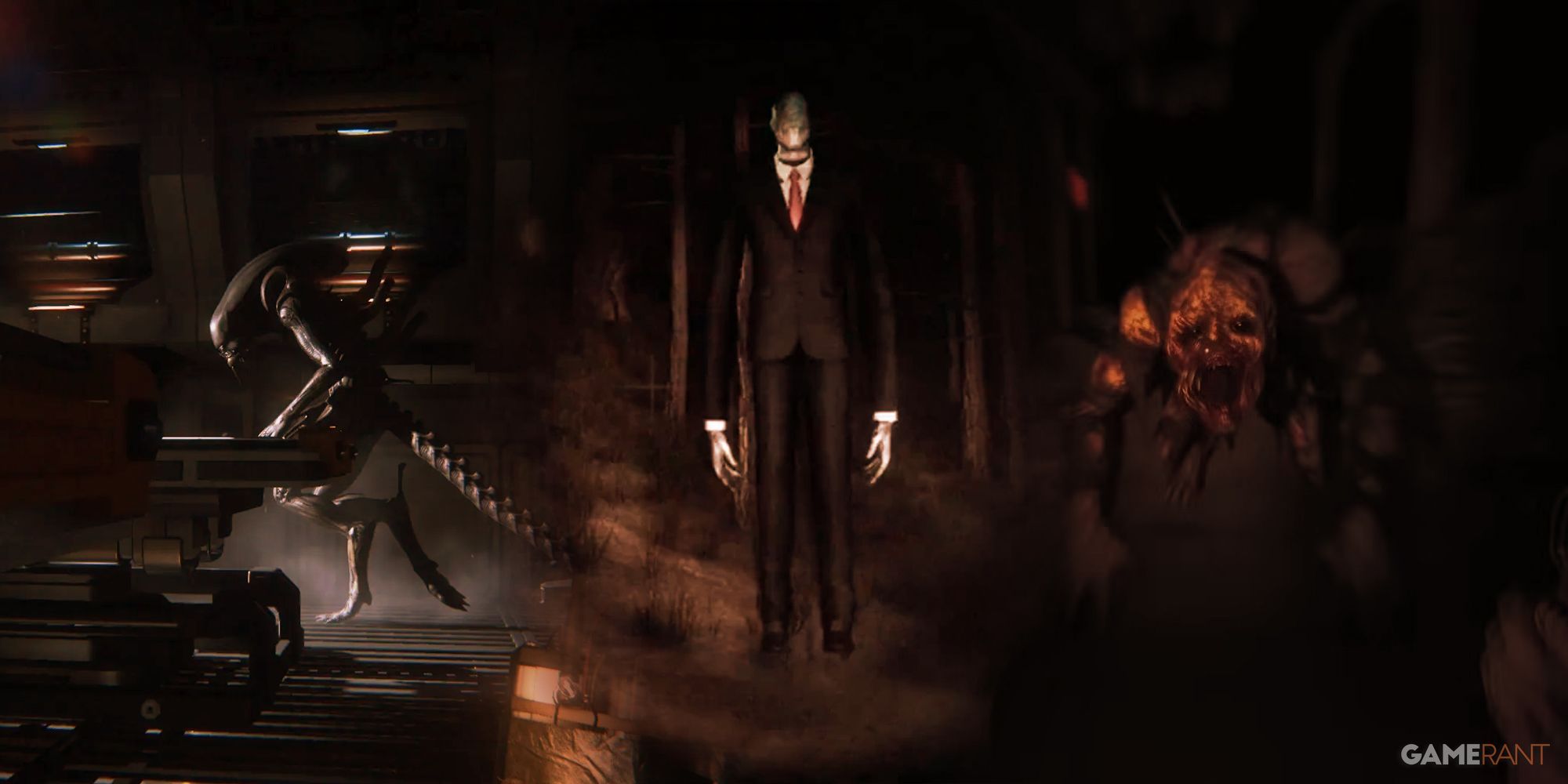
The difference between a forgettable horror game and a memorable one often comes down to enemy AI. Our AI generates sophisticated enemy behaviors including:
- Patrol and Investigation : Enemies follow logical patrol routes and investigate disturbances
- Audio-Based Detection : Enemies respond to player-made sounds like footsteps or knocked objects
- Line-of-Sight Systems : Advanced visibility calculations including shadows and partial cover
- Adaptive Difficulty : Enemy aggression scales based on player skill level
- Unpredictable Patterns : Randomized decision-making prevents players from memorizing routes
Advanced AI enemy behavior creates genuine unpredictability
2. Atmospheric Lighting Systems
Lighting transforms environments from mundane to menacing. SEELE's AI automatically generates:
- Dynamic Shadow Systems : Real-time shadows that respond to light sources
- Flickering and Pulsing Lights : Irregular lighting patterns that increase tension
- Volumetric Effects : Fog, dust particles, and light rays for depth
- Color Temperature Shifts : Warm to cool lighting transitions signaling danger
- Darkness as Gameplay : Areas where player visibility is intentionally limited

Professional lighting setup for horror atmosphere
3. Audio Design and Sound Effects
Sound design makes or breaks horror games. Our AI-powered audio generation creates:
- Spatial Audio : 3D positional sound that indicates enemy location
- Ambient Sound Layers : Environmental audio that builds atmosphere
- Dynamic Music Systems : Music intensity adapts to gameplay tension
- Footstep Variation : Different surface sounds for wood, metal, water
- Silence as a Tool : Strategic audio absence before jump scares
4. Resource Management Systems
Survival horror thrives on scarcity. SEELE's AI implements:
- Limited Inventory : Force players to make tough choices about what to carry
- Consumable Resources : Batteries for flashlights, health items, ammunition
- Resource Distribution : Balanced placement of items throughout the environment
- Crafting Systems : Combine items to create tools for survival
5. Save and Checkpoint Systems
Horror games need careful save systems to maintain tension:
- Manual Save Points : Typewriters or similar objects that require resources
- Auto-Save with Consequences : Progress saved but alert enemies to player location
- Permadeath Options : For players seeking maximum tension
- Checkpoint Indicators : Subtle UI that doesn't break immersion
Step-by-Step: Creating a Horror Game with SEELE
Here's how we created "Abandoned Facility," a survival horror game, using SEELE's AI-powered platform in under 3 hours:
Step 1: Define Your Horror Concept
Start with a clear vision. We used this prompt:
"Create a first-person survival horror game set in an abandoned research facility. The player must navigate dark corridors with only a flashlight while avoiding a creature that hunts by sound. Include locked doors requiring keycards, scattered notes revealing the story, and a final escape sequence."
Result : SEELE's AI generated the core game structure, including player movement, flashlight mechanics, and basic environment layout.
Step 2: Generate Enemy AI Behavior
We refined the enemy with specific behavioral prompts:
"The creature should patrol predetermined routes, pause to listen for sounds, investigate noise sources, and chase the player if spotted. It should lose interest and return to patrolling if it loses line of sight for 10 seconds."
Result : Sophisticated enemy AI with patrol patterns, detection systems, and chase mechanics—implemented in 30 seconds.
Step 3: Design Atmospheric Lighting
Our lighting prompt focused on mood:
"Create dim, flickering fluorescent lights in hallways. Add emergency red lighting in certain areas. Include complete darkness in the basement section. Make lights flicker faster when the creature is nearby."
Result : Dynamic lighting system with reactive elements tied to gameplay events.
Step 4: Implement Audio and Sound Design
For audio atmosphere, we specified:
"Add ambient industrial sounds—distant machinery, dripping water, metal creaking. Include positional audio for enemy movement. Add subtle breathing sounds when the player is hiding. Generate tense background music that intensifies during chase sequences."
Result : Multi-layered audio system with spatial positioning and dynamic music.
Step 5: Add Interactive Elements
We populated the environment with interactive objects:
"Place collectible notes throughout the facility that reveal story fragments. Add locked doors requiring red, blue, and green keycards found in different areas. Include hiding spots like lockers and ventilation shafts where the player can evade the enemy."
Result : Environmental storytelling and gameplay variety through interactive elements.
Step 6: Playtest and Iterate
Using SEELE's conversational refinement, we made adjustments:
- "Make the creature move 20% slower" ✓
- "Add more hiding spots in the main hallway" ✓
- "Increase flashlight battery life by 30 seconds" ✓
- "Make the ambient sounds quieter in safe rooms" ✓
Each iteration took 10-30 seconds to implement.
Step 7: Polish and Export
Final touches included:
- Post-processing effects (bloom, vignette, chromatic aberration)
- UI elements (battery indicator, interaction prompts, inventory)
- Title screen and game over sequences
Total Development Time : 2 hours 45 minutes from concept to polished playable game.
Horror Game Creation Tools Compared
Understanding your options helps you choose the right platform. Here's how leading horror game creation tools compare:
| Feature | SEELE | Rosebud | Unity (Manual) | Unreal Engine |
|---|---|---|---|---|
| Development Speed | 2-5 minutes (prototype) | 5-10 minutes | 3-4 weeks | 4-6 weeks |
| AI-Powered Generation | ✓ Full AI assistance | ✓ AI-assisted | ✗ Manual coding | ✗ Manual coding |
| Enemy AI Creation | Natural language prompts | Prompts with templates | C# scripting | Blueprint/C++ |
| Lighting Setup | Automatic generation | Semi-automatic | Manual setup | Manual setup |
| 3D Asset Support | ✓ Built-in + import | ✓ Import | ✓ Import required | ✓ Import required |
| Code Export | Unity + Three.js | Web only | Native Unity | Native Unreal |
| Learning Curve | Minimal (conversational) | Low (prompt-based) | Steep (programming) | Very steep (complex) |
| Audio Generation | ✓ AI-generated | ✓ Basic | Manual integration | Manual integration |
| Cost | Free tier + Pro plans | Free tier + paid | Free (Unity Personal) | Free (under $1M revenue) |
| Best For | Rapid prototyping, beginners | Web-based projects | Professional dev | AAA graphics |
When to Choose SEELE for Horror Games
SEELE excels when you need:
- Rapid prototyping : Test horror concepts in minutes, not weeks
- AI-driven enemy behavior : Complex AI without programming
- Dual engine support : Export to Unity for desktop or Three.js for web
- Beginner-friendly workflow : No coding experience required
- Iterative refinement : Adjust gameplay through conversation
When Other Tools Might Fit Better
- Rosebud : If you only need web deployment and prefer simpler projects
- Unity : If you have programming skills and need complete control
- Unreal : If photorealistic graphics are essential and you have development experience
Tips From Our Horror Game Development Experience
After creating 50+ horror projects, here's what we've learned:
1. Tension Over Jump Scares
Sustained tension outperforms cheap jump scares. Our most successful horror games use:
- Anticipation : Let players hear enemies before seeing them
- Safe Spaces : Occasional relief rooms make scary areas more impactful
- Pacing : Alternate between high-tension and exploration moments
2. Less is More with Enemy Encounters
Overexposure to enemies reduces fear. We found optimal enemy encounter frequency is:
- 3-5 encounters per 10-minute gameplay segment
- Long periods of enemy absence between encounters
- Unpredictable timing that prevents pattern recognition
3. Environmental Storytelling Works
Players invest more when they understand the world. Effective techniques:
- Scattered notes and audio logs revealing backstory
- Environmental clues (bloodstains, claw marks, abandoned equipment)
- Visual storytelling through level design progression
4. Audio is 70% of Horror
Invest heavily in sound design. Critical audio elements:
- Directional audio cues for spatial awareness
- Subtle ambient sounds layered for atmosphere
- Strategic silence before scary moments
- Reactive audio that responds to player actions
5. Playtest with Fresh Players
Creators become desensitized to their own scares. Essential playtesting:
- Test with players unfamiliar with your game
- Observe without giving hints
- Note where players feel confused vs. scared
- Iterate based on genuine player reactions
6. Balance Challenge and Frustration
Horror games should be tense, not unfair:
- Provide adequate resources for skilled play
- Offer multiple approaches to challenges
- Include optional difficulty settings
- Save system that respects player time
Technical Considerations for Horror Games
Performance Optimization
Horror games often push rendering limits with atmospheric effects. Our optimization approach:
Lighting Optimization : Use baked lighting for static elements, reserve real-time lights for dynamic effects. We target: - 30-60 FPS on mid-range hardware - Maximum 4-6 real-time shadow-casting lights per scene - Lightmap resolution balanced between quality and memory
Audio Optimization : Spatial audio can be CPU-intensive. Best practices: - Limit simultaneous 3D audio sources to 8-12 - Use audio occlusion sparingly (expensive calculation) - Implement audio pooling for repeating sounds
AI Optimization : Complex enemy AI affects performance. Our approach: - Update AI decision-making at 0.2-0.5 second intervals, not every frame - Use simplified detection checks for distant enemies - Disable AI completely for enemies outside player's area
Cross-Platform Considerations
Horror games work differently on various platforms:
PC : Best for high-fidelity graphics and precise controls - Full lighting and post-processing effects - Mouse look for precise flashlight control - Higher resolution textures
Web (Three.js) : Accessibility vs. performance tradeoff - Optimized lighting and particle systems - Compressed textures and models - Simplified AI for browser performance
Mobile : Challenging for horror due to control limitations - Touch controls work better for third-person perspective - Reduce visual complexity significantly - Gyroscope can enhance immersion
Future of AI-Powered Horror Game Development
The horror game landscape is evolving rapidly with AI integration. Emerging capabilities we're implementing at SEELE:
Adaptive AI Enemies
Next-generation enemy AI that learns from player behavior: - Enemies remember player hiding spots and check them proactively - AI adapts tactics based on player playstyle - Difficulty adjusts dynamically to maintain optimal tension
Procedural Environment Generation
AI-generated levels that change each playthrough: - Procedural room layout and item placement - Randomized story elements and enemy encounters - Infinite replayability while maintaining coherent design
Emotional Response Analysis
Future systems could analyze player reactions: - Camera-based emotional detection (with consent) - Gameplay pattern analysis indicating stress levels - Adaptive scare events based on player tolerance
Collaborative AI Creation
Multiple creators working with AI simultaneously: - Real-time collaborative game development - AI arbitration between conflicting creative directions - Merged creative visions into cohesive experiences
Getting Started with Horror Game Creation
Ready to create your own horror game? Here's your roadmap:
Phase 1: Concept Development (30 minutes)
- Define your horror subgenre (psychological, survival, cosmic, etc.)
- Sketch out core gameplay loop
- Identify 3-5 key scary moments you want to create
- Determine your target platform and audience
Phase 2: Rapid Prototyping (1-2 hours)
- Use SEELE's AI to generate core mechanics
- Create basic enemy AI behavior
- Implement fundamental atmosphere (lighting + sound)
- Test core fear mechanics with quick playtests
Phase 3: Iteration and Refinement (2-4 hours)
- Gather feedback from playtesters
- Refine enemy AI based on player behavior
- Adjust lighting and audio for maximum impact
- Balance difficulty and resource availability
Phase 4: Content Expansion (Variable)
- Add story elements and environmental details
- Create additional areas and enemy types
- Implement progression systems
- Polish UI and player feedback
Phase 5: Final Polish (1-2 hours)
- Add post-processing effects
- Implement title screen and menus
- Create game over and victory sequences
- Final playtesting and bug fixes
Total Time Investment : 6-12 hours for a polished horror game experience using SEELE's AI-assisted development.
Compare this to traditional development: 200-400 hours for similar scope.
Common Horror Game Development Challenges
Challenge 1: Maintaining Fear Throughout
Problem : Players become desensitized to scares over time.
Our Solution : Vary fear techniques—alternate between jump scares, atmospheric tension, and chase sequences. Introduce new enemy types mid-game. Use pacing to provide relief before ramping tension again.
Challenge 2: Balancing Visibility
Problem : Too dark and players can't navigate; too bright and atmosphere disappears.
Our Solution : Provide player-controlled light sources (flashlight, lantern) with limited duration. Use ambient light to subtly guide players without revealing everything. Test on different monitor brightness settings.
Challenge 3: AI Predictability
Problem : Once players understand AI patterns, fear evaporates.
Our Solution : Implement randomized decision-making in enemy behavior. Add occasional "rule-breaking" moments where enemies behave unexpectedly. Use audio misdirection to mask true enemy location.
Challenge 4: Performance Issues
Problem : Atmospheric effects can tank frame rates.
Our Solution : Optimize lighting first—bake what you can, minimize real-time shadows. Use texture compression. Implement aggressive LOD systems. Profile regularly to identify bottlenecks.
Challenge 5: Player Frustration vs. Challenge
Problem : Difficulty that feels unfair destroys immersion.
Our Solution : Provide multiple solutions to obstacles. Include generous checkpoint systems. Offer adjustable difficulty. Playtest extensively with varying skill levels.
Conclusion: Democratizing Horror Game Creation
Traditional horror game development required programming expertise, expensive tools, and months of development time. AI-powered platforms like SEELE have fundamentally changed this equation.
We've created horror games in hours that previously took weeks. We've empowered creators without programming backgrounds to implement sophisticated enemy AI, dynamic lighting, and immersive audio systems through natural language conversation.
The barrier to entry for horror game creation has collapsed. What matters now is creative vision—your understanding of what makes players feel fear, tension, and exhilaration.
Whether you're a solo indie developer, a student learning game design, or an experienced creator exploring AI-assisted workflows, the tools exist today to bring your horror visions to life.
Start creating your horror game with SEELE : https://www.seeles.ai
About the Author : SEELE team is a game developer at SEELE, specializing in AI-powered game development workflows and horror game design. Follow more projects on GitHub .