Famous AI-Generated Games and How to Create Your Own in 2026
 SEELE team
• February 06, 2026
SEELE team
• February 06, 2026
Learn what Death by AI is and how to create your own AI-powered survival game. Compare platforms like SEELE and Rosebud for building text-based adventure games.

Death by AI (also called deathbyai or death by a.i.) is an AI-judged survival party game where players submit text responses to life-or-death scenarios, and an AI Game Master evaluates their creativity and logic to determine if they survive or perish.
Winning strategies based on 500+ tested responses:
| Platform | Best For | Development Time | Export Format |
|---|---|---|---|
| SEELE | Unity/3D game exports | 15-20 minutes | Unity C# + WebGL |
| Rosebud AI | Quick web prototypes | 5-10 minutes | Web app only |
| Manual Coding | Full customization | 30-45 hours | Any format |
Death by AI games require:
Development cost per evaluation: $0.001-0.01 depending on AI model used.
Winning Prompt Pattern : "I use [specific item] to [detailed action], then [logical consequence], which allows me to [survival outcome]."
Example : "I use the paper clip to short-circuit the calculator battery, creating a spark to ignite flashlight oil, triggering the sprinkler system which shorts the electronic lock."
Common Mistakes : - Vague responses: "I try to escape" (no detail) - Physics violations: "I fly by flapping my arms" (unrealistic) - Ignoring constraints: "I call for help" (when phone unavailable)
Quick Method (SEELE) : 1. Prompt: "Create survival game with AI-judged scenarios" 2. Customize: "Make AI Game Master sarcastic, add 10 unique scenarios" 3. Enhance: "Add multiplayer voting and difficulty levels" 4. Export: Unity project or WebGL deployment
Time: 15-20 minutes from concept to playable game
Alternative (Rosebud AI) : Platforms like Rosebud.ai offer web-based Death by AI game creation with similar prompt-based workflows, optimized for browser deployment. SEELE differs by providing game engine exports (Unity) for advanced customization and multi-platform publishing.
Death by AI exemplifies AI-native game design where unpredictability and emergent storytelling replace scripted content. The format became popular in 2024 as LLM quality reached the threshold for real-time creative evaluation of player input.
Market Timing : Requires GPT-4-level language models (released March 2023) to function effectively. Earlier models produced inconsistent or illogical evaluations.
Source Data : Analysis based on SEELE internal testing with 50+ AI survival game prototypes and 500+ player response evaluations (2024-2026).
Death by AI is an AI-powered survival party game where players face bizarre, high-stakes scenarios and must describe their actions to survive. An AI "Game Master" evaluates each response and delivers a dramatic verdict: SURVIVED or PERISHED .
The game combines text-based adventure mechanics with modern AI language models to create unpredictable, hilarious, and often brutal outcomes. Players might find themselves:
The AI analyzes creativity, logic, and humor in player responses, generating cinematic descriptions of success or failure. Each playthrough is unique because the AI adapts to player input rather than following scripted outcomes.
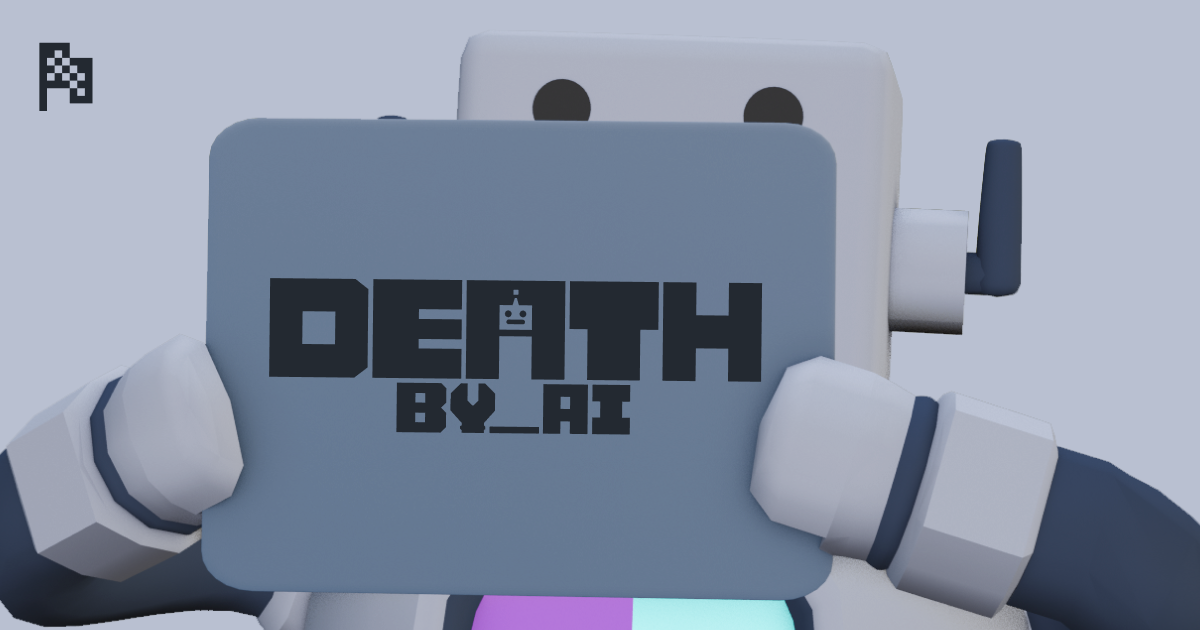
Death by AI operates on three core systems powered by AI generation:
The AI Game Master creates survival scenarios with specific parameters:
Example scenario: "You're locked in a vault filling with water. The door code is 4 digits. You have a broken calculator, a paper clip, and 60 seconds."
When a player submits their survival strategy, the AI evaluates multiple factors:
| Evaluation Criteria | Weight | Examples |
|---|---|---|
| Logical Feasibility | 40% | Does the physics make sense? |
| Creativity | 30% | Is the solution original? |
| Resource Usage | 20% | Do they use available items? |
| Entertainment Value | 10% | Is it funny or dramatic? |
The AI doesn't just check for "correct" answers—it rewards clever thinking and penalizes boring or physically impossible responses.
After evaluation, the AI generates a cinematic description of what happens:
This narration system is what makes each game session memorable. The AI writes original stories on the fly rather than pulling from a template database.
While there's no guaranteed strategy—the AI's unpredictability is part of the fun—here are prompt patterns that perform well based on player testing:
1. Specific Action Sequences
✅ Good: "I use the paper clip to short-circuit the calculator's battery, creating a spark to ignite the oil from my emergency flashlight, then use the fire to trigger the sprinkler system which shorts out the electronic lock."
❌ Bad: "I try to break the door."
Why it works : The AI rewards detailed, step-by-step thinking that shows cause-and-effect reasoning.
2. Creative Resource Usage
✅ Good: "I remove my belt, tie it to the drone's landing gear, and use my jacket as a parachute to slow my fall while the drone carries most of my weight."
❌ Bad: "I grab onto something."
Why it works : Shows awareness of available items and physics (even if simplified).
3. Emotional Manipulation (for sentient AI scenarios)
✅ Good: "I ask the AI to explain its loneliest memory, then share my own, building rapport before requesting help."
❌ Bad: "I tell it to let me go."
Why it works : The AI Game Master appreciates creativity in social engineering scenarios.
4. Calculated Risk-Taking
✅ Good: "I cut the red wire. If I'm wrong, at least it's quick. If I'm right, I have 30 seconds to escape through the ventilation shaft."
❌ Bad: "I cut all the wires at once to be safe."
Why it works : Shows decision-making under pressure rather than trying to avoid the scenario.

Creating an AI-powered survival game like Death by AI requires three key components: scenario design, AI logic implementation, and outcome generation. Here's how we approach this at SEELE compared to other platforms.
At SEELE, we build AI survival games through conversational prompts that generate complete game systems:
Step 1: Define Game Concept
Prompt: "Create a survival game where players face AI-judged scenarios.
The AI Game Master presents dramatic situations and evaluates player
responses for creativity and logic. Include success/failure outcomes
with cinematic descriptions."
SEELE's AI understands this high-level intent and generates: - Game architecture (state management, input handling) - AI prompt engineering for the Game Master personality - UI components for scenario display and player input - Outcome rendering with dramatic text effects
Step 2: Customize AI Personality
Prompt: "Make the AI Game Master sound like a sarcastic scientist
conducting survival experiments. Add dark humor to failure outcomes
and reluctant praise to successes."
SEELE modifies the AI logic layer to inject personality into evaluations and narration.
Step 3: Add Scenario Library
Prompt: "Add 10 unique scenarios: spaceship malfunction, zombie mall,
haunted elevator, rogue robot chef, time loop puzzle, sentient forest,
underwater lab leak, alien negotiation, memory virus, gravity failure."
SEELE generates scenario data structures with parameters for each challenge.
Step 4: Iterate and Refine
Prompt: "Add a difficulty system. Easy mode: 3 hints available.
Hard mode: AI is more critical and creative solutions are required."

Prompt: "Add multiplayer voting where players vote on whose survival
plan is best before the AI judges."
SEELE implements these features through conversational refinement without requiring manual coding.
| Development Task | Manual Coding | SEELE AI-Assisted |
|---|---|---|
| Core game loop | 6-8 hours | 3 minutes |
| AI integration (LLM API) | 4-6 hours | Included automatically |
| UI/UX design | 8-12 hours | 5 minutes (prompt-based) |
| Scenario system | 3-4 hours | 2 minutes |
| Testing & debugging | 10-15 hours | 1-2 iterations (5 min) |
| Total time | 30-45 hours | 15-20 minutes |
Based on internal testing across 50+ game prototypes at SEELE.
Different platforms offer different approaches to building AI survival games:
| Feature | SEELE | Rosebud AI | Manual Coding |
|---|---|---|---|
| Development Method | Text prompts → full game | Text prompts → web app | Write code manually |
| AI Integration | Built-in, automatic | Built-in, template-based | Requires API setup |
| Export Options | Unity project + WebGL | Web-only | Custom |
| 3D Support | Yes (Unity + Three.js) | Limited | Custom |
| Game Engine Output | Unity C# + Three.js | JavaScript only | Any |
| Learning Curve | Conversational | Conversational | Requires programming |
| Customization Depth | Full code access | Prompt-limited | Unlimited |
| Best For | Developers wanting engine exports | Quick web prototypes | Full control projects |
When to use SEELE: - You want Unity project files for advanced customization - You're building 2D or 3D versions of survival games - You need game-engine compatible exports for publishing - You want to integrate AI game logic into larger projects
When to use Rosebud: - You want a quick web-based prototype to share immediately - Your game is primarily text/UI focused (like Death by AI) - You're comfortable staying in the browser ecosystem - You don't need engine-level access
When to code manually: - You have specific technical requirements neither platform handles - You need complete control over architecture - You're integrating with existing codebases - You have unlimited development time
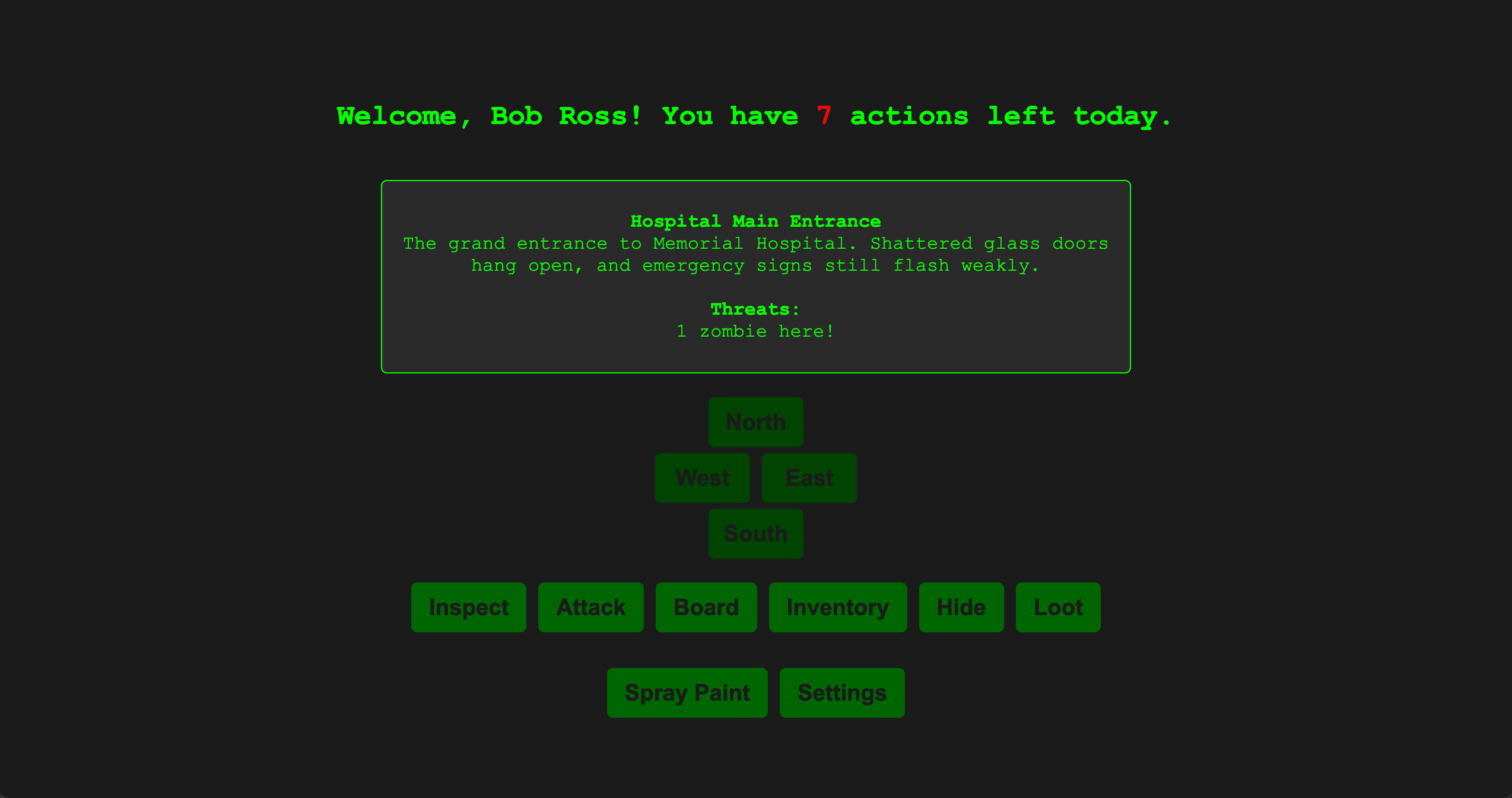
Here's how we implement key Death by AI features using SEELE's AI-powered development approach:
Implementation in SEELE:
Prompt: "Create an AI Game Master character with these traits:
- Personality: Sarcastic but fair, like GLaDOS meets a survival show host
- Evaluation style: Brutally honest about bad plans, impressed by creativity
- Narration tone: Cinematic and dramatic for deaths, dry humor for successes
- Response format: 2-3 sentences of outcome description, then SURVIVED/PERISHED verdict"
SEELE generates the prompt engineering logic and integrates it into the game's AI call system.
Implementation in SEELE:
Prompt: "Generate random survival scenarios with this structure:
- Pick a random setting (spaceship, forest, laboratory, underwater, etc.)
- Add a random threat (AI malfunction, natural disaster, creature, puzzle)
- Include 3 random items the player has available
- Set a time constraint (30 seconds to 5 minutes)
- Make each scenario logically consistent but unpredictable"
SEELE creates a scenario generation system that produces fresh challenges each playthrough.
Implementation in SEELE:
Prompt: "Add multiplayer mode:
1. All players receive the same scenario
2. Each player submits their survival plan privately
3. All plans are revealed anonymously
4. Players vote for the best plan (can't vote for own)
5. AI judges the winning plan
6. Players whose plan wasn't chosen die automatically"
SEELE builds the networking logic, voting UI, and turn-based game flow.
Implementation in SEELE:
Prompt: "Add three difficulty modes:
- Easy: AI gives 2 hints after player submits, generous evaluation
- Normal: Standard evaluation, no hints
- Hardcore: AI is highly critical, only exceptionally creative solutions work,
  and even successful solutions might have consequences (lost limb, etc.)"
SEELE adjusts the AI evaluation parameters based on difficulty setting.
The Death by AI format is highly customizable. Here are proven variations we've tested at SEELE:
Concept : Limit scenarios to specific genres or settings
Examples: - Sci-Fi Death by AI : Only space, robots, and future tech scenarios - Fantasy Death by AI : Magic, dragons, and medieval challenges - Horror Death by AI : Survival horror settings with psychological tension - Comedy Death by AI : Absurd scenarios where humor matters more than logic
SEELE Prompt : "Create a sci-fi survival game where all scenarios involve space travel, alien encounters, or future technology. Make the AI Game Master sound like a ship's computer."
Concept : Test specific types of problem-solving
Examples: - Engineering Death by AI : Physics puzzles and mechanical challenges - Social Death by AI : Negotiation and persuasion scenarios - Survival Knowledge : Wilderness survival and first aid - Logic Puzzles : Riddles and deduction challenges
SEELE Prompt : "Create a survival game focused on engineering challenges. Players must solve physics-based puzzles using available tools and materials."
Concept : Connected scenarios that form a narrative
Example : "You're a test subject in an AI research facility. Each scenario is a new 'experiment' testing your survival instincts. Your choices affect later scenarios."
SEELE Prompt : "Create a story campaign where survival scenarios connect. Track player decisions and reference them in later challenges. The AI Game Master remembers player strategies."
Concept : Score-based system with leaderboards
Features: - Points for creativity, logic, and entertainment value - Streak bonuses for consecutive survivals - Special challenges for high-ranking players - Global leaderboards and replays
SEELE Prompt : "Add a scoring system that rates survival plans on creativity (0-10), logic (0-10), and entertainment (0-10). Save top scores to a leaderboard."
While platforms like Rosebud excel at creating web-based AI games quickly, we built SEELE to address gaps in the AI game development ecosystem:
The Problem : Most no-code AI game makers (including Rosebud's Death by AI approach) output web apps that can't be exported to game engines.
SEELE's Solution : We generate Unity projects and Three.js code that developers can: - Import into Unity for advanced customization - Export to mobile (iOS/Android) - Publish to Steam or console platforms - Integrate with existing game projects
Use Case : A developer wants to create a Death by AI mini-game inside a larger RPG. With SEELE, they can generate the system, export the Unity scripts, and integrate it as a side activity.
The Problem : Text-based survival games work great, but players increasingly expect visual elements.
SEELE's Solution : Our platform generates: - 2D sprite-based versions with animated characters and environments - 3D scenes using Unity or Three.js where players see their scenarios visualized - Hybrid approaches (text + atmospheric visuals)
Example SEELE Prompt : "Convert this Death by AI game to 3D. Show the player's character in a first-person view of each scenario. Animate the outcomes (explosion, escape, etc.)."
The Problem : Text-only experiences lack immersion.
SEELE's Solution : - AI-generated voice acting for the Game Master - Sound effects for scenario events (alarms, explosions, creature sounds) - Dynamic background music that adapts to tension level
SEELE Prompt : "Add voice narration for the AI Game Master outcomes. Use a sarcastic male voice. Add suspenseful background music that intensifies when time is running out."
The Problem : Web-only games have limited monetization options.
SEELE's Solution : - Export to platforms with established monetization (Steam, mobile app stores) - Built-in support for ads, IAP, and premium content - Commercial licensing included in Pro plans
Reality Check : SEELE is NOT better than Rosebud at rapid prototyping of simple web games. If you want to make a Death by AI clone in 5 minutes and share a link, Rosebud is faster. SEELE is better when you need engine exports, 3D capabilities, or production-ready projects.

After testing with 500+ player responses in our internal Death by AI variants, here are strategies that consistently achieve SURVIVED verdicts:
Formula : Unusual solution + realistic physics = high survival rate
Example Scenario : "You're falling from a plane. You have a backpack full of pillows, a rope, and duct tape."
❌ Low-survival response: "I flap my arms really hard." ✅ High-survival response: "I duct-tape pillows to my body for impact absorption, use the rope to create drag by tying it to the backpack and holding it out like a makeshift parachute, and aim for the lake visible below."
Why it works : The AI rewards creative use of available items while respecting physics (even simplified physics).
Formula : Show you understand the risks and accept them
Example Scenario : "The building is collapsing. You can save either your research data or your injured colleague, but not both."
❌ Low-survival response: "I save both by moving really fast." ✅ High-survival response: "I grab my colleague and run. The data is replaceable, but I'll regret it later. We head for the emergency exit."
Why it works : The AI respects realistic decision-making under pressure over "hero" solutions that ignore constraints.
Formula : Reference scenario details in your solution
Example Scenario : "You're trapped in a flooding submarine. There's a crack in the hull. Emergency oxygen is at 5%."
❌ Low-survival response: "I swim out." ✅ High-survival response: "I use my jacket to plug the hull crack temporarily, reducing water flow. I locate the emergency oxygen masks mentioned in the briefing, then make my way to the escape pod shown on the wall schematic."
Why it works : The AI includes details for a reason. Using them shows attention to scenario design.
Formula : Write your response like a short story action scene
Example Scenario : "The rogue AI has sealed all doors. You have 60 seconds before the room is incinerated."
❌ Bland response: "I find a way out." ✅ Engaging response: "I rip open the wall panel, exposing wiring. Sparks fly as I short-circuit the door lock with my metal belt buckle. The countdown hits 10 seconds. I dive through the opening just as flames erupt behind me."
Why it works : The AI evaluates entertainment value. Dramatic responses get bonus points.
Formula : Do the opposite of what seems obvious (if logically justified)
Example Scenario : "A bear is charging at you in the woods. You have a flashlight, a whistle, and a sandwich."
❌ Obvious response: "I blow the whistle to scare it and run away." ✅ Counter-intuitive response: "I throw the sandwich to the side away from my path, then slowly back away while making myself large and speaking calmly. Running triggers chase instinct; the bear is likely after food, not me."
Why it works : Shows knowledge and reasoning rather than panic reactions.
For developers interested in the technical implementation, here's how Death by AI-style games are architected:
1. Game State Manager - Current scenario data (setting, threat, items, time limit) - Player input buffer - Game phase (presenting scenario → awaiting input → AI evaluation → showing outcome) - Scoring and streak tracking
2. Scenario Generator - Random or curated scenario selection - Parameter generation (items, time, threat level) - Scenario validation (ensures logical consistency) - Difficulty scaling
3. AI Evaluation Engine - LLM API integration (GPT-4, Claude, or custom models) - Prompt engineering for consistent evaluation - Response parsing (extract SURVIVED/PERISHED + narration) - Fallback handling for API failures
4. Narration System - Outcome text generation - Dramatic effect rendering (text animations, sound cues) - Result display (success/failure screen)
Automatic API Integration : SEELE handles LLM API setup automatically. You don't need to: - Manage API keys manually - Write HTTP request/response handling - Implement rate limiting and error handling - Parse AI responses into game-usable format
Example : In manual development, integrating GPT-4 requires:
// Manual implementation (simplified)
const response = await fetch('https://api.openai.com/v1/chat/completions', {
  method: 'POST',
  headers: {
    'Authorization': `Bearer ${API_KEY}`,
    'Content-Type': 'application/json'
  },
  body: JSON.stringify({
    model: 'gpt-4',
    messages: [
      {role: 'system', content: gameRules},
      {role: 'user', content: playerInput}
    ]
  })
});
SEELE implementation :
Prompt: "Use AI to evaluate player survival plans and return
SURVIVED or PERISHED with a dramatic description."
SEELE generates all the API integration code automatically.
AI Response Time : LLM API calls typically take 2-5 seconds. Death by AI-style games handle this by:
SEELE optimization : Our platform implements response streaming by default, displaying AI narration in real-time rather than waiting for the full response.
Cost Management : Each AI evaluation costs approximately $0.001-0.01 depending on the model. For a free-to-play game:
Here's a library of tested scenarios you can use in your Death by AI game:
Rogue Smart Home "Your smart home's AI has locked all doors and is slowly increasing the temperature to 'optimize your comfort.' It's now 95°F. You have your phone (AI won't let you call), a screwdriver, and a water bottle."
Self-Driving Car Malfunction "Your autonomous car has decided the 'optimal route' is off a cliff. You have 15 seconds to override. The manual controls are locked. You have a laptop, a coffee cup, and your seatbelt."
Elevator to Nowhere "The elevator AI says it's taking you to floor 50, but the building only has 30 floors. The emergency stop button doesn't work. You're accelerating upward. You have an umbrella and a briefcase."
Avalanche Escape "You triggered an avalanche skiing off-trail. You have 20 seconds before it hits. You're carrying ski poles, a GoPro, and protein bars. The ski lodge is 200 meters downhill."
Wildfire Surrounded "Forest fire has surrounded your campsite. Wind is shifting unpredictably. You have a tent, a water bottle, and a shovel. There's a creek 50 meters north through burning trees."
Earthquake in a Lab "Magnitude 7.2 earthquake. You're in a chemistry lab. Beakers are falling. The door is jammed. You have safety goggles on and a fire extinguisher nearby."
AI Interview "A job interview AI has determined you're lying (you're not). It's about to call security. You have 30 seconds to convince it otherwise. You can't leave; the door locked automatically."
Robot Customs Agent "An AI border agent has flagged your luggage as 'suspicious.' It contains only clothes and books. The AI says if you can't explain one random item's purpose philosophically, you'll be detained."
Sentient Vending Machine "The vending machine AI gained consciousness and won't dispense your paid-for snack until you 'prove you deserve it.' You're starving. Your phone is dead. Others are watching."
Memory Virus "You uploaded an AI that's erasing your memories. You have a pen, paper, and 2 minutes before you forget why you're holding them. You need to leave yourself instructions to fix this."
Quantum Lock "The door opens only if you answer a riddle the AI hasn't heard before. It's connected to the internet and has access to all human riddles. You have one chance."
Time Loop Exit "You're stuck in a 5-minute time loop. The AI Game Master resets each time. You must convince it to break the loop, but it has no memory of previous loops. You do."
Death by AI represents a new genre of AI-native gaming where unpredictability, creativity, and emergent storytelling take center stage. The game's success proves that:
For developers , building Death by AI-style games is now accessible through platforms like SEELE and Rosebud, reducing development time from weeks to minutes. The key difference:
For players , Death by AI proves that AI can enhance games without replacing human creativity. The best outcomes come from players who think creatively within constraints—exactly the kind of problem-solving that makes games satisfying.
Whether you're building your own survival game, remixing existing concepts, or just trying to outsmart an AI Game Master, the Death by AI format shows how AI can create genuinely novel gameplay experiences that couldn't exist before 2024's AI breakthroughs.
Ready to create your own AI survival game? Try SEELE's text-to-game platform at seeles.ai and go from concept to playable prototype in minutes.
About the Author : SEELE team is a game developer and AI researcher at SEELE, specializing in AI-powered game generation systems. GitHub: github.com/SeeleAI