A topic-specific visual used to frame the unreal engine metahuman character workflow; not an Epic Games screenshot. Original SEELE AI visual generated with Seedream.
Native Unreal projects · Pixel Streaming browser preview
What is the Unreal Engine character creator workflow?
For a realistic Unreal Engine character creator workflow, use MetaHuman Creator and the version-matched MetaHuman tools documented by Epic. Define the target platform and character role first, create the character, assemble it in the supported Unreal version, then verify skeleton, materials, hair or groom, LODs, animation or retargeting, facial behavior, collision, and runtime cost. Test the character in a representative level and packaged build rather than accepting a viewport render. Custom stylized characters may need a separate DCC, rigging, skinning, import, and animation pipeline instead of MetaHuman.
Is MetaHuman the only character creator for Unreal Engine?
No. MetaHuman is Epic’s realistic digital-human workflow. Stylized, creature, modular, marketplace, scanned, or custom characters can use other creation tools, but every result still needs version, skeleton, material, animation, performance, rights, and packaged-build validation.
Quick answer: unreal engine metahuman character
For unreal engine metahuman character, preserve compatibility across MetaHuman assembly, skeleton and body compatibility, and facial and body animation from source data through runtime playback. Validate deformation, timing, root motion, and runtime LOD budget on the production character, then budget bones, cloth, grooms, curves, LODs, and memory on target hardware.
SEELE AI can generate a native Unreal 5 game, preview it in-browser, optimize and package it, and provide a downloadable game or packaged build for external publishing or paid Seele games. Sales are not guaranteed.
1. Define the character and animation handoff
“Define the character and animation handoff” means identify skeleton, rig, mesh, facial, cloth, and runtime ownership. For unreal engine metahuman character, the immediate relationship is between MetaHuman assembly and skeleton and body compatibility; facial and body animation provides the next constraint that prevents an apparently correct result from becoming a production surprise. Locate those items among skeletons, meshes, rigs, animation sequences, curves, root motion, grooms, cloth, and LODs, name the engine or platform version, and identify who owns the input and output. This turns Unreal Engine MetaHuman Character Workflow Guide from a broad topic into a decision another developer can inspect and repeat.
Apply the decision to metahuman unreal engine tutorial with a narrow, reversible workflow. Open the exact project revision or first-party source, record the current value of MetaHuman assembly, make the smallest change needed to exercise skeleton and body compatibility, and observe facial and body animation in the editor, runtime, build, or dated public evidence where it actually belongs. Keep a validation clip on the production character with source and target poses, curves, and runtime context visible. Save the relevant settings, asset or map path, hardware or platform, and source publication date so the result remains understandable after the original session ends.
Reject the result if it depends on retargeting by bone-name similarity while ignoring hierarchy, reference pose, scale, and deformation. That failure can make MetaHuman assembly look correct while skeleton and body compatibility or facial and body animation remains unverified. Restore the known revision, change one owner, restart or rebuild when cached state matters, and repeat the same acceptance path plus one nearby success case. Record pose error, foot sliding, curve continuity, skinning cost, active bones, cloth cost, and memory; if those observations vary across releases or devices, publish the supported range and limitation instead of presenting one machine or screenshot as a universal Unreal rule.
Define the character and animation handoff checklist
- State the decision for “Define the character and animation handoff” in one sentence.
- Record how MetaHuman assembly is owned, versioned, and validated.
- Test the related query “metahuman unreal engine tutorial” against the same acceptance criteria.
- Capture pose error, foot sliding, curve continuity, skinning cost, active bones, cloth cost, and memory.
- Keep a reversible working revision and write the limitation that would force rollback.
2. Prepare compatible source data
“Prepare compatible source data” means check scale, hierarchy, bind pose, naming, curves, and licenses. For unreal engine metahuman character, the immediate relationship is between skeleton and body compatibility and facial and body animation; runtime LOD budget provides the next constraint that prevents an apparently correct result from becoming a production surprise. Locate those items among skeletons, meshes, rigs, animation sequences, curves, root motion, grooms, cloth, and LODs, name the engine or platform version, and identify who owns the input and output. This turns Unreal Engine MetaHuman Character Workflow Guide from a broad topic into a decision another developer can inspect and repeat.
Apply the decision to unreal engine 5 metahuman tutorial with a narrow, reversible workflow. Open the exact project revision or first-party source, record the current value of skeleton and body compatibility, make the smallest change needed to exercise facial and body animation, and observe runtime LOD budget in the editor, runtime, build, or dated public evidence where it actually belongs. Keep a validation clip on the production character with source and target poses, curves, and runtime context visible. Save the relevant settings, asset or map path, hardware or platform, and source publication date so the result remains understandable after the original session ends.
Reject the result if it depends on retargeting by bone-name similarity while ignoring hierarchy, reference pose, scale, and deformation. That failure can make skeleton and body compatibility look correct while facial and body animation or runtime LOD budget remains unverified. Restore the known revision, change one owner, restart or rebuild when cached state matters, and repeat the same acceptance path plus one nearby success case. Record pose error, foot sliding, curve continuity, skinning cost, active bones, cloth cost, and memory; if those observations vary across releases or devices, publish the supported range and limitation instead of presenting one machine or screenshot as a universal Unreal rule.
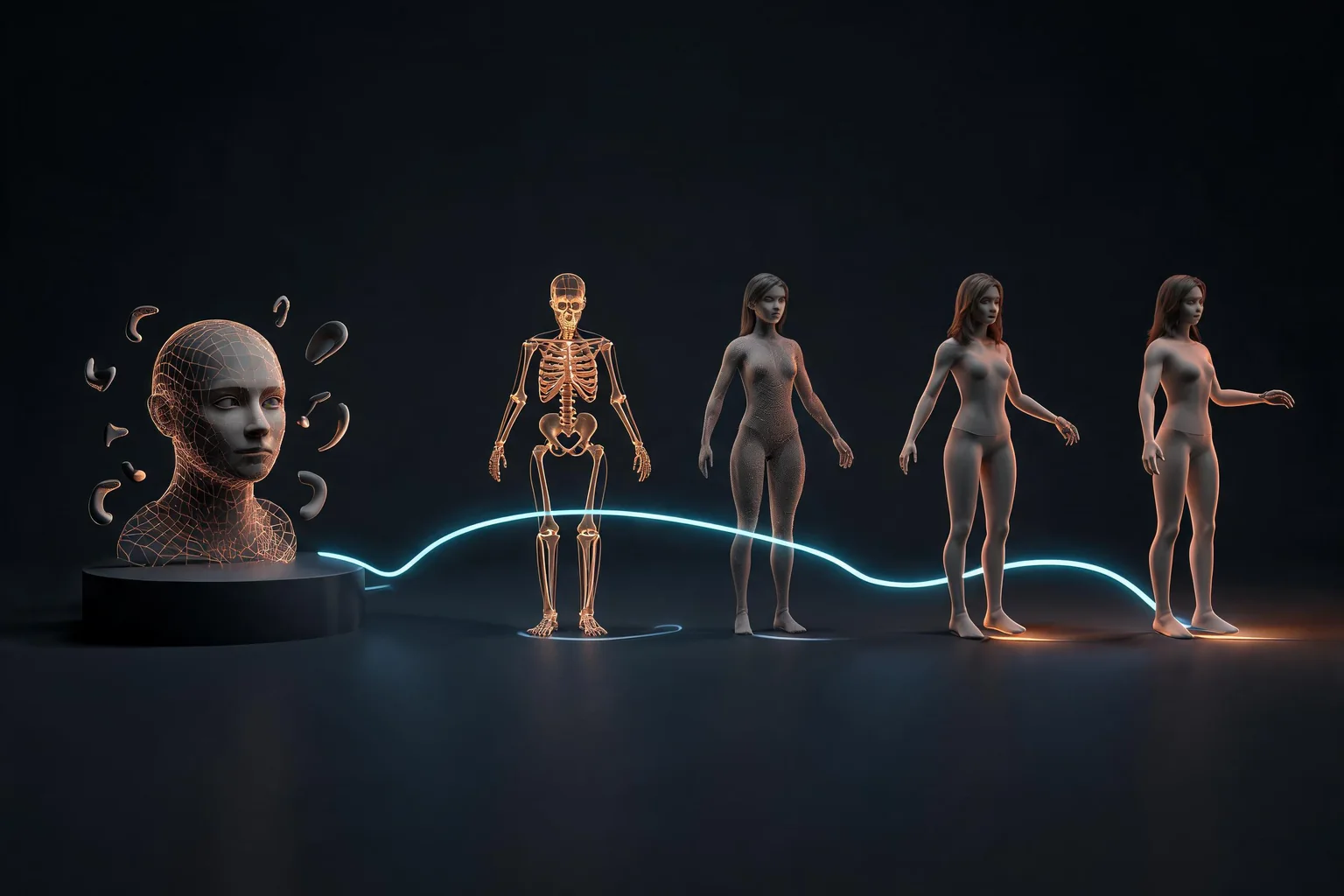
Prepare compatible source data checklist
- State the decision for “Prepare compatible source data” in one sentence.
- Record how skeleton and body compatibility is owned, versioned, and validated.
- Test the related query “unreal engine 5 metahuman tutorial” against the same acceptance criteria.
- Capture pose error, foot sliding, curve continuity, skinning cost, active bones, cloth cost, and memory.
- Keep a reversible working revision and write the limitation that would force rollback.
3. Build the Unreal animation path
“Build the Unreal animation path” means connect import, retargeting, Control Rig, animation assets, and gameplay use. For unreal engine metahuman character, the immediate relationship is between facial and body animation and runtime LOD budget; MetaHuman assembly provides the next constraint that prevents an apparently correct result from becoming a production surprise. Locate those items among skeletons, meshes, rigs, animation sequences, curves, root motion, grooms, cloth, and LODs, name the engine or platform version, and identify who owns the input and output. This turns Unreal Engine MetaHuman Character Workflow Guide from a broad topic into a decision another developer can inspect and repeat.
Apply the decision to unreal metahuman with a narrow, reversible workflow. Open the exact project revision or first-party source, record the current value of facial and body animation, make the smallest change needed to exercise runtime LOD budget, and observe MetaHuman assembly in the editor, runtime, build, or dated public evidence where it actually belongs. Keep a validation clip on the production character with source and target poses, curves, and runtime context visible. Save the relevant settings, asset or map path, hardware or platform, and source publication date so the result remains understandable after the original session ends.
Reject the result if it depends on retargeting by bone-name similarity while ignoring hierarchy, reference pose, scale, and deformation. That failure can make facial and body animation look correct while runtime LOD budget or MetaHuman assembly remains unverified. Restore the known revision, change one owner, restart or rebuild when cached state matters, and repeat the same acceptance path plus one nearby success case. Record pose error, foot sliding, curve continuity, skinning cost, active bones, cloth cost, and memory; if those observations vary across releases or devices, publish the supported range and limitation instead of presenting one machine or screenshot as a universal Unreal rule.
Build the Unreal animation path checklist
- State the decision for “Build the Unreal animation path” in one sentence.
- Record how facial and body animation is owned, versioned, and validated.
- Test the related query “unreal metahuman” against the same acceptance criteria.
- Capture pose error, foot sliding, curve continuity, skinning cost, active bones, cloth cost, and memory.
- Keep a reversible working revision and write the limitation that would force rollback.
4. Inspect deformation and timing
“Inspect deformation and timing” means review joints, root motion, curves, facial shapes, cloth, and camera context. For unreal engine metahuman character, the immediate relationship is between runtime LOD budget and MetaHuman assembly; skeleton and body compatibility provides the next constraint that prevents an apparently correct result from becoming a production surprise. Locate those items among skeletons, meshes, rigs, animation sequences, curves, root motion, grooms, cloth, and LODs, name the engine or platform version, and identify who owns the input and output. This turns Unreal Engine MetaHuman Character Workflow Guide from a broad topic into a decision another developer can inspect and repeat.
Apply the decision to metahuman unreal engine with a narrow, reversible workflow. Open the exact project revision or first-party source, record the current value of runtime LOD budget, make the smallest change needed to exercise MetaHuman assembly, and observe skeleton and body compatibility in the editor, runtime, build, or dated public evidence where it actually belongs. Keep a validation clip on the production character with source and target poses, curves, and runtime context visible. Save the relevant settings, asset or map path, hardware or platform, and source publication date so the result remains understandable after the original session ends.
Reject the result if it depends on retargeting by bone-name similarity while ignoring hierarchy, reference pose, scale, and deformation. That failure can make runtime LOD budget look correct while MetaHuman assembly or skeleton and body compatibility remains unverified. Restore the known revision, change one owner, restart or rebuild when cached state matters, and repeat the same acceptance path plus one nearby success case. Record pose error, foot sliding, curve continuity, skinning cost, active bones, cloth cost, and memory; if those observations vary across releases or devices, publish the supported range and limitation instead of presenting one machine or screenshot as a universal Unreal rule.
Inspect deformation and timing checklist
- State the decision for “Inspect deformation and timing” in one sentence.
- Record how runtime LOD budget is owned, versioned, and validated.
- Test the related query “metahuman unreal engine” against the same acceptance criteria.
- Capture pose error, foot sliding, curve continuity, skinning cost, active bones, cloth cost, and memory.
- Keep a reversible working revision and write the limitation that would force rollback.
5. Troubleshoot broken character results
“Troubleshoot broken character results” means separate skeleton, mesh, groom, retarget, solver, and LOD causes. For unreal engine metahuman character, the immediate relationship is between MetaHuman assembly and skeleton and body compatibility; facial and body animation provides the next constraint that prevents an apparently correct result from becoming a production surprise. Locate those items among skeletons, meshes, rigs, animation sequences, curves, root motion, grooms, cloth, and LODs, name the engine or platform version, and identify who owns the input and output. This turns Unreal Engine MetaHuman Character Workflow Guide from a broad topic into a decision another developer can inspect and repeat.
Apply the decision to unreal engine metahuman with a narrow, reversible workflow. Open the exact project revision or first-party source, record the current value of MetaHuman assembly, make the smallest change needed to exercise skeleton and body compatibility, and observe facial and body animation in the editor, runtime, build, or dated public evidence where it actually belongs. Keep a validation clip on the production character with source and target poses, curves, and runtime context visible. Save the relevant settings, asset or map path, hardware or platform, and source publication date so the result remains understandable after the original session ends.
Reject the result if it depends on retargeting by bone-name similarity while ignoring hierarchy, reference pose, scale, and deformation. That failure can make MetaHuman assembly look correct while skeleton and body compatibility or facial and body animation remains unverified. Restore the known revision, change one owner, restart or rebuild when cached state matters, and repeat the same acceptance path plus one nearby success case. Record pose error, foot sliding, curve continuity, skinning cost, active bones, cloth cost, and memory; if those observations vary across releases or devices, publish the supported range and limitation instead of presenting one machine or screenshot as a universal Unreal rule.

Troubleshoot broken character results checklist
- State the decision for “Troubleshoot broken character results” in one sentence.
- Record how MetaHuman assembly is owned, versioned, and validated.
- Test the related query “unreal engine metahuman” against the same acceptance criteria.
- Capture pose error, foot sliding, curve continuity, skinning cost, active bones, cloth cost, and memory.
- Keep a reversible working revision and write the limitation that would force rollback.
6. Control runtime and memory cost
“Control runtime and memory cost” means budget bones, skinning, cloth, grooms, curves, updates, and LODs. For unreal engine metahuman character, the immediate relationship is between skeleton and body compatibility and facial and body animation; runtime LOD budget provides the next constraint that prevents an apparently correct result from becoming a production surprise. Locate those items among skeletons, meshes, rigs, animation sequences, curves, root motion, grooms, cloth, and LODs, name the engine or platform version, and identify who owns the input and output. This turns Unreal Engine MetaHuman Character Workflow Guide from a broad topic into a decision another developer can inspect and repeat.
Apply the decision to metahuman unreal engine tutorial with a narrow, reversible workflow. Open the exact project revision or first-party source, record the current value of skeleton and body compatibility, make the smallest change needed to exercise facial and body animation, and observe runtime LOD budget in the editor, runtime, build, or dated public evidence where it actually belongs. Keep a validation clip on the production character with source and target poses, curves, and runtime context visible. Save the relevant settings, asset or map path, hardware or platform, and source publication date so the result remains understandable after the original session ends.
Reject the result if it depends on retargeting by bone-name similarity while ignoring hierarchy, reference pose, scale, and deformation. That failure can make skeleton and body compatibility look correct while facial and body animation or runtime LOD budget remains unverified. Restore the known revision, change one owner, restart or rebuild when cached state matters, and repeat the same acceptance path plus one nearby success case. Record pose error, foot sliding, curve continuity, skinning cost, active bones, cloth cost, and memory; if those observations vary across releases or devices, publish the supported range and limitation instead of presenting one machine or screenshot as a universal Unreal rule.
Control runtime and memory cost checklist
- State the decision for “Control runtime and memory cost” in one sentence.
- Record how skeleton and body compatibility is owned, versioned, and validated.
- Test the related query “metahuman unreal engine tutorial” against the same acceptance criteria.
- Capture pose error, foot sliding, curve continuity, skinning cost, active bones, cloth cost, and memory.
- Keep a reversible working revision and write the limitation that would force rollback.
7. Package a repeatable character workflow
“Package a repeatable character workflow” means record source files, versions, ownership, validation clips, and fallback assets. For unreal engine metahuman character, the immediate relationship is between facial and body animation and runtime LOD budget; MetaHuman assembly provides the next constraint that prevents an apparently correct result from becoming a production surprise. Locate those items among skeletons, meshes, rigs, animation sequences, curves, root motion, grooms, cloth, and LODs, name the engine or platform version, and identify who owns the input and output. This turns Unreal Engine MetaHuman Character Workflow Guide from a broad topic into a decision another developer can inspect and repeat.
Apply the decision to unreal engine 5 metahuman tutorial with a narrow, reversible workflow. Open the exact project revision or first-party source, record the current value of facial and body animation, make the smallest change needed to exercise runtime LOD budget, and observe MetaHuman assembly in the editor, runtime, build, or dated public evidence where it actually belongs. Keep a validation clip on the production character with source and target poses, curves, and runtime context visible. Save the relevant settings, asset or map path, hardware or platform, and source publication date so the result remains understandable after the original session ends.
Reject the result if it depends on retargeting by bone-name similarity while ignoring hierarchy, reference pose, scale, and deformation. That failure can make facial and body animation look correct while runtime LOD budget or MetaHuman assembly remains unverified. Restore the known revision, change one owner, restart or rebuild when cached state matters, and repeat the same acceptance path plus one nearby success case. Record pose error, foot sliding, curve continuity, skinning cost, active bones, cloth cost, and memory; if those observations vary across releases or devices, publish the supported range and limitation instead of presenting one machine or screenshot as a universal Unreal rule.
Package a repeatable character workflow checklist
- State the decision for “Package a repeatable character workflow” in one sentence.
- Record how facial and body animation is owned, versioned, and validated.
- Test the related query “unreal engine 5 metahuman tutorial” against the same acceptance criteria.
- Capture pose error, foot sliding, curve continuity, skinning cost, active bones, cloth cost, and memory.
- Keep a reversible working revision and write the limitation that would force rollback.
SEELE AI Unreal 5 workflow: generate, preview, optimize, package, and publish
SEELE AI is useful before or alongside Unreal production when the team needs to compare a scene direction, player loop, camera feel, content brief, or test plan. Open the canonical Unreal landing page, choose a real workspace card, and carry the prompt into the browser generation workspace with its source attribution intact.
SEELE AI can generate a native Unreal 5 game, preview it in-browser, optimize and package it, and provide a downloadable game or packaged build for external publishing or paid Seele games. Sales are not guaranteed.
Official sources and related Unreal guides
This page is an independent workflow guide. Engine behavior changes across releases, plugins, platforms, and project settings, so confirm version-specific details in Epic documentation and preserve the evidence used for your decision.
- MetaHuman documentation — first-party material for product scope, workflow, version, or policy checks; use only the claims the source actually states.
- Animation and rigging — first-party material for product scope, workflow, version, or policy checks; use only the claims the source actually states.
Continue through the cluster
FAQs
What is the direct answer for unreal engine metahuman character?
For unreal engine metahuman character, preserve compatibility across MetaHuman assembly, skeleton and body compatibility, and facial and body animation from source data through runtime playback. Validate deformation, timing, root motion, and runtime LOD budget on the production character, then budget bones, cloth, grooms, curves, LODs, and memory on target hardware. Verify the answer against the named official sources and their dates because engine releases, licensing, platform support, and live games can change after an older article was published.
What should I prepare before following this tutorial?
Prepare a known project revision, the exact Unreal Engine version, target platform or hardware, and the source files or public evidence for MetaHuman assembly and skeleton and body compatibility. Choose one representative map, asset, build, or source claim, write the expected result for facial and body animation, and define a rollback condition before changing project state.
How should I validate metahuman unreal engine tutorial?
Use a validation clip on the production character with source and target poses, curves, and runtime context visible. Capture MetaHuman assembly, skeleton and body compatibility, and facial and body animation under the same version and test conditions, then rerun a nearby success case and inspect runtime LOD budget. Save the settings, revision, source date, and result so another developer can understand it without the original editor session or a verbal explanation.
Which mistake most often weakens this workflow?
The recurring mistake is retargeting by bone-name similarity while ignoring hierarchy, reference pose, scale, and deformation. For this topic, that usually hides the boundary between MetaHuman assembly and skeleton and body compatibility or leaves facial and body animation untested. Preserve the first evidence, identify the owning system or source, make one reversible change, and measure pose error, foot sliding, curve continuity, skinning cost, active bones, cloth cost, and memory against the same acceptance criteria.
Can SEELE AI create or compile the native Unreal result described here?
SEELE AI can generate a native Unreal 5 game, preview it in-browser, optimize and package it, and provide a downloadable game or packaged build for external publishing or paid Seele games. Sales are not guaranteed.
When is Unreal Engine MetaHuman Character Workflow Guide ready for team handoff?
It is ready when another person can locate the source and license, open the exact revision, reproduce MetaHuman assembly through runtime LOD budget, inspect pose error, foot sliding, curve continuity, skinning cost, active bones, cloth cost, and memory, understand the supported versions and limitations, and restore the last working state. A concept image or one successful editor run is not sufficient handoff evidence.