Brain Teaser - Logic Puzzle Game - Puzzle Game
Prompt
Game Introduction
About Brain Teaser
Brain Teaser is an engaging logic puzzle game designed to challenge your mind and test your ability to think creatively. This free online brain training game presents you with a series of thought-provoking questions and riddles that often have unexpected solutions. The game's core concept revolves around lateral thinking - you'll need to approach problems from unique angles to avoid falling into obvious traps.
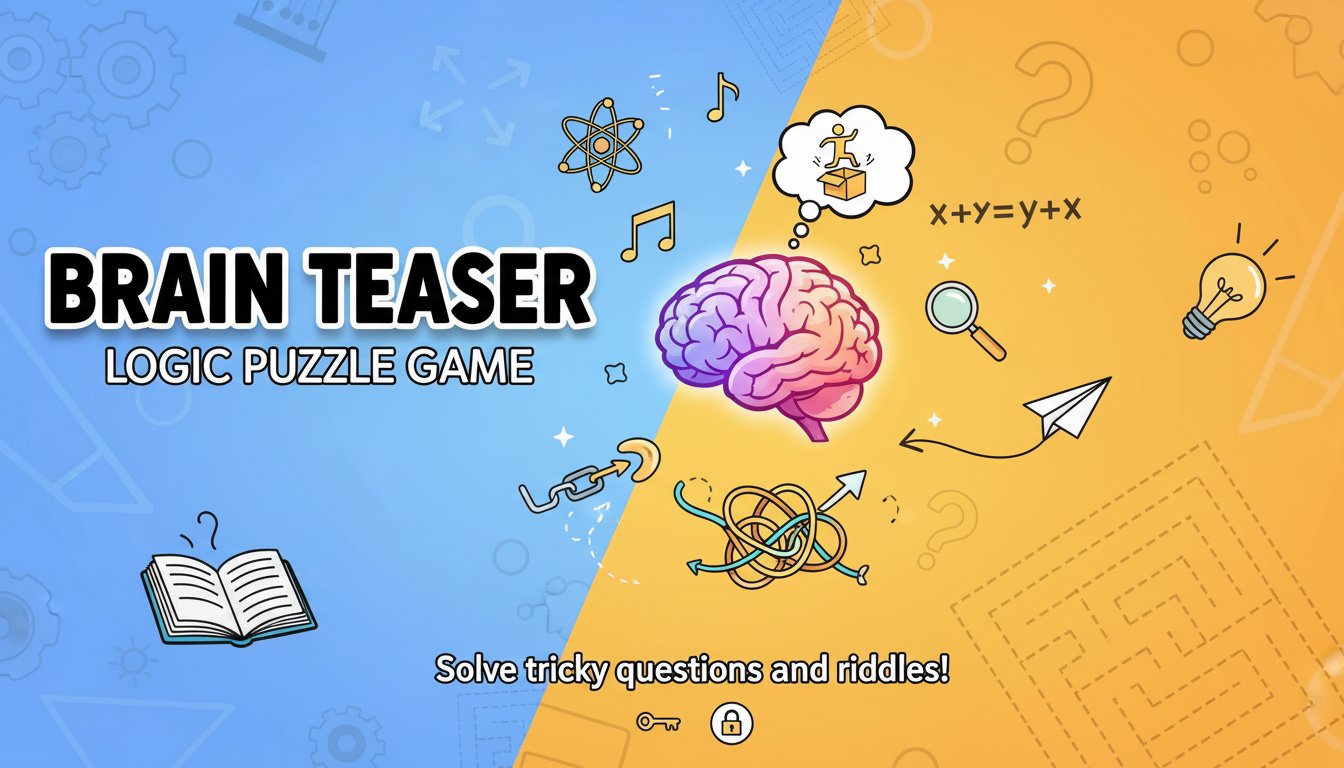
The game features a clean, minimalist design with mathematical symbols, books, and brain-related imagery that creates the perfect atmosphere for mental challenges. Each question is carefully crafted to make you reconsider your initial assumptions and think beyond conventional logic.
Core Features
Mind-Bending Question Format
Brain Teaser presents puzzles in various formats including multiple choice questions, visual riddles, and logical sequences. Each question is designed to test different aspects of your cognitive abilities, from pattern recognition to creative problem-solving.
Progressive Difficulty System
The game starts with relatively simple brain teasers and gradually increases in complexity. This progressive approach ensures that players of all skill levels can enjoy the challenge while continuously improving their logical thinking abilities.
Instant Feedback and Learning
When you answer incorrectly, the game provides explanations to help you understand the logic behind the correct solution. This educational approach transforms each mistake into a valuable learning opportunity.
Cross-Platform Accessibility
- Completely Free : No payment required to access the full game experience
- No Download Needed : Play instantly in your web browser
- Mobile Friendly : Optimized for both desktop computers and mobile devices
- Universal Compatibility : Works on all modern browsers including Chrome, Firefox, Safari, and Edge
Game Mechanics
The gameplay revolves around reading each question carefully and selecting the most logical answer from the given options. However, the key to success lies in questioning your assumptions and considering alternative interpretations of the presented information.
Types of Brain Teasers
- Lateral thinking puzzles that require creative problem-solving
- Mathematical riddles with unexpected twists
- Visual puzzles that test observation skills
- Word play challenges involving language and logic
- Sequential pattern recognition tests
Operation Guide
Brain Teaser features intuitive mouse-based controls that make it accessible to players of all ages:
- Mouse Click : Select your answer from multiple choice options
- Hover : Review different answer choices before making your selection
- Navigation : Use on-screen buttons to move between questions
- Progress Tracking : Monitor your performance and see how many questions you've answered correctly
The simple control scheme ensures that the focus remains entirely on the mental challenge rather than complex game mechanics.
Why Play Brain Teaser
Brain Teaser offers more than just entertainment - it's a comprehensive brain training experience that can help improve your cognitive abilities. Regular play can enhance your:
- Critical thinking skills through challenging logical scenarios
- Problem-solving abilities by encountering diverse puzzle types
- Attention to detail through carefully worded questions
- Creative thinking by learning to approach problems from multiple angles
- Mental flexibility through exposure to unconventional solutions
The game is perfect for students looking to sharpen their analytical skills, professionals wanting to maintain mental acuity, or anyone who enjoys the satisfaction of solving challenging puzzles. With its browser-based format, you can enjoy quick brain training sessions during breaks or engage in longer puzzle-solving marathons.
Educational Benefits
Brain Teaser serves as an excellent educational tool for developing logical reasoning and critical thinking skills. Teachers and parents often use similar puzzle formats to help students learn to question assumptions and think more analytically about problems they encounter in academic and real-world situations.