
Jelly Cat - Physics Puzzle Game - Puzzle Game
 Action
Open World City Action
Build an open-world city romp with driving and police chases.
 New
NewFirst-Person Horror Survival
Build a first-person horror survival with exploration and enemies.
 Unity
UnityCastle Devour Quest
Build a Unity castle quest with risky rooms and a win goal.
 Shooter
Decay Zone Survival
Build a first-person zombie survival with ammo management.
 Arcade
Pumpkin Night Adventure
Build a Halloween grid-arena survival romp.
 Racing
Track Racing Challenge
Build a closed-circuit racer built around drift corners.
 Subscriber only
Unreal City Tour
Explore a photoreal Unreal city with terrain and live weather.
 Adventure
Character Adventure Sim
Build a 3D character explorer with traversal and interactive zones.
 Puzzle
Magic Cube Puzzle
Build an interactive Rubik's Cube with scramble and reset.
 Survival
Survival Sandbox Arena
Build a survival arena with enemy waves and turret defense.
ActionOpen World City Action
Build an open-world city romp with driving and police chases.
NewFirst-Person Horror Survival
Build a first-person horror survival with exploration and enemies.
UnityCastle Devour Quest
Build a Unity castle quest with risky rooms and a win goal.
ShooterDecay Zone Survival
Build a first-person zombie survival with ammo management.
ArcadePumpkin Night Adventure
Build a Halloween grid-arena survival romp.
RacingTrack Racing Challenge
Build a closed-circuit racer built around drift corners.
Subscriber onlyUnreal City Tour
Explore a photoreal Unreal city with terrain and live weather.
AdventureCharacter Adventure Sim
Build a 3D character explorer with traversal and interactive zones.
PuzzleMagic Cube Puzzle
Build an interactive Rubik's Cube with scramble and reset.
SurvivalSurvival Sandbox Arena
Build a survival arena with enemy waves and turret defense.
Prompt

Games are fun. Creating them is even better.
Game Introduction
About Jelly Cat
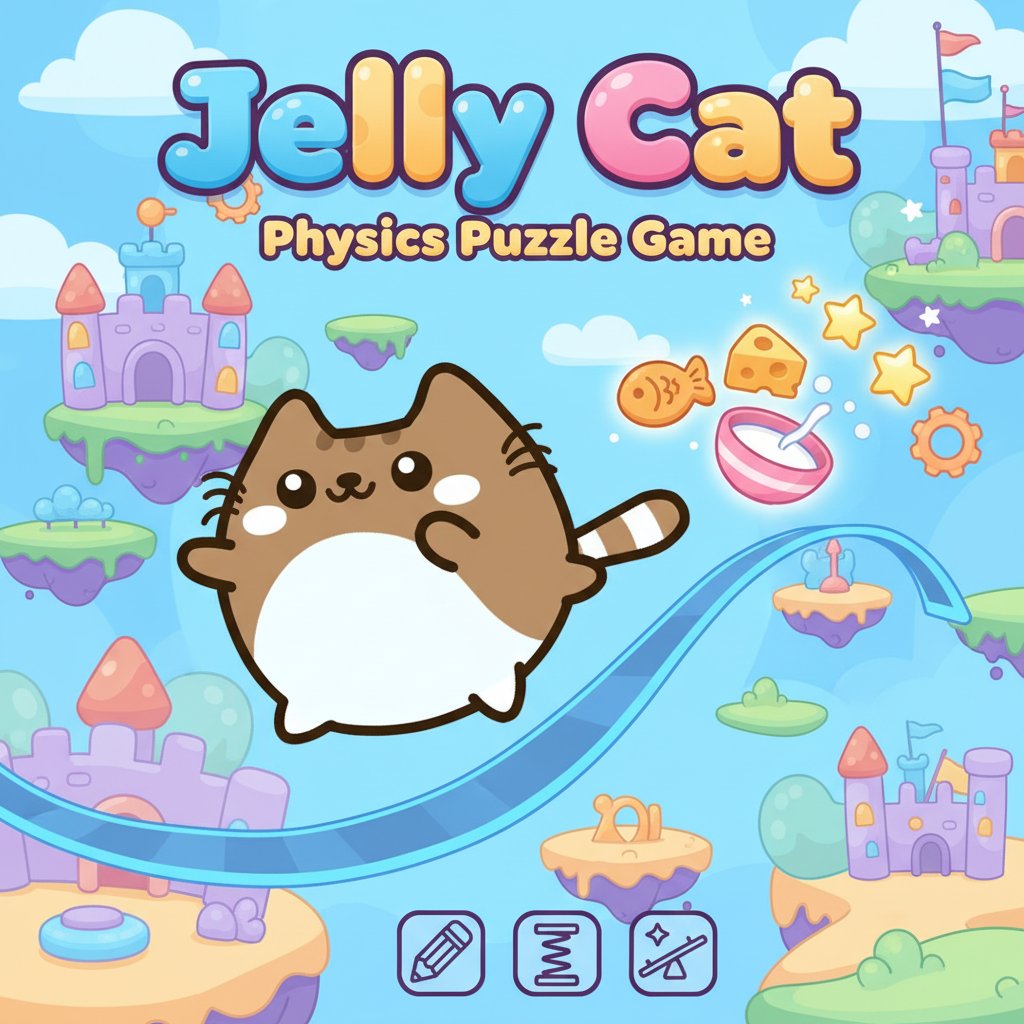
Jelly Cat is an engaging physics-based puzzle game that combines adorable cat characters with creative problem-solving gameplay. In this delightful brain teaser, your mission is to help a cute, bouncy cat reach tasty snacks by drawing strategic lines and shapes. The game challenges players to think creatively while using physics mechanics to guide their feline friend through increasingly complex levels.
With its charming cartoon art style featuring an irresistibly cute brown and white cat character, Jelly Cat appeals to puzzle enthusiasts of all ages. The game's intuitive drawing mechanics make it easy to learn but challenging to master, offering hours of engaging gameplay completely free in your browser.
Core Features
Creative Physics-Based Gameplay
Jelly Cat stands out with its innovative drawing mechanics that let you create custom solutions for each puzzle. Draw lines, ramps, and barriers to manipulate your cat's movement using realistic physics. Every level can be solved in multiple ways, encouraging experimentation and creative thinking.
3-Star Rating System
Perfect your puzzle-solving skills with the challenging 3-star rating system. Earn maximum stars by creating the most efficient solutions using the shortest possible lines. This scoring system adds replay value as you strive to optimize your strategies and achieve perfect ratings on every level.
Progressive Difficulty
Start with simple introductory puzzles and gradually face more complex challenges that test your spatial reasoning and physics understanding. Each new level introduces fresh obstacles and mechanics, keeping the gameplay exciting and mentally stimulating.
Adorable Visual Design
Enjoy the game's charming cartoon aesthetic featuring the loveable Jelly Cat character. The bright, colorful graphics and cute animations create a cozy, family-friendly atmosphere that makes puzzle-solving a delightful experience.
How to Play
Basic Controls
- Mouse : Click and drag to draw lines and shapes
- Left Click : Start drawing from any point
- Drag : Create lines, ramps, or barriers
- Release : Complete your drawn shape
Gameplay Strategy
- Analyze the Level : Study the cat's starting position and snack location
- Plan Your Route : Consider how physics will affect your cat's movement
- Draw Efficiently : Use the minimum number of lines for higher scores
- Test and Adjust : Experiment with different line angles and positions
- Use Environment : Incorporate existing platforms and obstacles in your solutions
Scoring Tips
- Draw the shortest possible lines to maximize your star rating
- Use gravity and momentum to your advantage
- Consider multiple solution paths before drawing
- Practice levels to discover more efficient strategies
Why Play Jelly Cat
Perfect Brain Training : Jelly Cat offers excellent mental exercise, improving spatial reasoning, problem-solving skills, and creative thinking. Each puzzle requires you to visualize physics interactions and plan effective solutions.
Relaxing Yet Challenging : The game strikes an ideal balance between cozy, stress-free gameplay and engaging mental challenges. Its cute aesthetic and gentle music create a calming atmosphere while the puzzles keep your mind active.
Completely Free : Enjoy the full Jelly Cat experience at no cost. Play directly in your browser without downloads, subscriptions, or hidden fees. All levels and features are accessible immediately.
Family-Friendly Fun : With its adorable cat theme and non-violent puzzle mechanics, Jelly Cat is perfect for players of all ages. Parents and children can enjoy solving puzzles together.
Endless Replayability : The 3-star system and multiple solution paths ensure lasting entertainment value. Return to earlier levels to improve your ratings or discover new creative solutions.