
The Evolution of Trust - Puzzle Game
 New
NewRiver Raid Survival
Build a River Raid-style flight survival run with fuel pressure.
 FPS
FPSNight Mission Survival
Build a first-person night survival with flashlight combat.
 Unity
UnityChaos Train Arcade
Build a chaotic Unity train arcade of hazards and timing.

Time-Attack Racer
Build a no-physics finish-gate racer with nitro, minimap guidance, and synthesized audio.
 Subscriber only
Unreal Top-Down Roguelite
Create a complete UE 5.5 top-down arena roguelite with upgrades and a boss finale.
 Unity
UnityCity Eater
Build a Unity game where a growing blob devours the city.
 Unity
UnityEgg on the Car Roof
Build a Unity challenge: keep a fragile egg on a moving roof.
 New
NewArcade Crossing Game
Build a lane-dodging arcade game with traffic and pickups.
 New
New3D Block Puzzle
Build a 3D falling-block puzzle with rotations and row clears.
 Subscriber only
Unreal Mountain Tour
Tour a third-person Unreal world of mountains and water.
NewRiver Raid Survival
Build a River Raid-style flight survival run with fuel pressure.
FPSNight Mission Survival
Build a first-person night survival with flashlight combat.
UnityChaos Train Arcade
Build a chaotic Unity train arcade of hazards and timing.
Time-Attack Racer
Build a no-physics finish-gate racer with nitro, minimap guidance, and synthesized audio.
Subscriber onlyUnreal Top-Down Roguelite
Create a complete UE 5.5 top-down arena roguelite with upgrades and a boss finale.
UnityCity Eater
Build a Unity game where a growing blob devours the city.
UnityEgg on the Car Roof
Build a Unity challenge: keep a fragile egg on a moving roof.
NewArcade Crossing Game
Build a lane-dodging arcade game with traffic and pickups.
New3D Block Puzzle
Build a 3D falling-block puzzle with rotations and row clears.
Subscriber onlyUnreal Mountain Tour
Tour a third-person Unreal world of mountains and water.
Prompt
Games are fun. Creating them is even better.
Game Introduction
About the Game
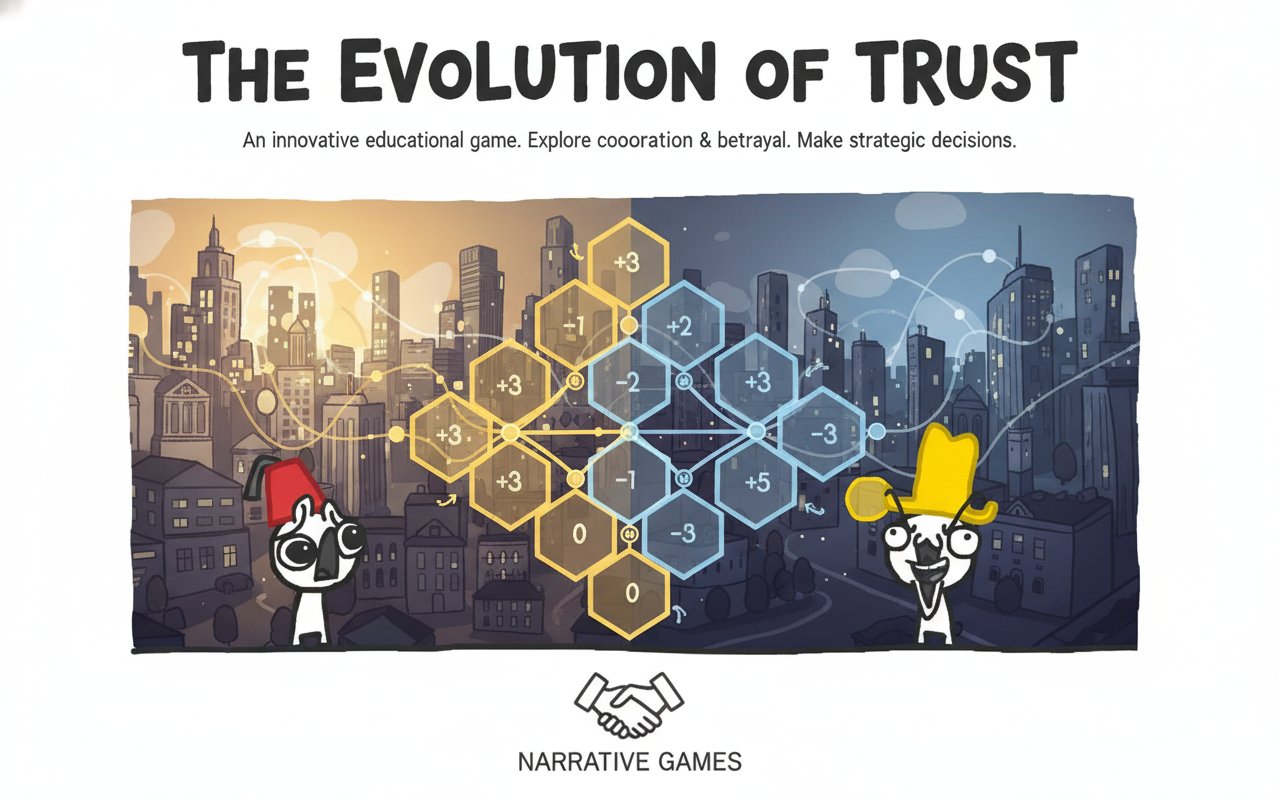
The Evolution of Trust is a fascinating educational simulation that challenges players to explore the complex dynamics of cooperation, trust, and betrayal. This interactive experience combines engaging gameplay with deep psychological insights, making it both entertaining and educational. The game presents players with strategic choices that reveal fundamental truths about human nature and social cooperation.
Core Features
Interactive Game Theory Experience
This unique simulation offers approximately 30 minutes of engaging gameplay that will change how you think about trust and cooperation. The game features beautiful, minimalist artwork that perfectly complements its thought-provoking content.
Multiple Game Modes
With eight different game modes, players can explore various scenarios and strategies:
- Classic Mode : The traditional prisoner's dilemma setup
- Tournament Mode : Compete against different AI strategies
- Evolution Mode : Watch cooperation strategies evolve over time
- Sandbox Mode : Create custom scenarios and test theories
- Educational Scenarios : Learn about famous game theory experiments
Deep Learning Experience
The game doesn't just entertain—it educates. Players learn about: - Cooperation theory and its real-world applications - The psychology of trust and betrayal - Strategic thinking and decision-making - Social dynamics and human behavior patterns
Gameplay Mechanics
The core gameplay revolves around a simple yet profound choice: cooperate or defect. You and an AI opponent simultaneously decide whether to work together or attempt to exploit each other for personal gain.
The Trust Machine
Players interact with a central "trust machine" where they deposit coins and make crucial decisions:
- Mutual Cooperation : Both players gain coins, building trust
- Mutual Defection : Both players lose, destroying potential gains
- Mixed Strategies : One player exploits while the other cooperates
Strategic Depth
Each decision affects future interactions, creating complex patterns of behavior. The game reveals how small choices compound over time, demonstrating the long-term value of trustworthy behavior versus short-term exploitation.
Operation Guide
The game features intuitive controls designed for accessibility:
- Mouse Control : Use the left mouse button for all interactions
- Point and Click Interface : Simply click on your chosen action
- Visual Feedback : Clear graphics show the results of each round
- Progress Tracking : Monitor your coin balance and relationship dynamics
The interface is designed to be immediately understandable, allowing players to focus on the strategic and psychological aspects rather than complicated controls.
Why Play This Game
Educational Value
This isn't just a game—it's an interactive lesson in psychology, economics, and social science. Perfect for students, educators, and anyone interested in understanding human behavior and decision-making processes.
Thought-Provoking Content
The Evolution of Trust challenges players to examine their own assumptions about trust, cooperation, and human nature. It's a rare gaming experience that can genuinely change how you view social interactions.
Accessibility
As a free web browser game, it's accessible to anyone with an internet connection. No downloads, no registration required—just pure, educational gaming that fits into any schedule with its 30-minute playtime.
Real-World Applications
The concepts explored in the game apply to numerous real-world situations: business negotiations, international relations, community building, and personal relationships. Understanding these dynamics can improve decision-making in countless scenarios.