
Little Master Cricket - Sports Game
 Unity
UnityEndless Runner
Build a polished Unity endless runner with lanes and pickups.
 Driving
City Car Driving
Build an open-city free-driving game with car selection.
 New
NewCharacter Physics World
Build a third-person physics world with day-night and props to touch.
 Shooter
Decay Zone Survival
Build a first-person zombie survival with ammo management.
 Unity
UnityCrimson Illusion Battle
Build a Unity fantasy battle through a crimson illusion realm.
 Action
Open World City Action
Build an open-world city romp with driving and police chases.
 SEELE02 CORE
Game Generator
Turn a one-line idea into a playable game demo.
 New
NewDrone Flight Combat
Build a cinematic drone combat run with missiles and a HUD.
 Subscriber only
Unreal Mountain Tour
Tour a third-person Unreal world of mountains and water.
 Unity
UnityCastle Devour Quest
Build a Unity castle quest with risky rooms and a win goal.
UnityEndless Runner
Build a polished Unity endless runner with lanes and pickups.
DrivingCity Car Driving
Build an open-city free-driving game with car selection.
NewCharacter Physics World
Build a third-person physics world with day-night and props to touch.
ShooterDecay Zone Survival
Build a first-person zombie survival with ammo management.
UnityCrimson Illusion Battle
Build a Unity fantasy battle through a crimson illusion realm.
ActionOpen World City Action
Build an open-world city romp with driving and police chases.
SEELE02 COREGame Generator
Turn a one-line idea into a playable game demo.
NewDrone Flight Combat
Build a cinematic drone combat run with missiles and a HUD.
Subscriber onlyUnreal Mountain Tour
Tour a third-person Unreal world of mountains and water.
UnityCastle Devour Quest
Build a Unity castle quest with risky rooms and a win goal.
Prompt

Games are fun. Creating them is even better.
Game Introduction
About the Game
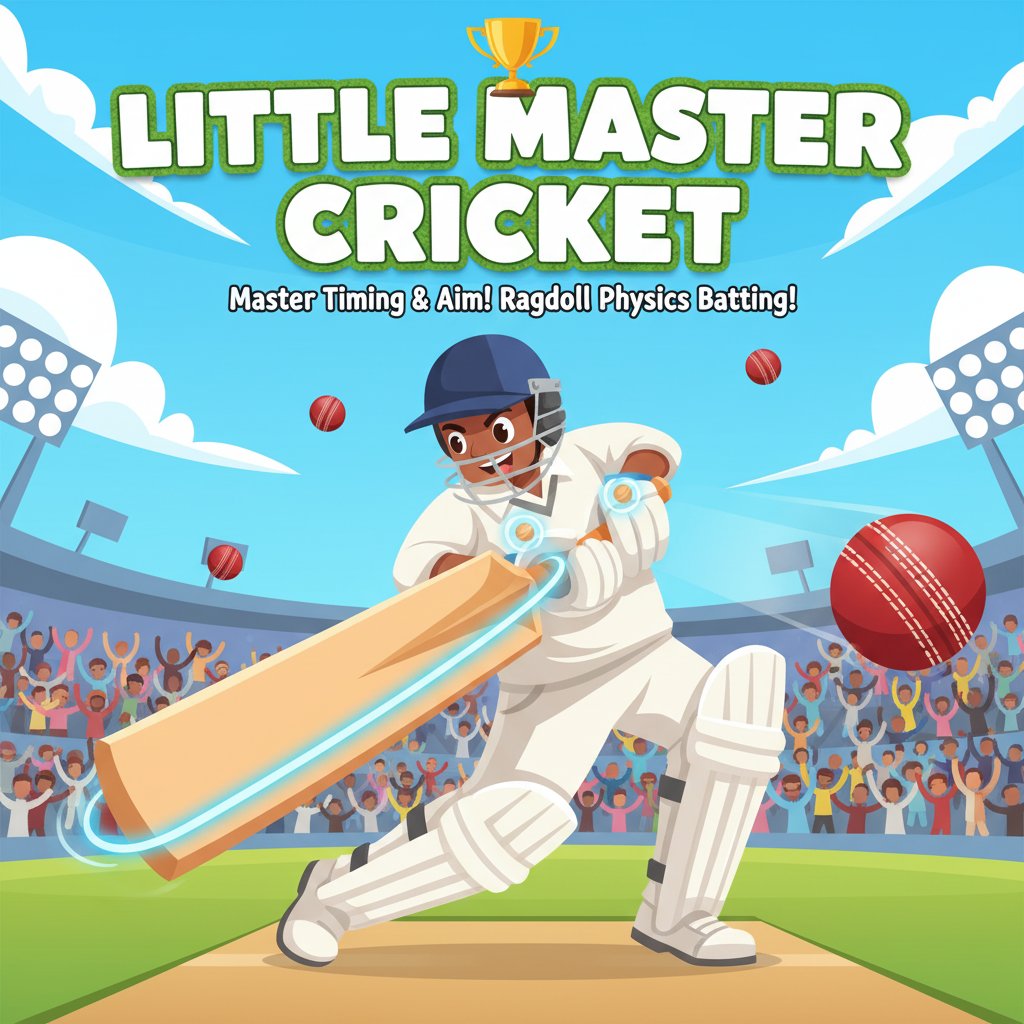
Little Master Cricket is a revolutionary cricket batting game that redefines how you experience this beloved sport. Unlike traditional cricket games, this innovative title features a sophisticated ragdoll physics engine and a unique control scheme that puts you in direct command of the bat. Whether you prefer playing defensively to protect your stumps or aggressively slogging your way to a quick century, the game offers multiple strategic approaches to master.
The game challenges players to demonstrate exceptional concentration and batting skills across various difficulty levels. Your ultimate goal is to earn the prestigious title of "Little Master" and be declared world champion through consistent performance and strategic gameplay.
Core Features
Revolutionary Physics Engine
The standout feature of Little Master Cricket is its advanced ragdoll physics system that creates realistic and unpredictable batting dynamics. Every swing feels authentic, with the bat responding naturally to your input while the ball behaves according to real-world physics principles.
Dual Strategy Gameplay
Choose your playing style based on the situation: - Defensive Play : Focus on protecting your stumps and building a solid innings - Aggressive Batting : Go for quick runs and attempt to reach centuries rapidly
Strategic Scoring Zones
The playing field features distinct zones that determine your success: - Striped Scoring Zones : Target these areas to accumulate runs safely - Yellow-and-Black Danger Zones : Avoid these at all costs to prevent being caught out
Skill-Based Progression
Success requires developing genuine batting skills including timing, placement, and strategic thinking. The game rewards players who master these fundamentals with higher scores and championship recognition.
Gameplay Mechanics
Batting Control System
The innovative control scheme allows direct manipulation of the bat, giving you unprecedented control over your shots. This system requires practice to master but offers incredibly satisfying gameplay once you develop the necessary skills.
Defensive Strategy
Protecting your stumps is crucial for survival in longer innings. Learn to read the ball's trajectory and position your bat accordingly to prevent being bowled out.
Scoring Strategy
Maximize your runs by consistently hitting the ball into striped scoring zones while carefully avoiding the dangerous yellow-and-black areas where fielders are positioned to catch you out.
Operation Guide
Basic Controls: - Use mouse or touch controls to swing the bat - Control the bat's angle and timing for different shot types - Defend your stumps by positioning the bat correctly
Gameplay Tips: - Study the ball's approach before committing to a shot - Aim for the striped zones to score safely - Avoid aggressive shots when the ball is heading toward danger zones - Practice timing to improve your batting average
Why Play Little Master Cricket
This game stands out in the crowded sports gaming market through its innovative approach to cricket simulation. The ragdoll physics create unpredictable and entertaining moments, while the skill-based gameplay ensures lasting appeal. Whether you're a cricket enthusiast or new to the sport, the game offers an accessible yet challenging experience that grows with your abilities.
The combination of strategic depth and physics-based fun makes every session unique. You'll find yourself constantly improving your technique while enjoying the satisfying feel of a well-timed shot. The game's difficulty curve ensures that both casual players and serious gamers can find their appropriate challenge level.
Perfect for quick gaming sessions or extended practice, Little Master Cricket delivers authentic cricket excitement without the complexity of full simulation games.