GPT-5.6 game alternative · prompt to playable mini game · mobile game studios
A GPT-5.6 alternative for prompt to playable mini game work.
Use SEELE AI when GPT-5.6-style ideation needs to become browser mini game loop with controls, score feedback, and a review package for UA creative queues, prototype reviews, and mechanic-market-fit checks.
Prompt to Playable Mini Gametap-to-collect challengeprompt-to-loop packageMobile Game Studios
GPT-5.6-style ideation · Prompt to Playable Mini Game · reviewable playable output · Mobile Game Studios
Preview evidence
Mobile Game Studios need prompt to playable mini game proof, not another generic game prompt.
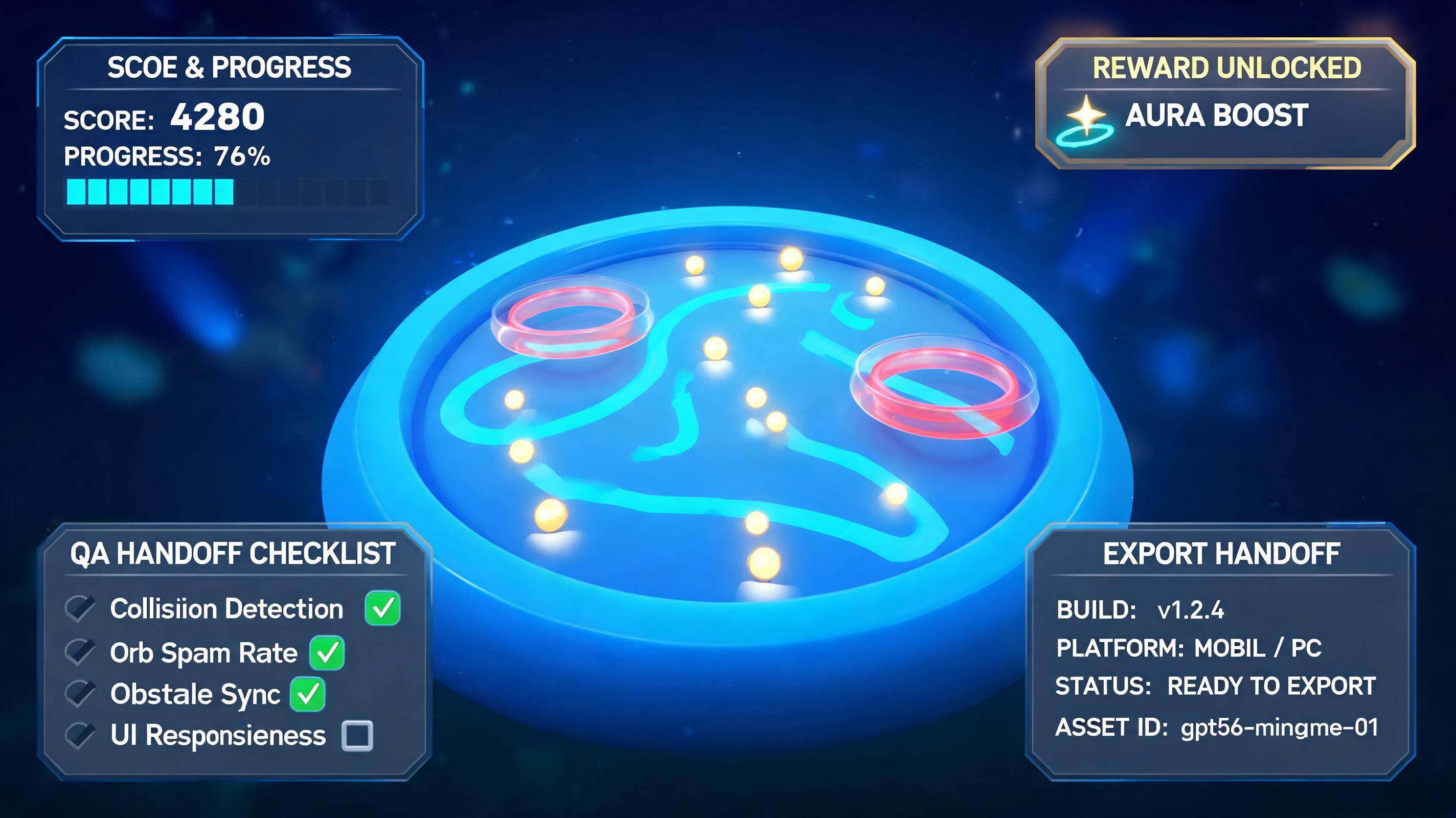
The useful output is browser mini game loop with controls, score feedback, and a review package: a focused playable direction with state notes, prompt-to-loop package, and handoff questions that let mobile game studios judge production value before more code or creative budget is spent.
Evidence check Checks: first action visible, browser/mobile frame, asset rows, QA notes, CTA copy, and gpt56-prompt-to-playable-mini-game-mobile-game-studios attribution.
Workflow
From intent to a concrete playable direction.
Frame the prompt to playable mini game brief
Mobile Game Studios bring prompt, audience, theme, and desired player action; SEELE AI narrows it into one player promise, one first action, and one approval question instead of another open-ended chat thread.
Build tap-to-collect challenge proof
The workflow packages tap-to-collect challenge with visible controls, feedback, reward or failure state, and the exact page or ad context mobile game studios need to evaluate.
Hand off studio production notes
Export the prompt-to-loop package, asset rows, QA checks, CTA copy, and next production questions so mobile game studios can decide whether to test, revise, or stop.
Positioning
Each page is built around a specific buyer job.
03 search intent
GPT-5.6 prompt to playable mini game alternative maps to turn a prompt into a browser-playable mini game, not a generic AI game generator promise.
Mobile Game Studios value
The page explains why a specialized playable workflow helps when need gameplay evidence before deciding which ideas deserve production slots.
Production proof
SEELE AI emphasizes prompt-to-loop package, visible game states, and producers can compare player input, reward timing, asset rows, and QA notes.
Who it is for
For mobile game studios evaluating GPT-5.6 or GPT-5.6-style models for teams turning a prompt into a browser-playable mini game.
Mobile Game Studios may use GPT-5.6-style models to draft ideas, prompts, or starter code. This page is for the next step: need gameplay evidence before deciding which ideas deserve production slots. SEELE AI keeps the work centered on a reviewable playable artifact for UA creative queues, prototype reviews, and mechanic-market-fit checks. The specific comparison is GPT-5.6 prompt to playable mini game alternative, so the proof stays tied to that buyer job instead of a recycled game-generator page.
Mobile Game Studios compare a GPT-5.6-style idea against a SEELE AI playable artifact before investing in production.
Mobile Game Studios turn prompt, audience, theme, and desired player action into a concrete first action and reward or failure state.
Mobile Game Studios share prompt-to-loop package with reviewers who need more than a prompt transcript.
Mobile Game Studios lower rework risk by checking controls, states, asset scope, and CTA copy early.
Examples
Show the input, the output, and why it matters.
Input
Mobile Game Studios bring prompt, audience, theme, and desired player action after drafting ideas in a GPT-5.6-style model.
Output
SEELE AI frames tap-to-collect challenge, visible states, prompt-to-loop package, and a review path for UA creative queues, prototype reviews, and mechanic-market-fit checks.
Use
Decide whether the prompt to playable mini game should move into testing, client review, or production planning.
Input
A reviewer asks whether the concept is specific enough for mobile game studios.
Output
The page ties GPT-5.6 prompt to playable mini game alternative to playable proof, asset scope, CTA tracking, and producers can compare player input, reward timing, asset rows, and QA notes.
Use
Keep the comparison calm: GPT-5.6-style tools help ideate; SEELE AI helps produce reviewable playable artifacts.
Output
Mobile Game Studios need prompt to playable mini game proof, not another generic game prompt.
The useful output is browser mini game loop with controls, score feedback, and a review package: a focused playable direction with state notes, prompt-to-loop package, and handoff questions that let mobile game studios judge production value before more code or creative budget is spent.
GPT-5.6 Prompt to Playable Mini Game Alternative for Mobile Game Studios FAQ
Can GPT-5.6 help with prompt to playable mini game?
Yes. A GPT-5.6-style model can help draft ideas, prompts, structure, or code snippets. SEELE AI is positioned here for the production-facing step: packaging browser mini game loop with controls, score feedback, and a review package so mobile game studios can review a playable direction instead of only reading text.
Why would mobile game studios use SEELE AI instead of staying in chat?
Chat is useful for exploration, but mobile game studios usually need a concrete artifact: prompt-to-loop package, asset rows, state notes, and QA signals. That lowers rework cost because reviewers can judge the playable promise earlier.
Does this claim SEELE AI is always cheaper than GPT-5.6?
No. The claim is about production and rework cost. SEELE AI can reduce prompt/code loops by focusing the work on a reviewable playable output, not by making unsupported pricing comparisons.