Start with one source brief
Lock the audience, genre, offer, visual reference, and campaign goal.
Playable ad variants · more angles from one UA brief
Use Seele AI Workspace to branch one game ad brief into distinct playable creative angles: different hooks, first actions, fail/reward moments, visual treatments, and end-card CTAs.
1 UA brief · 3–5 variants · Hook matrix · End-card CTAs · Review package
Preview evidence
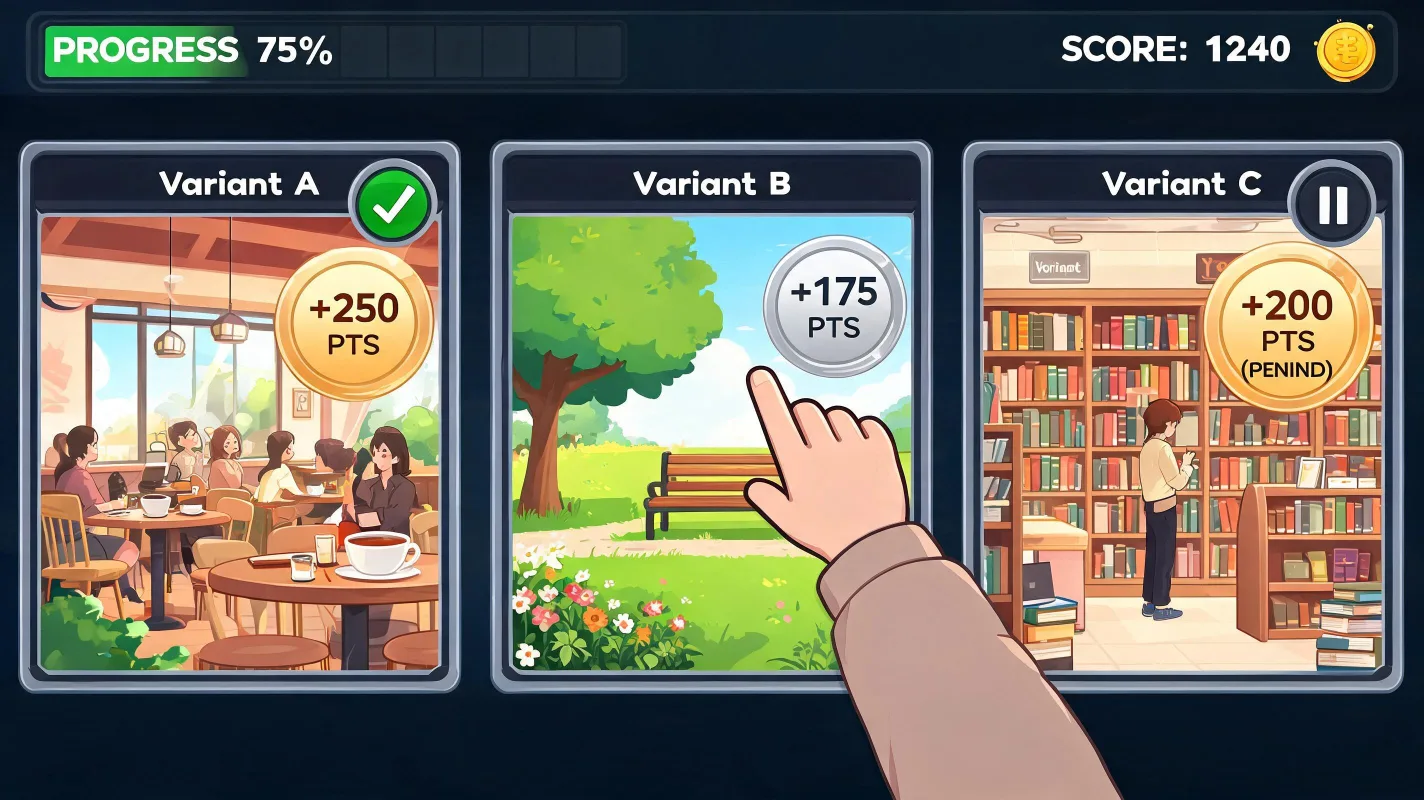
Each variant should change a meaningful decision: hook, mechanic, reward, failure, or CTA. The page makes those differences reviewable.
Workflow
Lock the audience, genre, offer, visual reference, and campaign goal.
Create variants around hook, input, fail state, reward, visual treatment, and CTA.
Export a variant matrix that makes tradeoffs obvious before production.
Positioning
UA and growth teams
Create several playable ad angles from one brief
Variant matrix, hooks, mechanics, end-card CTAs
Who it is for
This page owns variant testing. It should not repeat the broad AI playable ad generator promise; it focuses on comparing several creative hypotheses from one source brief.
Examples
Brief: puzzle game needs fresh playable ad angles.
Variants for curiosity hook, timed fail/retry, reward ladder, and before/after transformation.
Shortlist two variants for production testing.
Brief: merge game campaign fatigue is rising.
Variants split by first action: drag merge, tap upgrade, choose reward, and mistake recovery.
Refresh the creative pipeline without restarting strategy.
Output
Each variant should change a meaningful decision: hook, mechanic, reward, failure, or CTA. The page makes those differences reviewable.
Open Workspace →FAQ
Usually three to five meaningful variants. More is only useful if each changes a test hypothesis, not just the headline.
Yes. Seele AI Workspace is designed around reviewable, shareable, downloadable, and exportable outputs, so teams can move useful prototypes, playable packages, and assets into testing, creative review, or production handoff.
Seele is strongest at early playable prototypes, 2D browser-playable mini games, playable ad variants, and creative validation. Teams can use the output as a fast starting point before investing in a full production build.