Visual guide for Best AI NPC Tools for Unreal Engine
Key Takeaways: Best AI NPC Tools for Unreal Engine
- best ai npc tools for unreal engine: Choose an Unreal AI NPC platform by the complete runtime contract, not by one conversation demo. Compare Inworld, Convai, NVIDIA ACE, Replica Studios, and native Unreal gameplay AI across speech recognition, language model, memory, knowledge grounding, text-to-speech, facial animation, actions, latency, moderation, offline fallback, data retention, per-user cost, and server authority. Keep navigation, combat, inventory, quest state, and safety-critical actions under deterministic game rules.
- This guide keeps the answer version-aware and testable: identify the owning Unreal systems or public evidence, validate the result, and keep native Unreal 5 game, browser preview, optimization, packaging, and download evidence separate from third-party model claims.
1. Direct answer: an AI NPC is a stack not one model
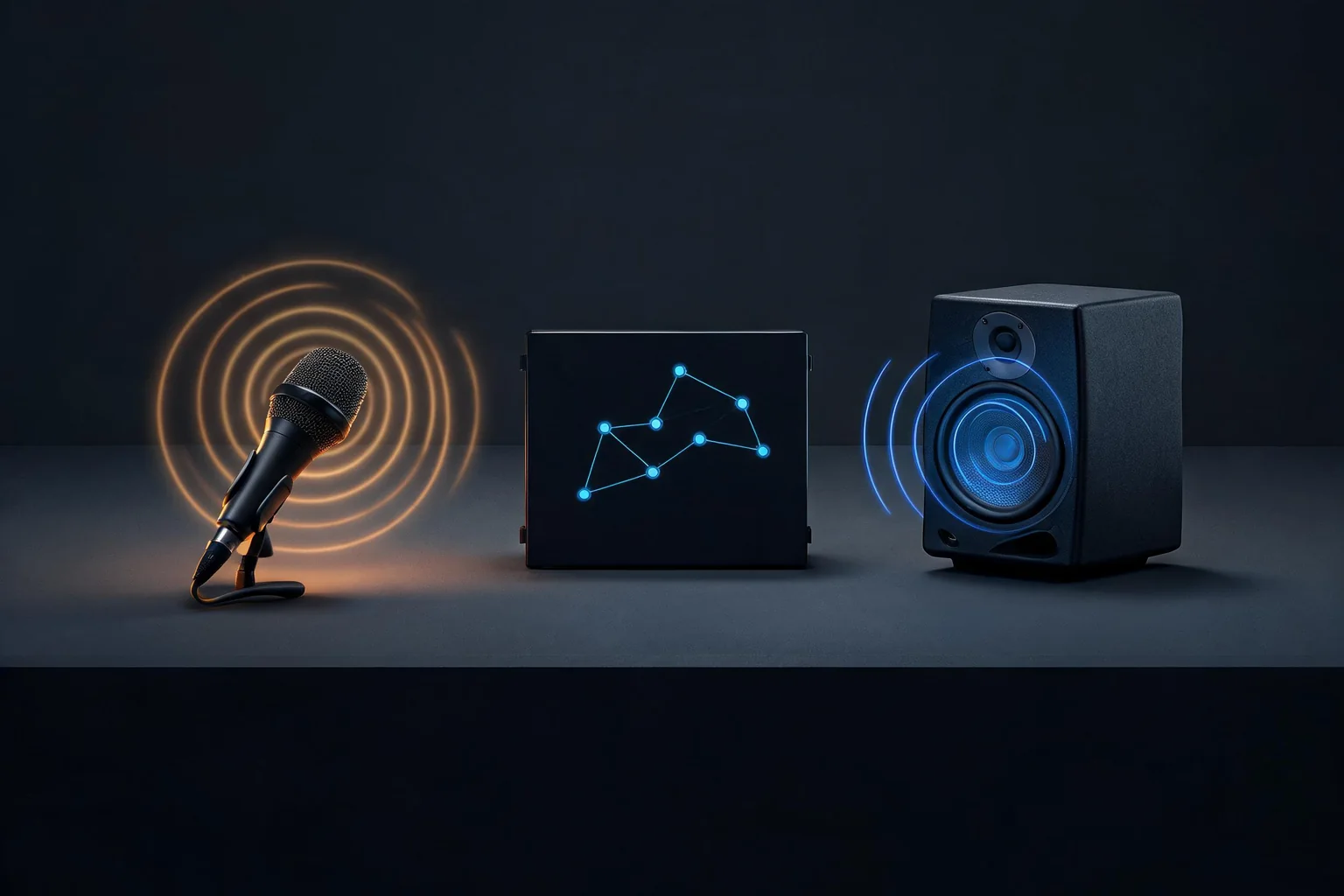
An AI NPC is a system stack: speech input, language or policy model, knowledge grounding, short- and long-term memory, moderation, text-to-speech, facial and body animation, gameplay intents, deterministic action validation, telemetry, and fallback. A conversation demo proves only a subset of that path and says little about a shippable multiplayer game.
Draw the runtime sequence from player input to rendered response. For each step, name provider, data sent, timeout, cached state, authority, failure behavior, and cost unit. Keep quests, inventory, combat, rewards, navigation goals, and persistent player state under game-owned rules even when a model proposes the high-level intent.
Direct answer: an AI NPC is a stack not one model checklist
- State the decision for “Direct answer: an AI NPC is a stack not one model” in one sentence.
- Record how speech language memory and grounding stack is owned, versioned, and validated.
- Test the related query “convai unreal engine plugin documentation” against the same acceptance criteria.
- Capture transition correctness, update cost, query count, serialized size, network traffic, and recovery coverage.
- Keep a reversible working revision and write the limitation that would force rollback.
2. Compare Inworld Convai NVIDIA ACE and Replica Studios
Inworld publishes an Unreal AI Runtime SDK direction; Convai publishes Unreal character and MCP workflows; NVIDIA describes ACE components for game characters; Replica Studios presents AI voice and NPC products. Their public surfaces differ in speech, character orchestration, voice, animation, deployment, and integration claims. Verify current Unreal versions and licensing directly with each vendor.

Run the same vendor questionnaire: Unreal plugin and source availability, MetaHuman path, ASR and TTS languages, knowledge grounding, memory ownership, action API, moderation, local or cloud inference, region, retention, deletion, observability, concurrency, pricing unit, rate limits, support, and exit export. Record “not documented” instead of filling gaps with assumptions.
Compare Inworld Convai NVIDIA ACE and Replica Studios checklist
- State the decision for “Compare Inworld Convai NVIDIA ACE and Replica Studios” in one sentence.
- Record how actions navigation animation and MetaHuman handoff is owned, versioned, and validated.
- Test the related query “nvidia ace unreal engine” against the same acceptance criteria.
- Capture transition correctness, update cost, query count, serialized size, network traffic, and recovery coverage.
- Keep a reversible working revision and write the limitation that would force rollback.
3. Keep gameplay actions deterministic and server-authoritative
Models should propose an intent such as greet, lead, trade, or retreat; the game validates the intent against server-owned state, permissions, distance, cooldowns, quest phase, inventory, and navigation. The authoritative system then executes a known ability or state transition. Free-form model output must not directly grant items, apply damage, or mutate saves.
Create adversarial tests for impossible requests, prompt injection through player text, stale memory, conflicting quests, repeated messages, disconnects, and two players addressing the same NPC. Log proposed intent, rejected reason, executed action, and resulting state. Replay the same transcript to confirm that safety and gameplay rules remain deterministic.
Keep gameplay actions deterministic and server-authoritative checklist
- State the decision for “Keep gameplay actions deterministic and server-authoritative” in one sentence.
- Record how latency moderation privacy and offline fallback is owned, versioned, and validated.
- Test the related query “unreal engine 5 ai npc demo” against the same acceptance criteria.
- Capture transition correctness, update cost, query count, serialized size, network traffic, and recovery coverage.
- Keep a reversible working revision and write the limitation that would force rollback.
4. Plan voice facial animation and MetaHuman handoff
Voice quality is an end-to-end timing and presentation problem. Measure speech detection, transcription, model response, synthesis, first audio, interruption, facial animation, body gesture, subtitles, and return to idle. A strong voice sample does not compensate for lip-sync drift, long silence, poor pronunciation, or animation that blocks gameplay.
Test a production MetaHuman or target character with localized names, emotional lines, noisy input, barge-in, packet loss, muted audio, and accessibility settings. Define a text-only fallback and a deterministic canned response when any hosted component is unavailable. Keep animation and gameplay actions decoupled so a voice failure cannot deadlock the NPC.
Plan voice facial animation and MetaHuman handoff checklist
- State the decision for “Plan voice facial animation and MetaHuman handoff” in one sentence.
- Record how server authority per-user cost and scale testing is owned, versioned, and validated.
- Test the related query “unreal engine 5 npc ai” against the same acceptance criteria.
- Capture transition correctness, update cost, query count, serialized size, network traffic, and recovery coverage.
- Keep a reversible working revision and write the limitation that would force rollback.
5. Audit safety privacy moderation and retention
Player speech and text can contain personal data, abuse, copyrighted material, or secrets. Document capture consent, transport encryption, processing regions, vendor subprocessors, retention, deletion, training use, age requirements, moderation, human review, and whether transcripts enter gameplay analytics. Store only what the shipped design and policy require.
Moderation needs pre-input and post-output controls plus an in-game fallback. Test harassment, self-harm, sexual content, attempts to extract system prompts, and requests to bypass game rules. Log category and action without retaining unnecessary raw audio. Provide block, report, mute, and non-AI interaction paths where the audience or platform requires them.
Audit safety privacy moderation and retention checklist
- State the decision for “Audit safety privacy moderation and retention” in one sentence.
- Record how speech language memory and grounding stack is owned, versioned, and validated.
- Test the related query “unreal npc ai” against the same acceptance criteria.
- Capture transition correctness, update cost, query count, serialized size, network traffic, and recovery coverage.
- Keep a reversible working revision and write the limitation that would force rollback.
6. Test latency cost concurrency and failure recovery
Cost follows concurrent speakers, audio minutes, tokens or model calls, synthesized voice, memory retrieval, moderation, observability, retries, region, and fallback capacity. Measure a real encounter distribution: short greetings, long conversations, interruptions, silence, repeated questions, and peak multiplayer concurrency. Vendor calculator examples are not a substitute for this trace.
Load test the full path with latency percentiles and rate-limit behavior. Budget a timeout at each boundary and choose which response can degrade to cached text, canned voice, or deterministic behavior. Track cost per completed encounter and per monthly active player, then include support, content review, incident handling, and vendor minimums.
Test latency cost concurrency and failure recovery checklist
- State the decision for “Test latency cost concurrency and failure recovery” in one sentence.
- Record how actions navigation animation and MetaHuman handoff is owned, versioned, and validated.
- Test the related query “convai unreal engine plugin documentation” against the same acceptance criteria.
- Capture transition correctness, update cost, query count, serialized size, network traffic, and recovery coverage.
- Keep a reversible working revision and write the limitation that would force rollback.
7. Choose with a vertical-slice scorecard
Pilot one NPC with a bounded knowledge set, three valid gameplay intents, a target character, subtitles, moderation, telemetry, and offline fallback. Compare vendors with the same scripts and network profiles. Score integration time, latency, response grounding, action correctness, animation quality, privacy fit, operational visibility, cost, and recovery.
Stop if the system cannot keep game authority deterministic, lacks required data controls, produces untraceable actions, misses latency or cost ceilings, or cannot degrade safely. Preserve prompts, schemas, knowledge sources, game-owned intent adapters, and character data so the project can change model or voice vendors without rewriting core gameplay.
Choose with a vertical-slice scorecard checklist
- State the decision for “Choose with a vertical-slice scorecard” in one sentence.
- Record how latency moderation privacy and offline fallback is owned, versioned, and validated.
- Test the related query “nvidia ace unreal engine” against the same acceptance criteria.
- Capture transition correctness, update cost, query count, serialized size, network traffic, and recovery coverage.
- Keep a reversible working revision and write the limitation that would force rollback.
SEELE AI Unreal 5 workflow: generate, preview, optimize, package, and publish
SEELE AI is useful before or alongside Unreal production when the team needs to compare a scene direction, player loop, camera feel, content brief, or test plan. Open the canonical Unreal landing page, choose a real workspace card, and carry the prompt into the browser generation workspace with its source attribution intact.
SEELE AI can generate a native Unreal 5 game, preview it in-browser, optimize and package it, and provide a downloadable game or packaged build for external publishing or paid Seele games. Sales are not guaranteed.
Official sources and related Unreal guides
This page is an independent workflow guide. Engine behavior changes across releases, plugins, platforms, and project settings, so confirm version-specific details in Epic documentation and preserve the evidence used for your decision.
Unreal Engine is a trademark of Epic Games. SEELE AI is independent and this guide is not an Epic endorsement.
- NVIDIA ACE for Games — first-party material for product scope, workflow, version, or policy checks; use only the claims the source actually states.
- Inworld Unreal AI Runtime SDK announcement (reviewed July 2026) — first-party material for product scope, workflow, version, or policy checks; use only the claims the source actually states.
- Convai MCP for Unreal Engine (reviewed July 2026) — first-party material for product scope, workflow, version, or policy checks; use only the claims the source actually states.
- Replica Studios official product page (reviewed July 2026) — first-party material for product scope, workflow, version, or policy checks; use only the claims the source actually states.
- Gameplay systems — first-party material for product scope, workflow, version, or policy checks; use only the claims the source actually states.
FAQs
What makes an AI NPC platform complete?
It connects speech, language, memory, voice, animation, actions, safety, telemetry, and deterministic game state.
Should an LLM control gameplay directly?
No. Map model intent into validated server-authoritative actions with permissions, cooldowns, state checks, and fallbacks.
Which platform works with MetaHuman?
Verify the current Unreal integration, facial-animation path, engine version, latency, and licensing for each vendor.
How should I compare voice quality?
Test end-to-end latency, interruption, pronunciation, localization, accessibility, emotional range, and degraded network behavior.
What privacy questions matter?
Ask what player audio and text are stored, where processing occurs, retention, deletion, training use, and consent.
How should I estimate cost?
Measure concurrent players, turns, audio minutes, tokens, hosting, moderation, retries, observability, and fallback capacity.