Open-world prototype team
Establish one strong explorable slice with clear landmarks.
Procedural generation only helps if the world still feels legible and worth exploring. This workflow is built for creators who need fast 3D world direction before they commit to deeper environment production.
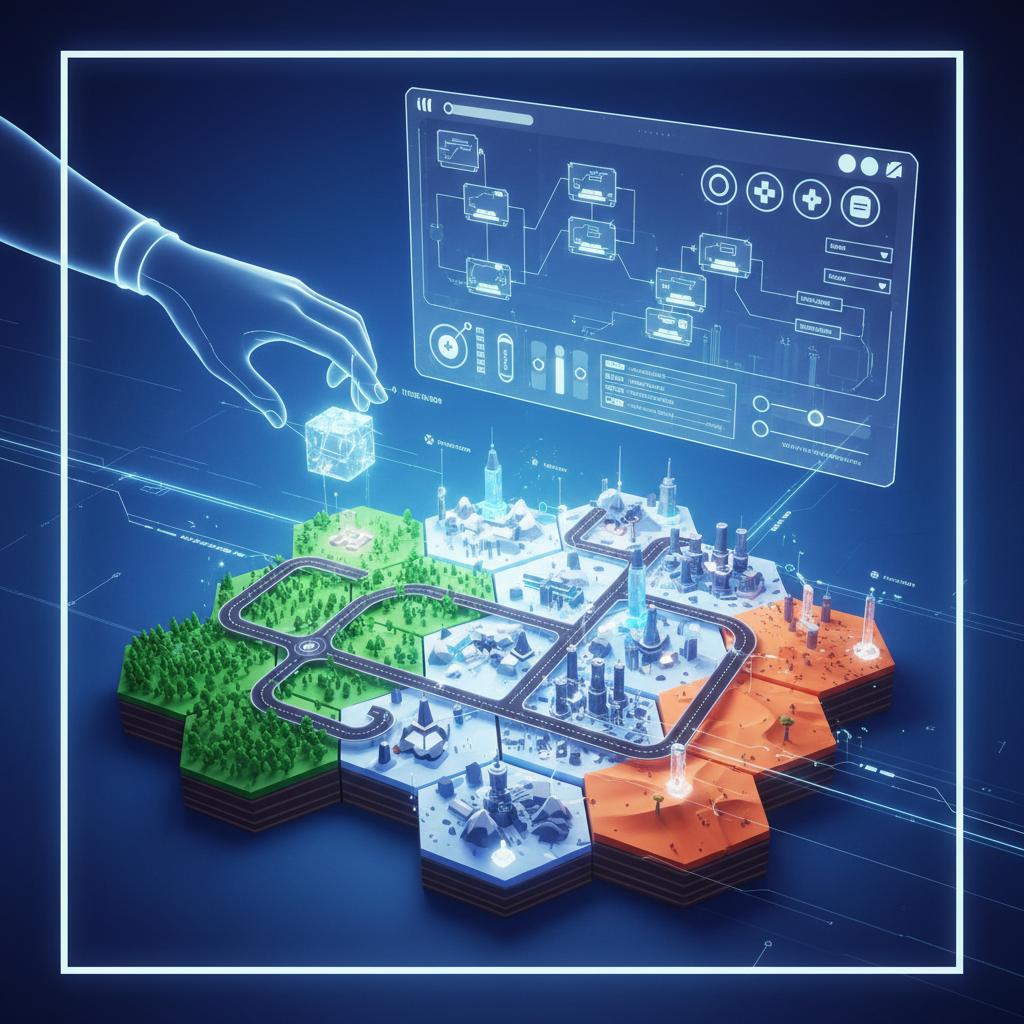
Establish one strong explorable slice with clear landmarks.
Test biome readability, traversal, and mood before full content load.
Shape routes, secrets, and scenery hierarchy early.
Align terrain tone, props, and skybox direction faster.
Describe the biome, traversal fantasy, and what players should notice first.
Generate a first-pass world brief with landmark hierarchy, mood, and environmental constraints.
Refine the slice until the route logic and world identity feel coherent.
Continue in the workspace with supporting skybox, texture, and scene prompts.
Create a procedural 3D desert world with collapsed observatories, shallow canyon routes, and strong sunset silhouettes.Build a floating-archipelago exploration world where glider traversal reveals hidden mushroom caverns under each island.Generate a flooded industrial wasteland with rusted towers, drifting debris fields, and readable salvage routes.A clearer answer to what the first explorable zone should contain.
What players navigate by and how routes unfold.
Follow-on prompts for sky, textures, props, and biome mood.
What to fake, what to generate, and what to handcraft first.
It means shaping a 3D world concept with procedural thinking while keeping landmarks, traversal, and player readability explicit.
No. It helps define the world slice, mood, and prototype direction. Final production still needs heavy follow-up work.
Because large generated worlds fail when players cannot read them. Good landmarks keep exploration meaningful.
Yes. The workflow is useful anywhere world tone and route logic matter.
Once the world brief is clear, you can branch into skybox, texture, dialogue, and prototype prompts more effectively.
Write the first prompt you actually want to test, then jump into the workspace. Better to start with one sharp question than pretend the whole game is already solved.
This handoff stores the prompt in session storage and redirects to the product flow. It accelerates concepting and prototype setup; final production still needs iteration.
Intent covered: SEELE AI world builder; AI interactive 3D generator; SEELE interactive 3D creator.
Define a readable world slice with landmarks, traversal, interaction, and reset behavior. Review navigation and player orientation before increasing scale or procedural variety.
Continue with the game prototype generator workflow or review the broader AI game generation workflow.