
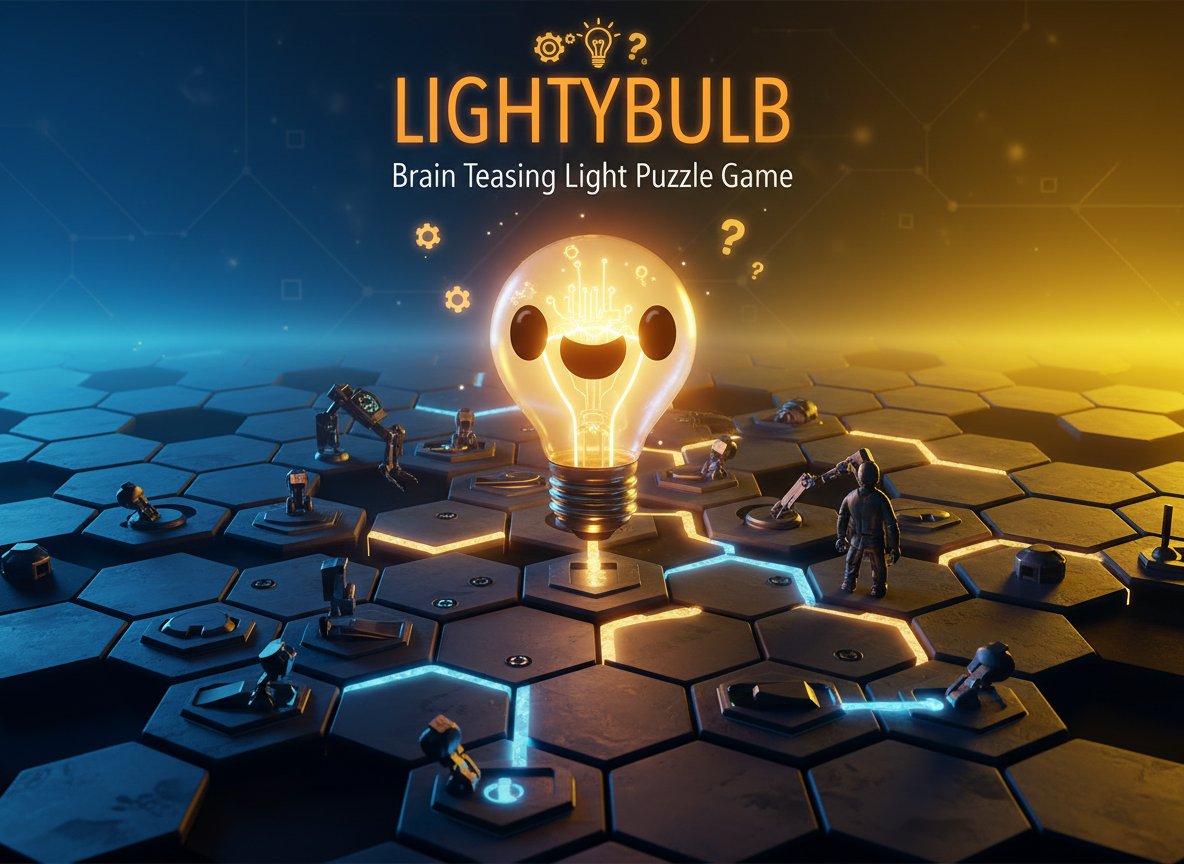
Lightybulb - Brain Teasing Light Puzzle Game - Puzzle Game
 New
NewRiver Raid Survival
Build a River Raid-style flight survival run with fuel pressure.
 Survival
Survival Sandbox Arena
Build a survival arena with enemy waves and turret defense.
 Unity
UnityCastle Devour Quest
Build a Unity castle quest with risky rooms and a win goal.
 Driving
City Car Driving
Build an open-city free-driving game with car selection.
 Unity
UnityDesert Quickshot
Build a Unity quickdraw duel with streaks and rising heat.
 Subscriber only
Unreal Landscape Tour
Tour photoreal Unreal landscapes with cinematic camera work.
 Unity
UnityFarmstead Shop
Build a Unity farm-shop sim: grow, stock, serve, upgrade.
 3D
3DThird Person Explorer
Build a third-person explorer with swappable scenes and a live minimap.
 Unity
UnityEgg on the Car Roof
Build a Unity challenge: keep a fragile egg on a moving roof.
 Puzzle
Magic Cube Puzzle
Build an interactive Rubik's Cube with scramble and reset.
NewRiver Raid Survival
Build a River Raid-style flight survival run with fuel pressure.
SurvivalSurvival Sandbox Arena
Build a survival arena with enemy waves and turret defense.
UnityCastle Devour Quest
Build a Unity castle quest with risky rooms and a win goal.
DrivingCity Car Driving
Build an open-city free-driving game with car selection.
UnityDesert Quickshot
Build a Unity quickdraw duel with streaks and rising heat.
Subscriber onlyUnreal Landscape Tour
Tour photoreal Unreal landscapes with cinematic camera work.
UnityFarmstead Shop
Build a Unity farm-shop sim: grow, stock, serve, upgrade.
3DThird Person Explorer
Build a third-person explorer with swappable scenes and a live minimap.
UnityEgg on the Car Roof
Build a Unity challenge: keep a fragile egg on a moving roof.
PuzzleMagic Cube Puzzle
Build an interactive Rubik's Cube with scramble and reset.
Prompt

Games are fun. Creating them is even better.
Game Introduction
About the Game
Lightybulb is a deceptively simple yet incredibly challenging puzzle game that will put your problem-solving skills to the ultimate test. With a charming yellow lightbulb character as your guide, you'll navigate through increasingly complex switch-flipping puzzles that are designed to challenge even the most experienced puzzle enthusiasts.
This HTML5 brain teaser combines minimalist design with maximum mental challenge, making it perfect for players who enjoy games that are easy to learn but difficult to master. The game's cute aesthetic belies its true nature as a serious test of logical reasoning and spatial awareness.
Core Features
Mind-Bending Switch Mechanics
The core gameplay revolves around a sophisticated switch system where each flip affects multiple lights in unpredictable patterns. What starts as a simple concept quickly evolves into complex chain reactions that require careful planning and strategic thinking.
Progressive Difficulty Curve
Lightybulb features a carefully crafted difficulty progression that gradually introduces new mechanics and more complex puzzle layouts. Each level builds upon previous concepts while introducing fresh challenges that keep the gameplay engaging and mentally stimulating.
Minimalist Visual Design
The game's clean, colorful interface focuses your attention on the puzzle mechanics without unnecessary distractions. The adorable lightbulb mascot adds personality while maintaining the game's professional puzzle game aesthetic.
Cross-Platform HTML5 Technology
Built with modern web standards, Lightybulb runs smoothly on any device with a web browser. No downloads, no installations - just pure puzzle-solving fun accessible from anywhere.
Game Mechanics
Strategic Switch Flipping
Each switch you flip affects not just one light, but multiple lights in predetermined patterns. Understanding these patterns is crucial to solving each puzzle efficiently. The challenge lies in working backwards from your desired end state to determine the correct sequence of switch flips.
Light Propagation Patterns
Different switches control different combinations of lights, creating complex interdependencies that require careful analysis. Some switches might control adjacent lights, while others affect lights in geometric patterns or along specific axes.
Logical Deduction Requirements
Success in Lightybulb requires pure logical thinking rather than reflexes or luck. Each puzzle has a definitive solution that can be reached through systematic analysis and deductive reasoning.
Operation Guide
Basic Controls
- Mouse : Click on switches to flip them and toggle connected lights
- Keyboard : Use arrow keys or WASD to navigate between switches in some levels
- Strategic Planning : Take time to analyze the puzzle before making moves
Gameplay Strategy
- Study the initial light configuration carefully
- Identify which switches control which lights
- Work backwards from your goal state
- Don't be afraid to restart levels to try different approaches
- Look for patterns in switch behavior across levels
Advanced Techniques
- Map out switch relationships before making moves
- Use systematic approaches like working from corners or edges
- Consider the minimum number of moves needed
- Practice pattern recognition to solve similar puzzles faster
Why Play Lightybulb
Mental Exercise and Brain Training
Lightybulb provides excellent cognitive exercise, improving your logical reasoning, spatial awareness, and problem-solving abilities. Regular play can help maintain mental sharpness and develop systematic thinking skills.
Perfect for Quick Gaming Sessions
Each puzzle can be completed in just a few minutes, making Lightybulb ideal for short breaks, commuting, or whenever you want a quick mental challenge. The game respects your time while providing meaningful cognitive engagement.
Suitable for All Skill Levels
While the game becomes genuinely challenging, it starts with accessible introductory levels that teach the core mechanics gradually. Both puzzle newcomers and veterans will find appropriate challenges.
No Pressure, Pure Logic
Unlike action games or time-based challenges, Lightybulb lets you think at your own pace. There are no timers, no penalties for taking time to think, and no external pressures - just you and the puzzle.
Addictive "Just One More" Factor
The satisfying moment of solving each puzzle, combined with the escalating difficulty, creates a compelling progression that keeps you coming back for increasingly challenging brain teasers.