
Orbit - Physics Puzzle Game - Puzzle Game
 Unity
UnityChaos Train Arcade
Build a chaotic Unity train arcade of hazards and timing.
 Subscriber only
Unreal Dungeon Crawler
Build a playable Unreal dungeon crawler, combat-ready.
 FPS
FPSZombie Horror Survival
Build a tense zombie horror survival with map progression.

Time-Attack Racer
Build a no-physics finish-gate racer with nitro, minimap guidance, and synthesized audio.
 Arcade
Pumpkin Night Adventure
Build a Halloween grid-arena survival romp.
 Subscriber only
Unreal FPS/TPS Shooter
Create a complete UE 5.5 FPS or TPS shooter with combat, UI, and replay.
 Unity
UnityCity Eater
Build a Unity game where a growing blob devours the city.
 Adventure
Character Adventure Sim
Build a 3D character explorer with traversal and interactive zones.
 Unity
UnityCastle Devour Quest
Build a Unity castle quest with risky rooms and a win goal.
 New
NewRiver Raid Survival
Build a River Raid-style flight survival run with fuel pressure.
UnityChaos Train Arcade
Build a chaotic Unity train arcade of hazards and timing.
Subscriber onlyUnreal Dungeon Crawler
Build a playable Unreal dungeon crawler, combat-ready.
FPSZombie Horror Survival
Build a tense zombie horror survival with map progression.
Time-Attack Racer
Build a no-physics finish-gate racer with nitro, minimap guidance, and synthesized audio.
ArcadePumpkin Night Adventure
Build a Halloween grid-arena survival romp.
Subscriber onlyUnreal FPS/TPS Shooter
Create a complete UE 5.5 FPS or TPS shooter with combat, UI, and replay.
UnityCity Eater
Build a Unity game where a growing blob devours the city.
AdventureCharacter Adventure Sim
Build a 3D character explorer with traversal and interactive zones.
UnityCastle Devour Quest
Build a Unity castle quest with risky rooms and a win goal.
NewRiver Raid Survival
Build a River Raid-style flight survival run with fuel pressure.
Prompt
Games are fun. Creating them is even better.
Game Introduction
About the Game
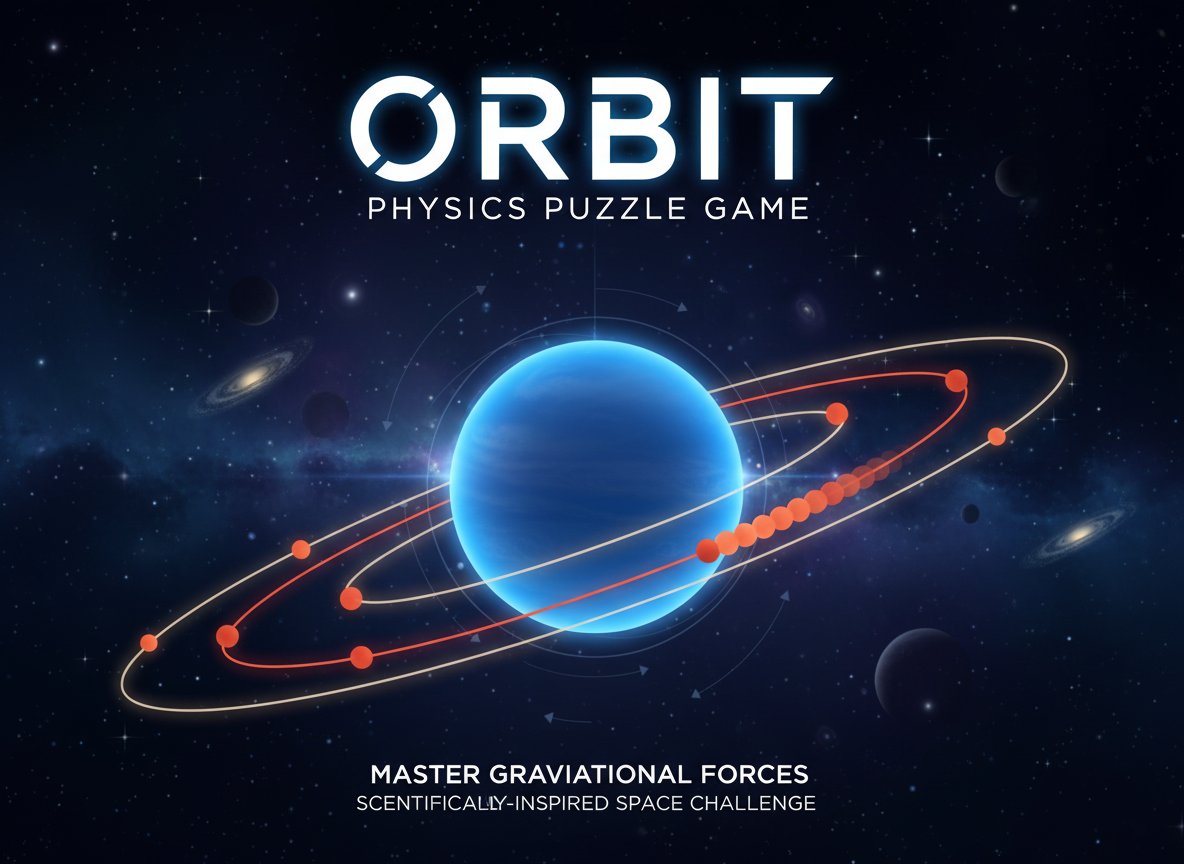
Orbit is a captivating physics puzzle game that challenges your understanding of gravitational mechanics and orbital dynamics. With a rating of 3.6/5 from players, this space-themed puzzle offers a unique blend of scientific accuracy and engaging gameplay. Navigate the complexities of planetary gravity as you launch satellites into perfect orbits around celestial bodies.
The game draws inspiration from real astronomical principles that once challenged our understanding of the universe. Experience the same gravitational forces that govern planetary motion, comet trajectories, and satellite orbits in our solar system.
Core Features
Realistic Physics Simulation
Orbit employs authentic gravitational physics to create challenging puzzle scenarios. Each level requires careful calculation of velocity, trajectory, and gravitational pull to achieve stable orbital patterns.
Progressive Difficulty System
Tagged as a "Hard" game, Orbit gradually increases complexity as you advance through levels. Master basic orbital mechanics before tackling multi-planetary systems and complex gravitational fields.
Educational Space Science
Learn real orbital mechanics principles while having fun. The game accurately represents how gravity affects objects in space, making it both entertaining and educational.
Minimalist Design
Clean, focused interface keeps your attention on the physics puzzle without visual distractions. The simple aesthetic highlights the elegant beauty of orbital mechanics.
Gameplay Mechanics
Each level presents a unique gravitational challenge where you must:
- Launch satellites with precise velocity and direction
- Navigate gravitational fields around planets and celestial bodies
- Achieve stable orbits that maintain consistent patterns
- Avoid collisions with planetary surfaces and obstacles
- Master complex multi-body systems in advanced levels
The game features randomly generated elements, ensuring fresh challenges even after multiple playthroughs.
Controls and Operation
Orbit uses intuitive mouse controls for satellite launching:
- Mouse Click and Drag : Aim your satellite launch direction and set initial velocity
- Release : Launch the satellite into the gravitational field
- Observe : Watch as realistic physics determine the orbital path
The simple control scheme allows you to focus entirely on the strategic elements of orbital planning.
Why Play Orbit?
Scientific Accuracy
Experience genuine physics principles that govern our universe. Understanding orbital mechanics has never been more engaging or accessible.
Mental Challenge
This puzzle game exercises spatial reasoning, physics intuition, and strategic planning skills. Perfect for players who enjoy intellectually stimulating challenges.
Relaxing Yet Engaging
While challenging, the game's minimalist design and smooth physics create a meditative experience as you watch satellites trace elegant orbital paths.
Educational Value
Ideal for students, educators, or anyone curious about space science. Learn fundamental concepts of gravity, velocity, and orbital mechanics through interactive gameplay.
Free Browser Access
No downloads required - play instantly in any modern web browser. Perfect for quick puzzle sessions or extended strategic gameplay.