
See an objective that ties items to a destination
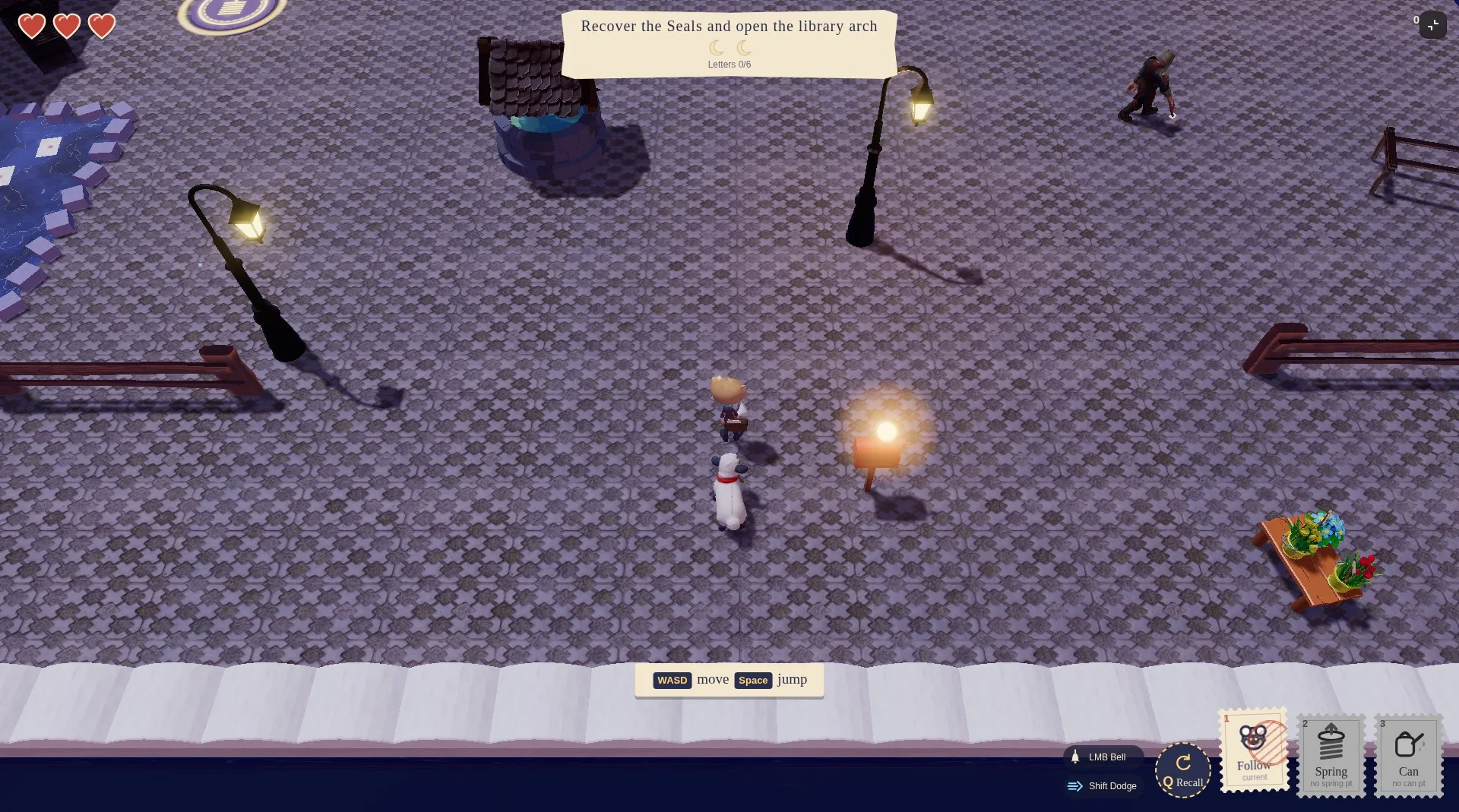
Woolly Post Voyage displays an instruction to recover seals and open a library arch. The example illustrates how a game can tell players which objects matter and what collecting them is for.
If a player has to find items and unlock an exit, prototype that loop first. If the game already handles pickups and you need the models, use an asset workflow such as Tripo’s.
Partners and teams
















 4.8 / 5
Use SEELE AI if the deliverable is a browser game that makes collecting worth doing: a pickup counts, the player sees progress and the exit responds. Use Tripo when the task is to produce the individual 3D objects for an existing game or production pipeline.
Make three pickups unlock an exit. Build a small collection loop in SEELE AI. Try touching a collectible twice and reaching the gate early, then see whether the feedback explains both outcomes.
Produce the collectible models. Use Tripo’s 3D generation workflow if the value lies in distinct object files. Confirm what the destination tool accepts and judge the models at the distance a player will see them.
Separate object recognition from rule comprehension. Give the test pickups the same simple shape at first. If players find them but miss the exit, revise the objective or feedback rather than modeling more distinctive props.
| Decision factor | SEELE AI | Tripo |
|---|---|---|
| Brief | Number of items, when a pickup registers and what it unlocks. | Visual references and requirements for the individual objects. |
| Deliverable | A browser build with pickups, progress and an exit state. | Individual 3D assets for inspection or use in a compatible tool. |
| First test | Revisit the same pickup, try the exit early and collect the last item. | View the collectible at the expected camera distance and confirm it is distinguishable from decoration. |
| Sign-off | The count updates once per item and the player knows where to go next. | The model meets the project’s requirements after a check in the destination tool. |
For your own trial, place three tokens along a short route. Let players reach the arch early, and show exactly what they are missing when they do.
Woolly Post Voyage displays an instruction to recover seals and open a library arch. The example illustrates how a game can tell players which objects matter and what collecting them is for.
Make the first test small enough to replay from the beginning.
Yes, if you need a playable browser loop that tracks pickups and unlocks a destination. Tripo is the closer fit if you need individual 3D collectible models, not the game logic.
No. A preview can help you judge the shape of an item. Use a playable route to check whether players find the items, notice progress and return to the exit.
Ask them to reach the gate before completing the objective, then finish without hints. Watch how they respond to the locked gate and whether they know where to go next.
Editorial comparison by SEELE AI. The library example shows a playable objective, not an asset import or a quality test. We compare the browser build described by SEELE AI with the 3D asset workflow documented by Tripo. The example demonstrates how an objective can connect collectibles and a location.
Specify three pickups, a visible count and one locked exit. Start by checking what happens when the player gets to the exit too early.
Build a browser collection loop