
Seele AI · Focused prototype production
Build a Party Sweep prototype with a focused gameplay loop
Turn clearing messy rooms under time pressure, avoiding obstacles, chaining cleanup combos, and upgrading tools into an original Party Sweep prototype with clear timing, feedback, and decisions.
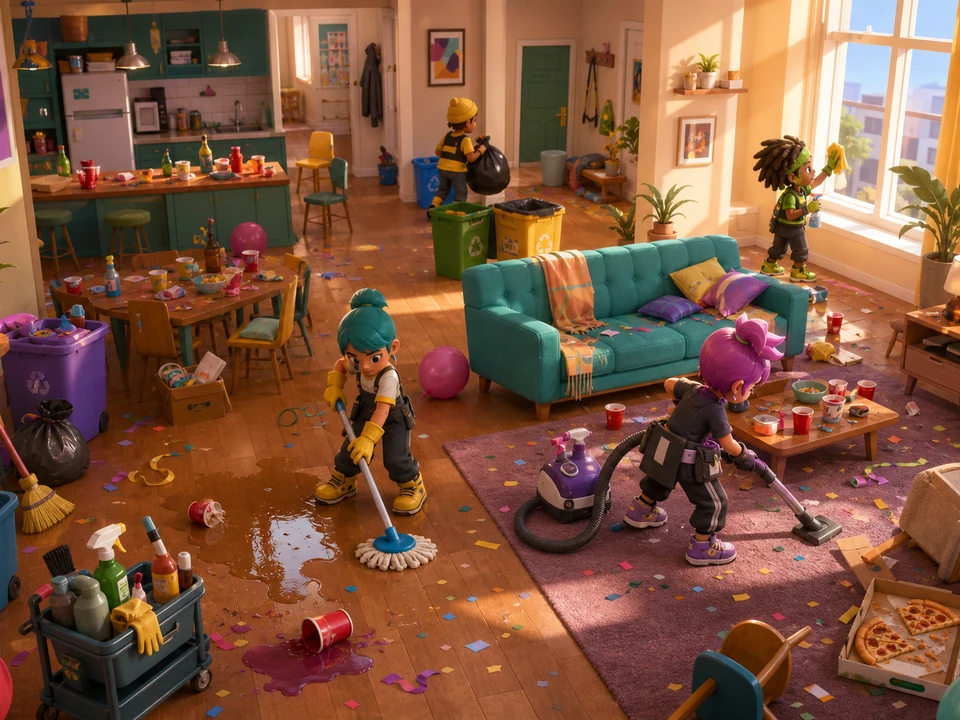


Visible prototype result
Review the core loop before expanding content
Start with one bounded scene, one clear player goal, and a small number of meaningful interactions. Inspect controls, feedback, pacing, and consequences before scaling.
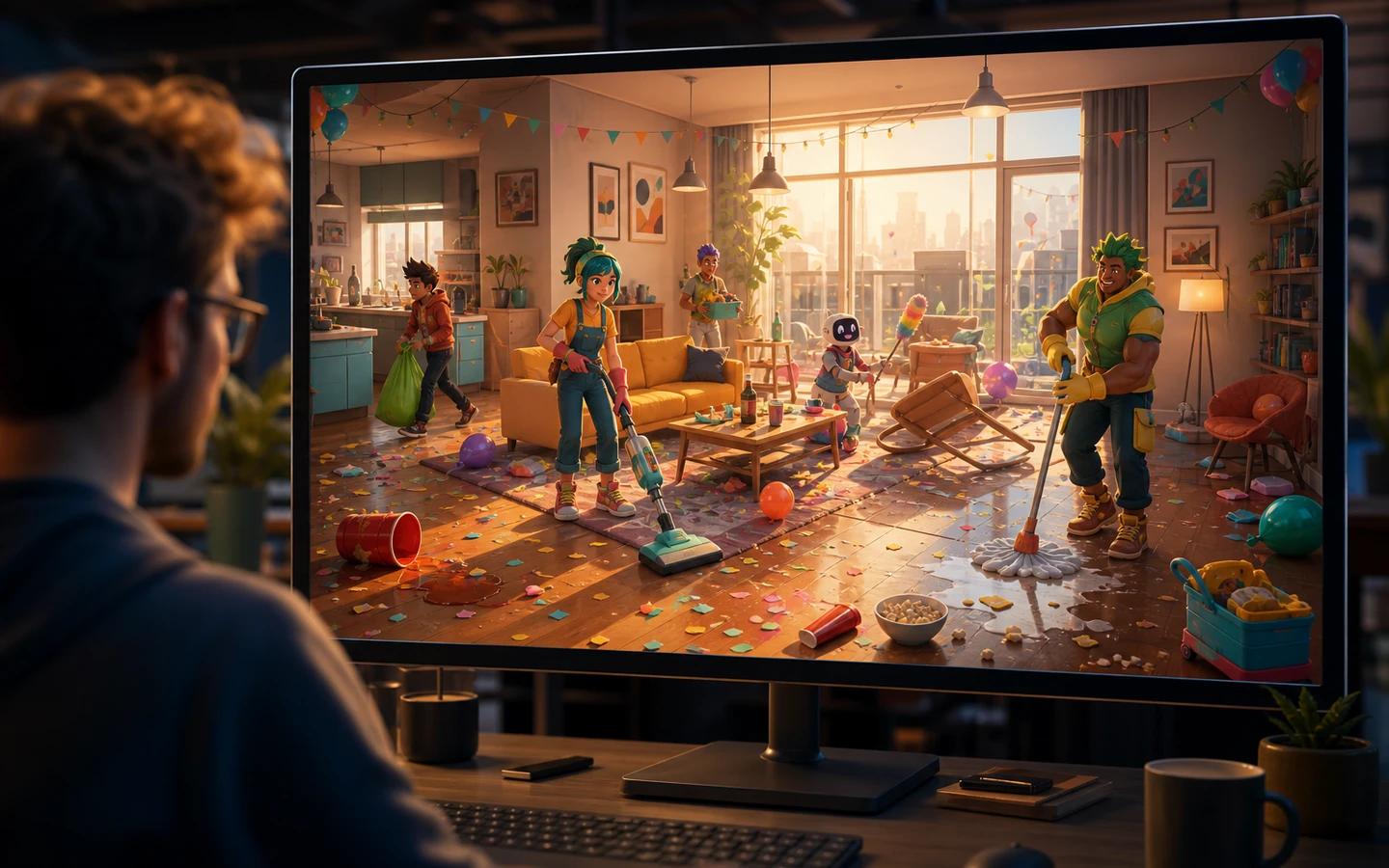
Built for early validation
Turn the brief into concrete evidence
Use mess clusters, cleaning tools, movable furniture, disposal points, spills, and room routes to distinguish actions, states, and consequences.
Show vacuum trails, scrub splashes, falling objects, obstacle collisions, and combo chains through in-world motion and staging rather than a fake HUD.
Connect introduction, escalation, recovery, and a clear finish around clearing messy rooms under time pressure, avoiding obstacles, chaining cleanup combos, and upgrading tools.
Independent signals
Trust is part of the build.
Two practical jobs
Test the decision that matters now
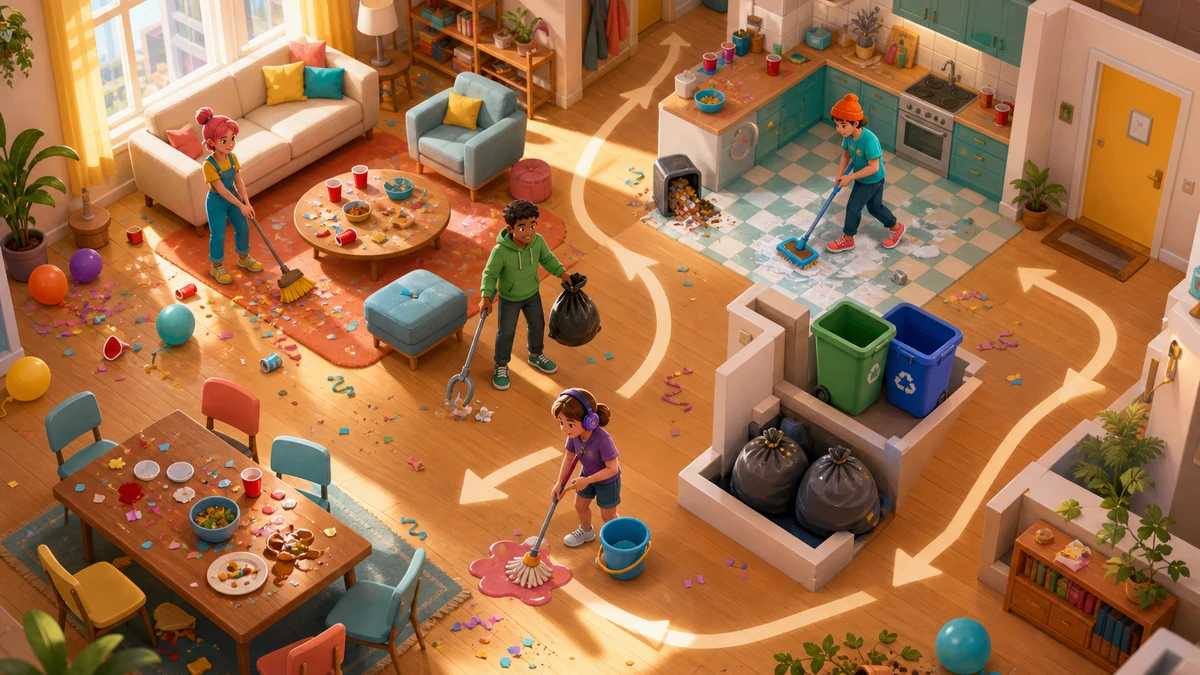
Test the central decision
Check whether players can understand clearing messy rooms under time pressure, avoiding obstacles, chaining cleanup combos, and upgrading tools before committing to a move.
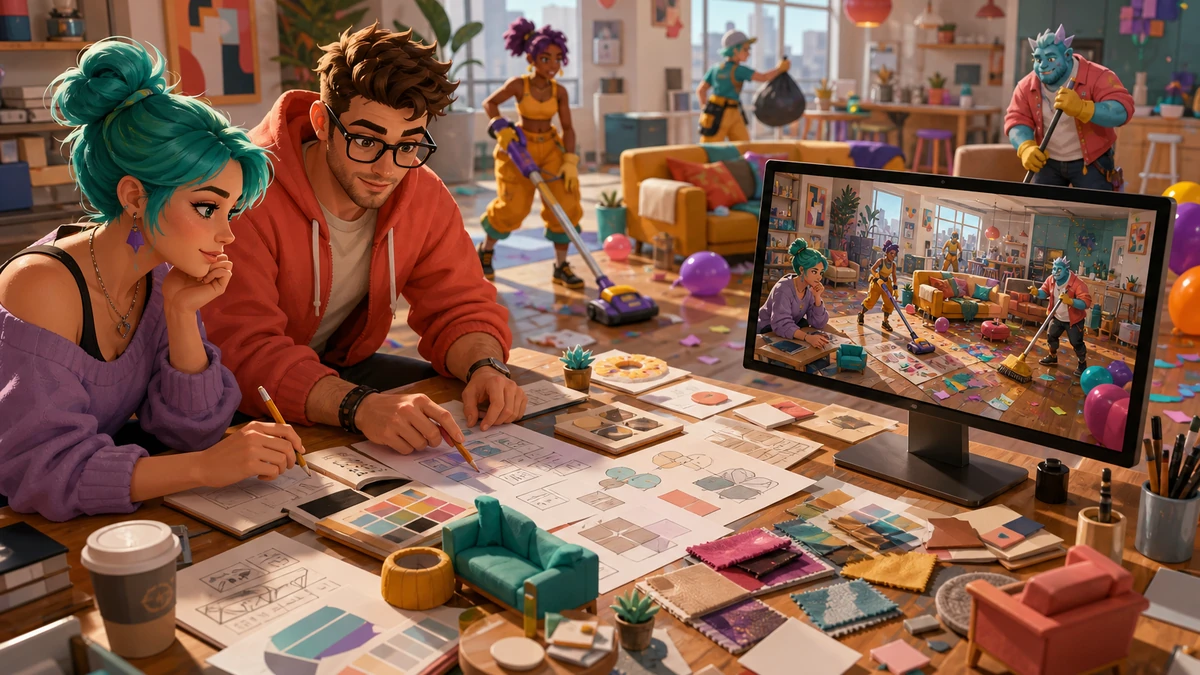
Validate escalation
Increase timer pressure, mess density, tool reach, and room-order choices while preserving a fair next action.
From prompt to next build
Shape the prototype around evidence
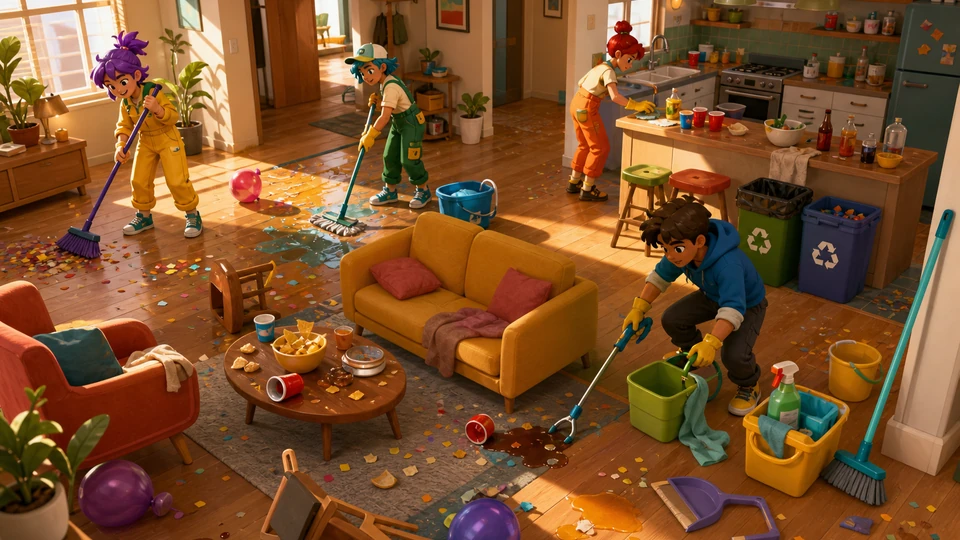
Compose the playable scene
Arrange mess clusters, cleaning tools, movable furniture, disposal points, spills, and room routes, landmarks, hazards, and open lanes for readability.
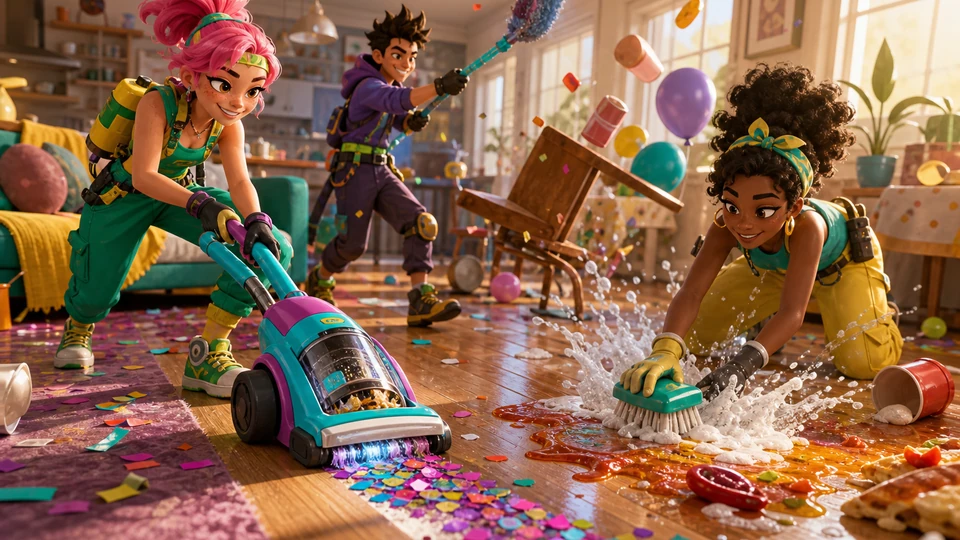
Define responsive feedback
Use animation, materials, light, motion, and sound direction to expose outcomes.
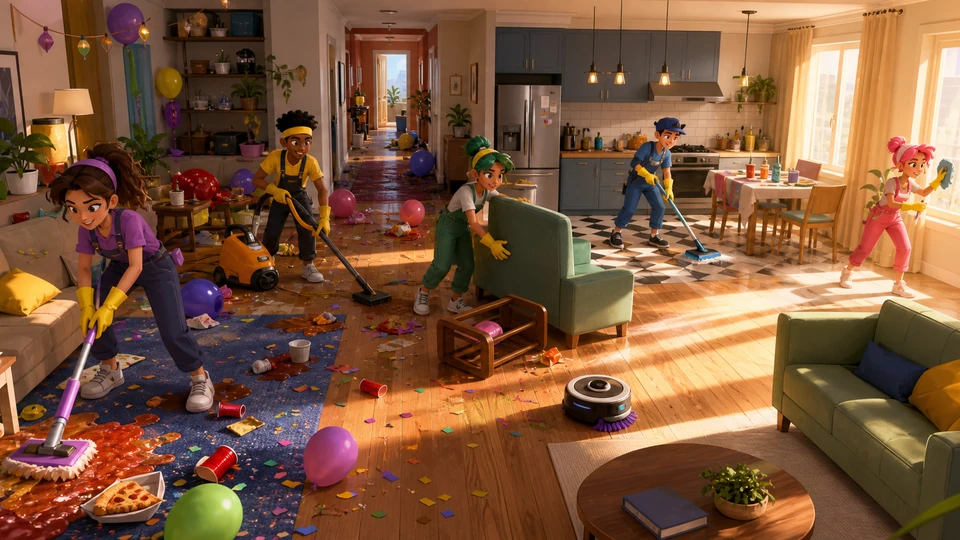
Tune session pacing
Balance timer pressure, mess density, tool reach, and room-order choices, recovery windows, failure behavior, and the target browser session.
Unity Party Sweep FAQ
Questions before you build
What is Party Sweep?
Party Sweep is a focused Unity browser-game prototype for testing clearing messy rooms under time pressure, avoiding obstacles, chaining cleanup combos, and upgrading tools. A first build keeps one objective, compact rules, readable feedback, and a bounded play session. It is not production-ready without code review, device testing, accessibility work, asset-rights review, and human playtesting.
How do I prototype a party cleanup arcade game?
Start with one playable scene and implement the smallest loop for clearing messy rooms under time pressure, avoiding obstacles, chaining cleanup combos, and upgrading tools. Add input response, state changes, success and failure feedback, and only the progression needed to answer the first design question. Avoid expanding content until players understand the core interaction.
What should the first party cleanup arcade game brief include?
Include the player goal, camera, controls, core rules, layout, feedback, target browser, and success condition. Also define performance limits, failure behavior, accessibility needs, asset direction, and the evidence the prototype should produce. Exact implementation choices still require engineering review in the target Unity stack.
What can I test with an early party cleanup arcade game build?
An early build can test input clarity, visual readability, pacing, difficulty, feedback, and whether the central decision is engaging. Keep the session short and inspect hesitation, failure, recovery, and strategy moments. Broad progression, monetization, multiplayer, and content variety should be tested separately.
What are the limits of an AI-generated party cleanup arcade game?
AI can accelerate visual and interaction exploration, but it cannot prove balance, accessibility, browser performance, stability, or player enjoyment. Creators must inspect generated code and assets, profile real devices, tune values, test edge cases, and run representative playtests. Generated scenes are prototype evidence rather than a claim of production readiness.
How do I start Party Sweep with Seele AI?
Describe the smallest playable scene that can validate clearing messy rooms under time pressure, avoiding obstacles, chaining cleanup combos, and upgrading tools. Name visual style, player actions, rules, hazards, feedback, objective, failure state, target device, and the decision to validate. Keep the first request narrow so revisions remain tied to the gameplay question.
From idea to first result
Start building with Seele AI
Turn your idea into an interactive experience you can test and improve.