Key takeaways
- Compare AI-assisted game development and outsourcing by the job, acceptance test, review effort, integration risk, rights, and ownership of the final artifact, not by headline price alone.
# AI Game Development vs Outsourcing: Compare the Workflow Before the Cost
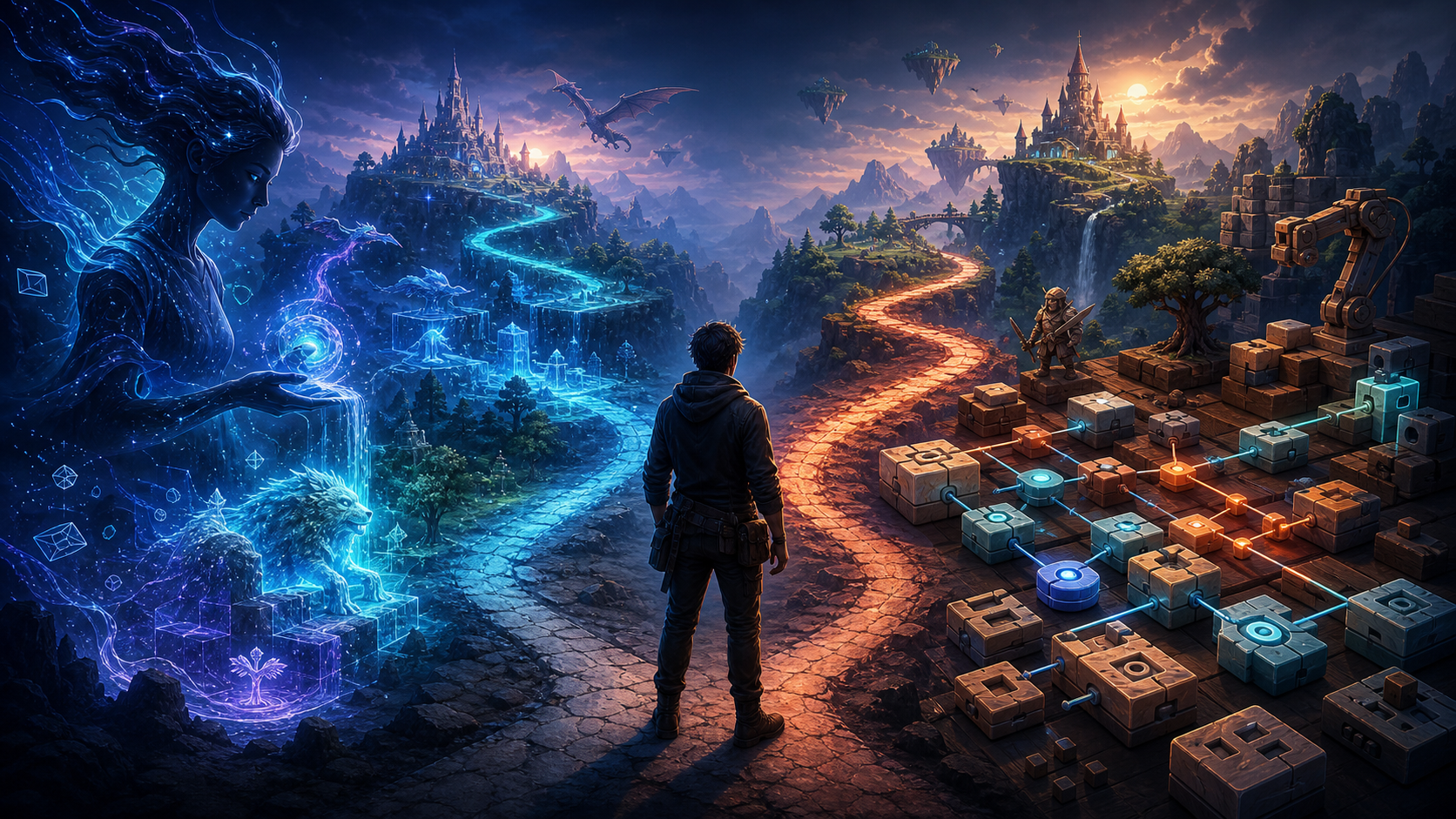
For an indie creator or a small team, the choice between AI-assisted game development and outsourcing is rarely a simple price comparison. The real decision is about speed, control, quality, communication, rights, and the kind of artifact the team needs next. A short prototype can make that decision more concrete than a long list of vendor promises.
Compare the job, not the label
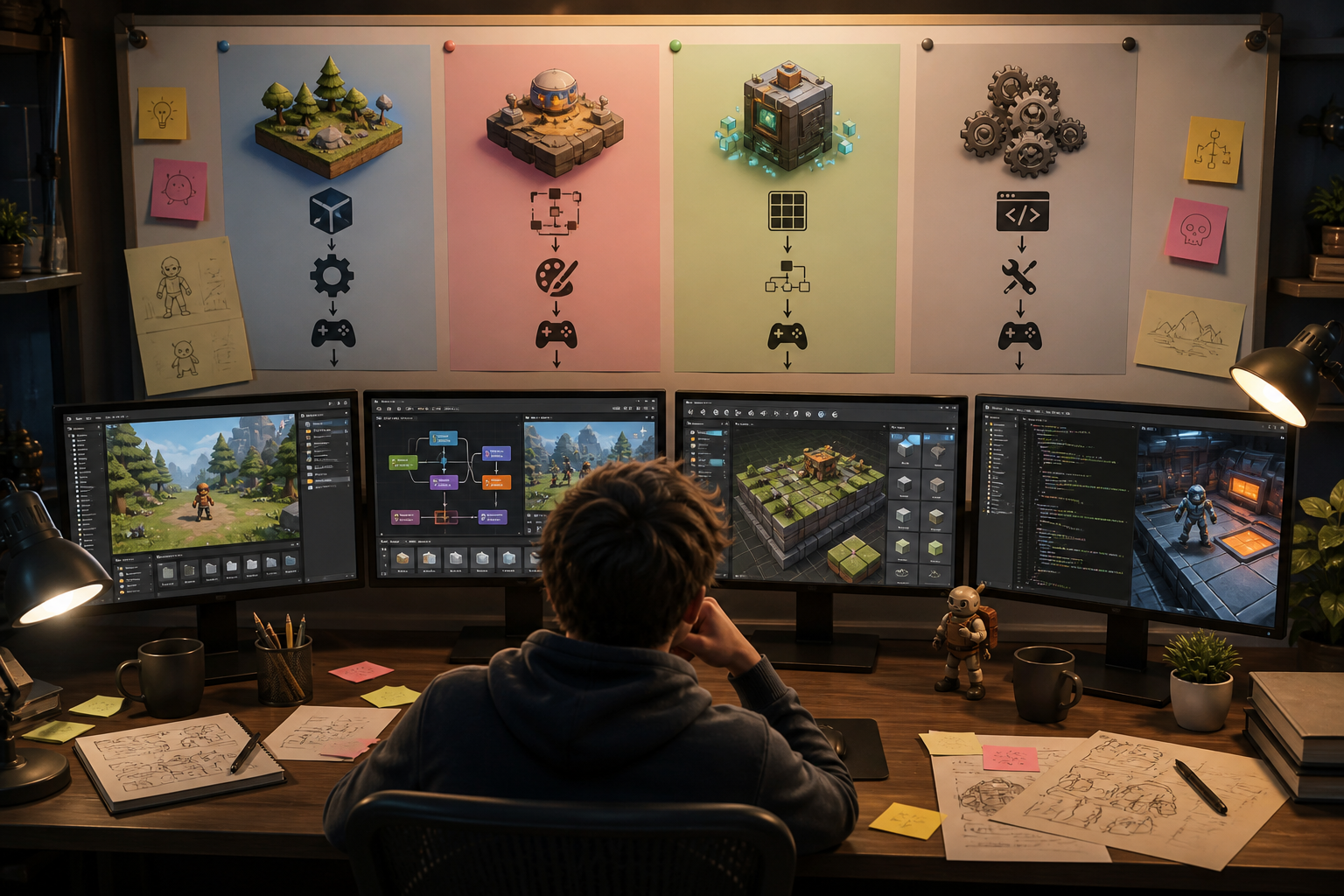
First define the job. Are you testing a mechanic, creating temporary art, building a vertical slice, integrating a production system, or preparing a release candidate? AI assistance may be useful for fast exploration and repeatable drafts. Outsourcing may be stronger when you need specialist craft, a defined deliverable, or accountability for a production task. The answer can change from one stage to another.
Speed and control trade off differently
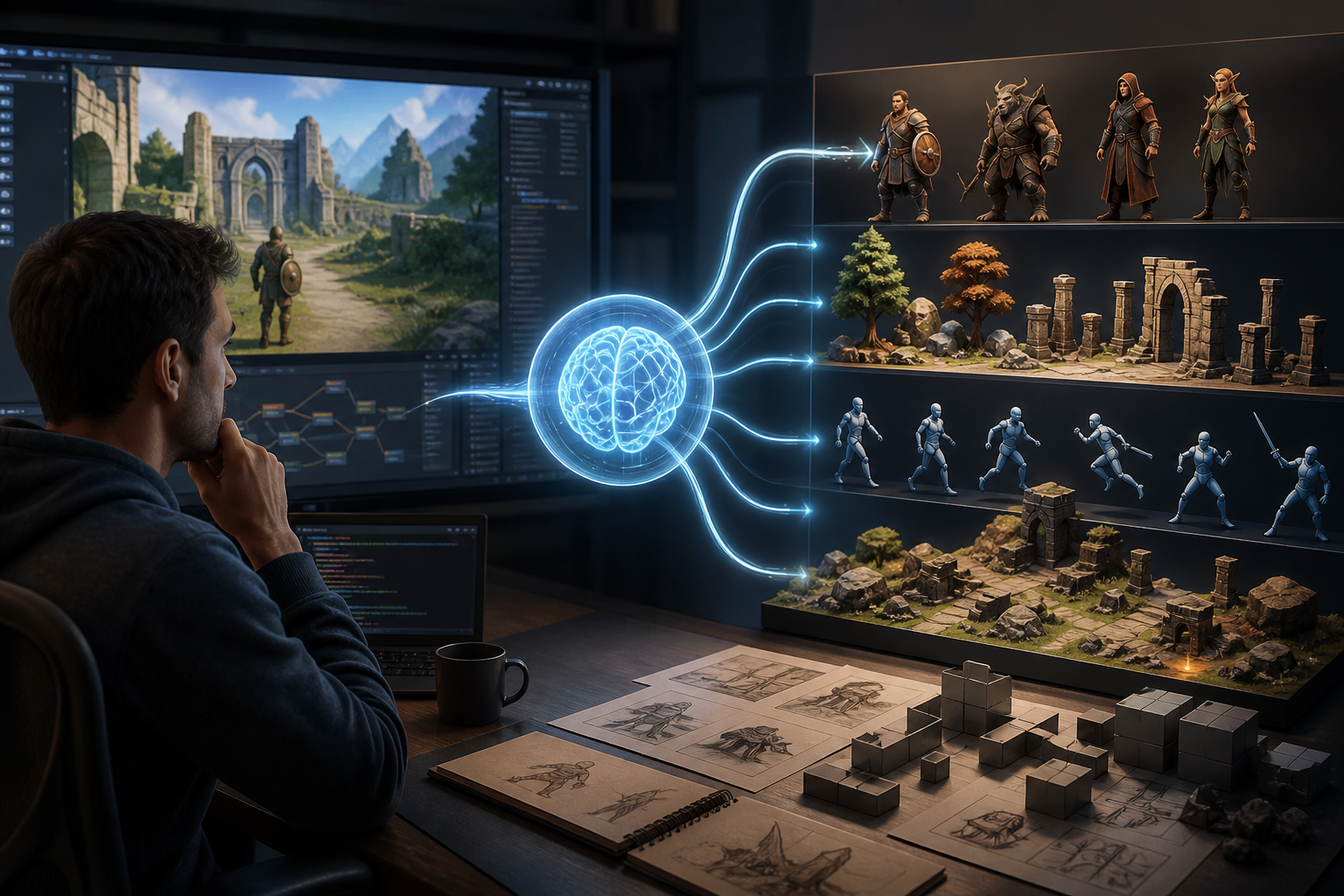
AI can reduce blank-page time and let a creator test several directions before committing to a detailed brief. The creator retains close control of the prompt and can iterate quickly. The tradeoff is that review and correction remain the creator’s responsibility, and the first output may not satisfy production constraints.
Outsourcing can provide a clearer scope and a specialist handoff, but communication, scheduling, revisions, and procurement add their own time. The team also needs a way to evaluate the work before accepting it. A fast vendor handoff is not useful if the result cannot be integrated or changed by the internal team.
Quality depends on the acceptance test
Write the acceptance test before choosing the path. For a gameplay prototype, it might specify the core loop, controls, win and fail states, and a short playtest. For an art task, it might specify formats, dimensions, style references, originality constraints, and integration requirements. For a production system, it should include tests, performance targets, and ownership of the code.
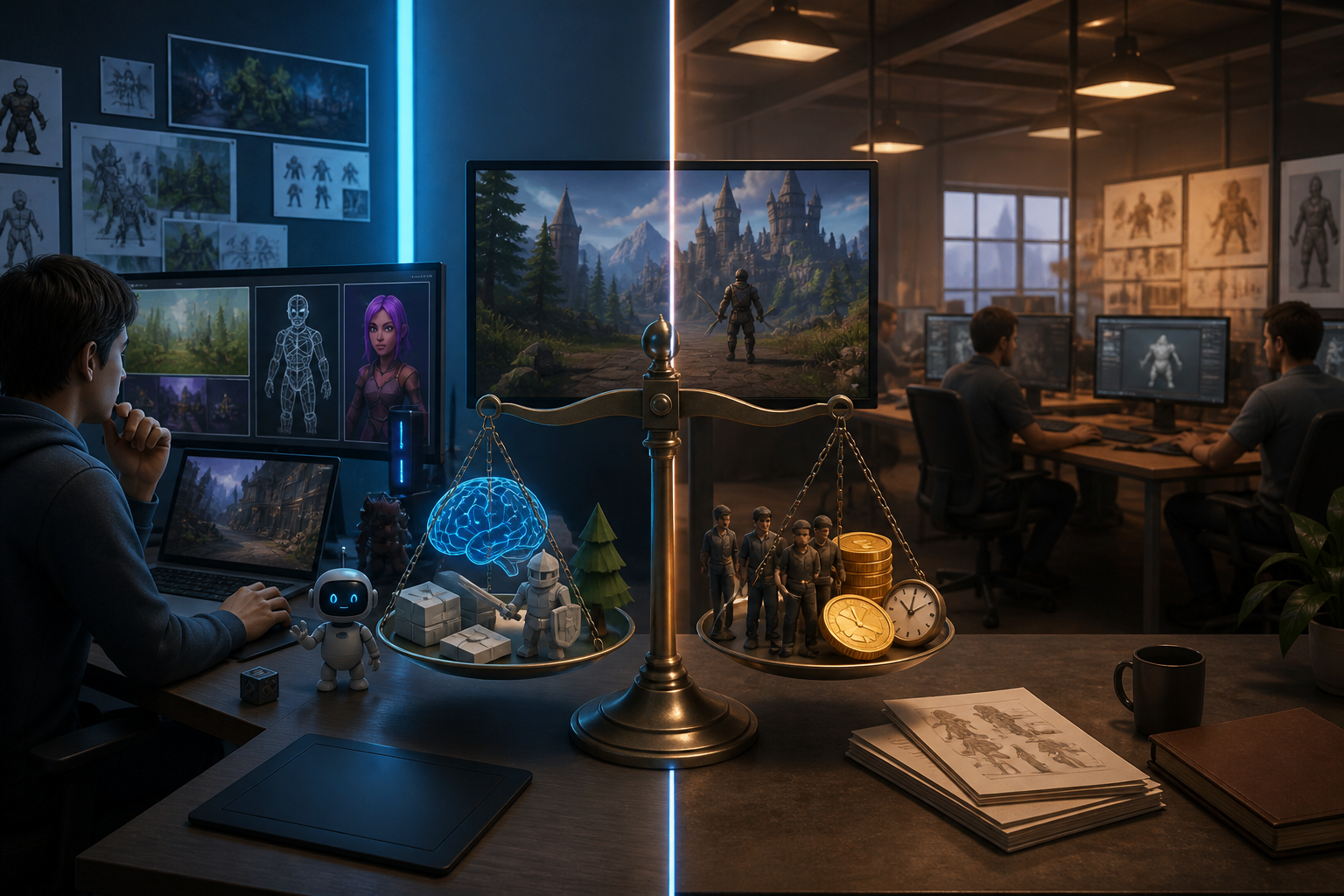
The acceptance test also makes the comparison fair. Run one representative brief through the AI-assisted path and the outsourcing path, then compare the usable artifact, review effort, revision count, and integration risk. Do not compare a polished outsourced final asset with an unreviewed AI draft and call the difference a technology verdict.
Rights and ownership need explicit answers
Commercial teams should document who owns the code, art, music, models, source files, and derivative work. Confirm what third-party or generated material is included, what restrictions apply, and who is responsible if a rights question appears later. These questions should be answered in the contract or workflow record rather than inferred from a marketing page.
The same discipline applies to AI-assisted work. Keep prompts, source references, generated assets, edits, and human review notes where the team can find them. Clear records do not eliminate every risk, but they make the project’s decisions explainable.
A sensible hybrid path
Many teams can use AI for exploration, rough variations, and early playable direction, then bring in internal or external specialists for the parts that need deep craft and production accountability. A hybrid workflow works when the handoff is explicit. Define what the AI stage must deliver, what the specialist will change, and how the team will verify the final result.
The best path is the one that gets the next decision made with the least avoidable rework. Test a small job, measure the complete workflow, and keep the final choice tied to the artifact and the team’s actual constraints.
Measure the complete cost
The useful cost of a production path includes more than the first deliverable. Count briefing, waiting, communication, review, correction, integration, testing, rights checks, and the cost of changing the result after acceptance. An AI-assisted draft may be inexpensive to generate but expensive to clean up. An outsourced asset may have a clear invoice but require internal work to adapt it to the project. The comparison should capture both sides of that work.
Time should be measured at the decision level. If the goal is to choose between three mechanics, compare how quickly each path produces a playable, reviewable candidate. If the goal is a production-ready character system, compare the complete handoff and maintenance burden. A path that is fast for exploration may be a poor fit for a system that needs long-term ownership.
Use a decision matrix with evidence
Create a small matrix with rows for speed, control, craft quality, communication, revision, integration, rights, source access, and ongoing maintenance. For each row, record what the team observed in the representative job and what remains unverified. This keeps opinions separate from evidence and prevents a single impressive image or a single difficult vendor interaction from deciding the entire strategy.
The matrix should also record the risk of switching paths. If the team starts with AI for exploration, what must be preserved for an external specialist? If it starts with outsourcing, what source files and documentation must return to the team? A good handoff reduces future lock-in and gives the team a clear exit when the production requirement changes.
Document the hybrid handoff
A hybrid workflow needs a boundary document. State what the AI stage produced, what the specialist will change, what the internal team will verify, and who owns each unresolved decision. Include source files, references, acceptance tests, rights records, and the expected integration format. Without this document, the team may save time in one stage and lose it in the handoff.
The final choice should be reversible at small scale. Run one real job, review the artifact with the people who will maintain it, and decide whether the path improved the next production decision. That evidence is more valuable than a universal claim about AI or outsourcing.
FAQs
Which is faster, AI-assisted development or outsourcing?
It depends on the job and the full workflow. AI can shorten early exploration, while outsourcing can provide specialist delivery. Compare brief, revision, integration, and review time rather than generation or vendor time alone.
When is outsourcing a better fit?
Outsourcing can fit when the team needs specialist craft, a defined production deliverable, or external capacity with an explicit scope and acceptance contract.
When is AI assistance a better fit?
AI assistance can fit early mechanics, rough variations, and playable directions where the creator wants fast iteration and close control before committing to a detailed production brief.
How should I compare quality?
Write the acceptance test first, run a representative job through each path, and compare the usable artifact, review effort, revision count, integration risk, and rights record.
Who owns generated or outsourced work?
Ownership depends on the relevant terms and contract. Document rights for code, art, music, models, source files, edits, and derivative work before commercial use.
Is a hybrid workflow reasonable?
Yes. Many teams can use AI for exploration and early direction, then use internal or external specialists for craft, integration, testing, or release work that needs deeper accountability.