Answer the extraction condition before you add combat
An extraction-shooter prompt needs one objective, a route to reach it, a cost for each action, and a clear rule for what survives the run. Start with a fixed mission and make its clock, health, ammunition, cargo, enemy response, and extraction state explicit. That gives you an expected-state ledger to compare with a future build.
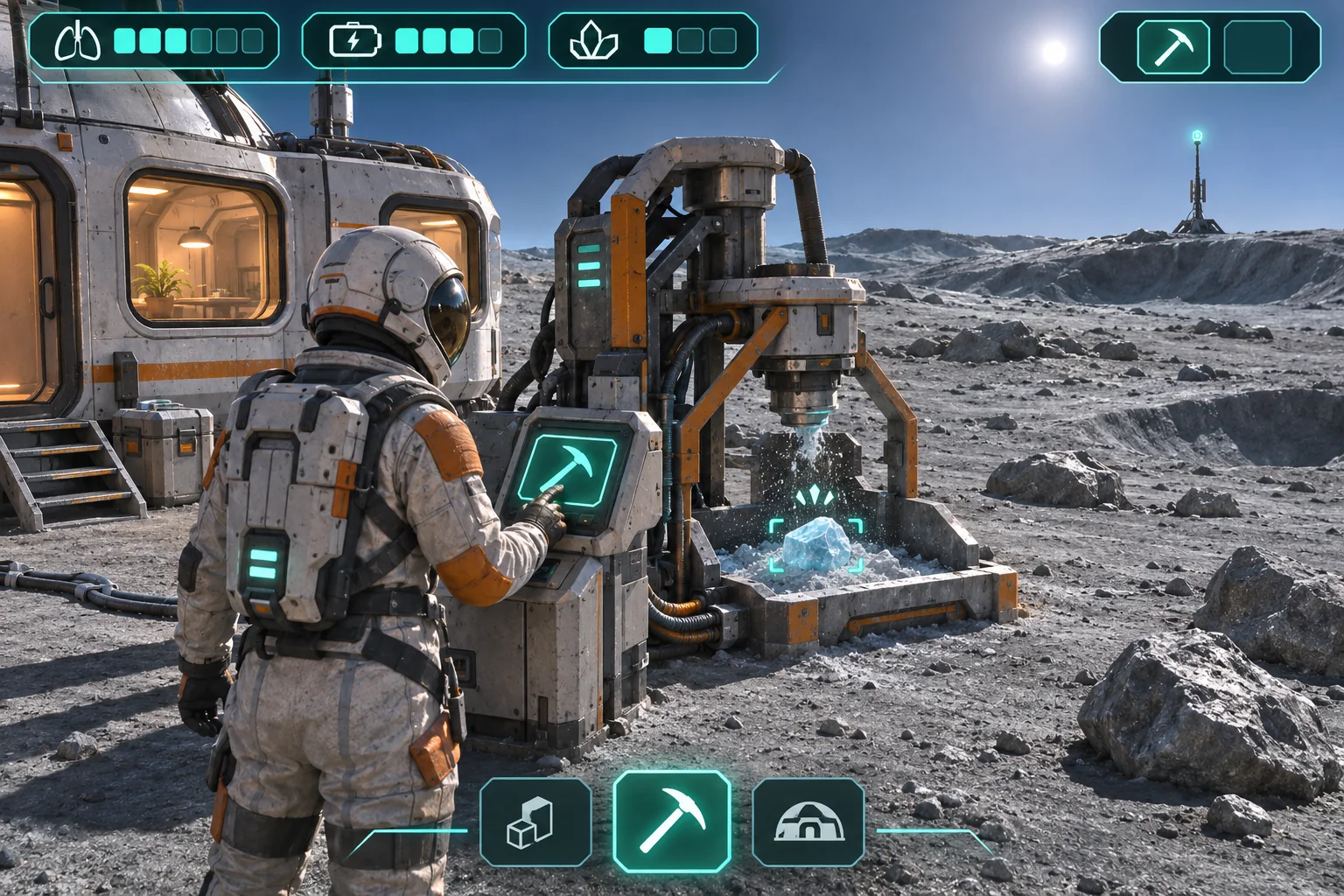
Breakwater Run is an invented three-zone mission used to demonstrate the method. Its rules, sentry, loot, and state trace are fictional. The four prompts below are author-created templates that have not been run, and this guide does not present a playable Breakwater Run build. The hand-resolved route is a simulation, not a playtest.
The success condition is deliberately narrow: carry one signal core from the Relay Vault to the Tide Gate and finish extraction with time remaining. Optional salvage adds a risk choice, but it is not required to win.
Write the mission state contract
List every value that changes during the run and decide when it changes. In this example, one player action always costs a 15-second beat. Resolve the action first, allow a sentry response if its conditions still hold, then subtract the beat. That order lets a shot defeat an enemy before its response, while still charging time for the action.
| State or rule | Breakwater Run contract | What to inspect |
|---|---|---|
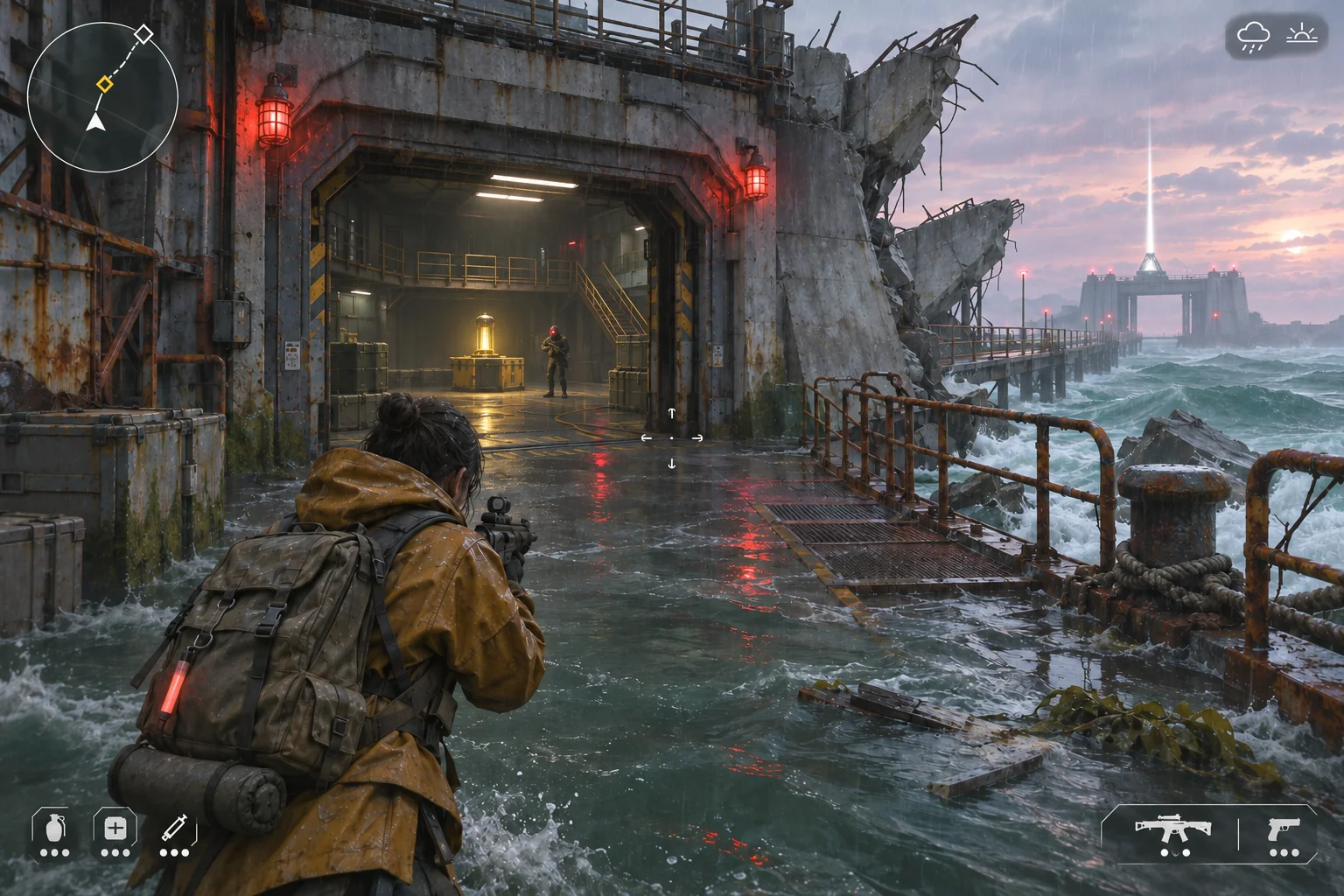
| Route | Flooded Dock → Relay Vault → Tide Gate, in that order. Moving to the adjacent zone costs one beat. | The map offers only the next legal zone; there is no route choice or campaign layer. |
| Start | 120 seconds, 3 health, 6 ammunition rounds, empty mission cargo, at Flooded Dock. One 2-health sentry guards the Vault lane. | The timer, health, ammo, cargo, and current zone are visible before the first action. |
| Action clock | Move, shoot, pick up the core, take the optional cache, or extract; each costs 15 seconds. | Player action → eligible sentry response → subtract 15 seconds. |
| Sentry warning | Entering its lane marks that lane. On the next player action, a surviving sentry deals 1 damage at the action's end if the operator remains in the lane. | Leaving the lane or reducing the sentry to 0 health prevents that response. If it survives and remains engaged, it marks the next warning beat. |
| Objective and optional loot | Picking up the signal core costs one beat and adds it to run cargo. A separate salvage cache costs one beat and adds one scrap. | The cache is optional; neither item enters a permanent inventory. |
| Extraction and failure | Extracting costs one beat and succeeds only with the core in cargo and more than 0 seconds left. At 0 time or 0 health, the run fails and all mission cargo is lost. | Success, failure, and restart are explicit; restart restores the exact starting state. |
This contract keeps a run separate from progression. The core and scrap exist only in the current mission; the example has no between-run inventory, unlocks, base, or persistent reward. If you later add any of those systems, define their own state and save timing instead of quietly mixing them into carried loot.
Prompt the route and interactions
Ask for the smallest layout that can prove the objective and extraction loop. The first route prompt should name each zone, where the core and cache sit, what an interaction costs, and what changes when the operator moves or picks something up. Keep the four prompt jobs separate so each output has one acceptance check.
| Prompt stage | Requested output | Acceptance check |
|---|---|---|
| 1. Mission contract | Starting state, required core, optional cache, clock, failure, extraction, and restart rules. | Success requires the core and positive time; cargo is run-only. |
| 2. Fixed route | Three zones in order, interaction locations, costs, and state changes. | Only Dock → Vault → Tide Gate is legal; extraction is at the Gate. |
| 3. Sentry timing | Warning, player action, enemy response, damage, defeat, and beat order. | A surviving sentry responds after the action; a defeated one does not. |
| 4. HUD and checks | Readable timer, health, ammo, cargo, warning, current zone, and edge checks. | Missing core, empty ammo, zero time/health, restart, and reward timing are visible. |
Prompt 1: lock the mission contract
Design one fictional top-down extraction-shooter mission named Breakwater Run. Use exactly three connected zones in fixed order: Flooded Dock, Relay Vault, Tide Gate. Start with 120 seconds, 3 health, 6 ammunition rounds, empty run-only cargo, and one 2-health sentry in the Vault lane. The required objective is one signal core in the Vault. A separate optional cache adds one scrap. Each move, shot, pickup, cache interaction, and extraction costs one 15-second beat. Extraction succeeds only with the signal core and time remaining. At 0 seconds or 0 health, fail and lose all carried mission cargo. Restart restores the exact start state. Return a compact state table and list any rule conflict before adding extra content. Do not add a base, route branches, factions, or permanent progression.Check that the route is fixed, the core is required, the cache is optional, and cargo belongs to one run. If the prompt response invents a second objective or persistent reward, remove it before asking for level detail.
Prompt 2: make the three zones actionable
Using the approved Breakwater Run state contract, lay out only Flooded Dock, Relay Vault, and Tide Gate in that order. Put the required signal core and one optional one-scrap cache in the Vault; put extraction at Tide Gate. A move to the adjacent zone, core pickup, cache interaction, and extraction each cost one 15-second beat. Show the legal next zone, the pickup feedback, carried mission cargo, and a clear failed-extraction message when the core is missing or the timer reaches 0. Do not add shortcuts, additional loot, a return route, or between-run rewards. Return the state change for each action so it can be checked against the contract.Review the route one transition at a time: Dock to Vault, then Vault to Gate. The prompt should not imply that the operator can extract from the Vault or collect a second required objective.
Make one sentry threat readable
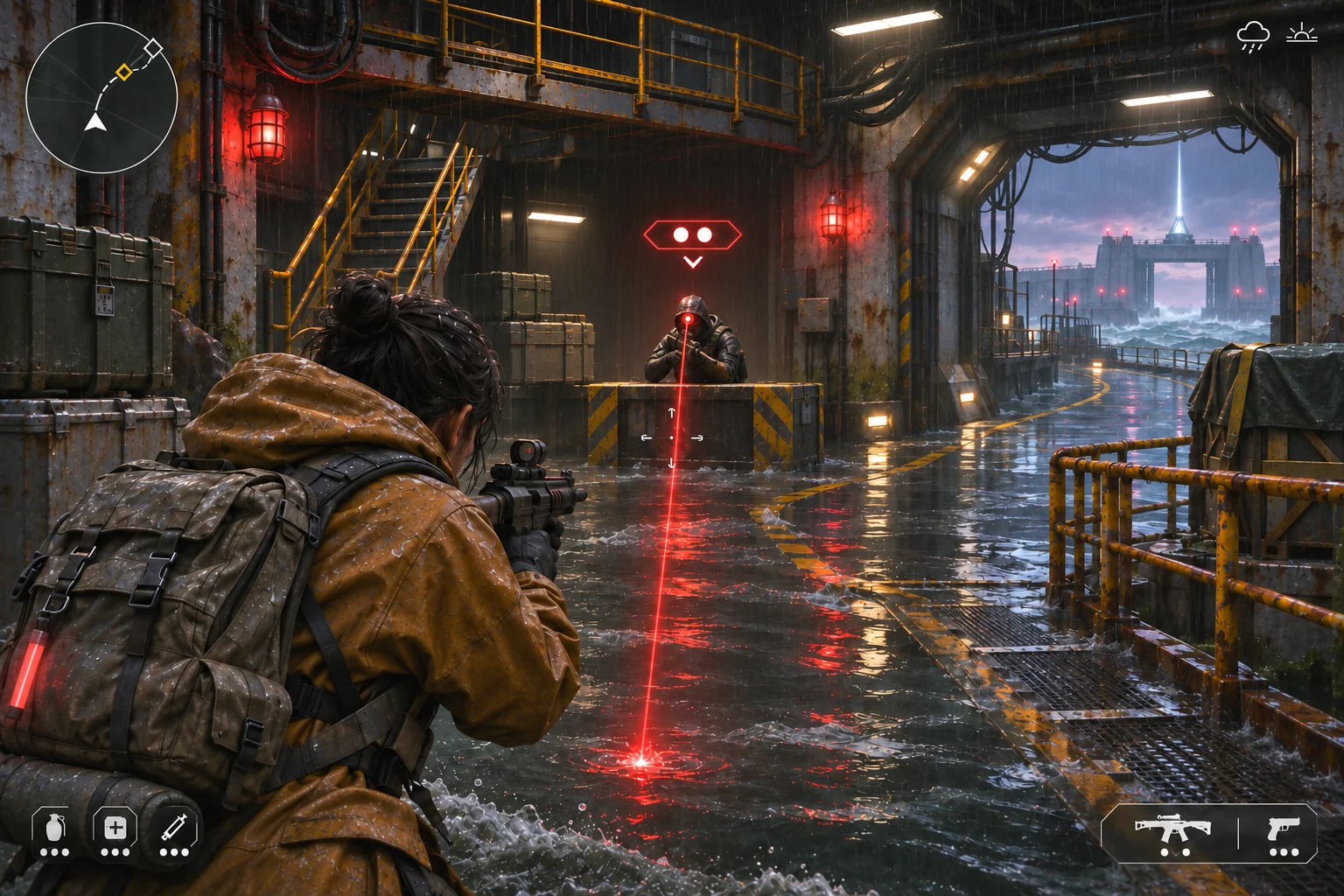
A telegraph becomes useful when it gives the player a response window and a rule for resolving the attack. Here, entering the marked lane warns the player. The following action happens first; then a sentry that is still alive and still has the operator in its lane deals one damage. A successful second shot can prevent the next response by reducing its health to zero before that step.
Prompt 3: specify the enemy timing
Add only one 2-health sentry to the Relay Vault lane. Entering the lane displays a visible warning line. Resolve every beat in this order: player action, sentry response if it survives and the operator remains in the marked lane, then subtract 15 seconds. One shot costs one ammunition round and deals 1 damage. If the sentry is still alive after the player's action, it deals 1 damage at that action's end; if it survives and remains engaged, mark the next warning beat. If its health reaches 0 during the player action, it cannot respond. Leaving the marked lane also avoids the response. Show the state before and after one shot, including sentry health, operator health, ammo, and clock. Do not add a faction system or a second enemy.On the first shot, the sentry falls from 2 to 1 health, so its marked response still deals one damage. The player spends one round and loses one health. On the second shot, the sentry falls to 0 before its response and cannot fire. This is a rule prediction; compare it with a real build only if you later run one.
A simulated prompt clarification
An incomplete v0 prompt might say only “the sentry telegraphs, then attacks.” That leaves open whether the player acts before the shot and whether a defeated enemy still attacks. The simulated v1 clarification states the order directly: player action → eligible sentry response → subtract 15 seconds, and a sentry at 0 health cannot respond. This is an authored specification review, not a prompt run or observed game correction.
Hand-resolve the extraction route
Before adding more zones or enemies, apply the rules to one route. Seven actions cost 105 seconds. The sentry attacks after the first shot because it survives that action; the second shot defeats it before a second response. The core is mandatory, while the cache is a deliberate extra beat.
| Beat | Player action and sentry response | State after the beat |
|---|---|---|
| Start | — | 120s, 3 HP, 6 rounds, empty cargo; Flooded Dock. |
| 1 | Move to Relay Vault; the sentry marks the occupied lane. | 105s, 3 HP, 6 rounds; warning visible. |
| 2 | Fire once; sentry falls to 1 HP, then its marked shot deals 1 damage. | 90s, 2 HP, 5 rounds; the sentry marks the next warning beat. |
| 3 | Fire again; sentry reaches 0 HP and cannot respond. | 75s, 2 HP, 4 rounds; Vault lane is safe. |
| 4 | Pick up the signal core. | 60s, 2 HP, 4 rounds; core carried. |
| 5 | Take the optional salvage cache. | 45s, 2 HP, 4 rounds; core and one scrap carried. |
| 6 | Move to Tide Gate. | 30s, 2 HP, 4 rounds; extraction available. |
| 7 | Complete extraction before time reaches 0. | 15s, 2 HP, 4 rounds; success, core and one scrap secured for this run. |
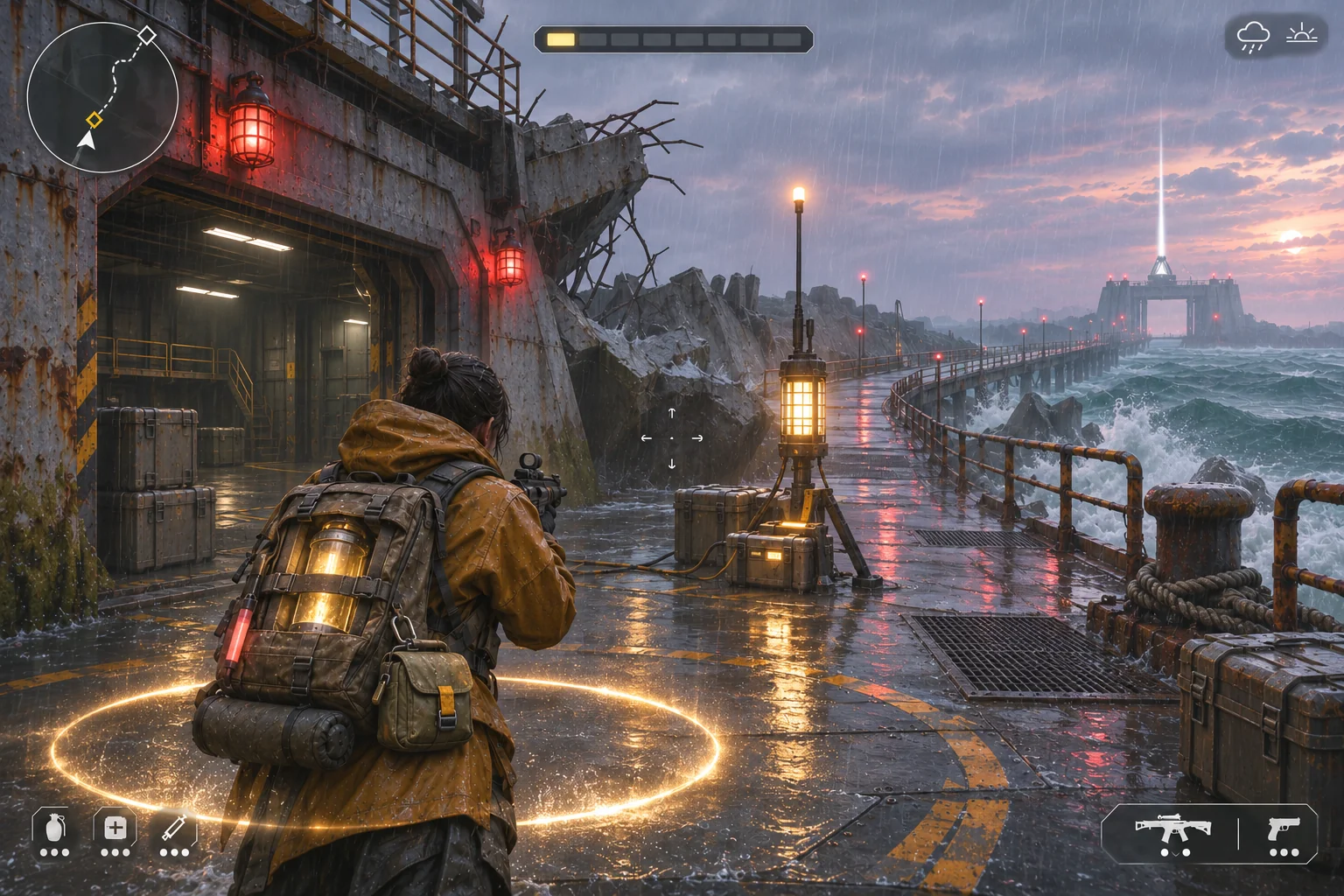
The remaining time is one 15-second beat: 120 seconds minus seven actions × 15 seconds. If you spend an eighth beat before extraction, the clock reaches zero and the cargo is lost. The table is an arithmetic expectation from invented rules, not a captured run or a measured result.
Turn the rules into acceptance checks
Use the hand trace as a checklist for a future prototype. Check each boundary separately so a visible result does not hide a timer, ammo, or cargo error.
| Case | Expected state or behavior | Why check it |
|---|---|---|
| Missing signal core | Tide Gate interaction fails; no extraction success or cargo reward. | The optional cache cannot substitute for the required objective. |
| One round left | A shot spends exactly one round; no free shot is allowed at zero ammo. | Ammo and sentry health should remain auditable. |
| Sentry survives a shot | If the operator stays in the marked lane, the sentry responds after the player action and before the 15-second deduction. | Confirms telegraph and response order. |
| Sentry reaches zero health | It does not deal damage after the shot that defeats it. | A defeated threat must not resolve a stale attack. |
| Timer reaches zero | The run fails and all mission cargo is lost. | Prevents a late extraction from succeeding with no time. |
| Operator reaches zero health | The run fails and all mission cargo is lost. | Health failure is independent of extraction progress. |
| Restart | Restore 120 seconds, 3 HP, 6 rounds, empty cargo, Dock start, and the original sentry state. | A replay should not inherit mission cargo or damage. |
When you do have a build, compare its observed state with these expected values and record the exact action that caused any mismatch. Change one rule at a time. Until that comparison is actually made, call the list planned acceptance checks, not passed tests.
Take the mission brief to a creation workspace
Once the rules fit on one page, use them as the input for your own first pass: identify the game format, describe the player's first action, lay out the three zones, then add the sentry's response and extraction limits. SEELE's current Free AI game maker page describes a general flow for entering a game idea in plain English, reviewing a playable 2D or 3D result, and iterating in Workspace. It also advises reviewing the selected AI model, available Koin balance, and displayed generation cost before submitting. The page describes browser testing and follow-up refinement; those general steps do not establish that this fictional extraction loop will work.
Those are general creation and review steps, not a promise that this extraction mission, sentry timing, or cargo rules will be implemented. Inspect the actual state transitions if you try your own prompt, especially the order of an enemy response and the point at which extraction pays out.
Start with one mission you can audit
A useful first extraction mission has one required objective, one optional risk, one readable enemy, and a clock that can be checked action by action. Keep run cargo separate from permanent progression, state when an enemy responds, and decide whether a player action can stop that response. Then test the real build against the expected state instead of assuming a detailed prompt guarantees it.
When you are ready to shape your own mission brief, start with the route, the first player decision, and one success check. Keep the first loop small enough to inspect before adding more enemies or persistence.
Extraction shooter prompt FAQ
What should I define first in an extraction-shooter prompt?
Start with the required objective, extraction point, and the condition for success. Then define the clock, health, ammunition, carried mission cargo, and the order for resolving each action. Those rules tell you what the first mission must show and which edge cases matter before you add more loot, enemies, or a larger map.
How do I make extraction rules clear?
Name the item required for extraction, the zone where extraction happens, its action cost, and whether the timer must remain above zero when the action finishes. Also state what happens if the player lacks the objective or runs out of time. A reader should be able to decide whether a given end state wins without guessing.
How should a prompt describe an enemy telegraph?
State what reveals the warning, how long the player has to respond, when the enemy attacks, and what cancels the attack. In this example, the player's next action resolves first; then a surviving sentry fires if the operator stays in the marked lane. A sentry reduced to zero health cannot respond.
Does this package include a tested extraction-shooter build?
No. Breakwater Run is a fictional hand-resolved example, and the four prompts are templates that were not run for this package. There is no playable N0368 result or playtest here. The route table is an expected state from authored rules; only a later observed build can show whether an implementation follows it.
How can I test optional loot without changing the win condition?
Keep optional loot separate from the required objective and give it a clear action cost. Compare one route that skips the cache with one that takes it, then check how much time remains at extraction. In this example, the cache adds one 15-second action and one run-only scrap, but never replaces the signal core.