Key takeaways
- Direct answer: For beginners, a prompt-based game generator is often best for reaching a first playable build. For programmers, a coding assistant inside a familiar engine usually offers more control. Use image and audio generators only for focused support after the core loop works; no tool guarantees completion within 24 or 48 hours.
The best AI tool for a game jam is the one that removes your biggest bottleneck without making the project harder to finish. For a beginner or a solo jammer, a prompt-based game generator can be the fastest route to a first playable build. For an experienced programmer, a coding assistant inside a familiar engine usually offers more control. Image and audio generators are best treated as supporting tools for placeholders, mood, and rapid variation rather than as the center of the production plan.
No tool can guarantee a complete game in 24 or 48 hours. Your odds improve when you choose one primary creation environment, freeze a tiny core loop early, and use AI only where its output can be reviewed quickly.
Choose a stack, not a collection of tools
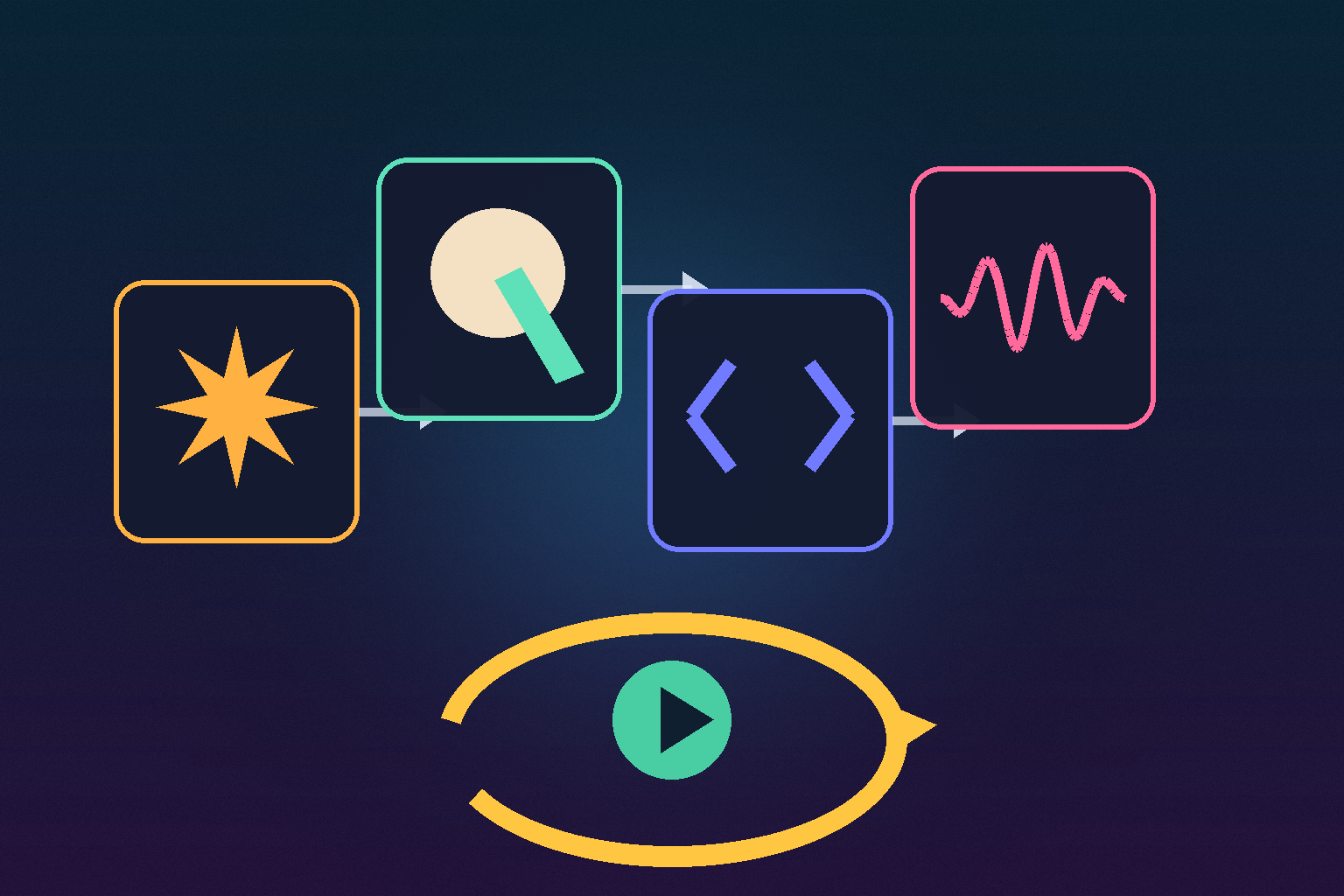
A jam stack should have one owner for each job: the playable runtime, code or logic, visuals, audio, and build delivery. Adding multiple overlapping assistants creates handoffs, inconsistent files, and extra decisions. A useful default is one game-making environment, one general reasoning or coding assistant, and at most one specialist generator for the asset type that would otherwise block you.
Before the timer starts, confirm that you can export a build, reopen the project, and replace generated output. Also check the jam rules and each tool's current terms. Some events restrict generated assets, require disclosure, or expect source files. Rules and product capabilities can change, so verify them on the event page and official product documentation.
Best for the fastest first playable: a prompt-based game generator
Choose a prompt-based game generator when the main risk is reaching a playable state at all. This category is especially useful for students, non-programmers, and teams that need to turn a mechanic description into something they can test quickly.
The strongest use is not asking for a complete dream game in one prompt. Start with a single loop: move, collect three objects, reach an exit. Then test the build and request one change at a time. Keep a written list of what must survive each revision, because regeneration can alter behavior you already liked.
This route fits a 24-hour jam when the goal is a compact browser-playable experience and deep engine customization is not essential. It is a weaker fit when the concept depends on unusual physics, complex procedural systems, precise networking, or an export workflow the generator does not support. Verify current editing and export options before committing.
Best for programmers: a coding assistant in a familiar engine
If you already know Godot, Unity, Unreal Engine, or another engine, staying in that environment is usually safer than learning a new generator during the jam. A coding assistant such as GitHub Copilot or a conversational assistant can help draft small scripts, explain errors, suggest state-machine structure, and turn a mechanic into a checklist.
Ask for the smallest testable unit, not an entire architecture. A productive request includes the engine version, language, relevant node or component structure, expected behavior, and the exact error. Review every change, run the game after each small edit, and commit working checkpoints. Generated code can be plausible but wrong, outdated, or mismatched to your project.
This stack is best when the team can already debug. If nobody can explain the generated logic, the assistant may create a late-night recovery problem instead of saving time.
Best for scope, design, and debugging: a general AI assistant
A general assistant is most valuable before and between implementation tasks. Use it to reduce a broad theme into three one-sentence concepts, identify the minimum playable loop, draft a risk list, or create a test plan for a mechanic. During development, give it concrete evidence: the error message, a short code excerpt, what you expected, and what happened.
A strong scope prompt is: “Design a game jam concept with one input mechanic, one win condition, one lose condition, one scene, and a three-minute play session. List what to cut first.” That produces a decision aid rather than an oversized feature list.
Do not let the assistant become the project manager you continually consult without building. Time-box planning, choose a direction, and move the task list into a shared source of truth.
Best for visual placeholders and variation: an image generator
Image generation can help with a title image, mood exploration, texture ideas, icons, or temporary character and environment concepts. It is useful when visual indecision is blocking the team. Generate a small, coherent set with the same palette, camera angle, and shape language rather than dozens of unrelated assets.
The limitation is integration. A striking image is not automatically a usable sprite sheet, animation, tileset, layered interface asset, or correctly licensed submission. Cropping, transparency, consistency, readability, and import settings still take time. Test one asset in the game before generating the rest, and keep a simple fallback style such as colored shapes or a limited pixel palette.
For judged jams, document what was generated and check the event's disclosure requirements. When asset provenance or usage rights are unclear, choose assets you created, event-provided packs, or clearly licensed alternatives.
Best for quick sound direction: an audio generator
AI audio tools can help you explore music mood, short stingers, ambient layers, or sound-effect ideas. They are most useful after the game loop works, because audio cannot rescue an unplayable build. Request short, specific outputs and test them at the volume and repetition rate players will actually hear.
Audio files still need trimming, looping, normalization, import, and in-game mixing. A generated track that is too long or stylistically inconsistent can consume more time than a small public-domain or event-provided pack. Check the tool's current usage terms and the jam's rules before shipping generated material.
A practical 24-hour plan
In a 24-hour jam, optimize for a complete arc rather than breadth.
- In the opening hour, select one mechanic, one scene, and one visual rule. Write the win and lose conditions.
- Build movement and the core interaction with placeholders. Use a generator or coding assistant only to reach this test faster.
- Create a build as soon as the loop works. Ask someone else to play without explanation.
- Fix blockers and confusing feedback. Cut secondary mechanics before adding content.
- Add a small visual pass and a minimal sound layer.
- Reserve the final stretch for export, submission text, credits, disclosure, and a clean-machine test.
The key decision is a feature freeze. Once an unfamiliar player can complete the loop, treat new mechanics as optional.
A practical 48-hour plan
A 48-hour jam gives you room for one additional iteration cycle, not permission to double the scope. Use the first half to produce and test the same small complete loop you would target in a shorter jam. Use the remaining time for clarity, feel, accessibility, content tuning, and a reliable final build.
For a team, split ownership clearly. One person protects the playable branch, one prepares art, and one handles audio or presentation. Generated assets enter the project only after the owner checks format, consistency, and whether the file can be replaced. Merge at planned checkpoints instead of continuously.
A useful 48-hour stretch goal is one meaningful variation on the proven loop: a second enemy behavior, a new level arrangement, or a difficulty modifier. Add it only if the base game remains recoverable from a known working checkpoint.
How to choose your best tool in ten minutes
Score each candidate against five questions:
- Can the team already use it without a tutorial marathon?
- Can it produce or support a playable build in the target platform?
- Can you edit the result without regenerating everything?
- Can you inspect and debug its output?
- Do its current terms and the jam rules fit your planned submission?
If a tool fails the export, editability, or rule check, remove it from the stack. If two tools solve the same problem, choose the one the team knows. The best jam stack is usually boring, small, and recoverable.
Recommended stacks by situation
For a first-time solo jammer, use a prompt-based game generator plus a simple image or audio source only after the loop works. For a programmer, use a familiar engine, version control, and one coding or conversational assistant. For an artist-designer pair, use a familiar engine template, an assistant for small logic tasks, and an image tool for controlled visual exploration. For a classroom team, prioritize shared files, clear task ownership, and a build everyone can test over maximum automation.
Whichever stack you choose, keep placeholders until the game is fun, save working versions often, and judge AI output by what survives the final build rather than by how impressive the first generation looks.
Frequently Asked Questions
Can AI make an entire game during a 24-hour jam?
AI can accelerate planning, code drafts, assets, and prototyping, but it cannot guarantee a complete game. A tiny scope, familiar tools, frequent testing, and early export matter more than asking for a large one-shot generation.
What is the best AI tool for a beginner game jammer?
A prompt-based game generator is often the most approachable starting point when the goal is a simple playable prototype. Choose one only after confirming that its editing, export, and submission options fit the jam.
Should I use an AI game generator or a coding assistant?
Use a game generator when speed to first playable is the main constraint and deep customization is optional. Use a coding assistant in a familiar engine when you need more control and can review and debug the output.
How many AI tools should I use in a game jam?
Use as few as possible. One primary creation environment, one general assistant, and one optional specialist asset tool is a practical ceiling for many small teams.
When should I generate art and audio?
After the core loop works and has survived a playtest. Early placeholder shapes and simple sounds make it easier to change mechanics without wasting polished assets.
How do I prevent AI-generated code from breaking the project?
Request small changes, provide exact context, test immediately, and save working checkpoints in version control. Never merge code that nobody on the team can explain or recover.