
Choose groups and reputation signals
Reputation should represent a relationship the player can understand. Start with two or three factions that have distinct goals, then name the actions that raise or lower standing. Helping a courier group might build trust; taking its supplies could damage it. Explain the effect when it happens rather than hiding the change in a later menu.

Use a readable scale with only a few meaningful bands, such as hostile, neutral, and trusted. Exact point totals may support tuning, but players mainly need to know what the next threshold unlocks. Show recent reasons for change so they can connect quest outcomes to their standing.
The official The Doors of Trithius listing describes quests that can raise reputation among locals and unlock benefits, along with dynamic quests in towns. That is general reputation-and-quest context only; the roguelite persistence design here is an original proposal.
Gate quests without removing agency
A reputation threshold can change which jobs appear, their terms, or the reward offered. A faction might share a supply mission once it trusts the player, while a hostile group refuses a direct request. Keep at least one route forward available so a low standing does not strand a run. Alternate factions, neutral jobs, or a recovery quest can preserve agency.
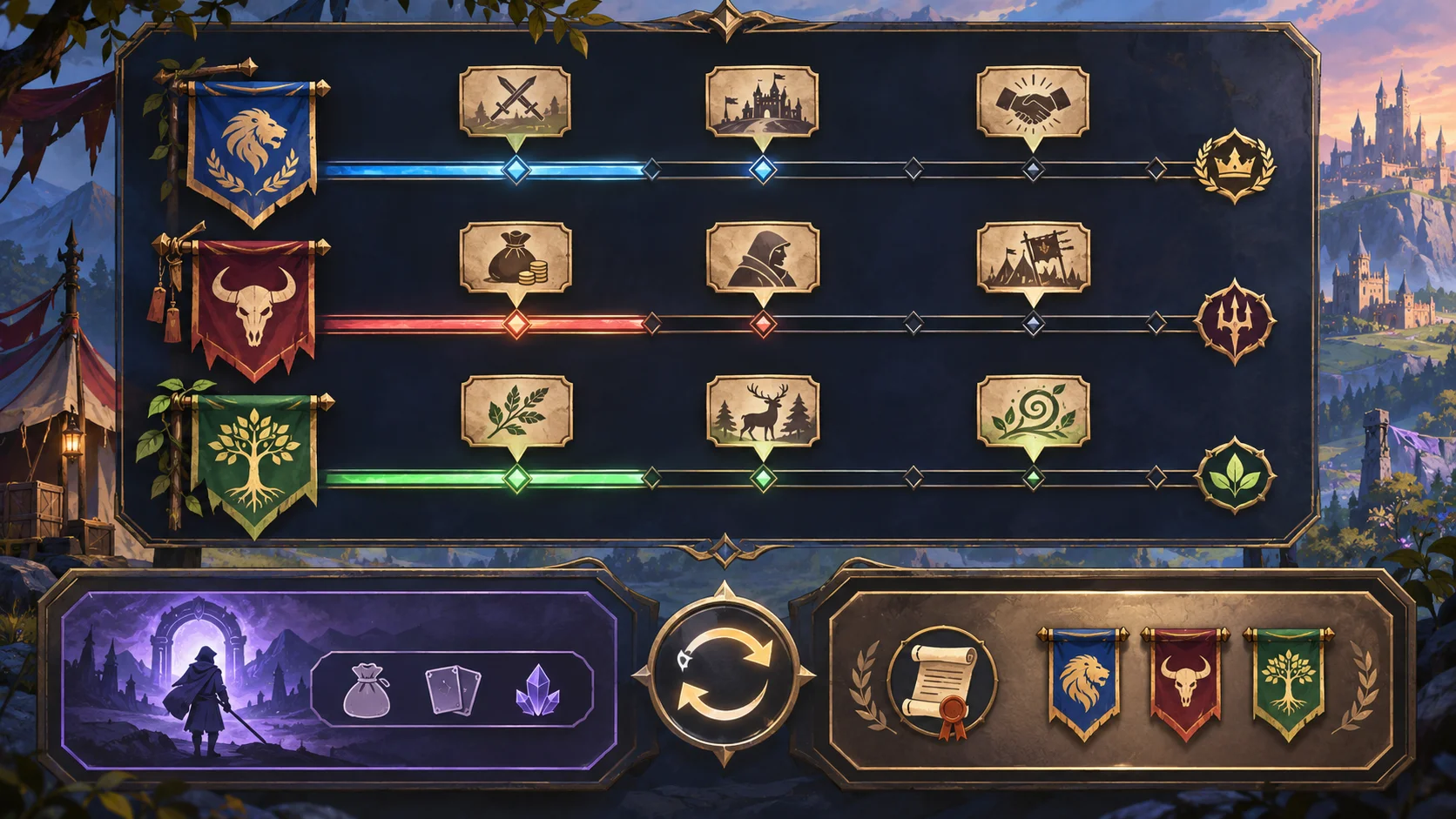
Tell the player what a locked quest requires. “Earn trust by completing a delivery” is actionable; a greyed-out card with no explanation is not. You can preserve uncertainty around the exact faction response, but the basic gate should be understandable. If a choice harms one group while helping another, show both changes." alt="Faction standing markers connect to newly available quest cards." width="1672" height="941" loading="lazy">
Do not make every quest a pure reputation transaction. Some jobs can reveal a story or offer a tactical reward without changing standing. This keeps quest selection from becoming a checklist for maximizing one bar and allows the player to pursue a different build or narrative route.
Connect persistence to run resets
Separate temporary mission state from account-level reputation. A quest accepted during a run might reset when the expedition ends, while a completed milestone may persist. Decide what happens on success, failure, and voluntary retreat. State those rules before the player starts so a failed run does not unexpectedly erase a long-term relationship.
Carry only the amount of reputation needed to make the next run feel different. If every small action persists, the player can be locked into a faction path very early. A modest checkpoint after a major quest can preserve consequence while letting the player keep exploring other groups. The reset should be visible in the hub or run summary.
Provide recovery routes when standing drops. A player might complete a neutral delivery, return a stolen supply, or resolve a faction dispute. Recovery should take effort and create a choice, but it should not require replaying the entire game. Ensure that the recovery quest itself remains available at low standing.
Test reputation recovery and balance
Play the same mission loop with low, neutral, and high faction standing. Check which quests appear, what alternatives remain, and whether a player can recover after a poor decision. Compare a player who consistently supports one group with one who stays flexible. Look for an optimal faction that grants every useful reward. " alt="A traveler reviews faction quest offers in a town between repeat expeditions." width="1536" height="1024" loading="lazy">
Track quest availability, completion, abandoned offers, standing changes, and how often people reach a lockout. Ask players to explain why an offer appeared or disappeared. If they guess incorrectly, improve the threshold feedback or the action history. Balance should follow clarity: players need to understand a reputation system before they can judge its fairness.
See the roguelite RPG guide for the repeating run foundation. SEELE AI can help outline an original faction system, but quest gating, persistence, and recovery need implementation and playtesting.

FAQ
How do you add reputation-gated quests to a roguelite RPG?
Create a few groups with visible reasons for gaining or losing trust. Use clear thresholds to change quest offers or terms, and keep an alternate route forward available. Separate quest state that resets with a run from reputation that persists, then test low, neutral, and high standings.
How should reputation change quest availability?
Standing can unlock a faction offer, alter its reward, or change how a character responds. Show the threshold or action that caused the change. Preserve neutral or alternate quests so the player is not locked out of the main loop after one early decision.
What reputation should persist between runs?
Persist only meaningful milestones or a bounded amount of standing that makes the next run feel different. Temporary quest progress can reset, while a completed faction objective may carry forward. Explain which state survives success, failure, or retreat before the expedition begins.
How can players recover from low faction standing?
Offer a recovery path such as a neutral service, returned supplies, or a dispute quest. Make it take time or resources so the earlier choice still matters, but avoid requiring a complete replay. Test recovery from the lowest standing to ensure the main game remains playable.