
Make forecasts change which supplies, routes, and activities fit today, while keeping pets safe and giving players time to prepare. Prototype one short sequence first, then check whether the player can see the cause, consequence, and next choice. The system described here is original design guidance; the linked source is limited to the genre context in the first chapter.
Map daily care and travel baselines
Record the daily care loop, current weather cues, resource inventory, and routes pets can safely travel. Separate needs that require immediate care from activities the player can reschedule. The official Potted Pets demo listing describes changing weather in a cozy garden and pet simulation; it supports context only, while the resource and travel consequences here are original design advice. See Planter’s Box and MAGIC Spell Studios for the limited context claim.

Choose a small forecast set with distinct consequences, such as rain that changes outdoor access, heat that increases water demand, or wind that makes a route uncomfortable. Explain the forecast before the day begins and give players enough time to prepare. Do not make a weather event secretly damage a pet or erase a day of progress.
Make forecasts actionable
Translate each forecast into actions the player can take: stock water, move an activity indoors, pack a comfort item, or choose a sheltered route. Keep a forecast icon consistent with the resulting world cue so players learn the rule through observation.
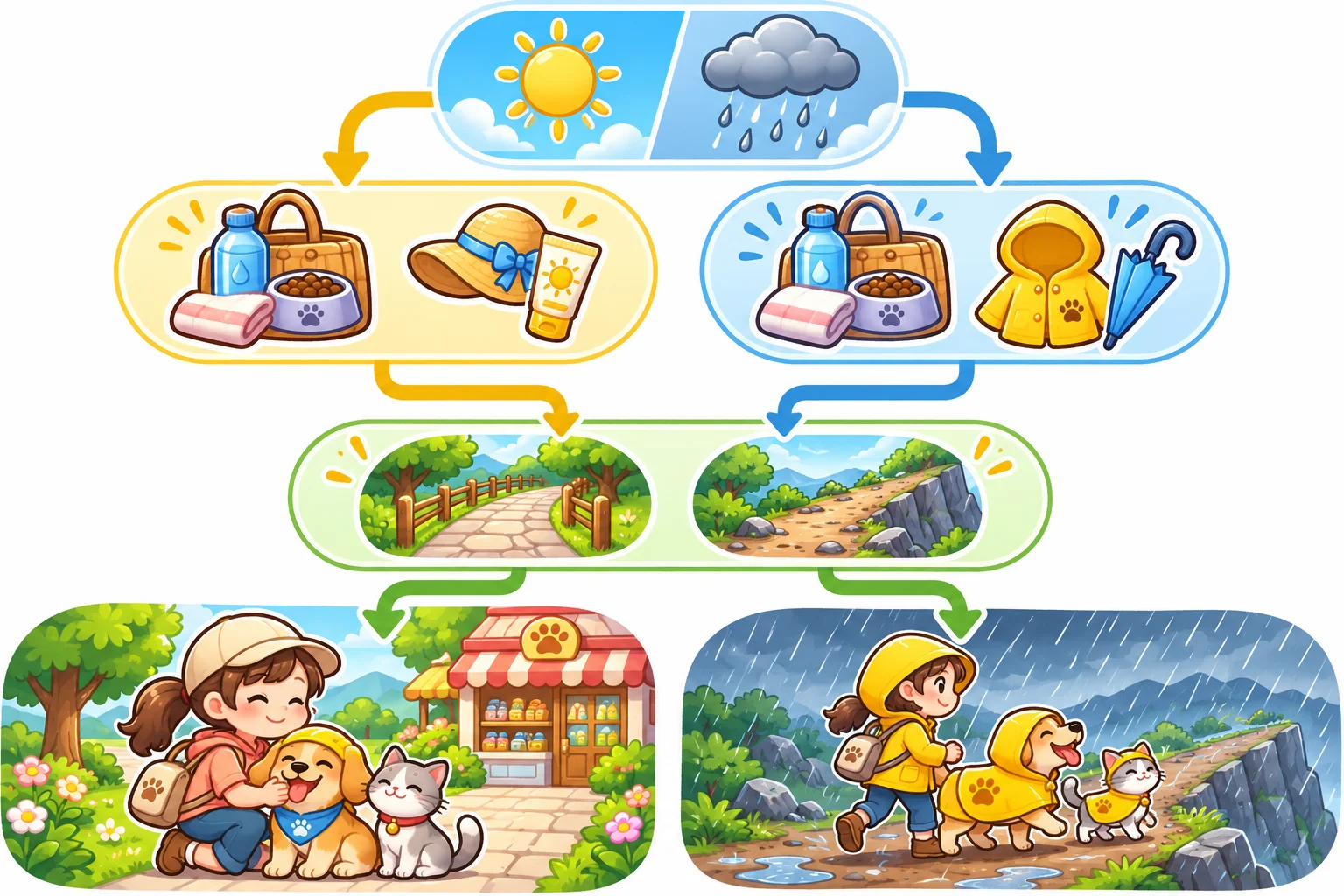
Show the cost and benefit in the same place. Bringing extra supplies can preserve an outing but reduce carrying room; staying home may protect comfort but delay a gathering goal. Let players make an informed trade instead of forcing the single correct response.
Connect weather to resources and routes
Tie weather to resource use with visible quantities or states, not arbitrary hidden penalties. A hot day might use more water during outdoor play, while rain can refill a garden basin or create a muddy path. Keep alternate sources for essential care so a forecast changes planning without making an animal’s basic needs impossible.
Use route choice to express risk gently. Shelters, short paths, and indoor alternatives can reduce exposure, while an optional scenic route offers a reward in suitable conditions. Let players turn back or switch activities without losing collected items or relationship progress.
Test preparation and recovery
Test a forecast across preparation, travel, activity, and return home. Ask players what they expect before the day starts, then check whether the same weather cue explains resource use and route feedback. Include a missed forecast and a rescheduled outing to confirm that recovery is simple.

See a forecast-driven resource guide for another example of weather changing resource decisions. Accept the design when the forecast informs a choice, pets remain safe, and the player can name a clear fallback.
FAQ
How should weather affect pet-care decisions?
Forecasts should change what the player packs, where they travel, or which activity they choose. Connect each weather cue to a visible resource or route effect, and preserve safe care options for pets. Give players time to prepare so weather prompts planning rather than surprising them with an unavoidable loss.
How can forecasts change travel choices?
A forecast can make a sheltered path, a shorter route, or an indoor activity more attractive. Show the likely effect before departure and allow the player to change plans. Include a return or reschedule option so a route decision does not trap the pet or discard progress.
How do you avoid weather becoming punishment?
Use gentle, reversible consequences and keep essential care available. Weather can alter comfort, resource use, or activity rewards without injuring a pet or deleting a day’s progress. Provide indoor alternatives, rescheduling, and clear recovery if the player misreads a forecast.
What should you test in a pet-care weather system?
Test the same forecast through preparation, route choice, activity, and return. Ask players to predict what will happen, then compare their expectation with feedback. Include an unexpected change and check that the player can switch activities or return safely. Repeat the test after loading a saved day to confirm the forecast state persists.