In fictional Tideglass, an oracle asks the player to speak a phrase before a match-3 board begins. Saying “Tide” doubles shells earned from horizontal matches; saying “Stone” doubles shells earned from vertical matches. Both choices set the same five-shell goal. Keep the board and its three match events fixed: two horizontal shell matches and one vertical shell match. Compare the resulting totals and level outcomes. The local fixture selects a phrase deterministically; it does not test microphone capture or speech recognition.
Connect a spoken phrase to one clear modifier
Before the board starts, let the player say “Tide” or “Stone” to the oracle. Tide doubles the shell reward for horizontal matches. Stone doubles the reward for vertical matches. Both set a five-shell level goal, so the player’s phrase changes the puzzle rule without changing the task target or board layout.
Keep phrase selection, rule modifier, and level goal visible in the level state. Godot Resources can store authored modifier definitions such as match orientation and reward multiplier. This article tests the phrase-to-rule mapping with a fixed selection; real microphone input and speech-to-text would need a separate implementation and test.

Apply the selected rule to matching shells
Use one fixed board fixture with three resolved shell matches: two horizontal and one vertical. Under Tide, each horizontal match earns two shells and the vertical match earns one, for five total. Under Stone, horizontal matches earn one each and the vertical match earns two, for four total. The same board therefore produces a different result because the phrase changes how matches count.
Do not alter piece colors, match order, moves, or cascade behavior between the two runs. Show each match orientation, its reward, the running shell total, and the unchanged five-shell goal. This makes the changed rule inspectable instead of hiding the effect inside a score animation.
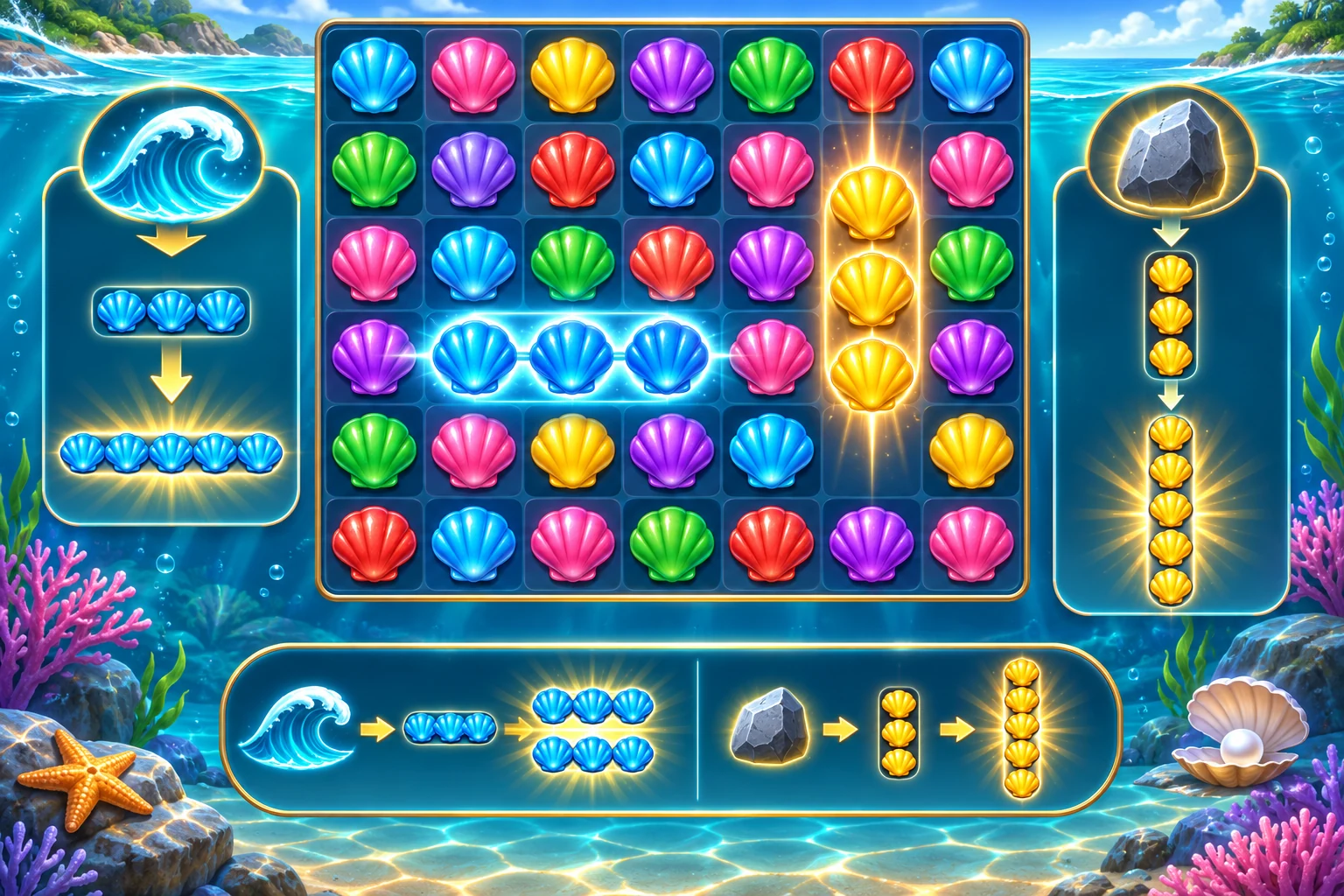
Compare both phrases on the same board
Run Tide first: two horizontal matches contribute four shells and the vertical match contributes one. The total reaches five and the level completes. Reset the board, choose Stone, and replay the same three matches: two shells from horizontal matches plus two from the vertical match make four, so the goal remains incomplete.
Report the selected phrase, match orientations, shell total, five-shell goal, and level state for each run. The fixture confirms that phrase selection changes scoring and outcome while the board remains fixed. Tideglass, the oracle, and the scores are fictional; microphone capture and speech recognition are outside this local test.

Give the AI a fixed spoken-choice match test
Create a match-3 puzzle in fictional Tideglass. Before the board starts, the player speaks either Tide or Stone. Tide doubles shells earned by horizontal matches; Stone doubles shells earned by vertical matches. Both choices set a five-shell level goal. Keep the same board and three match events in both runs: two horizontal shell matches and one vertical shell match. Show the selected phrase, match orientation, reward, total shells, goal, and level result. The local test may select the phrase deterministically; do not claim microphone or speech-recognition testing.
Run the same events under both choices. Tide should score 2+2+1=5 and complete the level. Stone should score 1+1+2=4 and leave the five-shell goal incomplete. Do not change board, moves, match order, or goal.
FAQ
How can spoken choices change a match-3 puzzle?
Map each phrase to a visible rule modifier before the board begins. The modifier can change how a match scores or which pieces count toward the goal. Keep the board and target fixed in a test so players can see that the phrase caused the outcome difference.
How do you test a phrase-based puzzle rule?
Use the same board and match events for each phrase, then report the chosen phrase, match type, reward, total, goal, and result. A deterministic phrase selector can verify rule logic before microphone capture or speech recognition is added. on the same board.
What should change when a dialogue choice changes puzzle rules?
Change only the stated modifier and any directly linked level goal. Keep the board layout, pieces, move order, and other scoring rules fixed. This isolates the choice’s effect and makes it easier to tell whether the puzzle remains solvable. during this comparison.