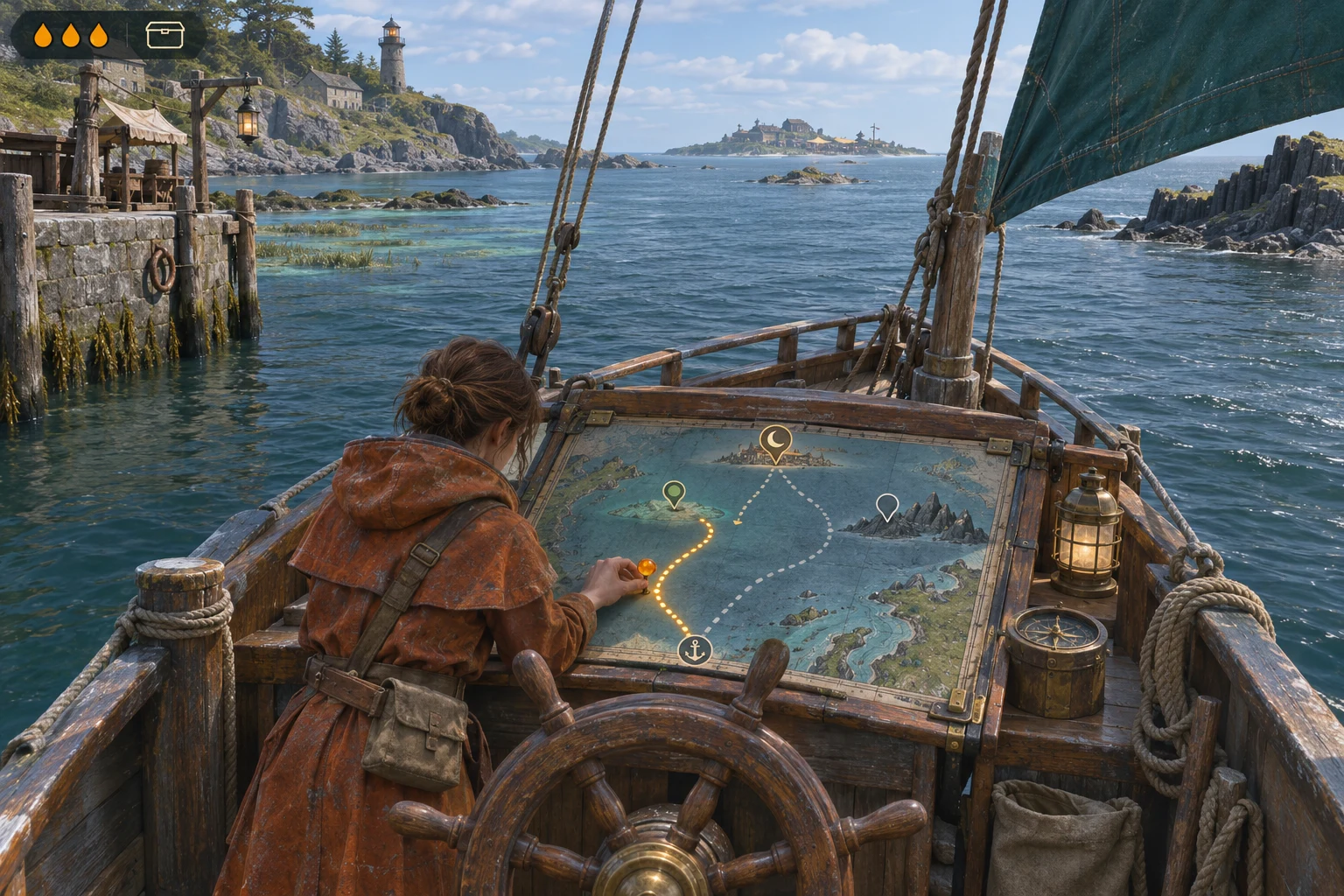
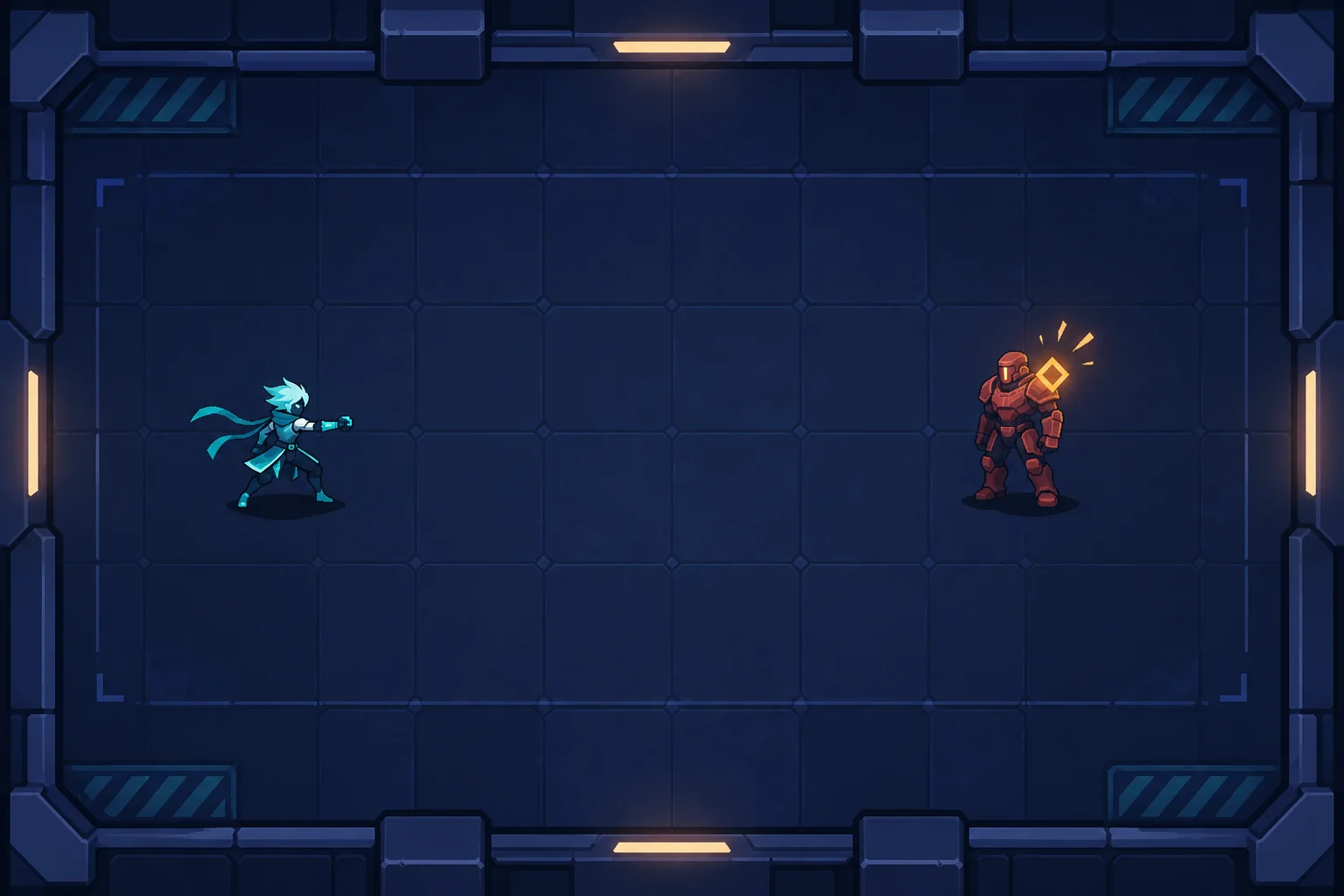
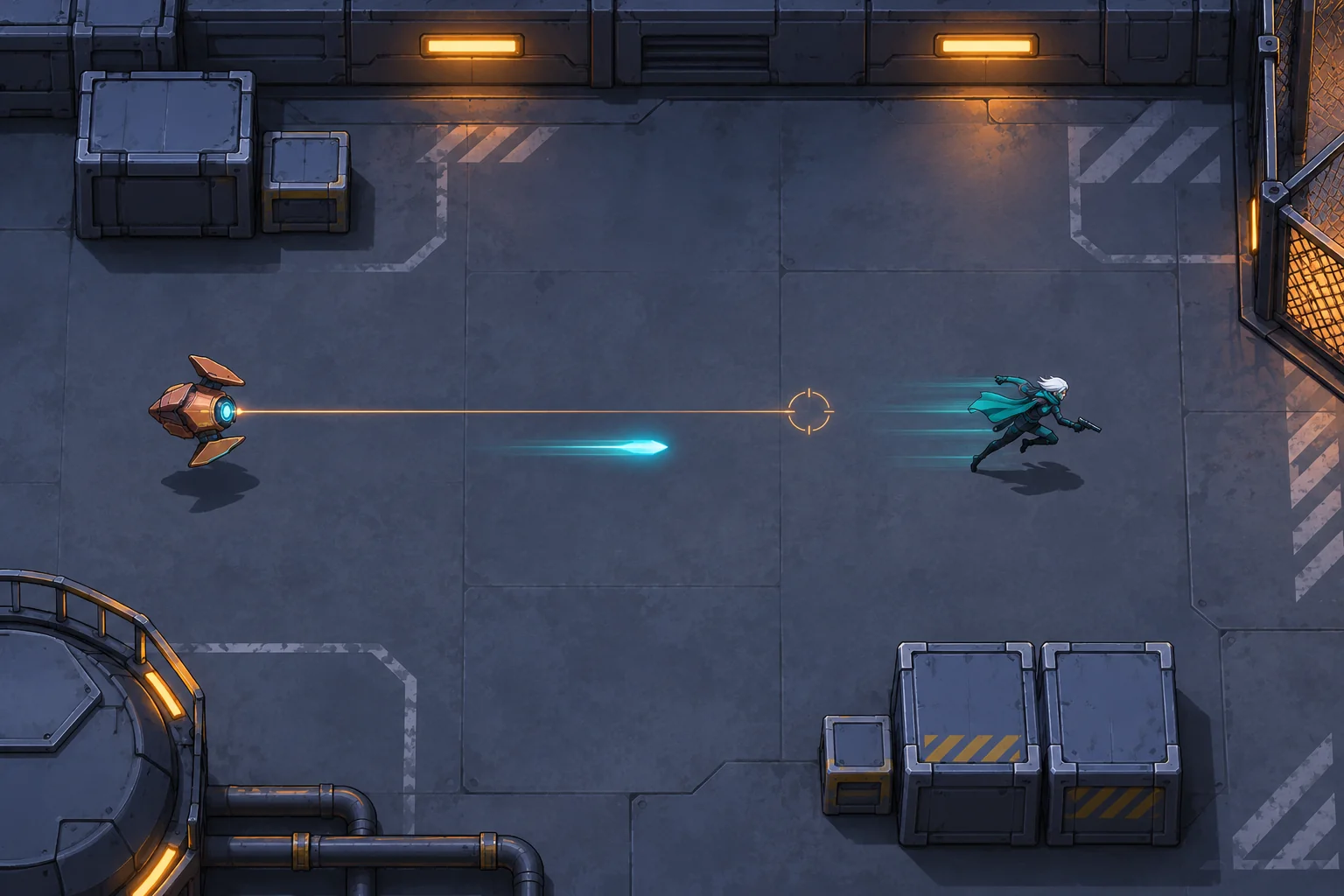
Protecting a companion becomes an action-game loop when their movement changes what you can safely do. Define how close Iven follows, where he stops at cover, and when a sentry can see him. Then give the player one reliable chance to interrupt a visible warning before a bolt reaches the exposed crossing.
Northline Relay is a fictional design exercise, not a generated or tested game. Its coordinates and timings form a paper contract you can check in your own build. The useful choice is simple: keep Iven behind an opaque barrier while you attack from a nearby firing position, then regroup before he crosses the lane.
Define the escort distance before the fight
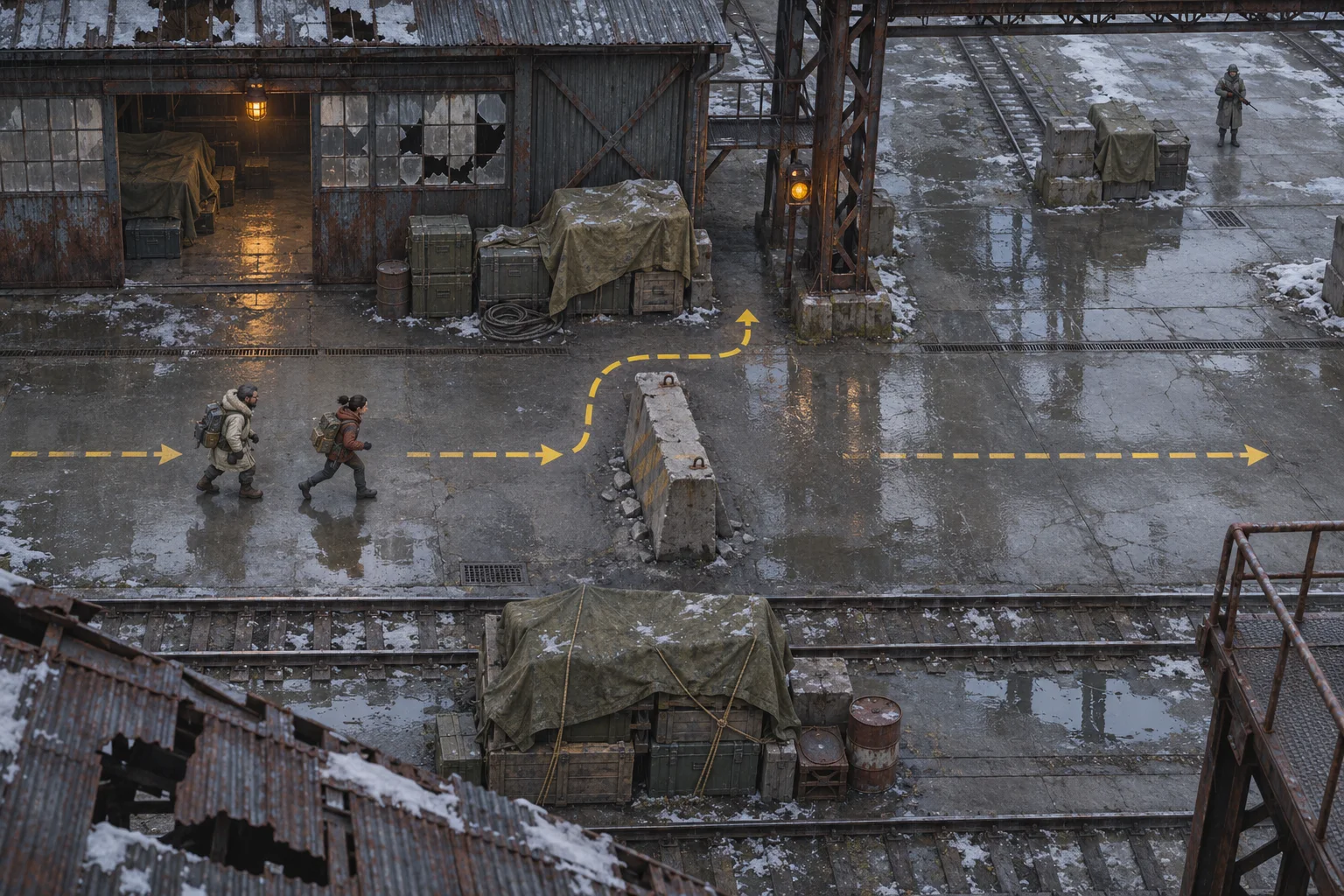
Start with one rule for ordinary movement and a stricter rule for cover stops. Iven walks east at 72 units per second along authored waypoints and prefers to stay 56 units behind the player. If the straight-line gap exceeds 112 units, he stops where he is. He does not teleport, keep advancing, or snap to a marker. He resumes only after the player returns within 96 units and no active warning or bolt is aimed at him.
At a cover stop, Iven waits until the player is within 96 units and the nearest sentry has no lock warning or bolt aimed at him. That keeps the protected pause useful: the player can move around the barrier, take a shot, then return before Iven crosses the exposed route. Give Iven two integrity points. Each bolt hit removes one; the second hit loses the run and resets the full encounter rather than resuming at a checkpoint.
| State | Rule | What to check |
|---|---|---|
| Following | Iven moves at 72 units per second and prefers a 56-unit gap. | He follows authored waypoints instead of taking a straight path through a wall. |
| Leash stop | At more than 112 units from the player, he stops at his current route position. | He does not teleport, advance, or snap to the next marker. |
| Resume | He moves again within 96 units, with no active lock or bolt targeting him. | The warning or projectile must clear before he crosses. |
| Cover stop | At (300,270) and (620,270), he waits for the player within 96 and the nearest threat cleared. | Test that stopping at cover does not depend on distance to a moving marker. |
| Hit and reset | Two bolt hits exhaust Iven's integrity and restart the full run at its initial state. | There is no last-cover checkpoint resume. |
Make the enemy telegraph a response window
Place two opaque concrete barriers across the eastbound route: B1 at x=320–340, y=220–320, and B2 at x=640–660, y=220–320. Each blocks movement through its rectangle, stops bolts, and blocks line of sight when the straight segment from a sentry to Iven intersects it. The route passes through the north opening around each barrier, so Iven follows explicit waypoints instead of walking through concrete. A covered Iven produces no lock line and draws no bolt.
When Iven reaches the exposed point beyond a barrier, a sentry with a clear line shows an amber warning cone 180 units long and 20 degrees wide. The cone locks to Iven, not the player. In fictional v0, the tell lasts 0.45 seconds; in v1, it lasts 0.75. A directional pulse that hits during the tell deals one damage, cancels the lock, and stuns the sentry for 1.00 second. After launch, a pulse cannot erase that bolt.
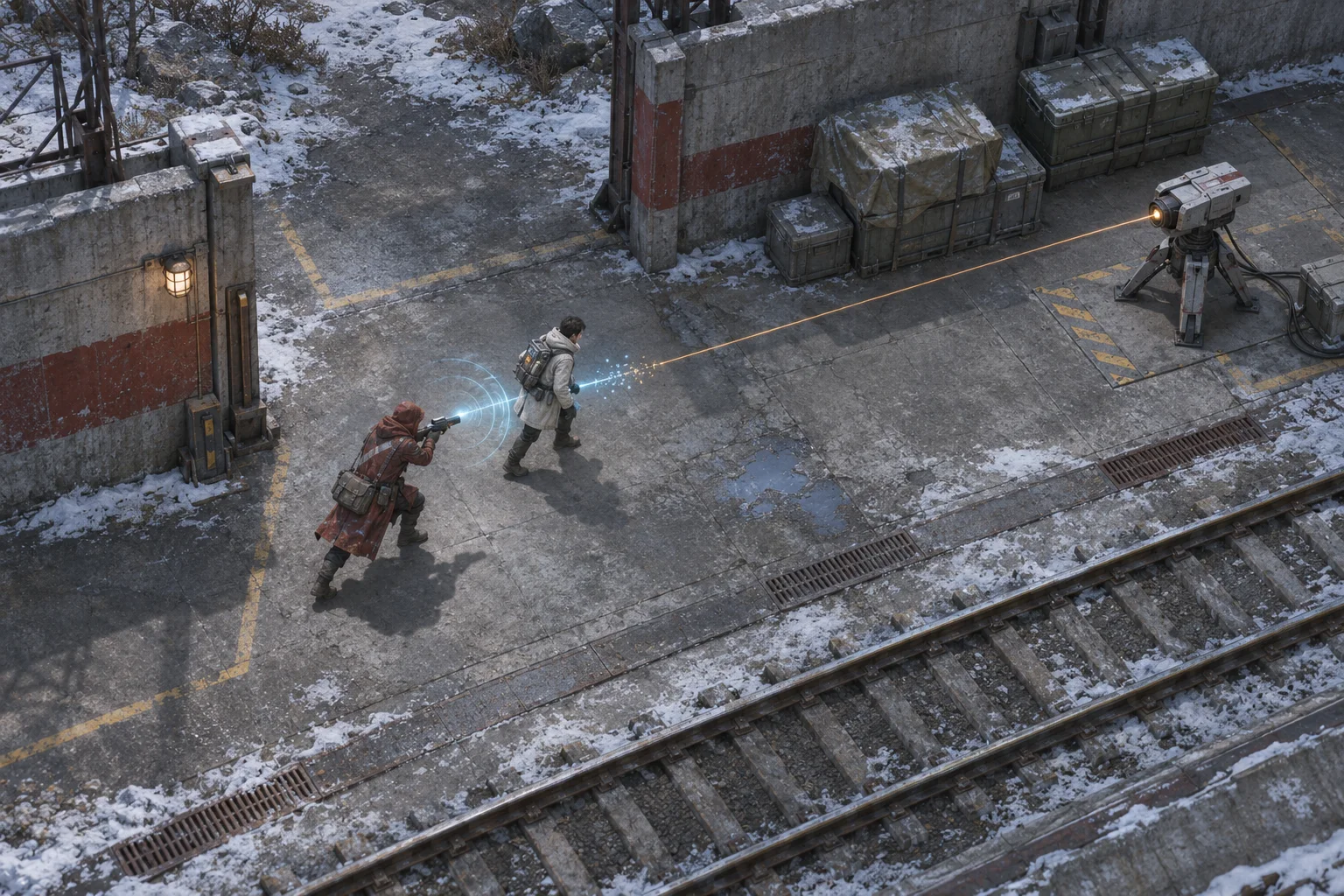
Each sentry has three health and fires a non-homing bolt at 280 units per second toward Iven's position when the warning ends. The direction stays fixed after launch. If the bolt crosses an intact barrier, it is consumed without hurting Iven or damaging the barrier. At the first exposed point, (360,270), Iven is 90 units from sentry one at (450,270). The travel time is about 90 ÷ 280 ≈ 0.32 seconds; that short path is why the warning duration matters.
Keep the player within support range
Use the first cover stop to stage a shot without exposing Iven. While he waits at (300,270), B1 still blocks the sentry's line to him. The player can move to (356,220): that is about 76 units from Iven and 107 from the first sentry, inside both the 96-unit resume distance and the 110-unit pulse range. From that firing position, three landed pulses defeat the three-health sentry while Iven remains behind the wall.
Repeat the same relationship near B2. Iven pauses at (620,270); the barrier stays between him and the second sentry until he reaches the exposed point at (700,270). Keep the player close enough to stop the escort from pulling ahead, but on the open side of the north opening so a pulse can reach the sentry. After the threat is defeated and any warning or bolt clears, regroup within 96 units before Iven resumes.
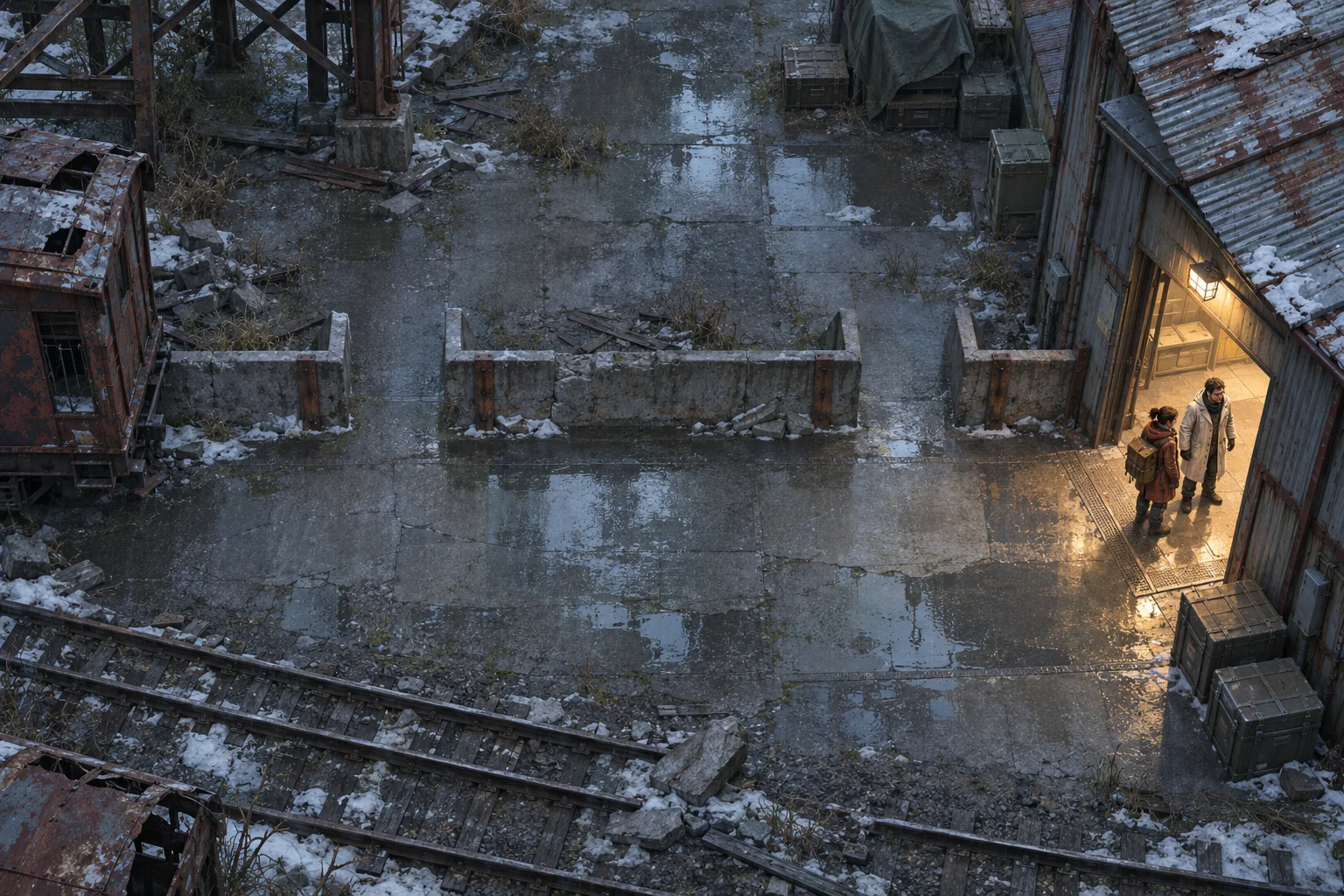
The route ends at the lit shelter at (900,270). Reaching it with Iven alive wins; the outcome illustration shows that authored arrival state, with the rail route empty behind the pair. It is a designed target for your own prototype, not a measured result from Northline Relay.
Revise the tell with a paper rehearsal
Before tuning the whole encounter, change one timing value. At the first exposed point, the bolt travels 90 units to Iven at 280 units per second, or about 0.32 seconds. Add that flight to the warning: a 0.45-second tell gives roughly 0.77 seconds from warning start to impact; a 0.75-second tell gives about 1.07 seconds. These totals are hand-calculated from fictional settings, not observations of player reaction.
| Paper version | Warning | Bolt travel | Warning plus travel | Still unknown |
|---|---|---|---|---|
| v0 | 0.45 seconds | About 0.32 seconds | About 0.77 seconds | Whether players notice and interrupt in time. |
| v1 | 0.75 seconds | About 0.32 seconds | About 1.07 seconds | Whether the longer tell makes the crossing readable without removing danger. |
For a real build, keep the positions and bolt speed fixed. Compare whether a player noticed the cone, fired during the warning, stayed within support range, and avoided a hit. Leave the observations blank until you run that test; the fictional rehearsal cannot answer them.
| Version | Noticed tell? | Pulse timing | Bolt hit? | Iven distance |
|---|---|---|---|---|
| v0 / v1 |
Turn the contract into a build you can review
Give a prototype prompt the player action, Iven's route, the two barrier rectangles, the follow and stop thresholds, line-of-sight rule, warning duration, bolt speed, hit damage, reset state, and shelter win condition. Then check those rules in the result: hide Iven behind B1, confirm no lock appears, move him past the north opening, and verify that a warning-time pulse cancels the lock while a launched bolt remains in flight.
SEELE's official Free AI Game Maker page describes a general workflow for describing a game idea in plain English, reviewing a playable 2D or 3D result, and iterating in Workspace. It does not establish that this escort logic will be implemented. Review your actual build against the contract. Before submitting, check the selected AI model, available Koin balance, and displayed generation cost. When you are ready to plan your own route, open the Free AI game maker.
Frequently asked questions
How should an escort companion follow?
Use authored waypoints and a preferred following gap, then define separate stop and resume thresholds. In Northline Relay, Iven prefers 56 units behind the player, stops if the distance exceeds 112, and resumes within 96 only after a warning or bolt aimed at him clears. Those numbers are fictional settings, but the distinction makes the behavior predictable.
Where should the companion stop if the player outruns it?
Stop at the companion's current route position. Do not move it farther forward, teleport it to the player, or snap it to a later marker. Resume only when the player returns inside the resume threshold and the route is safe. That way the player can recover the companion's position deliberately instead of wondering which script moved it.
What does hard cover do to an enemy lock-on?
In this example, an opaque barrier blocks line of sight whenever the sentry-to-Iven segment crosses its rectangle. A covered Iven receives no warning or bolt, and the barrier consumes a bolt that reaches it. If cover blocks movement but not sight in your game, state that different rule and test the actual visibility check.
How can the player interrupt a telegraph?
Make the warning visible, lock its direction, and give the player a reachable response. Here a pulse that hits during the 0.45- or 0.75-second warning cancels the lock and stuns the sentry for one second. A pulse after launch does not erase the bolt. Those timings are design values, not measured reaction times.
What happens after Iven is hit twice?
The run is lost when Iven's two integrity points are gone, and the full encounter restarts from its initial state: both characters return to their start positions, sentries and health reset, warnings and bolts clear, and Iven's route returns to the first cover stop. There is no checkpoint resume at the last barrier in this design.
Was Northline Relay built or measured?
No. Northline Relay is a fictional design exercise, and the 0.45-to-0.75-second change is hand-calculated with the stated bolt distance and speed. No game-generation prompt was submitted, no playable build or measured iteration exists, and no player reaction is claimed. Use the blank observation row only after testing your own build.