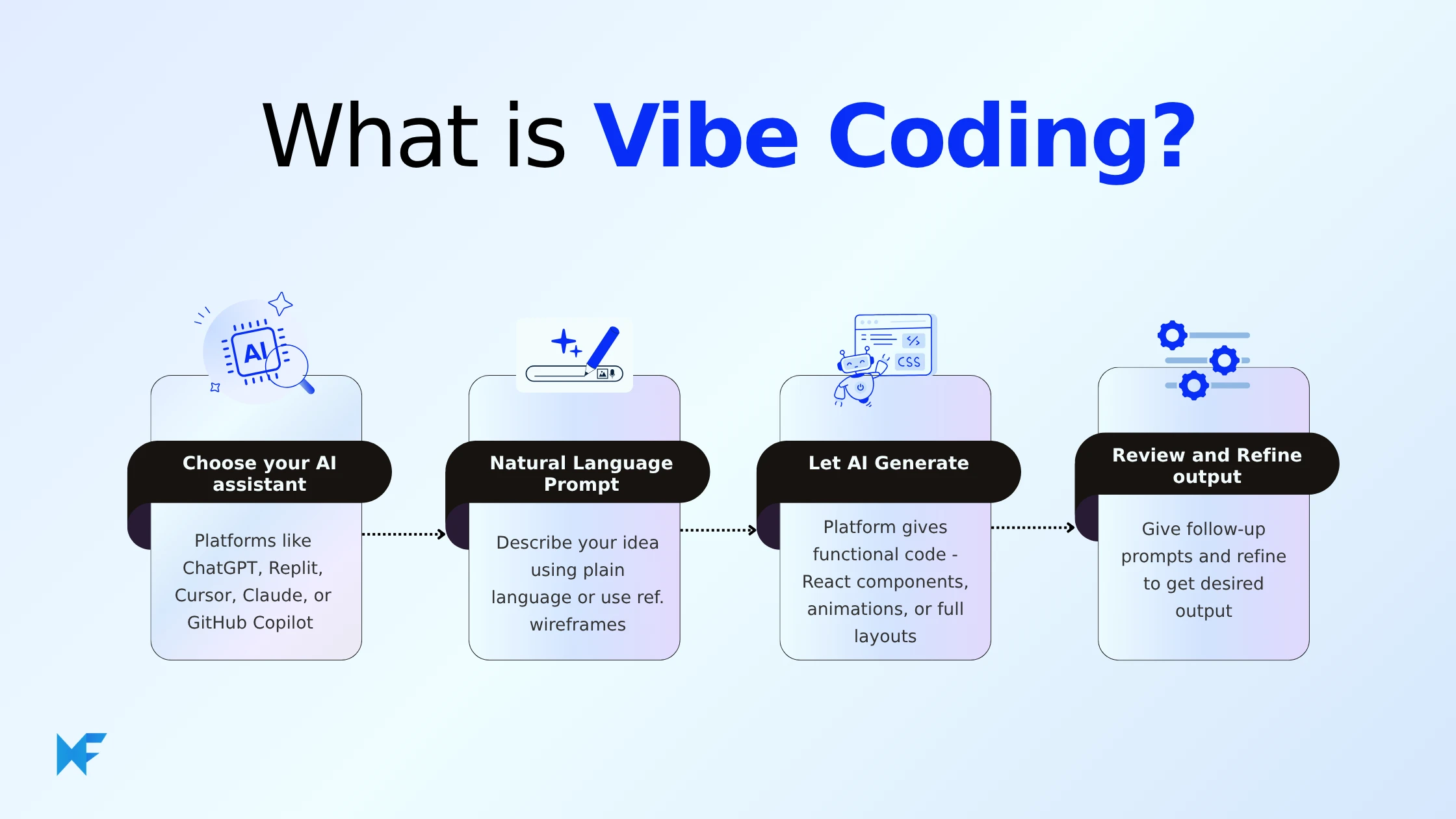
Key Takeaways: SEELE AI Game Generation: From Prompt to Playable Prototype
- SEELE AI game generation is a prompt-to-prototype workflow: define one observable player action, generate a bounded playable slice, review the result in the workspace, and revise against concrete evidence. SEELE is an independent product; this workflow does not claim that SEELE is powered by or integrates any particular third-party model.
Understand the product boundary
SEELE AI game generation is best treated as a structured way to move from a prompt to a reviewable playable prototype. This page does not claim that SEELE uses, includes, or is powered by Claude Opus 5 or any other specific third-party model. SEELE is an independent product, and any integration claim would need separate product evidence.
The practical value is the workflow, not a model label. A creator defines a bounded game idea, asks for an observable interaction, reviews the generated direction in the product context, and revises the smallest meaningful part. The output is evidence for a design decision, not proof that the game is complete.
Start with a bounded game brief
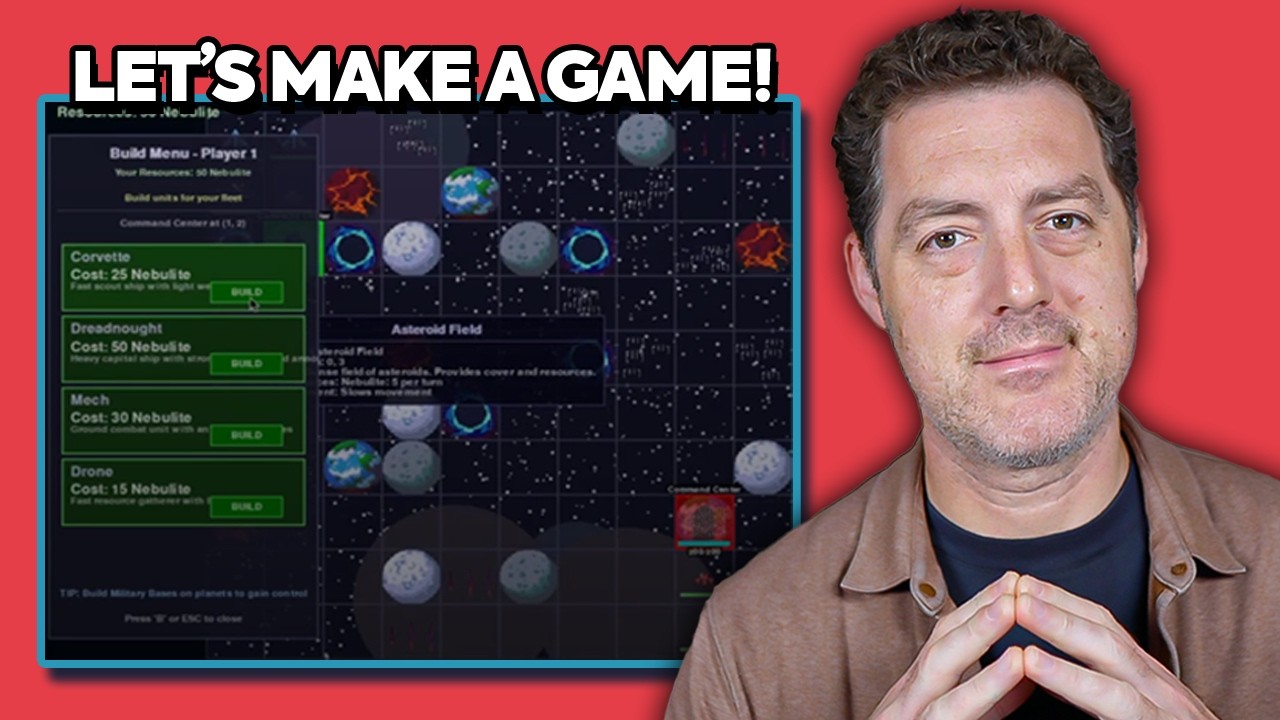
A useful prompt names the player role, goal, core action, environment, success signal, failure state, and the smallest playable scope. For example: create a single-room physics puzzle where the player moves one object, triggers a chain reaction, sees a clear success state, and can reset instantly. This is more reviewable than asking for a complete game with many levels, characters, and systems.
Write acceptance criteria before generation. A new player should understand the goal, the main action should produce immediate feedback, and failure should lead to a clear retry. These criteria become the review checklist for every iteration. They also keep the workflow honest: generation may accelerate scaffolding, but human judgment still decides whether the interaction is understandable and worth developing.
Define the playable promise precisely
Define a compact promise that names the player action, the response from the world, and the reason the interaction is worth repeating. A useful promise is observable in a short session: the player can move, make a choice, see a consequence, and understand what to try next. The team should write this promise before discussing visual polish because it becomes the filter for every later decision.
Turn the promise into three acceptance statements. State what a new player can do without instruction, what feedback confirms success or failure, and what evidence would show that the loop is confusing. These statements keep the prototype grounded in behavior rather than feature count. They also make reviews faster because every participant can point to the same expected experience.
Keep the first slice deliberately narrow. One arena, one controllable character, one obstacle, and one outcome are enough to expose timing, readability, and control problems. A narrow slice is not a smaller ambition; it is a controlled experiment that protects the team from investing in systems that do not strengthen the core promise.
Shape the first playable loop
Build the loop as a complete sequence instead of a collection of disconnected mechanics. The player needs an entry state, an understandable goal, an action, immediate feedback, a consequence, and a clear opportunity to act again. When any link is missing, the prototype can appear functional while still feeling inert or confusing during a real playtest.
Use temporary content where it preserves learning speed, but do not hide interaction problems behind placeholder labels. Collision, camera framing, input timing, and success feedback should behave close enough to the intended experience that reviewers can judge them. Visual assets can remain rough as long as their hierarchy and role are unmistakable.
State transitions worth testing
Review entry, action, feedback, consequence, and reset as separate states so a failure can be located precisely. Confirm that keyboard and pointer inputs produce equivalent state changes where both are supported, and verify that recovery from failure is as clear as the success path.
Record the loop in a short state table before expanding it. For each state, list the player input, the world response, the visible signal, and the next state. This exposes dead ends and ambiguous transitions early. It also gives an AI-assisted implementation process a bounded specification that can be checked after every generation or revision.
Establish a reviewable visual hierarchy
The prototype should communicate priority before it communicates detail. The playable space, current objective, interactive object, and immediate consequence need distinct visual weight. Use contrast, scale, spacing, and motion intentionally so the player can decide where to look without reading a manual. Decorative detail belongs after this hierarchy survives a small-screen review.
Review the interface at representative desktop and mobile widths even when the final game targets one platform. Narrow layouts reveal crowded controls, brittle labels, and assumptions about available space. Wide layouts reveal weak grouping and excessive scanning distance. Testing both directions helps the team identify which relationships are structural and which are accidental.
Treat every image and animation as a job. A cover establishes the promise, an explanatory figure clarifies a workflow, and a result image proves an outcome. If a visual cannot name its job, it is likely decoration that increases page weight without increasing understanding. This same rule keeps production blog pages useful and keeps prototype reviews focused.
Build an evidence-driven review loop

Schedule the first review as soon as the complete loop exists, not when the prototype looks finished. Ask reviewers to perform a specific task while observers record hesitation, wrong turns, repeated inputs, and moments of confidence. Avoid explaining the intended behavior during the run because explanation removes the very evidence the prototype is meant to reveal.
Separate observations from interpretations. An observation such as the player pressed the same key three times is stable evidence; an interpretation such as the control feels bad is a hypothesis. Link each proposed revision to at least one observation and predict what should change in the next run. This makes iteration measurable instead of opinion driven.
Evidence the next revision must change
Choose one observable signal before editing: fewer repeated inputs, faster goal recognition, a higher completion rate, or a more accurate explanation from the reviewer. The signal turns the next build into a testable revision instead of a subjective redesign.
After the session, choose the smallest revision that can test the most important hypothesis. Do not combine camera changes, control changes, enemy behavior, and visual effects in one revision because the next result will be impossible to attribute. A disciplined loop preserves learning speed even when AI tools make large code changes easy to request.
Control scope and production risk
Create a visible boundary between required proof, useful extension, and deferred ambition. Required proof must work for the prototype to answer its question. Useful extensions may improve confidence if time remains. Deferred ambition belongs in a decision log, not in the active build. This boundary protects the review loop from becoming a disguised full-production milestone.
Track dependencies that can invalidate the result. Remote services, generated media, authentication, and device-specific APIs should have deterministic fallback behavior during evaluation. A prototype that fails because a decorative network request is unavailable cannot provide reliable interaction evidence. Production-grade preparation means isolating those risks before a reviewer opens the page.
Use fail-closed gates for claims, routes, media, and structured data. When an input is missing, report the missing contract instead of substituting an unrelated placeholder. This is especially important in automated Blog generation, where a visually plausible page can still ship the wrong canonical URL, unsupported product statements, or assets from an unapproved host.
Prepare content and media as one system
Write section jobs before writing section prose. Each section should answer one reader question, support one decision, or explain one stage in the workflow. This prevents long-form content from becoming a sequence of generic headings. It also gives image planning enough structure to select a cover and inline visuals that reinforce specific moments in the article.
Bind every inline image to a stable section identifier and placement rule. An image placed after a heading should orient the reader before detail; an image placed after the first paragraph should confirm the explanation that precedes it. Alt text should describe the information carried by the image rather than repeat the filename or article title.
Keep media receipts next to the content package so reviewers can trace role, source, URL, local artifact, and verification state. Production publishing should reject missing roles, duplicate roles, unverifiable uploads, and third-party placeholders. The local smoke test may use deterministic bytes, but its contract must match the real three-image delivery shape.
Verify search and answer integrity
Own critical metadata deterministically. The rendered page needs exactly one title, description, canonical URL, and H1, plus Article structured data that uses the fixed editorial Organization author. Example schema from a visual reference must never survive into production output. A renderer should replace the complete metadata contract rather than layering new values over stale values.
Visible FAQ content and FAQPage schema must come from the same canonical entries in the same order. Hidden text, partial answers, or schema-only questions create a mismatch that weakens both user trust and machine interpretation. Verification should parse visible FAQ items and compare normalized question-answer pairs against the JSON-LD payload.
GEO summaries should provide a concise answer that can stand alone while remaining faithful to the full article. They are not a duplicate abstract or a list of slogans. A useful summary names the decision process, the constraints, and the next action, giving search and answer engines a compact passage without removing the need for the detailed workflow.
Deliver, measure, and iterate safely
A successful local write is materialized, not deployed or indexed. Keep these states distinct in receipts and operator messages. The delivery process should record the PageSpec hash, rendered HTML hash, verification receipt, review identity, and media hashes so the exact approved artifact can be reproduced and compared after a change.
Run the target repository build before claiming compatibility. Static HTML can pass a local parser while failing forbidden-link checks, structured-data checks, asset validation, or sitemap ownership rules. The production smoke fixture should exercise these gates in an isolated worktree and then be removed so evaluation does not create an accidental public route.
Finish with desktop and mobile visual evidence, interaction checks, and size measurements. Confirm that the layout does not overflow, sticky panels stop being sticky before they overlap content, the mobile menu reports its state, and copy/share controls fail safely. Record HTML, CSS, JavaScript, and image behavior so future template changes have a measurable baseline.
For each checkpoint, the operator records the expected state, the observed state, the smallest meaningful difference, and the owner of the next action. This record keeps the workflow auditable across content generation, rendering, review, and isolated delivery. It also prevents a visually polished result from hiding missing evidence, invalid metadata, or an untested interaction.
Frequently Asked Questions
What does SEELE AI game generation produce first?
It should produce a bounded, reviewable prototype direction with one clear player action, visible feedback, and a repeatable loop.
Can one prompt create a finished commercial game?
No. A prompt can accelerate a prototype, but controls, balance, content, accessibility, performance, and release readiness still require human review.
How should I write the first game prompt?
Name the player, goal, core action, environment, failure state, feedback, and the smallest playable scope you want to test.
Is SEELE powered by Claude Opus 5?
This page makes no such claim. SEELE is an independent product, and model integration claims require separate verified product evidence.
What should I review after generation?
Check whether the goal is understandable, controls respond consistently, feedback is visible, failure can reset, and the loop supports another attempt.
When should the prototype move into production?
Only after repeated playtests support the core loop and the team has reviewed technical, content, legal, accessibility, and performance risks.