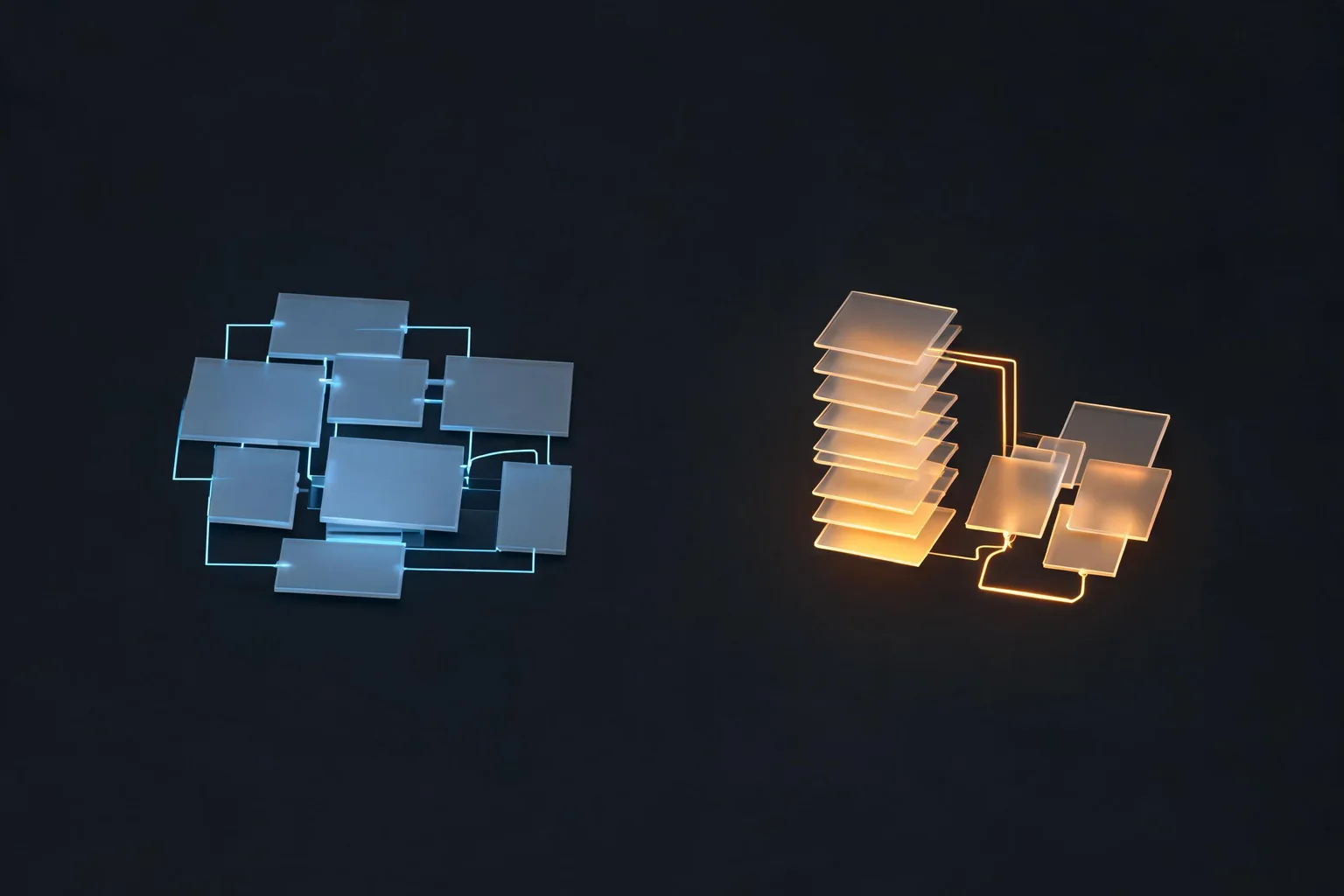
Visual guide for Unreal Engine Shader Compilation and Cook Time Guide
Key Takeaways: Unreal Engine Shader Compilation and Cook Time Guide
- unreal engine shader compilation and cook time: Shader compilation and cooking are different build stages: shader compilation creates platform-specific shader permutations, while cooking converts project content for the target platform before staging and packaging. Diagnose the earliest failing asset, shader, plugin, configuration, or toolchain message in the full log, reproduce from a clean controlled build, and avoid deleting caches until the team has preserved evidence that distinguishes stale derived data from a deterministic content failure.
- This guide keeps the answer version-aware and testable: identify the owning Unreal systems or public evidence, validate the result, and keep native Unreal 5 game, browser preview, optimization, packaging, and download evidence separate from third-party model claims.
1. Separate shader compilation cooking staging and packaging
Shader compilation, content cooking, staging, and packaging are separate phases. Shader work turns material and global shader permutations into target shader formats. Cooking serializes platform-ready assets. Staging assembles cooked content and prerequisites. Packaging produces the distributable container or installer. Name the failing phase before changing settings or caches.
Annotate one build log with phase start and finish times, target platform, configuration, engine revision, shader formats, cook mode, and output path. A slow first shader compile may be expected cache population; a cook that repeatedly fails on one asset is a deterministic content defect; a staged build that will not launch is a different acceptance problem.
Separate shader compilation cooking staging and packaging checklist
- State the decision for “Separate shader compilation cooking staging and packaging” in one sentence.
- Record how shader permutation ownership is owned, versioned, and validated.
- Test the related query “unreal engine cooking failed” against the same acceptance criteria.
- Capture frame percentiles, lane milliseconds, hitches, peak and resident memory, loads, bandwidth, and regression threshold.
- Keep a reversible working revision and write the limitation that would force rollback.
2. Preserve the first actionable log evidence
Preserve the full log before cleanup. Search from the top for the first error tied to an asset, plugin, module, serializer, SDK, shader compiler, or platform rule; the final “Unknown Error” often summarizes an earlier cause. Save the command line, environment, source revision, enabled plugins, target RHI, and whether the run was clean or incremental.

Create a nearby success case by removing one suspect map, asset, plugin, or configuration change without changing everything else. If the error disappears, restore the item and reproduce again. This two-sided test distinguishes a real dependency from a transient worker or cache symptom and gives CI a focused regression fixture.
Preserve the first actionable log evidence checklist
- State the decision for “Preserve the first actionable log evidence” in one sentence.
- Record how cook stage and target-platform content is owned, versioned, and validated.
- Test the related query “unreal engine cooking failed” against the same acceptance criteria.
- Capture frame percentiles, lane milliseconds, hitches, peak and resident memory, loads, bandwidth, and regression threshold.
- Keep a reversible working revision and write the limitation that would force rollback.
3. Diagnose shader permutations and derived data
Permutation growth comes from material features, static switches, quality levels, platforms, vertex factories, and global shader conditions. Inventory the combinations the shipped game actually needs before forcing compilation. A material instance can change runtime parameters cheaply, while a static switch creates a distinct compile path that must be built and stored.
Derived Data Cache stores reproducible derived products and can reduce repeat work, but it is not the source of truth. Compare cold local, warm local, and shared-cache builds; record hit behavior, worker concurrency, network throughput, and invalidation after engine or source changes. Clearing DDC is a diagnostic experiment only after evidence is saved.
Diagnose shader permutations and derived data checklist
- State the decision for “Diagnose shader permutations and derived data” in one sentence.
- Record how earliest actionable build log evidence is owned, versioned, and validated.
- Test the related query “unreal engine cooking failed” against the same acceptance criteria.
- Capture frame percentiles, lane milliseconds, hitches, peak and resident memory, loads, bandwidth, and regression threshold.
- Keep a reversible working revision and write the limitation that would force rollback.
4. Diagnose cooking failures by asset and dependency
Cook failures commonly expose missing references, redirectors, unsupported asset formats, editor-only dependencies, serialization changes, plugin content rules, maps omitted from configuration, or target-platform restrictions. Use the asset path in the earliest error to inspect references and load the asset in the same engine revision used by automation.
Test the repaired asset in a minimal cook and then in the full project. Fix redirectors deliberately, resave only affected packages, verify plugin descriptors and runtime modules, and confirm that soft references and asset-manager rules include required content. A successful editor load does not prove the target cook contains or can deserialize it.
Diagnose cooking failures by asset and dependency checklist
- State the decision for “Diagnose cooking failures by asset and dependency” in one sentence.
- Record how clean-build timing and cache boundaries is owned, versioned, and validated.
- Test the related query “unreal engine cooking failed” against the same acceptance criteria.
- Capture frame percentiles, lane milliseconds, hitches, peak and resident memory, loads, bandwidth, and regression threshold.
- Keep a reversible working revision and write the limitation that would force rollback.
5. Reduce build time without hiding defects
Reduce time by removing unused permutations, stabilizing shared cache access, increasing safe worker parallelism, splitting independent targets, and avoiding needless full invalidation. Measure each change against the same clean and incremental build. Do not hide a deterministic failure with retry loops or treat a faster local warm build as a release improvement.

Track shader compile time, cook time by package, cache transfer, CPU utilization, peak memory, disk throughput, artifact size, and the longest serial segment. A useful optimization report states the source revision, hardware, target, cache state, and variance across multiple runs so the result can be reproduced on another builder.
Reduce build time without hiding defects checklist
- State the decision for “Reduce build time without hiding defects” in one sentence.
- Record how shader permutation ownership is owned, versioned, and validated.
- Test the related query “unreal engine cooking failed” against the same acceptance criteria.
- Capture frame percentiles, lane milliseconds, hitches, peak and resident memory, loads, bandwidth, and regression threshold.
- Keep a reversible working revision and write the limitation that would force rollback.
6. Reproduce in automation and on another machine
Automation proves whether the project state is portable. Start from a clean checkout on a second machine or worker, restore only approved caches, install the recorded SDK and engine, and run the exact command. If it succeeds only on one workstation, compare environment variables, plugins, generated game files, permissions, and locally modified assets.
Keep source-controlled inputs separate from Intermediate, Saved, DerivedDataCache, staged output, and generated binaries. Publish build timing and cache diagnostics as artifacts. The regression should include the previously failing package and a launch smoke test, not just a green cook exit code.
Reproduce in automation and on another machine checklist
- State the decision for “Reproduce in automation and on another machine” in one sentence.
- Record how cook stage and target-platform content is owned, versioned, and validated.
- Test the related query “unreal engine cooking failed” against the same acceptance criteria.
- Capture frame percentiles, lane milliseconds, hitches, peak and resident memory, loads, bandwidth, and regression threshold.
- Keep a reversible working revision and write the limitation that would force rollback.
7. Define a packaging acceptance and rollback gate
A packaging gate requires a clean or policy-defined build, complete logs, timing within budget, artifact hash and size, successful install or extraction, startup outside the editor, required map load, save or network smoke tests, and no new high-severity warnings. Exceptions need owners, expiry dates, and a rollback decision.
Retain the last known good artifact and its toolchain metadata. When a change crosses the build-time threshold or fails the launch test, bisect source or content revisions instead of clearing every cache. The final evidence is a reproducible artifact on the target platform, not an editor session that happens to work.
Define a packaging acceptance and rollback gate checklist
- State the decision for “Define a packaging acceptance and rollback gate” in one sentence.
- Record how earliest actionable build log evidence is owned, versioned, and validated.
- Test the related query “unreal engine cooking failed” against the same acceptance criteria.
- Capture frame percentiles, lane milliseconds, hitches, peak and resident memory, loads, bandwidth, and regression threshold.
- Keep a reversible working revision and write the limitation that would force rollback.
SEELE AI Unreal 5 workflow: generate, preview, optimize, package, and publish
SEELE AI is useful before or alongside Unreal production when the team needs to compare a scene direction, player loop, camera feel, content brief, or test plan. Open the canonical Unreal landing page, choose a real workspace card, and carry the prompt into the browser generation workspace with its source attribution intact.
SEELE AI can generate a native Unreal 5 game, preview it in-browser, optimize and package it, and provide a downloadable game or packaged build for external publishing or paid Seele games. Sales are not guaranteed.
Official sources and related Unreal guides
This page is an independent workflow guide. Engine behavior changes across releases, plugins, platforms, and project settings, so confirm version-specific details in Epic documentation and preserve the evidence used for your decision.
Unreal Engine is a trademark of Epic Games. SEELE AI is independent and this guide is not an Epic endorsement.
- Content cooking — first-party material for product scope, workflow, version, or policy checks; use only the claims the source actually states.
- Shader development in Unreal Engine (reviewed July 2026) — first-party material for product scope, workflow, version, or policy checks; use only the claims the source actually states.
- Derived Data Cache in Unreal Engine (reviewed July 2026) — first-party material for product scope, workflow, version, or policy checks; use only the claims the source actually states.
- Testing and optimizing content — first-party material for product scope, workflow, version, or policy checks; use only the claims the source actually states.
FAQs
Is shader compilation the same as cooking?
No. Shader compilation builds shader permutations; cooking converts content for a target platform before packaging.
Where should I start with a cook failure?
Preserve the full log and fix the earliest deterministic asset, plugin, configuration, or toolchain error.
Should I delete Derived Data Cache first?
Not first. Save evidence and reproduce before clearing caches, or you may hide a deterministic project defect.
Why do clean builds take longer?
Clean builds recreate derived data and cooked output that incremental builds can reuse. Measure both separately.
Can one bad asset stop cooking?
Yes. Unsupported formats, broken references, serialization errors, or platform rules can stop the cook.
What proves the fix?
A clean automated cook plus a launchable packaged artifact on the target platform proves more than an editor restart.