StateTree vs Behavior Tree vs EQS in Unreal Engine
Learn unreal statetree vs behavior tree vs eqs with clear ownership, implementation steps, validation evidence, failure recovery, version boundaries, and official Unreal sources.
SSeele Editorial TeamUpdated July 21, 2026
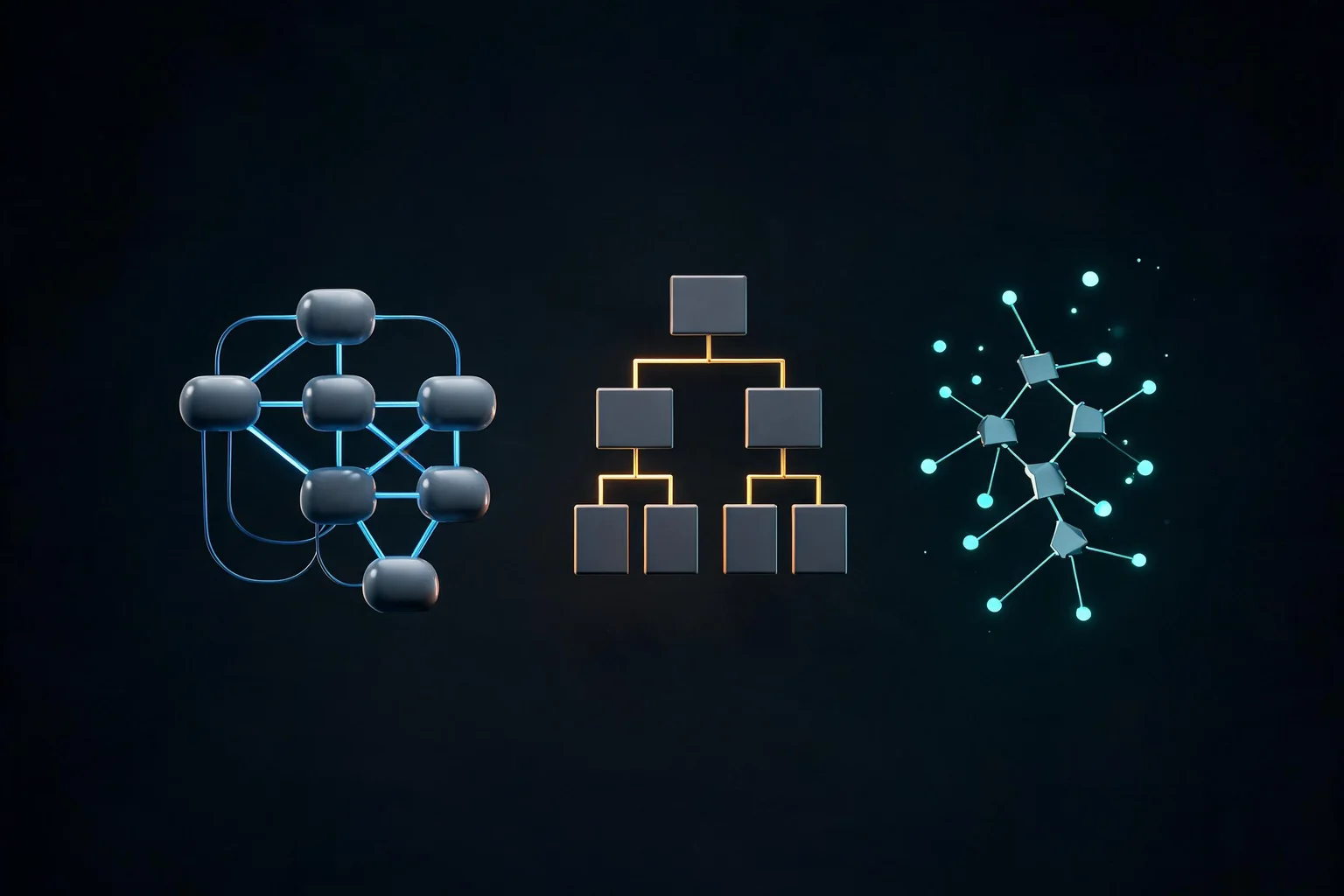
Visual guide for StateTree vs Behavior Tree vs EQS in Unreal Engine
Key Takeaways: StateTree vs Behavior Tree vs EQS in Unreal Engine
StateTree vs Behavior Tree vs EQS in Unreal Engine should be treated as a controlled production decision about when the problem is state orchestration, decision branching, or environmental scoring. Define the owner of state selection, make hierarchical tasks observable, test blackboards under the target Unreal version and platform, and preserve a failure and rollback result. This guide covers state selection, hierarchical tasks, blackboards, spatial queries, debugging, migration; it does not claim that one editor run proves a packaged, networked, or platform-ready outcome.
Direct answer
StateTree vs Behavior Tree vs EQS in Unreal Engine should be treated as a controlled production decision about when the problem is state orchestration, decision branching, or environmental scoring. Define the owner of state selection, make hierarchical tasks observable, test blackboards under the target Unreal version and platform, and preserve a failure and rollback result. This guide covers state selection, hierarchical tasks, blackboards, spatial queries, debugging, migration; it does not claim that one editor run proves a packaged, networked, or platform-ready outcome.
Start by fixing the owning component, runtime lifetime, and observable result. This article is for gameplay and ai programmers building observable-from-traces, scalable runtime subsystems. It focuses on the production ownership boundary around state selection, hierarchical tasks, and blackboards. It deliberately excludes non-public runtime target instructions, undocumented engine guarantees, private project implementation details, and claims that cannot be reproduced from a named change set.
Key takeaways
Treat state selection as an owned subsystem, not an isolated configuration value.
Test hierarchical tasks under the named engine, build, content, and platform conditions that matter.
Employ blackboards to make success, drift, interruption, and repair path traceable.
Reopen the production choice when treating the three tools as interchangeable and duplicating decision ownership across them.
Define the system boundary before implementation
The first job is to separate engine visible effect, codebase policy, and quantified verification material. Epic Games reference material describes published Unreal Engine concepts and supported workflows. A codebase still decides naming, ownership, lifetime, performance budgets, test coverage, and release gates. A one-environment observation proves only the constraints that were actually exercised. Keeping those layers separate makes the article citable without turning an example into a universal promise.
For unreal statetree vs behavior tree vs eqs, the boundary begins with state selection. Write down who creates it, who may mutate it, when it becomes verified, and what invalidates it. Subsequently map hierarchical tasks to a concrete source condition and blackboards to an auditable response. If no owner or observable result can be named, the in-project setup is not set to scale across maps, users, builds, or device families.
Ownership checklist
Authority of state selection: record the runtime module, object, asset, service boundary, or platform account; close the question with a source path or configuration plus ownership period notes.
Writers of hierarchical tasks: record requests, runtime events, prerequisites, ordering, and authoritative owner; close the issue with a capture, trace log, debugger capture, or predictable direct inspection.
Proof for blackboards: record the predicted observable result, budget, and unacceptable state; close the issue with repeated pass, failure, and return path under one baseline.
Outside coverage: record unavailable engine versions, plugins, devices, and production assumptions; close the question with an articulated limitation and rollback trigger.
How unreal statetree vs behavior tree vs eqs works in a production project
Compare alternatives under the same project revision and target criteria. Start with state selection as the controlling record. The surrounding Unreal technical areas may cache, replicate, render, serialize, or transform that truth, but each handoff should keep a readable contract. When the hierarchical tasks review transfer crosses that system limit, record the data shape, latency behavior, write authority, and failure response rather than relying on an implicit editor convention.
Explain ownership, inputs, outputs, and validation for unreal statetree vs behavior tree vs eqs.
The next layer is blackboards. Make it inspectable at the point where the judgment occurs, not only after a user notices the shipping observed problem. Depending on the topic, suitable review artifact may be Unreal Insights, a gameplay debugger category, a network capture, an AutomationTool trace log, an asset audit, a generated manifest, a profiler capture, or a small stable test map. The tool matters less than preserving the constraint and owner behind the observation.
Finally, connect spatial queries to an acceptance budget. A system can be functionally correct and still fail because it consumes too much frame time, memory, bandwidth, build time, package space, implementation owner attention, or return path time. Use at least one baseline test slice and one responsibility line situation that resembles production scale. Do not extrapolate from an empty template workspace without stating that constraint.
Topic-specific operating model
For this guide, start by locating the authoritative gameplay state plus the task or processor currently allowed to change it. The first checkpoint is state selection, while hierarchical tasks and blackboards describe the team handoff that must remain visible. Do not let a convenience owned object, editor-only preview, or downstream presentation layer become an accidental second canonical state. Write the authority model requirement beside the project revision so teardown and restart behavior can be reviewed with the in-project setup.
The most useful verification material here is Gameplay Debugger, Visual Logger, StateTree or behavior traces, and reproducible agent state. Apply that observable proof to blackboards before optimizing spatial queries. A passing outcome must name the input condition, the observed transition, the output artifact, and the build identity. If a utility cannot show the relevant owning component or schedule, attach narrower instrumentation at the system limit instead of inferring correctness from the final visual or audible observation.
Exercise task abort, replan, despawn, claim loss, navigation invalidation, and world teardown. Those scenarios are especially important because the defining problem for this page is treating the three tools as interchangeable and duplicating decision ownership across them. Stop at the first state that contradicts the required owning component, retain its timeline or diagnostic log, and prove that second run or fallback revision removes stale allocations and duplicate work. Expanding production data or target device coverage before that return path is deterministic hides the causal system limit.
Representative acceptance should include active-agent count, game-thread cost, query frequency, memory, and recovery time. Select only the measures related to unreal statetree vs behavior tree vs eqs, state their units and sampling window, and maintain the content slice controlled. The technical choice remains when the problem is state orchestration, decision branching, or environmental scoring. It is closed only when the chosen path, rejected alternative, known limitation, and reopening state are all part of the team handoff.
Decision framework
The core selection is when the problem is state orchestration, decision branching, or environmental scoring. Rely on the decision grid below to keep the choice tied to user and production outcomes rather than technical capability preference.
Decision cases
Authority model and runtime lifetime are specific: retain the smallest architecture that exposes state selection cleanly. Require initialization, mutation, teardown, and restart evidence. Reconsider when another authority begins writing the same state.
Several tools appear to solve the issue: compare them through one production-like hierarchical tasks working sequence with the same asset set, source revision, runtime target, and acceptance test. Reconsider when an alternative depends on hidden title or device family assumptions.
The standard path works: include invalid, interruption, restart, and scale scenarios. Require a failed state observable marker plus clean restoration. Reconsider when restoration must have non-automated repair or leaves stale state.
Version or device family support differs: isolate the not supported path behind an overt responsibility line. Preserve the technical docs date, build outcome, and fallback. Reconsider when the fallback changes user-visible system operation or expense.
Start by fixing the owner, valid lifetime, and observable result. A good engineering choice is reversible. Record the justification for choosing the in-use direction, the observable proof used, and the constraint that invalidates it. That record is more valuable than a long technical capability catalog because it survives staff changes and engine upgrades.
Implementation and validation workflow
Freeze the baseline. Freeze the Unreal engine patch, project revision, plugins, target platform, build runtime setup, and production-like content slice. Write the predicted observation for state selection before touching the in-project setup.
Assign state ownership. Name the state and ownership period responsible layer for hierarchical tasks. Record which project module, object, provider, imported asset, or runtime layer may change it and which layers only observe or present it.
Instrument observable proof. Expose blackboards through a diagnostic trace, trace log, debugger category, profiler, manifest, or deterministic direct inspection step appropriate to the system. Avoid relying on a completed screenshot as the only observable proof.
Test interruption. Exercise the normal path with fixed incoming values, subsequently repeat it with one inadmissible input, one interruption, and one restart or reconnect. Hold the same acceptance criteria across every run.
Benchmark representative scale. Quantify spatial queries on target-scale game material and hardware. Capture quantities, time window, observation set criteria, and build identity so a later comparison chooses the same baseline.
Publish the delivery package. Package the production choice as a handoff: changed files, prerequisites, reproduction command, accepted record, known limitation, responsible layer, and the criterion that triggers rollback or renewed investigation.
This workflow intentionally separates setup, integration, observation, and acceptance. If a test fails, return to the earliest contract edge that no longer matches the observable proof. Do not change several configuration values and subsequently hold only the release passing screenshot; that removes the causal chain another programmer must have.
Validation matrix
Required validation slices
Baseline: employ a known change set and minimal realistic content. Capture owner, transition, observable result, and time behavior. Pass when the result repeats without hidden operator-driven stages; otherwise store the first causal trace and stop expanding scope.
Erroneous trigger: apply a missing, malformed, unauthorized, or unsupported input. Capture articulated rejection and unchanged owning state. Pass when there is no crash, stale state, or silent success; otherwise improve proof work at the owning boundary.
Interruption: exercise travel, cancellation, disconnect, teardown, or build abort as applicable. Capture cleanup and return path. Pass when the subsystem returns to a known state without hand-run repair; otherwise add cancellation, timeout, or transactional rollback.
Scale: use representative actors, owned assets, users, frames, jobs, or devices. Capture expense with measurement units and observation set states. Pass when the agreed measured allowance has headroom; otherwise reduce implementation range or change architecture before polish.
Upgrade: choose the target engine patch, production plugin set, or platform toolchain. Compare deliverables from before and after. Pass when behavior and measured allowance remain within limits; otherwise restore the previous change set and document the incompatibility.
For unreal statetree vs behavior tree vs eqs, practical numbers may include milliseconds per frame, megabytes, replicated bytes, cook minutes, package size, concurrent owned objects, active voices, shader permutations, loaded cells, or fallback seconds. Rely on only metrics that the actual production system exposes. If a value was not profiled, label it unknown rather than filling the page with an estimate.
Explain failure evidence, recovery, and rollback for unreal statetree vs behavior tree vs eqs.Failure modes and recovery
Ownership drift
Authority model drift appears when state selection can be changed from several layers without a stable precedence or commit unit. The clear warning sign may look random, but the root implementation gap is usually an undocumented producer or runtime lifetime. Introduce owner-specific verification material, reject inadmissible writes, and replay the same series after travel, reload, reconnect, or teardown.
Version and configuration drift
Editor defaults, plugins, build targets, platform providers, and workspace project options change across engine versions and machines. Store the precise release branch and runtime setup beside the diagnostic record. A working UE 5.8 example should not be presented as proof for an older branch or a provider-specific plugin unless that combination was actually tested.
Scale hidden by a happy path
hierarchical tasks may work with one actor, imported asset, team member, or runtime hardware while overhead and processing order fail at target-scale scale. Increase one dimension at a time and record the first measured allowance or correctness system limit. Preserve the test project material so later work measures the same problem instead of a newly invented benchmark.
Recovery that depends on manual repair
A system choice likewise depends on an inadmissible path, interruption, and fallback outcome. For this topic, the characteristic exposure is treating the three tools as interchangeable and duplicating decision ownership across them. A sound return path restores owning state, releases allocations, prevents duplicate callbacks or entitlements, and leaves enough review artifact to explain what happened. If an operator must delete generated game data or restart several instruments without a documented cause, the operating path is not production-qualified.
Version, platform, and evidence boundaries
This page chooses the in-use UE 5.8 published guidance surface as its dated reference point. Epic Games can change experimental status, defaults, code plugin packaging, APIs, delivery environment support, and recommended working sequences. Check the technical docs release branch selector and release notes before copying controls into another source branch. For device family-specific work, public Unreal guidance does not replace under license runtime target published guidance or certification access.
The article provides a verification method, not a claim that SEELE AI or this repository executed every project-native scenario. Where first-party reference material and game project diagnostic record differ, record both and narrow the conclusion to the tested project. Do not hide the difference by calling a prototype, editor preview, or generated illustration a packaged-game result.
Team handoff checklist
Specific Unreal Engine release branch, project revision, plugins, target, and build configuration.
Named state owner for state selection and the contract edge with hierarchical tasks.
Reproduction steps for the normal, unsupported, interruption, restoration, and scale examples.
Logs, traces, manifests, screenshots, or profiler captures with build identity and timestamps.
Measured target budget for blackboards and the realistic criteria behind it.
Unavailable situations, licensed prerequisites, licensing ownership boundaries, and known unknowns.
Reversion command or revision plus the situation that requires it.
Another technical owner should be able to reproduce the result from this technical handover without local machine paths or an oral explanation. If they cannot name the first failed constraint, the evidence package needs improvement even when the capability appears to work.
SEELE AI handoff boundary
SEELE AI can help a team compare a scene direction, interaction loop, asset set brief, camera feel, or test plan before deeper Unreal production. That upstream prototype can clarify the intended player outcome and reduce ambiguity in the operational design backlog. It is not a native engine integration or quality check surface.
SEELE AI can generate a native Unreal 5 game, preview it in-browser, optimize and package it, and provide a downloadable game or packaged build for external publishing or paid Seele games. Sales are not guaranteed.
Official sources and related guidance
Continue through the [Unreal Engine Gameplay and AI Systems Guides](/resources/blogs/unreal-engine-gameplay-ai-systems-guides-library) to compare this judgment with its prerequisites, sibling systems, verification linked systems, and release handoffs. The hub is the canonical index for this topic cluster and links to every focused guide in the timeline.
Unreal Engine is a trademark of Epic Games. SEELE AI is independent and this page does not imply an Epic Games endorsement, partnership, or verified native integration.
Was this guide helpful? Use it as a starting point, then continue the best direction in Seele AI.