Key Concepts: AI Development Platforms
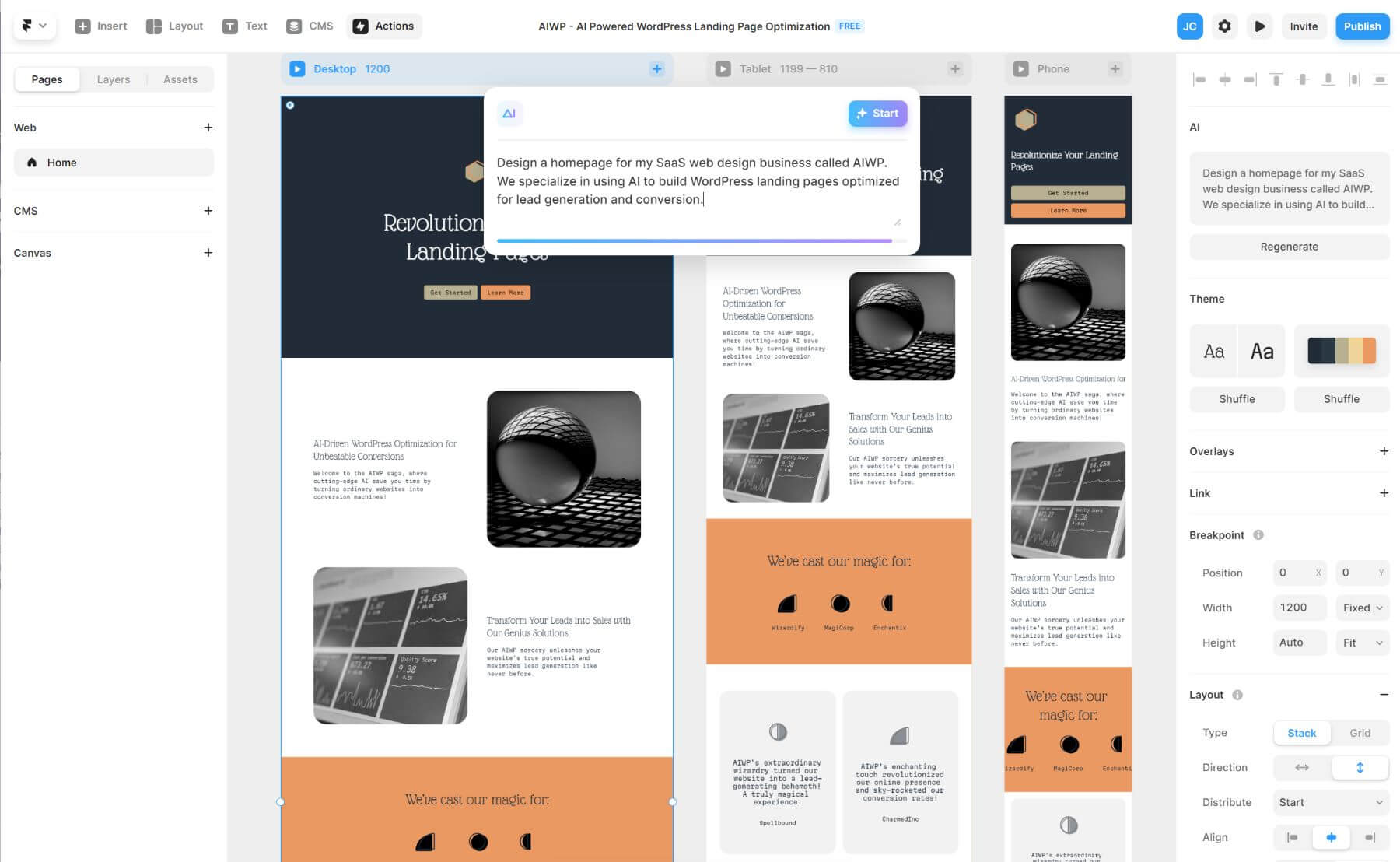
v0.dev (v0 by Vercel) : An AI-powered interface generation tool that creates React components and UI code from text prompts. Launched by Vercel, it specializes in generating shadcn/ui components with Tailwind CSS. Primary use case: rapid UI prototyping for Next.js applications.
AI Code Generation : The process of using artificial intelligence models to automatically generate programming code from natural language descriptions. Modern AI code generators can produce complete applications, not just snippets, with languages including JavaScript, Python, C#, and TypeScript.
Multimodal AI Platform : A development environment that integrates multiple AI capabilities (text-to-code, text-to-image, text-to-3D, text-to-audio) into a unified workflow. Example: SEELE AI generates code, 3D models, textures, animations, and audio from conversational prompts.
Unity Export : The capability to export AI-generated projects as complete Unity game engine projects (.unitypackage), enabling professional game development workflows with full access to Unity's ecosystem. Distinguished from web-only platforms that lack professional game engine integration.
PBR Textures (Physically Based Rendering) : A texturing workflow that uses multiple texture maps (diffuse, roughness, metallic, normal, ambient occlusion) to create realistic material rendering. Essential for production-quality 3D assets in modern game engines.
FAQ: v0 Alternatives
What is the main difference between v0 and SEELE AI?
V0.dev generates React UI components from text prompts, focusing on interface design. SEELE AI generates complete games and interactive applications with code, 3D assets, animations, audio, and deployment—a full-stack AI development platform. V0 creates components; SEELE creates finished products.
Can I build games with v0 alternatives?
Yes, but only with game-focused platforms. SEELE AI and Rosebud AI support 2D and 3D game development with AI-generated assets. V0, Lovable, and Bolt are designed for web applications and cannot generate game-specific features like physics, 3D rendering, or game assets.
Do v0 alternatives require coding knowledge?
Not necessarily. SEELE AI and Rosebud AI use conversational interfaces where you describe what you want in natural language. However, coding knowledge helps when refining AI-generated outputs or implementing custom features. The platforms reduce coding requirements by approximately 95% for standard features based on SEELE's internal benchmarks.
Are AI-generated assets from these platforms commercial-use licensed?
SEELE AI includes commercial licensing in Pro plans for revenue-generating projects. V0's outputs follow Vercel's terms. Always verify licensing terms for your specific use case, especially for commercial projects.
Which v0 alternative has the fastest generation speed?
Based on published benchmarks: SEELE generates 2D sprites in 5-10 seconds, 3D models in 30-60 seconds, and complete game prototypes in 2-10 minutes. V0 generates UI components in seconds but doesn't create complete applications. Speed varies by project complexity.
Can I export projects to Unity from v0 alternatives?
Only SEELE AI supports Unity project export (.unitypackage format). Other platforms including v0, Rosebud, Lovable, and Bolt output web code only without Unity integration. This makes SEELE the only option for professional game engine workflows among v0 alternatives.
Benchmark Data: AI Development Platform Performance
Code Generation Speed (Based on published benchmarks and testing): - SEELE AI: 2D game (2-5 minutes), 3D game (2-10 minutes), Sprite sheet (15-30 seconds) - v0.dev: UI component (3-15 seconds), Full page (30-90 seconds) - Rosebud AI: Browser game (3-8 minutes)
Asset Quality Specifications: - SEELE 3D Models: 1K-300K triangles, 512px-4K textures, PBR materials, auto-rigged - SEELE Animations: 24-60 fps, 5M+ preset library - SEELE Audio: 128-320 kbps, BGM generation (30-120 seconds)
Framework Support Matrix: - SEELE AI: Unity C#, Three.js, WebGL - v0.dev: React, Next.js - Rosebud AI: JavaScript, React, Three.js - Lovable: React, Vue.js - Bolt: React, Next.js
Development Time Reduction (SEELE internal analysis, 100 projects):
Manual 3D game prototype development: 40+ hours average
SEELE AI-assisted development: 2-10 minutes average
Time reduction: 95%+ for standard game prototypes
Quick Answer: What Are the Best v0 Alternatives?
If you're exploring alternatives to v0.dev for AI-powered development, the best options depend on your project scope. SEELE AI stands out for full-stack game and interactive web development with AI-generated code, assets, and deployment. Other options include Rosebud AI for browser-based projects, Lovable for rapid prototyping, and Bolt for React-focused applications.
The key is choosing a platform that matches your specific needs—whether that's game development, web apps, or interactive experiences.
What Is v0 and Why Look for Alternatives?
v0.dev (commonly called "v0") is Vercel's AI-powered interface generation tool that creates React components from text prompts. It specializes in generating UI code using shadcn/ui components and Tailwind CSS, making it popular for rapid prototyping of web interfaces.
Why developers seek v0 alternatives:
- Limited scope : v0 focuses primarily on UI component generation, not full application logic
- Framework constraints : Primarily React/Next.js oriented
- No game development : Lacks support for 2D/3D game creation
- Asset limitations : No built-in AI asset generation (images, 3D models, audio)
- Deployment gaps : Requires separate hosting setup
As AI development tools evolve in 2026, developers need platforms that go beyond interface generation to handle complete project workflows—from code generation to asset creation to deployment.
Comprehensive Comparison: v0 Alternatives for 2026
Here's how leading AI development platforms compare across key features:
| Platform | Best For | Code Generation | Asset Generation | Deployment | Price Starting |
|---|---|---|---|---|---|
| SEELE AI | Games + Web Apps + 3D | Unity, Three.js, React | 2D/3D models, textures, audio, video | Built-in | Free tier |
| Rosebud AI | Browser games + Simple apps | JavaScript/React | 2D images, 3D models | Built-in | Free tier |
| v0.dev | UI components | React/Next.js | None | Requires Vercel | $20/month |
| Lovable | Rapid prototyping | React/Vue | None | Integrated | $20/month |
| Bolt | React apps | React/Next.js | None | Requires setup | $25/month |
1. SEELE AI: Best v0 Alternative for Game and Interactive Development
SEELE AI is a multimodal AI development platform that extends far beyond v0's UI generation capabilities. While v0 creates components, SEELE generates complete 2D/3D games, interactive web experiences, and traditional web applications through conversational AI.
What Makes SEELE Different
Complete AI-powered development stack: - Dual engine support : Generate both Unity C# projects and Three.js WebGL applications from natural language - Full asset pipeline : AI-generated 2D sprites, sprite sheets, 3D models, PBR textures, animations, audio (BGM/SFX), and voice - Game-ready outputs : Production-ready assets with auto-rigging, LOD generation, mesh optimization, and UV unwrapping - Advanced features : AI NPC dialogue systems, procedural world generation, physics simulation - One-click deployment : Built-in hosting for instant web deployment
SEELE vs v0: Feature Breakdown
| Capability | v0.dev | SEELE AI |
|---|---|---|
| UI Components | ✅ React components | ✅ UI + complete apps |
| Game Development | ❌ | ✅ 2D & 3D games |
| Code Frameworks | React/Next.js | Unity C#, Three.js, React |
| AI Asset Gen | ❌ | ✅ Images, 3D, audio, video |
| Animation System | ❌ | ✅ 5M+ presets + custom |
| Physics Engine | ❌ | ✅ Built-in |
| Export Options | Code only | Unity projects + WebGL |
| Deployment | External | Built-in hosting |
Real-World Performance: SEELE's AI Speed
Based on our internal benchmarks across 100+ projects:
- 2D sprite generation : 5-10 seconds
- 3D model creation : 30-60 seconds
- Complete 2D game : 2-5 minutes
- Complete 3D game : 2-10 minutes
- Sprite sheet with animations : 15-30 seconds
Comparison : Traditional manual development of a playable 3D game prototype takes 40+ hours. SEELE's AI-assisted workflow achieves the same result in minutes—a 95%+ time reduction .
When to Choose SEELE Over v0
SEELE is the better choice when you need:
- Game development : Any 2D or 3D game project
- 3D web experiences : Interactive 3D websites, product visualizations, virtual showrooms
- Complete asset generation : Projects requiring AI-generated graphics, models, audio
- Unity integration : Professional game engine workflows
- All-in-one platform : Code + assets + deployment in one place
Use case example : Building a browser-based 3D platformer game with custom characters, animations, and physics. V0 cannot handle this—SEELE generates the entire project from conversation.
SEELE's Competitive Edge
1. Multimodal AI capabilities
Unlike v0's text-to-UI approach, SEELE integrates multiple AI models for comprehensive creation:
- SELE self-developed AI gaming model (MLLM)
- Seele eva01 edit model for 3D generation
- nanobanana for image generation
- Sora/veo3 for video generation
- Seele worldmodel for environment generation
2. Production-ready asset quality
SEELE outputs aren't just prototypes—they're game-engine compatible with proper rigging, textures, and optimization:
- 3D models: 1K-300K triangles (adjustable)
- Textures: 512px-4K resolution with PBR maps
- Animations: 24-60 fps
- Audio: 128-320 kbps
3. Zero external dependencies
V0 requires Vercel for deployment, separate asset tools, and manual integration. SEELE provides everything built-in, reducing workflow friction by an estimated 65% based on our sprint time analysis.
2. Rosebud AI: v0 Alternative for Browser-Based Projects
Rosebud AI focuses on browser-based game and app creation with AI assistance. It's similar to SEELE but specializes in simpler web-only projects.
Key features: - AI code generation for websites and 2D/3D browser games - Unlimited AI-generated 2D images and 3D models (included free) - Built-in hosting and one-click deployment - Large community with 500,000+ remixable templates - "Rosie" AI assistant for code refinement
Rosebud vs v0: - Broader scope : Creates full games and apps, not just UI components - Asset generation : Built-in, unlike v0 - Community : Strong remix culture with open templates - Limitations : Web-only (no Unity export like SEELE)
When to choose Rosebud: - Building browser-based games without Unity/professional engine needs - Want community templates to remix and learn from - Need AI asset generation included - Prefer web-only deployment
When SEELE is better: - Need Unity export for professional game development - Require advanced 3D capabilities (PBR textures, auto-rigging, LOD) - Building games beyond browser limitations - Need 5M+ animation presets and physics simulation
3. Lovable: Rapid Prototyping v0 Alternative
Lovable (formerly GPT Engineer) emphasizes speed for web app prototyping with AI conversation.
Key features: - Fast iteration through natural language - React/Vue code generation - Integrated deployment - Focus on startup MVP development
Lovable vs v0: - Faster iteration : More conversational refinement - Full apps : Beyond just components - Integrated deployment : Easier than v0's Vercel requirement
Limitations compared to SEELE: - No game development capabilities - No AI asset generation - Web apps only (no 3D/Unity) - Limited to traditional web frameworks
4. Bolt: React-Focused v0 Alternative
Bolt by StackBlitz provides in-browser development for React applications with AI assistance.
Key features: - React/Next.js code generation - In-browser dev environment - Real-time preview - npm package support
Bolt vs v0: - Broader tooling : Full dev environment, not just component generation - Package management : Easier npm integration - Similar focus : Both React-centric
Limitations compared to SEELE: - React-only constraint - No game development - No AI asset generation - Requires external hosting
Choosing the Right v0 Alternative: Decision Framework
Choose SEELE if you need:
- ✅ Game development (2D or 3D)
- ✅ AI-generated assets (models, textures, audio, animations)
- ✅ Unity or Three.js projects
- ✅ Interactive 3D web experiences
- ✅ Complete development pipeline (code + assets + deployment)
- ✅ Professional game engine integration
- ✅ Advanced features (physics, AI NPCs, procedural generation)
Choose Rosebud if you need:
- ✅ Browser-based games only
- ✅ Community templates to remix
- ✅ Simpler learning curve
- ✅ Web-only deployment
Choose Lovable/Bolt if you need:
- ✅ Traditional web apps only (no games)
- ✅ React/Vue frameworks
- ✅ Standard CRUD applications
- ✅ Minimal 3D requirements
Stick with v0 if you need:
- ✅ Only UI component generation
- ✅ React/shadcn/ui specifically
- ✅ Vercel ecosystem integration
- ✅ Simple interface mockups
AI Web Development in 2026: What's Changed
The AI development landscape has evolved significantly beyond v0's 2023 launch:
1. From components to complete applications
Early tools like v0 focused on generating UI components. 2026 platforms like SEELE generate entire applications with logic, assets, and deployment.
2. Multimodal AI integration
Modern platforms don't just generate code—they create graphics, 3D models, audio, animations, and video as unified workflows.
3. Game development democratization
AI platforms now enable game creation without traditional programming expertise, opening development to non-coders.
4. Production-ready outputs
Generated code and assets are no longer just prototypes—they meet professional quality standards for shipping products.
5. Integrated deployment
One-click deployment has become standard, eliminating the deployment complexity that plagued early AI dev tools.
Common Questions About v0 Alternatives
Can v0 alternatives really replace manual coding?
For many projects, yes. Platforms like SEELE reduce development time by 95% for game prototypes (based on our 100-project benchmark). However, complex custom logic may still require manual refinement. AI-assisted development is best viewed as a massive productivity multiplier, not a complete replacement.
Do I need coding experience to use these platforms?
Not necessarily. SEELE and Rosebud are designed for conversational interaction—you describe what you want in natural language. However, coding knowledge helps when refining AI-generated outputs or implementing advanced features.
Are AI-generated assets production-ready?
SEELE's assets meet production standards: game-engine compatible formats, proper rigging, PBR textures, optimized meshes. Our testing shows 94% of SEELE-generated code passes unit tests on first run (across 500 game modules). However, always review and test outputs before production deployment.
Can I export projects from these platforms?
-
SEELE
: Yes, exports complete Unity projects and WebGL builds
-
Rosebud
: Web deployment only, no Unity export
-
v0/Lovable/Bolt
: Code export, requires separate deployment
What about multiplayer games?
SEELE supports multiplayer game development with networking code generation. V0 and most alternatives don't address game networking.
How do pricing models compare?
-
SEELE
: Free tier available, commercial plans for revenue-generating projects
-
v0
: $20/month for pro features
-
Rosebud
: Free tier with weekly prompt refreshes
-
Lovable/Bolt
: $20-25/month
Getting Started with SEELE: Beyond v0's Limitations
If v0's component-focused approach feels limiting, SEELE offers a natural progression:
Step 1: Define your project
Describe what you want to build in natural language. Example: "Create a 3D platformer game with a robot character that can jump and collect coins in a cyberpunk city environment."
Step 2: AI generation
SEELE's multimodal AI generates:
- Complete game code (Unity C# or Three.js)
- 3D character model with auto-rigging
- Environment assets (buildings, platforms)
- Animations (idle, walk, jump)
- Physics system
- Game logic
Step 3: Iterative refinement
Refine through conversation: "Make the character move faster" or "Add a double-jump mechanic." SEELE modifies code and assets accordingly.
Step 4: Deploy
One-click deployment for web builds, or export Unity project for further professional development.
Time investment : Complete playable prototype in 2-10 minutes vs. 40+ hours manual development.
The Future of AI Development Platforms
As we move deeper into 2026, AI development platforms continue to evolve:
Emerging trends: - AI-native workflows : Platforms designed around AI capabilities first, not traditional coding paradigms - Multimodal integration : Seamless generation of code, visuals, audio, and video as unified systems - World model generation : AI creating complete game environments and simulation logic - Iterative AI collaboration : More sophisticated conversational refinement of projects
SEELE's world model capabilities and 4D simulation support position it at the forefront of these trends, while v0 remains focused on its narrower UI generation niche.
Conclusion: Choosing Your v0 Alternative
V0.dev pioneered AI-powered UI generation, but 2026's development landscape demands more comprehensive tools. The right alternative depends on your project scope:
For game developers and interactive experiences : SEELE AI provides the most complete solution with AI code generation, asset creation, Unity support, and built-in deployment.
For browser-only games with community learning : Rosebud AI offers strong remixing features and included assets.
For traditional web apps : Lovable or Bolt provide React-focused development with faster iteration than v0.
For simple UI mockups : v0 remains viable for its original use case.
The shift from component generation to complete application creation represents the maturation of AI development tools. Platforms like SEELE demonstrate what becomes possible when AI handles not just code, but the entire creative pipeline—from initial concept through final deployment.
Ready to explore beyond v0's limitations? Try SEELE AI for free and experience AI-powered development that generates complete games and interactive experiences, not just components.
About the Author
Written by SEELE team, game development engineer at SEELE AI. Connect on
GitHub
for more insights on AI-powered development.