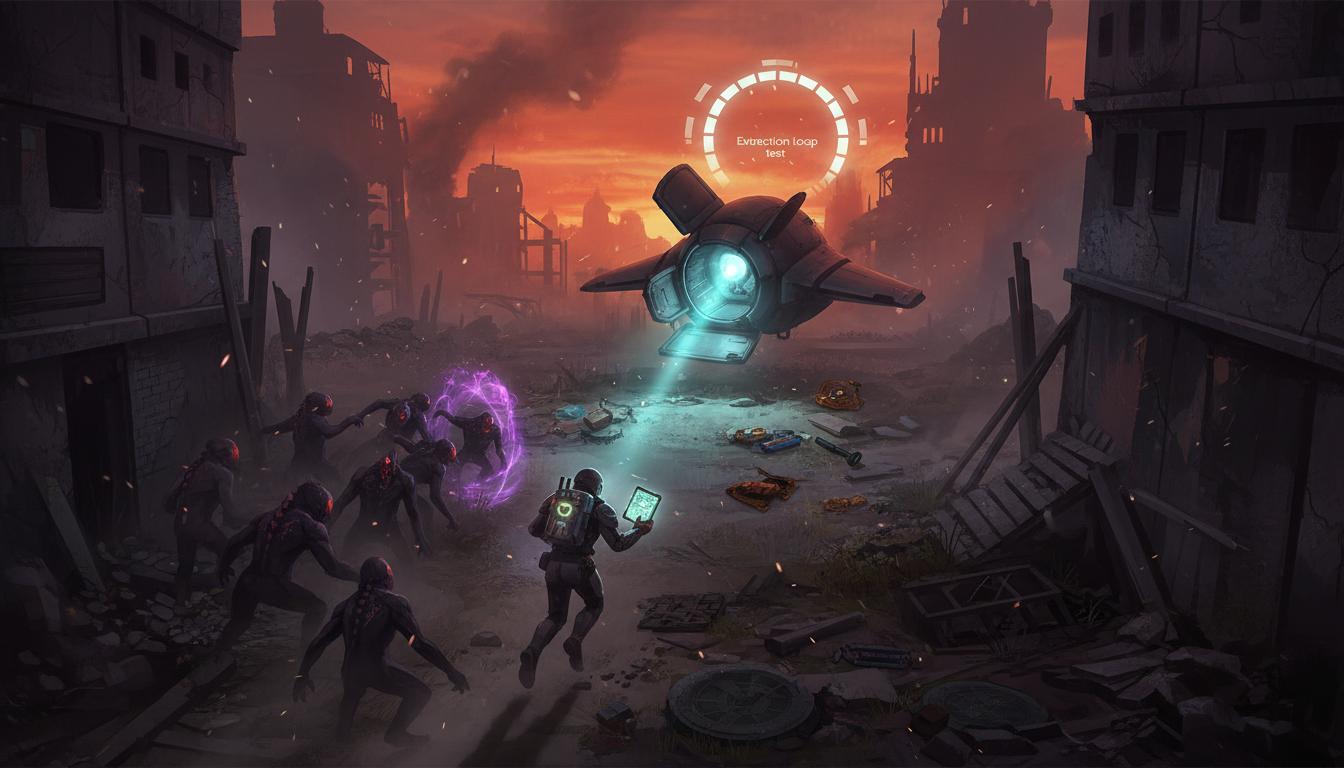
Extraction Loop Test
Prototype one tense risk-reward cycle.
Search thisTurn a game idea into a first-playable prototype brief, scoped feature set, and validation plan before full production effort ramps up.
Try this in Seele AI
Start with a specific instant playable prototype tool need, then carry that prompt into the workspace for deeper iteration and follow-up planning.
Quick Start Searches
Pick a concrete instant playable prototype tool scenario and jump into the workspace with a stronger starting prompt.
Prototype one tense risk-reward cycle.
Search this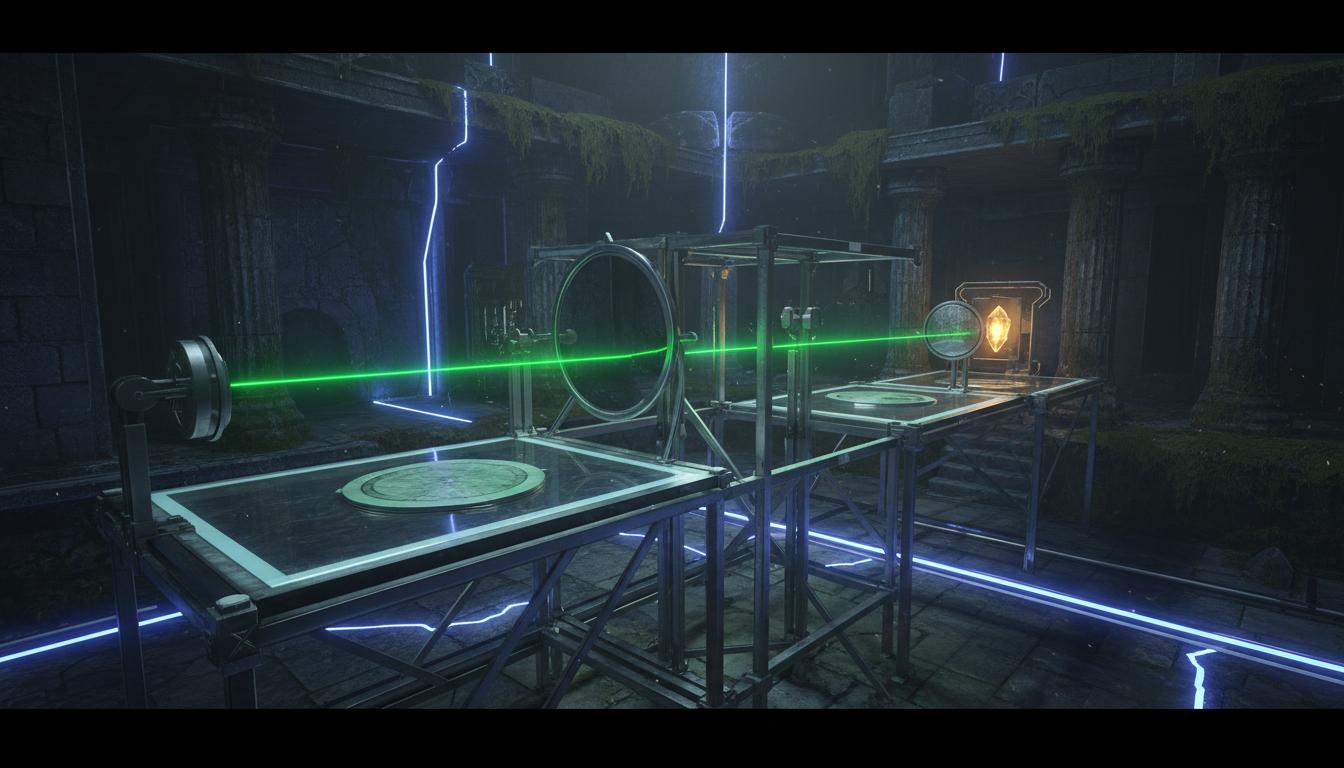
Keep the first build centered on the main interaction.
Search this
Test a softer economy without overbuilding.
Search this
Validate timing and readability before content expansion.
Search this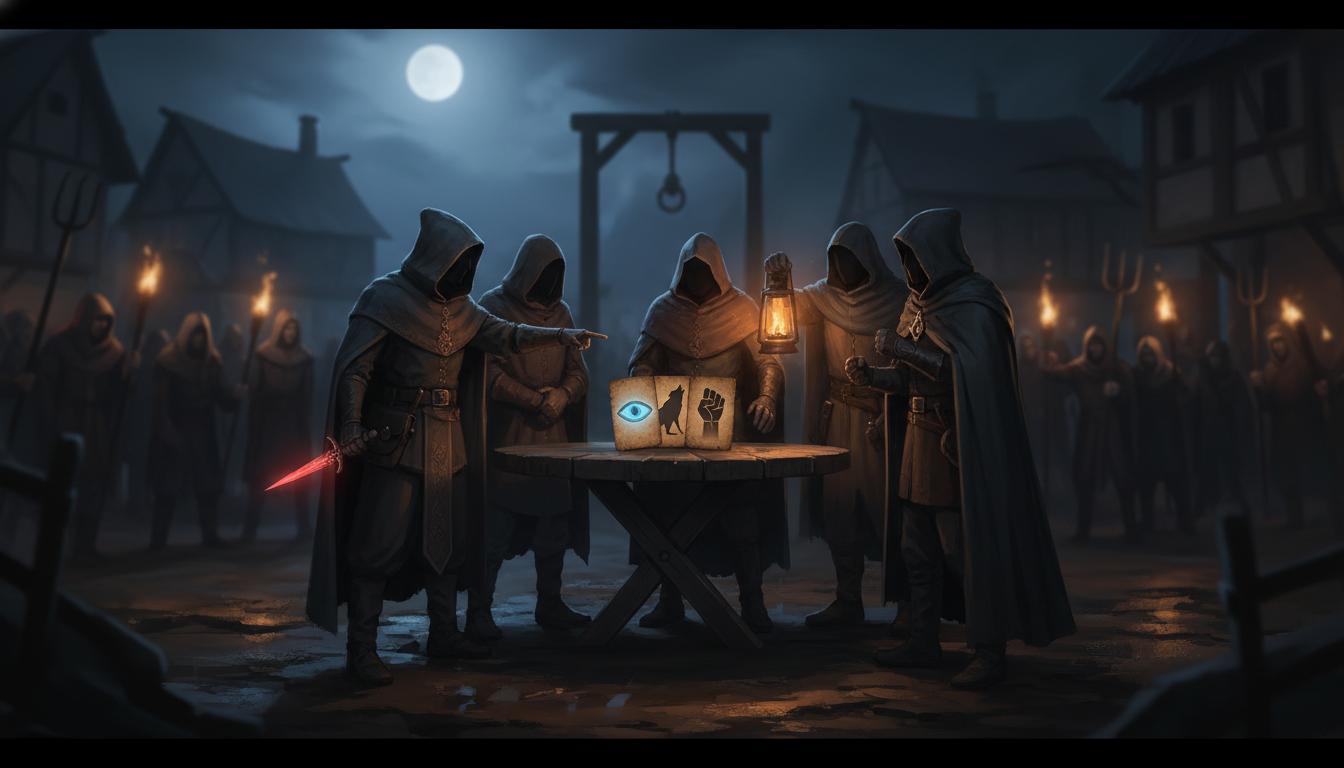
Reduce a broad concept to one playable hypothesis.
Search this
Focus on loop feel over content volume.
Search thisCore Features
This page is strongest when you need clearer instant playable prototype tool direction before expensive production steps begin.

The workflow should emphasize first-playable validation and scaffolding rather than promising a finished, store-ready game.
Open Workspace
A good prototype only needs enough content to test the core assumption, not every supporting system.
Open Workspace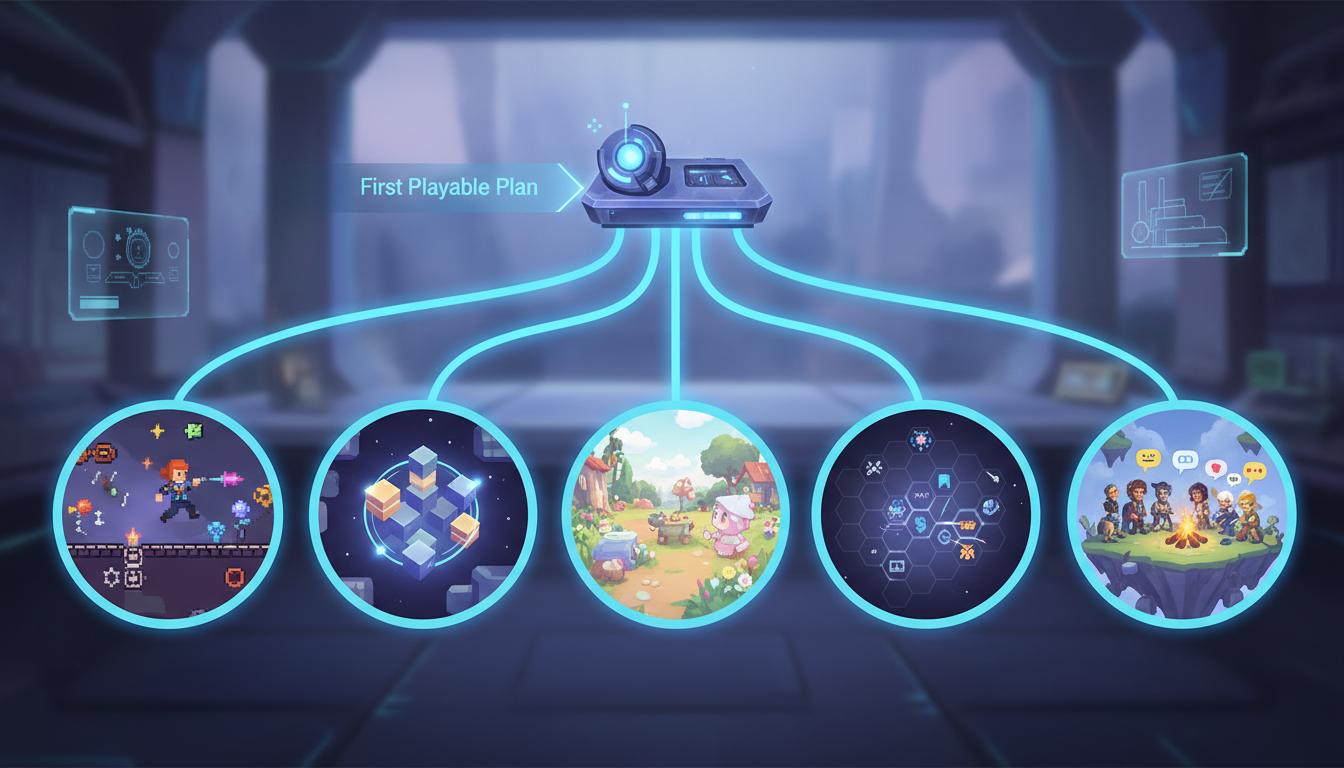
Action, puzzle, cozy, strategy, and social games can all benefit from a clearer first-playable plan.
Open Workspace
Alternative scaffold routes make it easier to remove features that do not help the main validation goal.
Open Workspace
The output can help design and implementation agree on what the prototype should actually contain first.
Open Workspace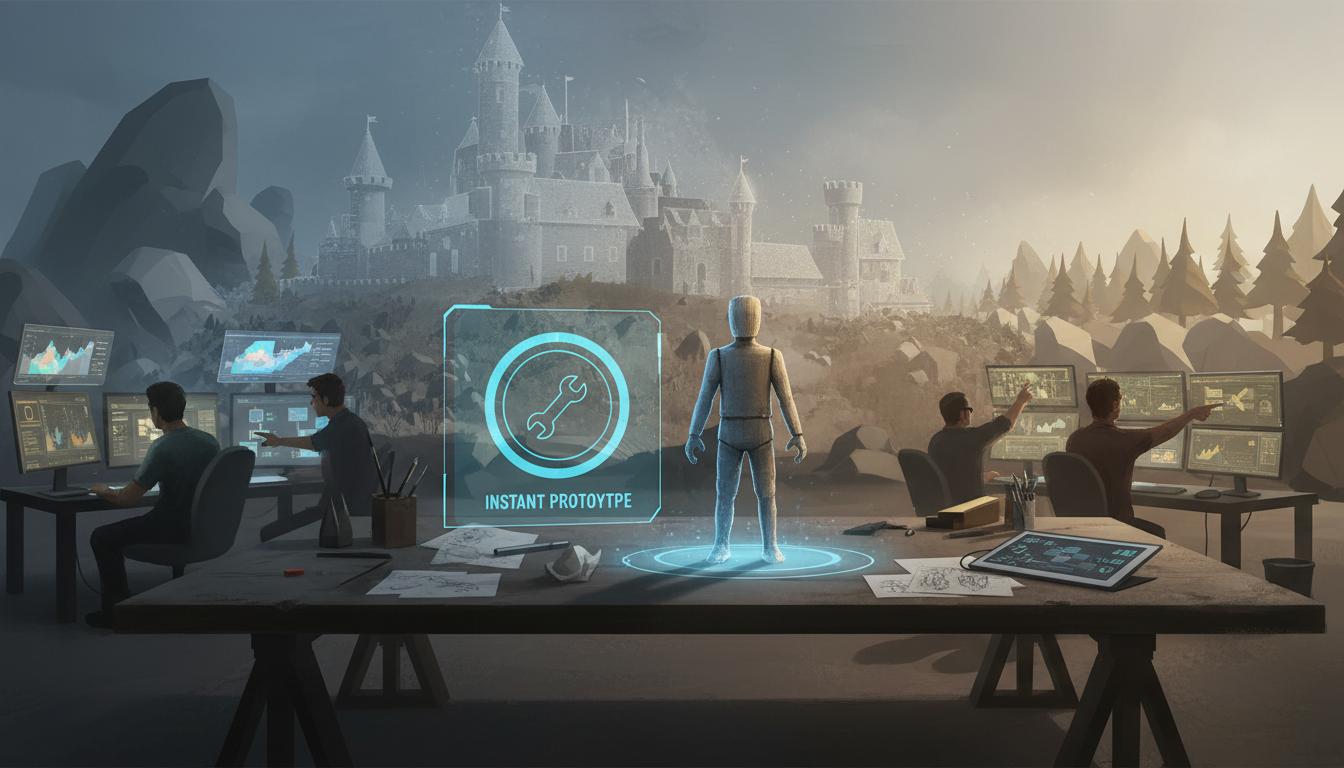
This page must avoid language that implies one-click shipped games or polished production output from the initial scaffold.
Open WorkspaceComparison
Use this page to understand where instant playable prototype tool helps most in a real workflow.
| Criteria | Instant Playable Prototype Tool for Faster Game Validation | Manual workflow | Generic prompt-only ideation |
|---|---|---|---|
| Time to first usable direction | Fast | Slow | Fast |
| Best stage | Prototype and pre-production | Production execution | Early ideation only |
| Iteration cost | Low | High | Low |
| Review boundary clarity | High | High | Low |
| Technical production readiness | Needs review | Strong when finished | Not applicable |
| Team alignment speed | High | Medium | Medium |
Who This Tool Page Is For
The strongest use cases appear when one team needs instant playable prototype tool direction quickly, not a final production asset immediately.
Use clearer prompts and structured outputs to move from idea to a reviewable direction without waiting on a full production pass.
Open WorkspaceCompare scope, style, and production trade-offs earlier so implementation starts from a cleaner brief.
Open WorkspaceBring stronger first-pass options into review and decide which path deserves deeper production effort.
Open WorkspaceMany game ideas fail because the first build tries to prove too many things at once. An instant playable prototype tool is useful when a team needs to identify the one loop worth testing first and cut everything else that does not support that learning goal.
The most practical result is a prototype brief, a few scaffold options, and a clearer next-build plan. That can help teams test action loops, puzzle interactions, economy cycles, social systems, and other concepts without overcommitting to content volume or polish.
The positioning should stay squarely on prototype scaffolding and validation. It should not imply a polished final game, one-click shipping, or a complete production pipeline. Feel tuning, content depth, QA, and final packaging still belong to later stages.
How It Works
Explain the game concept, the core loop, and what the first playable must prove or invalidate. Seele AI frames the minimal testable loop, likely scope cuts, and what should stay in the prototype.
Ask for a few prototype routes with different scope, pacing, or mechanic emphasis. Seele AI proposes alternative first-playable structures that favor speed of learning over polish.
Select the route that tests the key assumption with the least production risk. Seele AI condenses the chosen route into a clearer next-build plan for the team.
What You Get
A structured summary of the core loop, success metric, and what the first playable should test.
Alternative first-playable routes that trade off scope, speed, and learning value.
A concise note on what to build first without pretending the result is a polished ship-ready game.
Where This Works Best
It is best for turning a game idea into a testable first-playable plan faster. Teams use it to clarify the minimal loop and the main validation goal before deeper production starts.
No. The workflow is for prototype planning and scaffolding, not a promise of a polished store-ready game. Final feel, content, and production work still come later.
Include the game concept, core loop, target platform or format, and what the first playable needs to prove. The clearer the validation question is, the more useful the scaffold becomes.
Yes. It is especially useful when a team has a strong idea but needs help deciding what to build first and what to postpone.
Use it at the point where a concept is exciting but still too broad. The workflow helps narrow that concept into a buildable first test.
Join thousands building with Seele AI — no setup required.
Open Workspace