Define the Spiral Anchor traversal loop
A grappling hook prompt should define what counts as an anchor, how the line is checked and how far each pull moves the player. Words like “swing smoothly” leave out the state changes a prototype needs. Spiral Anchor uses a small grid room to make attachment and release behavior visible.
The fictional room is 12 cells wide and 8 tall. The player starts at (1,6), has two hearts and must reach the exit at (12,1). Fixed anchors sit at (4,3) and (9,2). Walls and gaps remove some movement cells. The goal is to solve the route without turning the hook into a universal teleport.
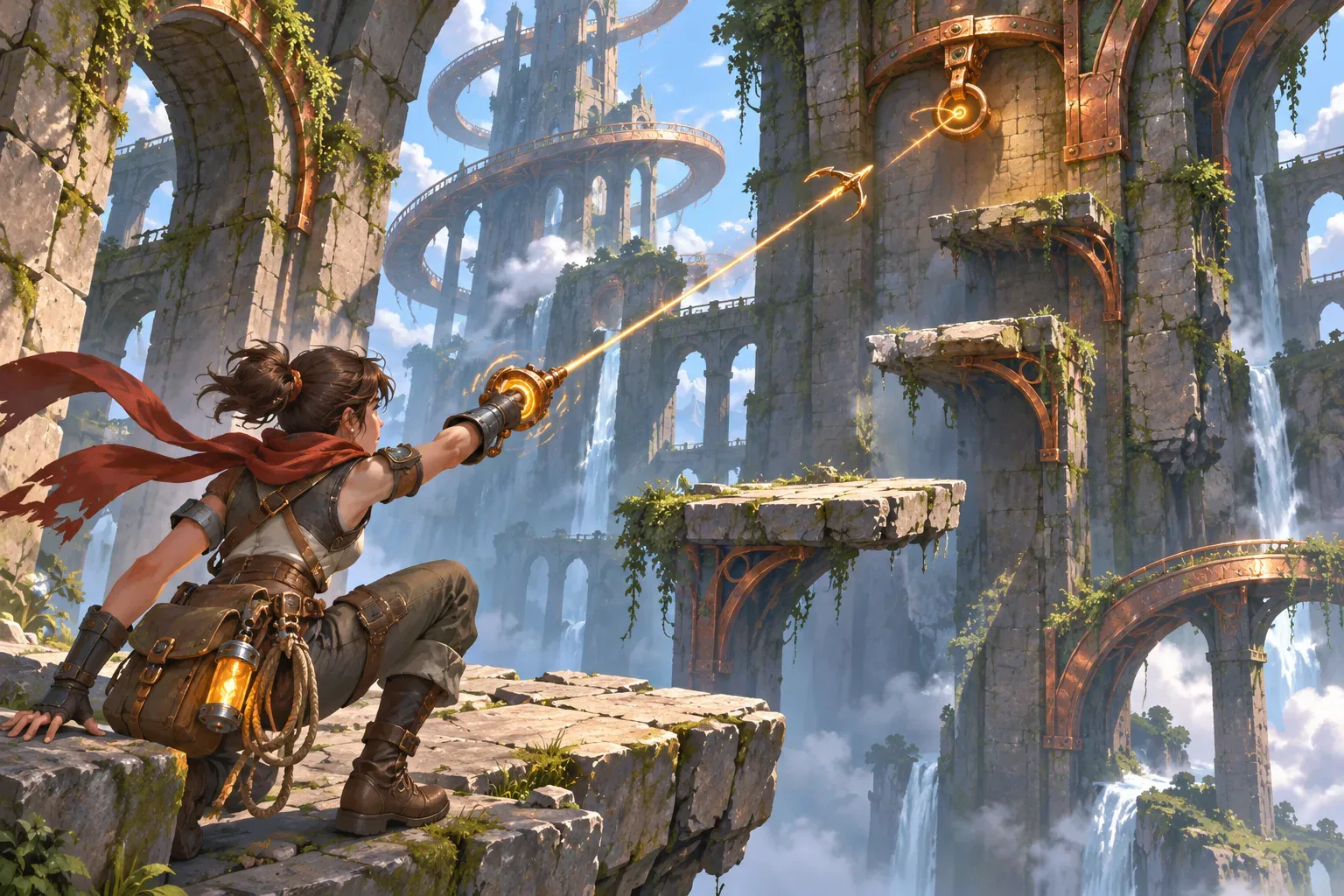
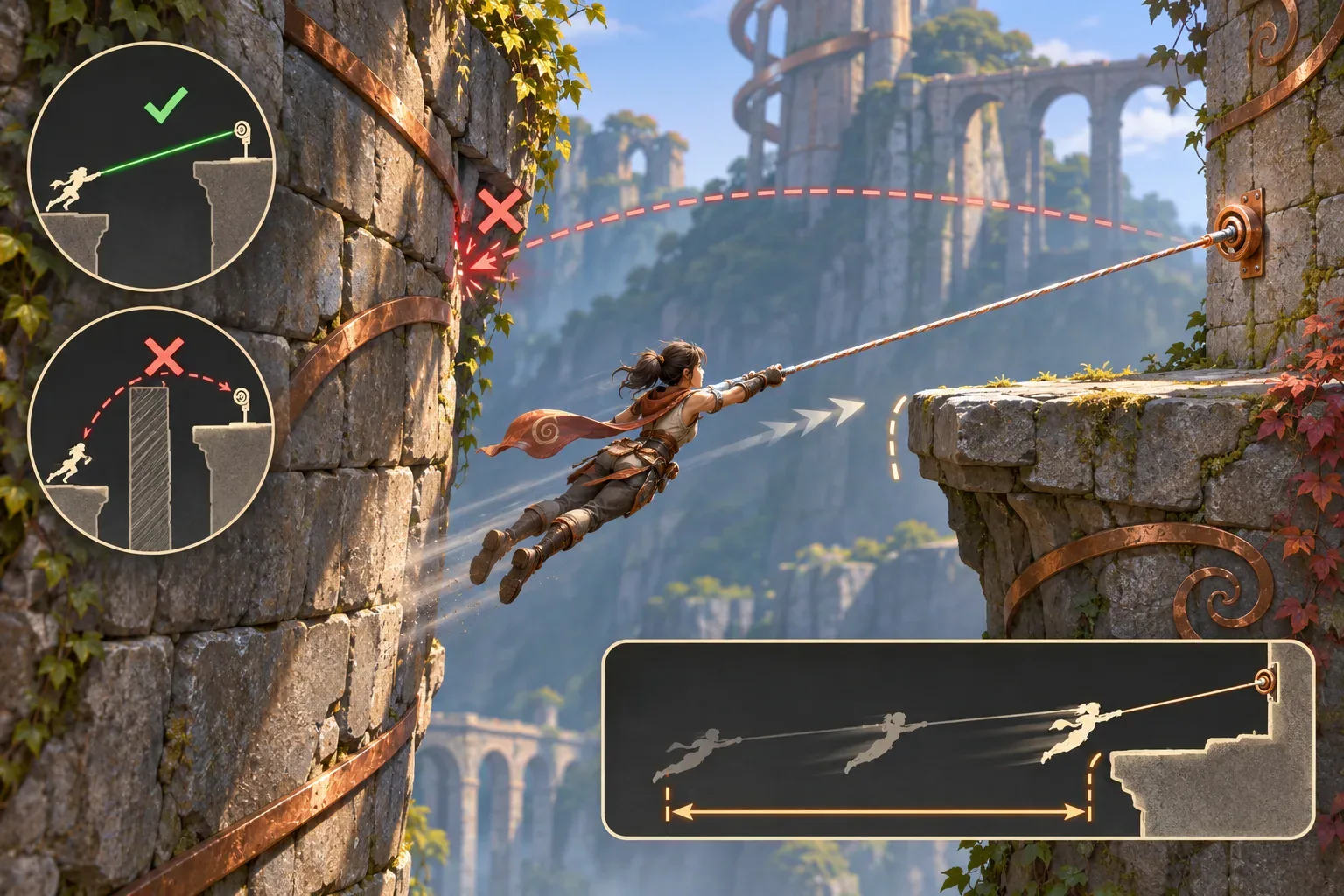
The hook can connect to a fixed anchor within five cells in any of eight directions when the straight line is unobstructed. Each Pull advances up to two cells toward it along the same direction, stopping one cell away. Solid cells block the pull. Release detaches at the current cell without moving the player.
Make hook connection and pulling deterministic
Movement is discrete: Step moves one orthogonal cell to an open space. Hook and Pull are separate actions. An attached line remains connected until Release or until a solid obstruction invalidates it. The player may not switch anchors mid-pull; detach first, then select a new visible anchor.
A hazard occupies (7,5) and damages the player every third beat while the player is on that cell. The mission ends in a win at the exit with at least one heart by beat 16. Zero hearts or the timer ending is a loss. Restart returns the player, hearts, hazard counter and hook state to their initial values.
These rules make the hook's movement legible. The game can later replace the grid with continuous physics, but the first specification should keep range, collision and pull distance observable before adding swing arcs or momentum.
Trace the example
From (1,6), the anchor at (4,3) is three cells across and three up, within the five-cell range under the chosen Chebyshev distance rule. The diagonal ray is clear. Hook attaches. The first Pull moves two diagonal cells to (3,4), still one step from the anchor; the second Pull stops at the adjacent cell (3,3). The player can then Release and continue with Step actions.
This example assumes the room allows (3,4) and (3,3) and that the line remains clear. It illustrates the discrete pull rule only. It does not prove a specific level is solvable or that a real grappling animation behaves correctly. A future build should log the anchor, line check and player position before and after each Pull.
The distinction between Hook and Pull also prevents an automatic snap. Attachment changes the tether state but not position; only a Pull moves the player. Release ends the tether and preserves location. That state model can be checked without guessing whether the hook should carry momentum.
Write the six prompts
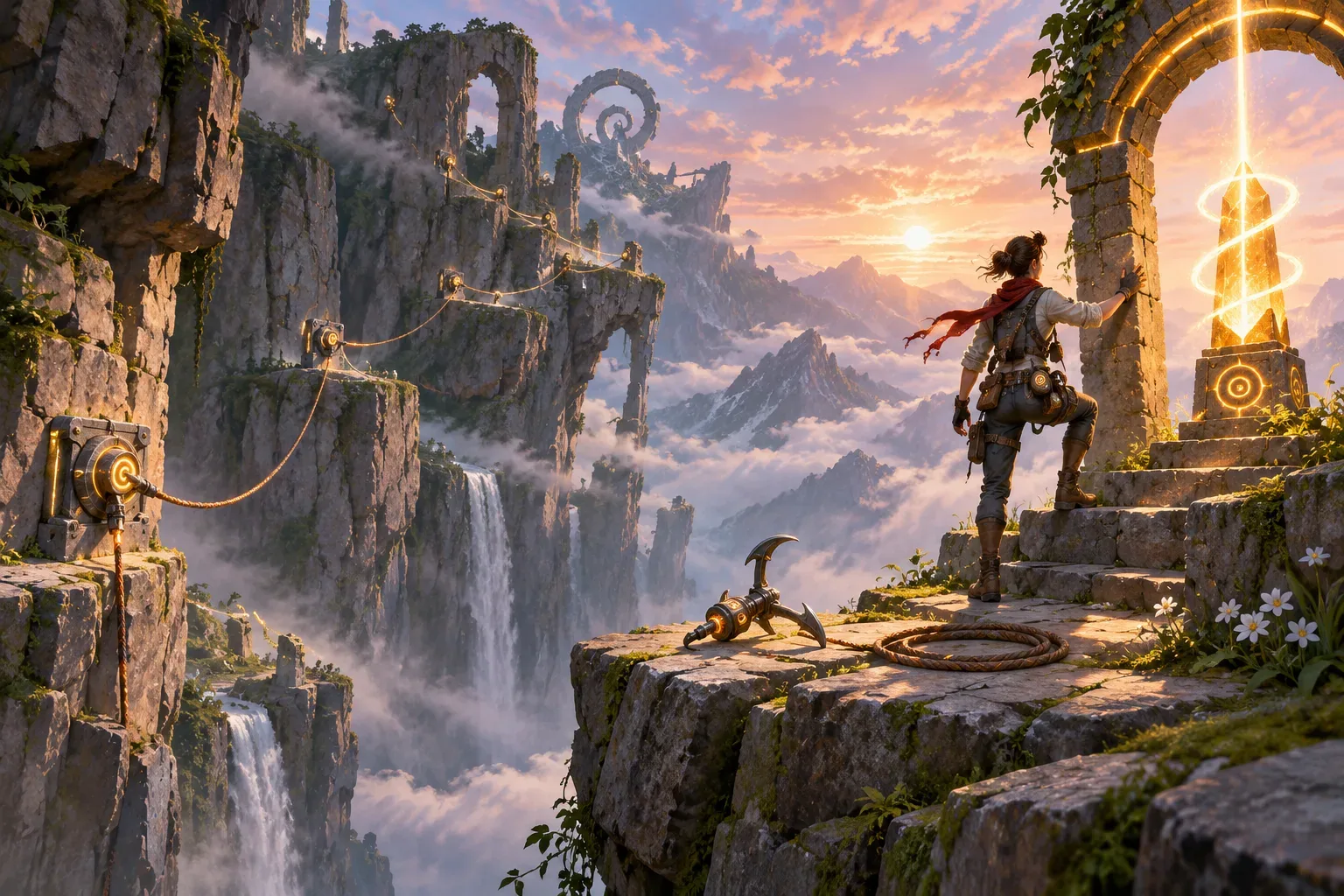
Use one prompt per design decision so later checks have a clear source of truth. These drafts describe Spiral Anchor; they have not been run and do not represent a generated playable game.
Prompt 1: place the route and fixed anchors
Create a 12×8 grid traversal room. Player starts at (1,6), exit is (12,1), player has 2 hearts and a 16-beat limit. Place visible fixed anchors at (4,3) and (9,2), plus explicit solid walls and gaps.Prompt 2: define hook target selection
Step moves one orthogonal cell into an open cell. Hook selects a fixed anchor within Chebyshev distance 5 in any of 8 directions only when the straight ray is unobstructed. Attaching does not move the player.Prompt 3: resolve pull and release
While attached, Pull moves up to 2 cells along the anchor line, stops one cell adjacent to the anchor and never crosses solid terrain. Release detaches without movement. To choose another anchor, release first.Prompt 4: add one hazard and end states
A hazard at (7,5) removes 1 heart every third beat the player occupies that cell. Track its counter. At zero hearts, lose. Win by reaching (12,1) with at least 1 heart by beat 16.Prompt 5: make Restart deterministic
Restart restores player position, hearts, hazard counter and detached hook state. Display the current hook target and whether line of sight is clear.Prompt 6: prepare future checks
For future checks log cell, selected anchor, distance, ray obstruction, attachment state, pull cells, hazard counter and hearts. Check range edges, blocked line, wall collision, release, hazard cadence, exit and reset. Do not mark unobserved tests as passed.SEELE’s official page describes general plain-English prompting, a playable first version, browser testing and refinement; it does not verify Spiral Anchor. See Free AI game maker for workflow context only.
Prepare future build checks
Capture the selected anchor, grid distance, ray cells and current tether state for each attempt. Test a target at the range limit, one beyond it, a blocked line, a pull stopped by terrain, and a release followed by a second target. These are future checks, not passed tests. Record the before and after state so a later build can be compared with the specification.
| Future check | Expected rule | Evidence to capture |
|---|---|---|
| Hook range | Connect at distance 5; reject beyond 5 | Player/anchor coordinates and range metric |
| Line of sight | Solid cell blocks connection | Ray cells and obstruction result |
| Pull movement | Move at most 2 cells, stop adjacent, do not cross solids | Before/after cells and anchor |
| Hazard cadence | Damage every third beat on hazard cell | Beat counter and hearts |
| Exit and reset | Reach exit by beat 16 with heart; reset room state | Outcome and initial-state snapshot |
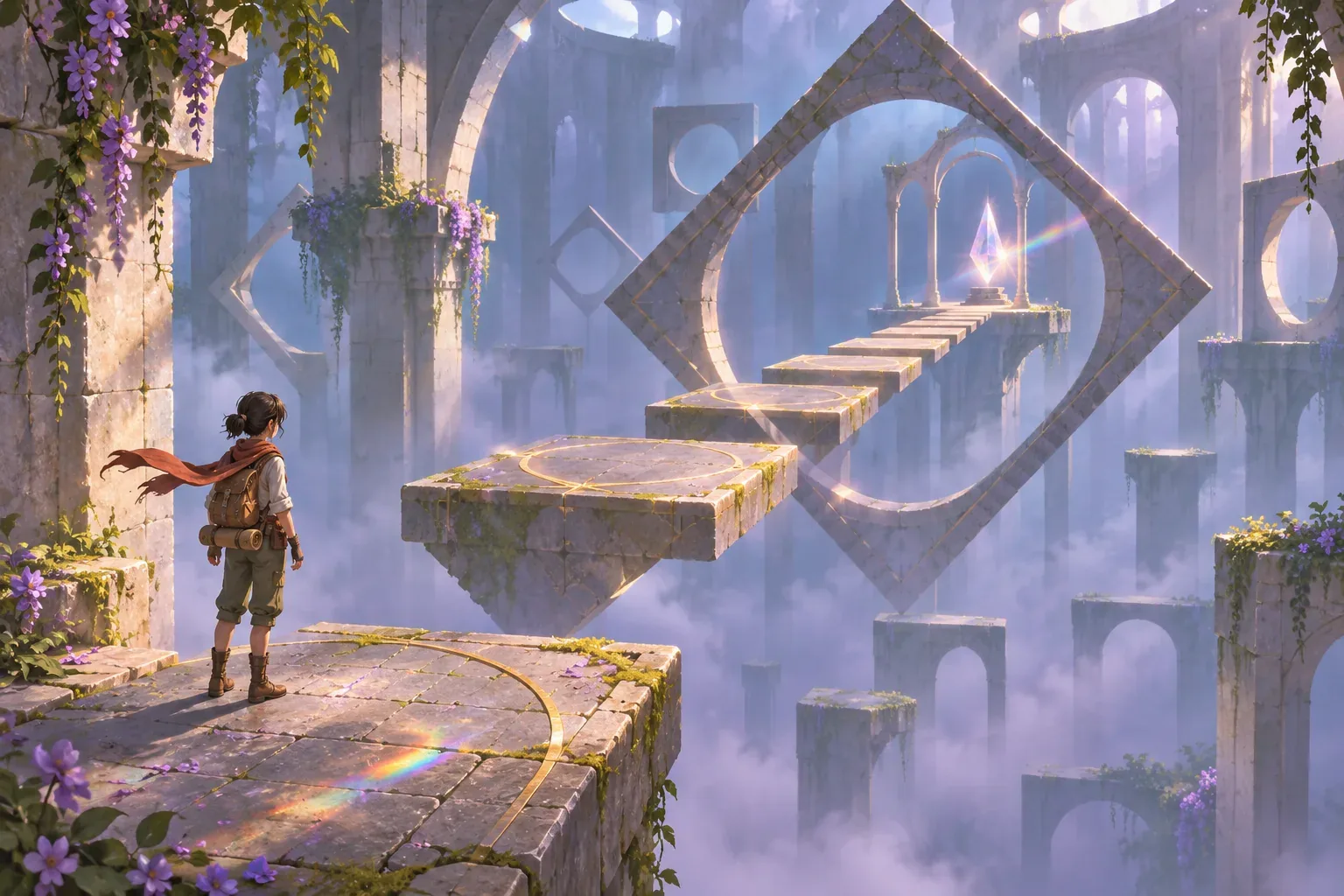
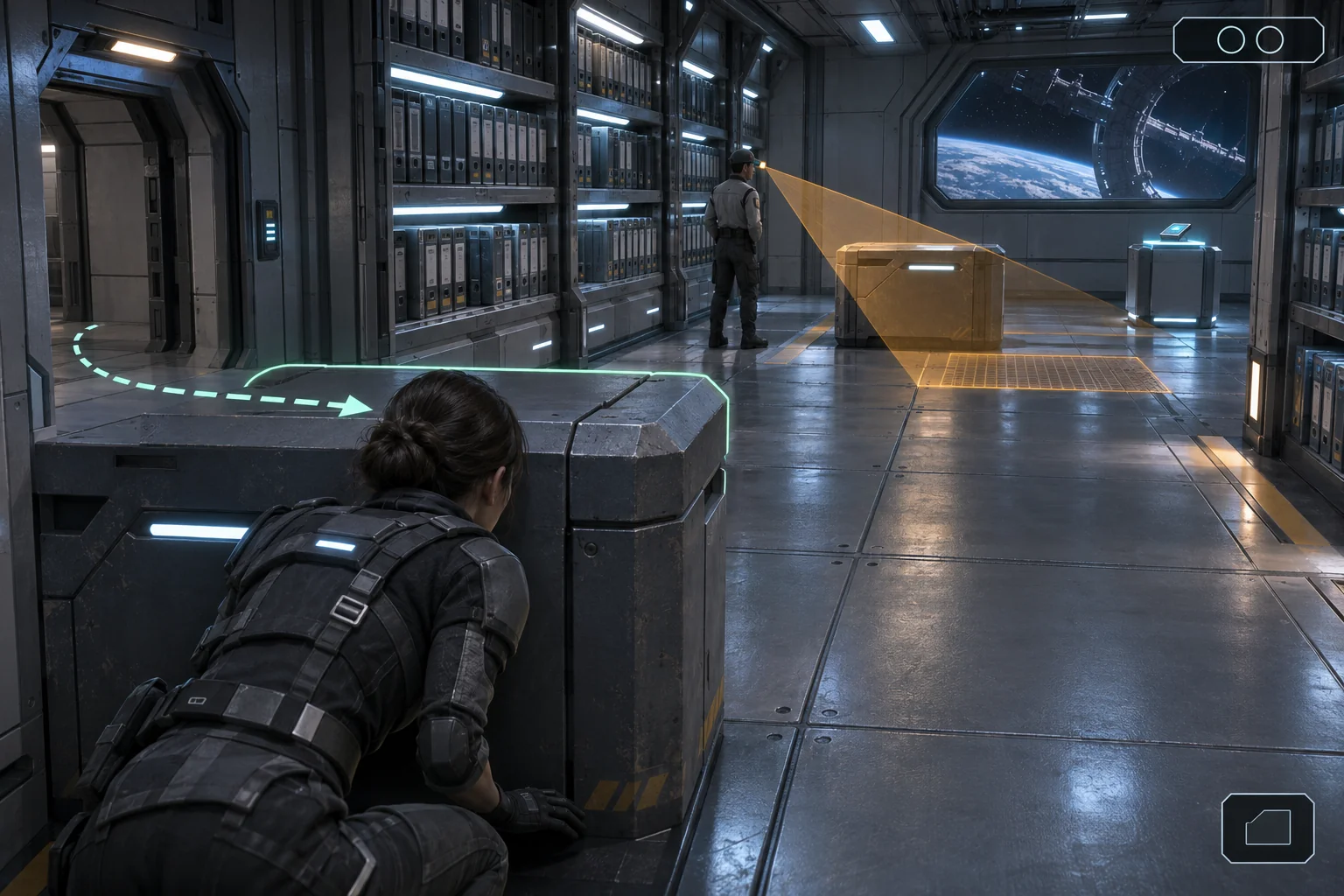
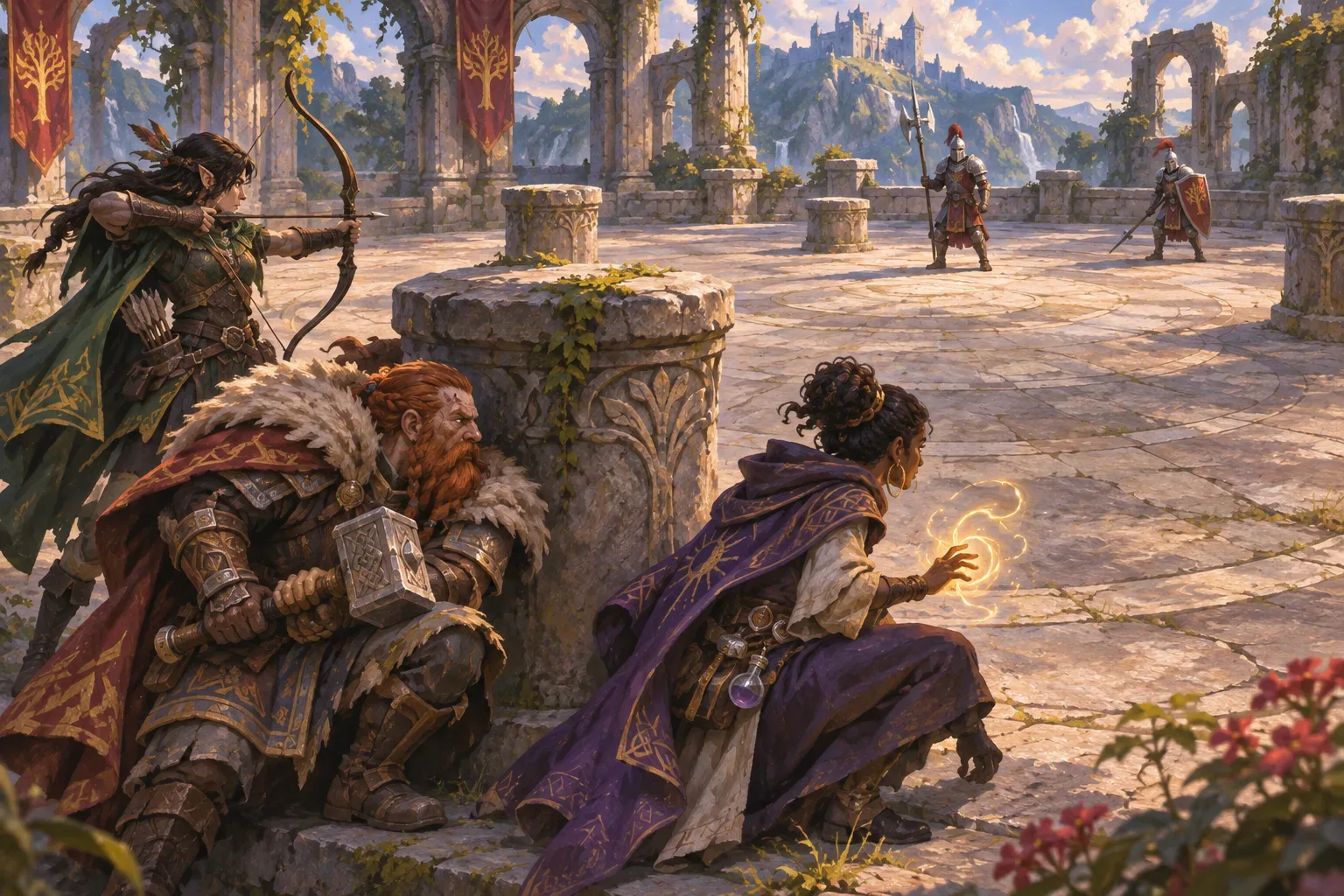
No real game run, browser test or measured result is available for this fictional example. The illustrations are original concept art and are not screenshots.
Frequently asked questions
What should a grappling hook game prompt define?
Specify valid anchor surfaces, line of sight, range, pull distance, collision behavior, release and the objective.
Does hooking immediately move the player in Spiral Anchor?
No. Hook only attaches; a separate Pull action moves up to two cells toward the anchor.
How far can the fictional hook connect?
It connects within Chebyshev distance five in any of eight directions when the ray is clear.
Were these prompts tested in a playable build?
No. Spiral Anchor is fictional and the route trace is a rules example, not an observed test.
What happens if a wall blocks the rope path?
The hook cannot attach through a solid cell, and an attached pull cannot pass through solid terrain.