Define the Nightglass room
A light-and-shadow puzzle prompt should define whether a beam is a hazard, how mirrors redirect it and what creates a safe shadow. Nightglass is a fictional 8-by-6 grid room where the player changes one mirror and uses a shadow cell to reach the exit.
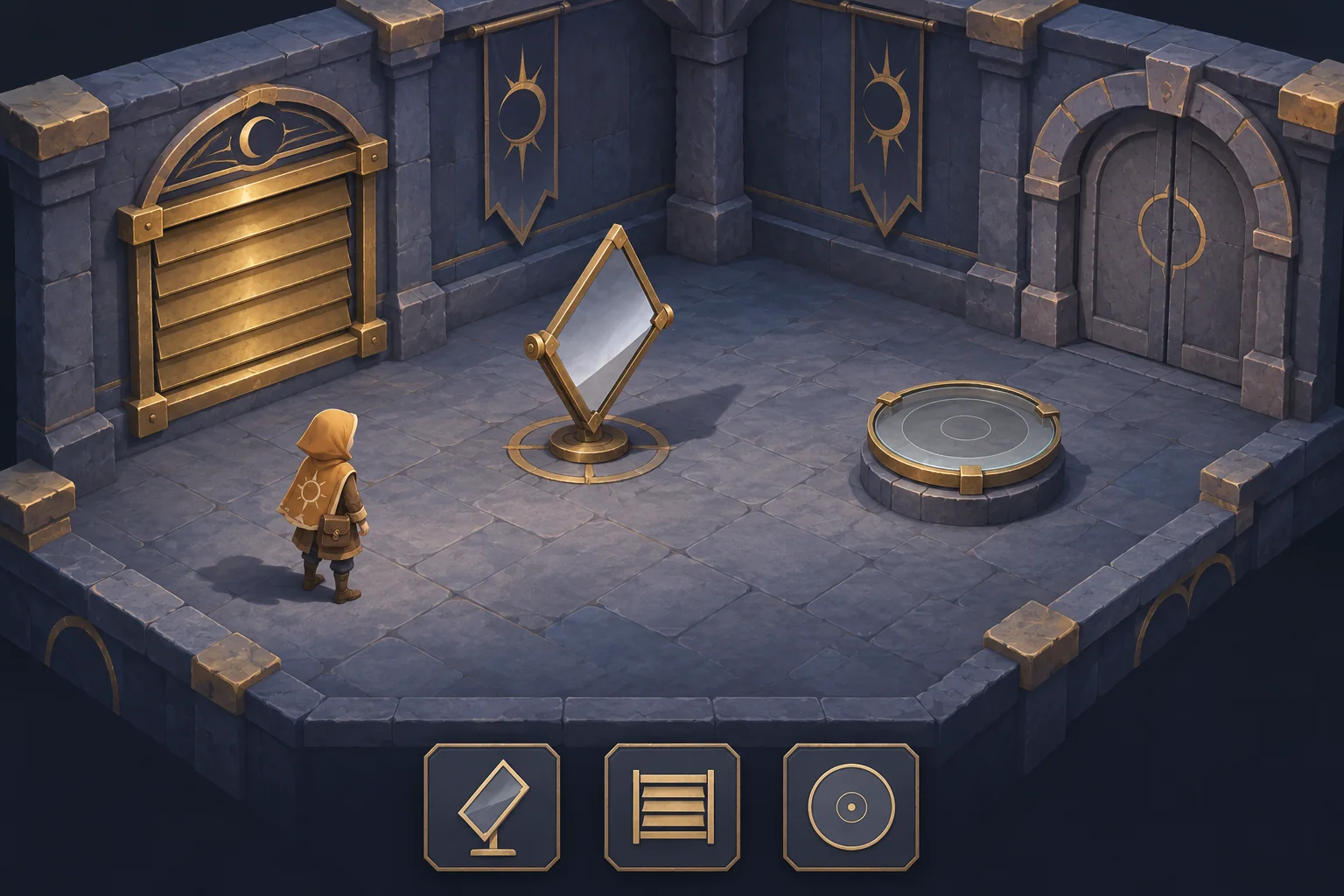
The player starts at (2,6) with two shields. The exit sits at (8,6) and stays locked until a receiver at (4,1) is activated. Emitter A at (1,3) sends a beam east toward a mirror at (4,3). Emitter B at (1,5) sends east toward an opaque block at (6,5).
The player chooses Step, Rotate or Wait. Step moves one orthogonal cell into an open cell. Rotate changes an adjacent mirror by 90 degrees between slash and backslash. A beam travels in cardinal cells until a wall, opaque block, mirror or boundary. Slash redirects east to north; backslash redirects east to south. The receiver activates only if beam enters from the south.
Specify how beams and shadows resolve
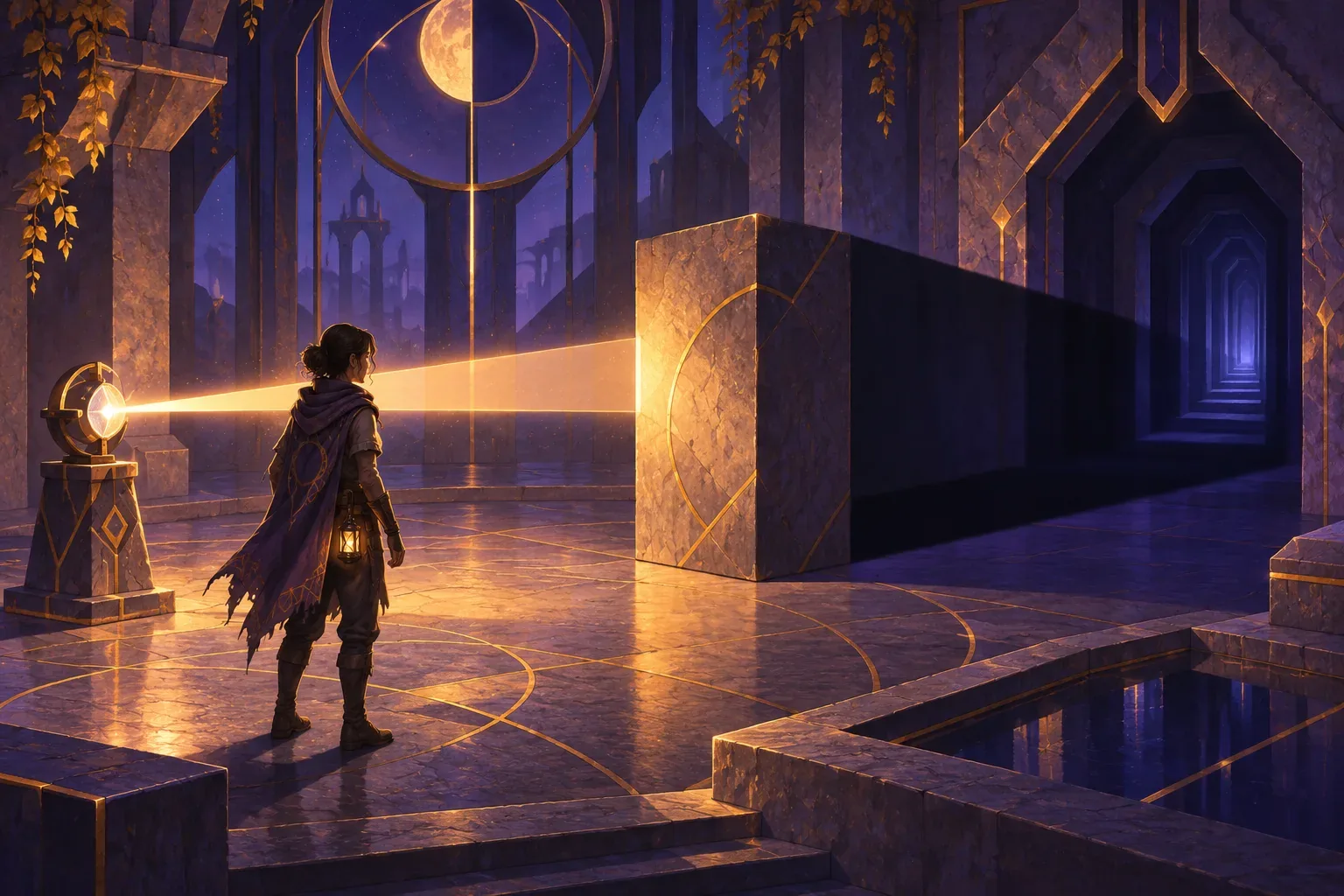
Emitter B's block at (6,5) stops the beam. Cell (7,5), directly behind it, is a safe shadow cell and is not illuminated. A shadow exists only in the single cell immediately beyond the blocker along the beam direction; it does not extend through walls or around corners.
Entering any illuminated cell removes one shield. When both shields are gone, the player returns to start and the room resets. Beams resolve immediately after each player action, including Rotate. Reaching the exit after activating the receiver wins; the room allows at most 14 actions.
This makes a mirror turn consequential and shadow use observable. It also gives the prompt a strict order: player action, ray update, exposure check, then exit check. Avoid adding color filters or moving lights until this simple reflection and shadow loop can be verified.
Trace the example
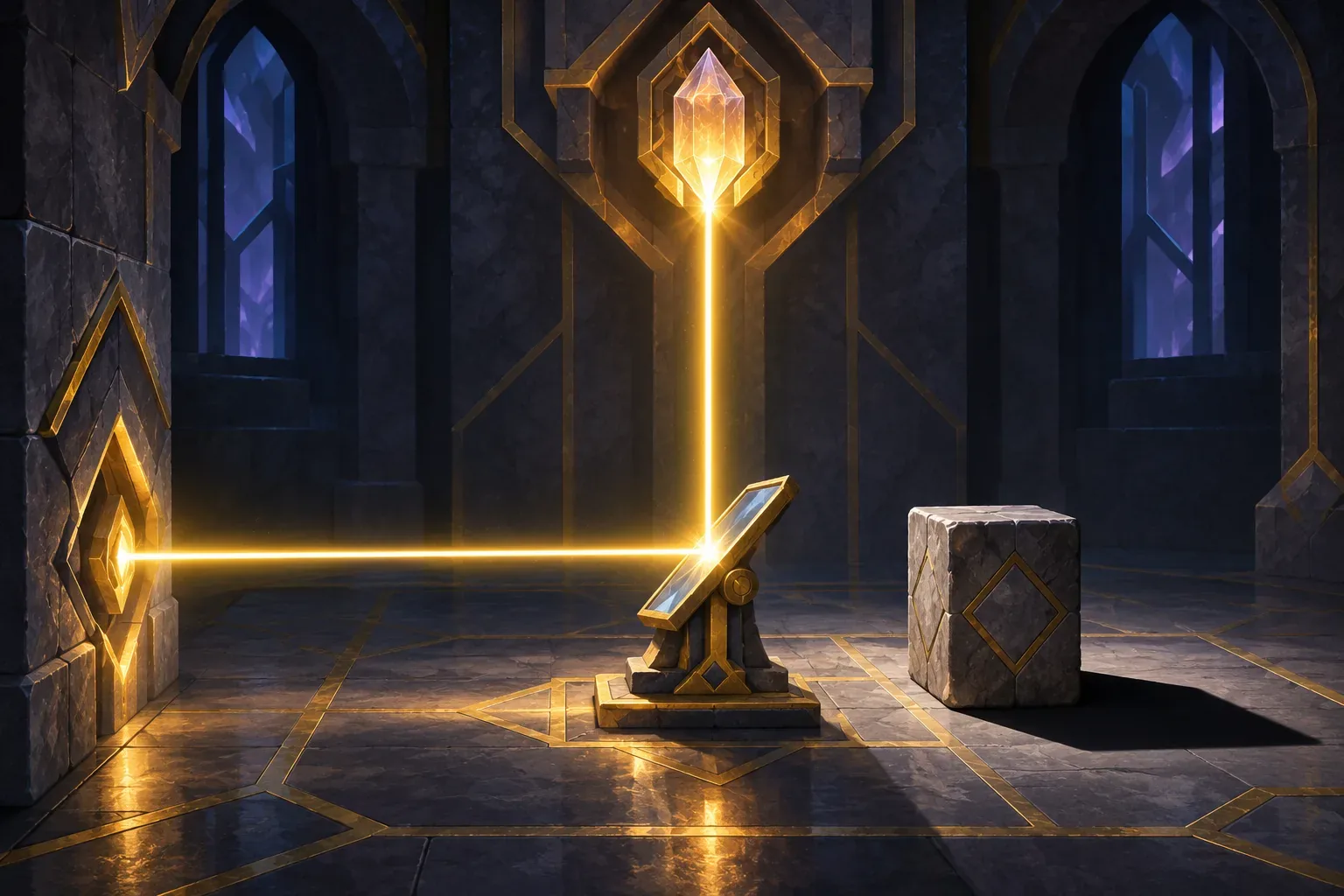
The mirror begins as backslash, so Emitter A's eastbound ray turns south and misses the receiver above. The player moves to a cell adjacent to the mirror without entering the lit row, then chooses Rotate. The mirror becomes slash. The ray updates immediately and turns north into the receiver at (4,1), unlocking the exit.
Emitter B continues east until the block at (6,5); the cell at (7,5) remains in shadow. The player can step through that cell without losing a shield, then route to the unlocked exit. If the player instead enters an illuminated cell, one shield is removed after the step. A second exposure triggers a full room reset.
This is a rules trace based on a fictional grid. It does not claim that a playable implementation exists. A future build check should compare the beam cells before and after rotation and verify that the blocked cell is the only safe shadow cell behind the opaque block.
Write the six prompts
Use one prompt per design decision so later checks have a clear source of truth. These drafts describe Nightglass; they have not been run and do not represent a generated playable game.
Prompt 1: place the grid and optical pieces
Create an 8×6 grid puzzle. Player starts (2,6) with 2 shields. Exit (8,6) is locked until receiver (4,1) is lit. Place Emitter A (1,3) east, mirror (4,3) backslash; Emitter B (1,5) east, opaque block (6,5).Prompt 2: define beam travel and reflection
Emitters travel cardinally until boundary, wall, opaque block or mirror. Slash redirects east to north; backslash redirects east to south. Receiver activates only when a beam enters from south. Update rays immediately after each player action.Prompt 3: define the shadow cell
Define the single-cell shadow directly beyond an opaque block along the beam direction. The shadow cell is safe and not illuminated. No other cells are shadowed by that blocker.Prompt 4: add player actions and exposure
Player actions are Step to an open orthogonal cell, Rotate an adjacent mirror between slash/backslash, or Wait. Entering an illuminated cell removes one shield. At zero shields reset the room to initial state.Prompt 5: set resolution and exit rules
After each action resolve beams, exposure and exit state in that order. Win by reaching (8,6) after receiver activation within 14 actions. Restart restores player, mirror, shields, beams and exit lock.Prompt 6: prepare future checks
For future checks log mirror orientation, ray cells, blocker, shadow cell, player cell, shield count and receiver/exit state. Check both mirror orientations, immediate update, shadow boundary, exposure, reset and locked exit. Do not claim a test passed before inspecting a build.SEELE’s official page describes general plain-English prompting, a playable first version, browser testing and refinement; it does not verify Nightglass. See Free AI game maker for workflow context only.
Prepare future build checks
Capture the active ray path after each action and compare it with mirror orientation and blockers. Test both mirror states, one shadow cell, entry into light, the reset threshold and the exit before/after receiver activation. These are future checks, not passed tests. Record the before and after state so a later build can be compared with the specification.
| Future check | Expected rule | Evidence to capture |
|---|---|---|
| Mirror direction | Slash turns east beam north; backslash south | Orientation and resulting ray cells |
| Receiver | Only south entry activates it | Incoming direction and exit state |
| Shadow | Only cell directly behind blocker is safe | Blocker coordinate and exposure result |
| Exposure | Each illuminated entry removes one shield | Player cell and shield count |
| Exit and reset | Exit unlocks after receiver; reset restores mirror | State before/after outcome |
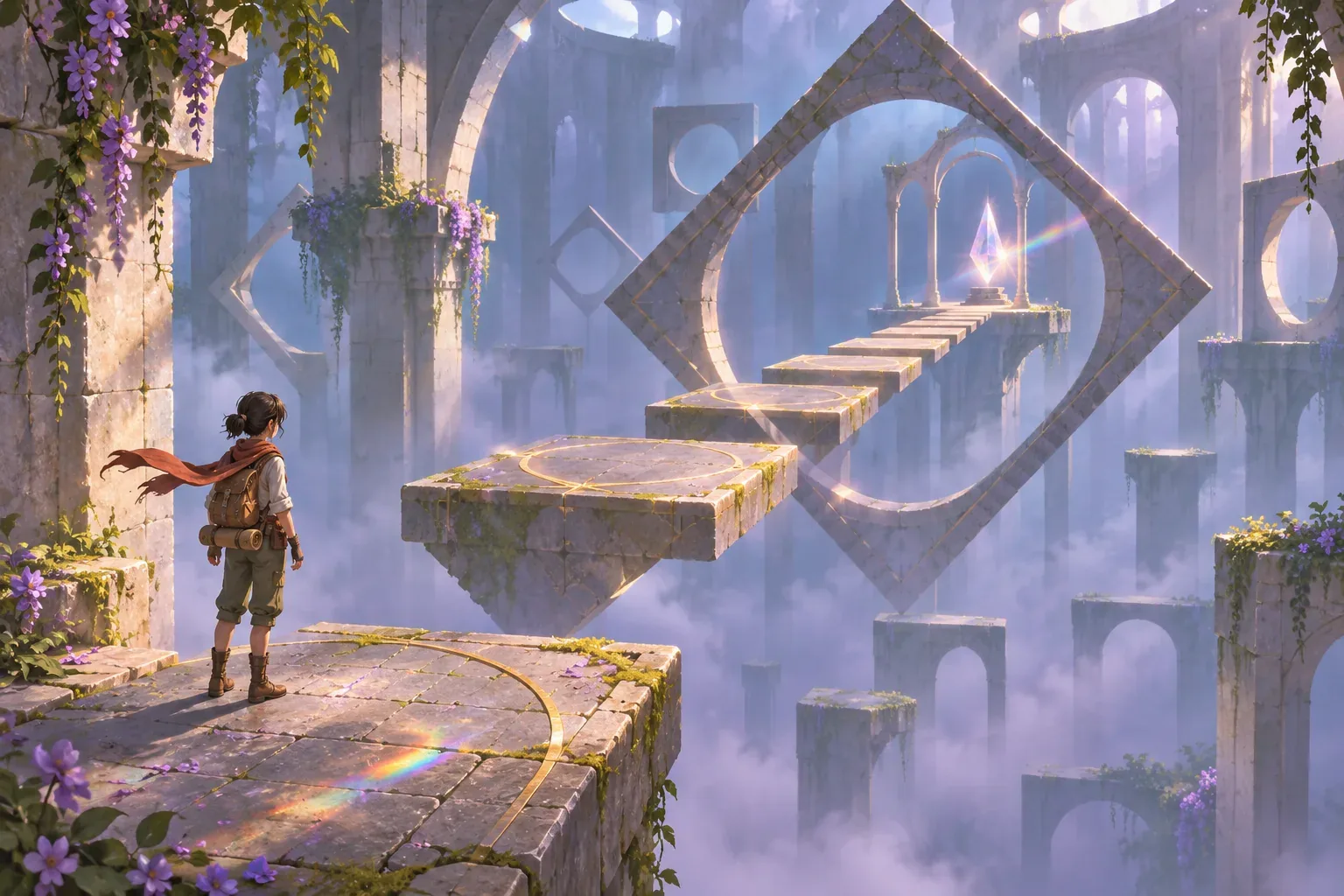
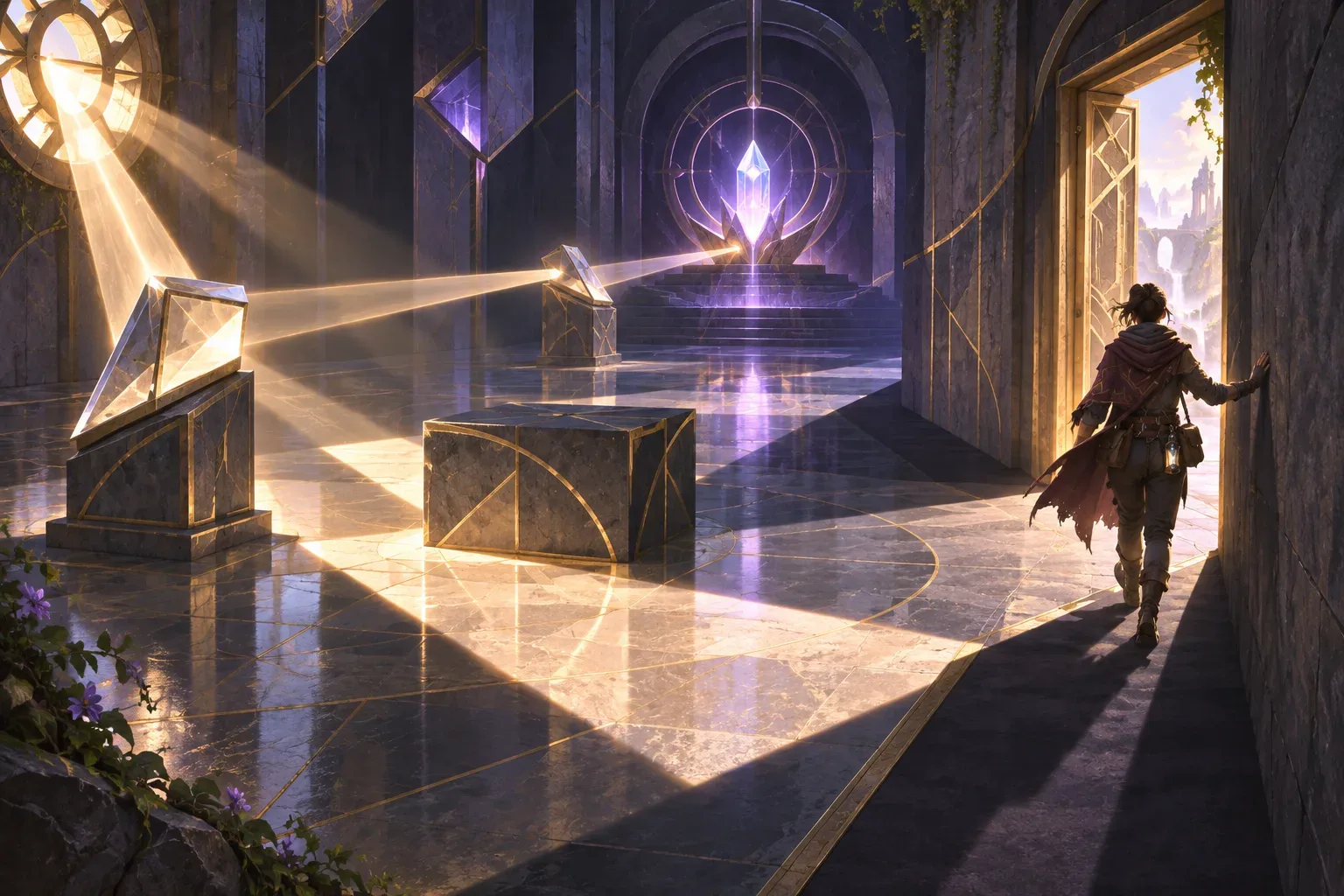
No real game run, browser test or measured result is available for this fictional example. The illustrations are original concept art and are not screenshots.
Frequently asked questions
What should a light and shadow puzzle prompt define?
Specify ray direction, blockers, mirror mapping, safe shadow cells, exposure effects and the objective.
How does Nightglass create a shadow?
An opaque block stops a ray and makes the one cell immediately beyond it safe along the beam direction.
When does the receiver activate?
Only when a beam enters the receiver from the south after mirror orientation is resolved.
Were these puzzle prompts tested?
No. Nightglass and its ray trace are fictional design material, not a playable test result.
What happens when the player loses both shields?
The room resets the player, mirror, beams and exit lock to their initial state.