Define the Windward Line engagement
A naval tactics prompt should specify how ships move through water, how wind changes a sail action and what makes a shot legal. Windward Line is a fictional 8-by-8 duel. The player begins at (1,4), heading east with three hull; the enemy starts at (7,4) with two. Two islands sit off the direct row at (4,2) and (4,6).
Wind is fixed east. Sail moves two cells when traveling east with the wind and one cell in any other direction. A sail stops before a blocked or out-of-bounds cell. Turn rotates the ship 90 degrees clockwise. Fire travels forward up to four cells and removes one enemy hull if the target lies on the ray.
After a player action and shot, a surviving enemy moves one cell toward the player along the axis with the greater separation; a tie chooses horizontal. It then fires for one hull if player and enemy share a row or column within three cells. It does not move through islands, boundaries or the player cell; if its chosen cell is blocked, it stays.
Connect wind, movement and weapon range
The beat order is: validate and resolve player action; resolve forward shot; if the enemy survives, move it; then resolve an in-range enemy shot; check hull and turn limit. A defeated enemy skips its remaining phase. A blocked Fire action still consumes the turn but causes no damage.
The player wins when enemy hull reaches zero. The player loses at zero hull or after turn six with an enemy still afloat. Restart restores positions, headings, wind, island cells, hull and turn count.
This encounter uses one wind direction and one weapon to make movement choice measurable. Later prompts can add currents, multiple ships or ammunition only after this basic range and phase order is clear.
Trace the example
Turn one: the player sails east with the wind from x1 to x3. The enemy survives and moves one cell toward the player from x7 to x6. They share row4 at distance3, so the enemy fires and the player's hull drops from3 to2.
Turn two: Fire forward from x3 has range3 and hits the enemy at x6, reducing its hull from2 to1. It then moves to x5 and fires at distance2, leaving player hull1. Turn three: Fire hits the enemy again, reducing hull to0; the enemy phase is skipped and the player wins.
This is a fictional turn trace, not an observed naval battle or tested game. The values show why the tailwind move matters: it enters firing range, but also exposes the ship to the enemy's counterattack.
Write the six prompts
Use one prompt per design decision so later checks have a clear source of truth. These drafts describe Windward Line; they have not been run and do not represent a generated playable game.
Prompt 1: place ships and sea cells
Create an 8×8 sea grid. Player at(1,4) heading east with3 hull; enemy at(7,4) with2 hull. Place islands at(4,2),(4,6). Fixed wind is east.Prompt 2: define wind-driven sailing
Turn rotates clockwise90°. Sail moves2 cells east with wind, otherwise1. Stop before islands or board edges; reject movement if no open cell.Prompt 3: resolve forward fire
Fire travels forward up to4 cells, stopping at an island. A hit removes1 enemy hull. A blocked shot consumes the turn but deals no damage.Prompt 4: order enemy movement and shot
Resolve player action and shot, then if enemy survives move it one cell toward player along the greater-distance axis (horizontal tie). Enemy fires for1 hull if same row/column within3 after moving; it cannot enter islands, boundaries or the player cell; if blocked, it stays.Prompt 5: set match end and reset
Win enemy hull0; lose player hull0 or after turn6. A defeated enemy skips its phase. Restart restores ships, heading, wind, islands, hull and counter.Prompt 6: prepare future checks
For future checks log wind, action, position, facing, shot ray, enemy move, range, hull and turn phase. Check tailwind distance, blocked sail/fire, range4, counterattack, win-before-enemy-phase and reset. Do not claim tests passed without a build.SEELE’s official page describes general plain-English prompting, a playable first version, browser testing and refinement; it does not verify Windward Line. See Free AI game maker for workflow context only.
Prepare future build checks
Record coordinates and facing before each action. Verify the two-cell tailwind, a one-cell crosswind move, island blocking, four-cell shot range and the enemy phase after a hit. These are future checks, not passed tests. Record the before and after state so a later build can be compared with the specification.
| Future check | Expected rule | Evidence to capture |
|---|---|---|
| Sail | Two cells east, one otherwise | Wind, facing and destination |
| Fire ray | Forward four cells, island stops it | Ray and target hull |
| Enemy move | One cell along greater separation axis | Before/after coordinates |
| Counterattack | Same row/column within three after movement | Range and hull delta |
| End/reset | Defeat skips enemy phase; restart restores setup | Phase and snapshot |
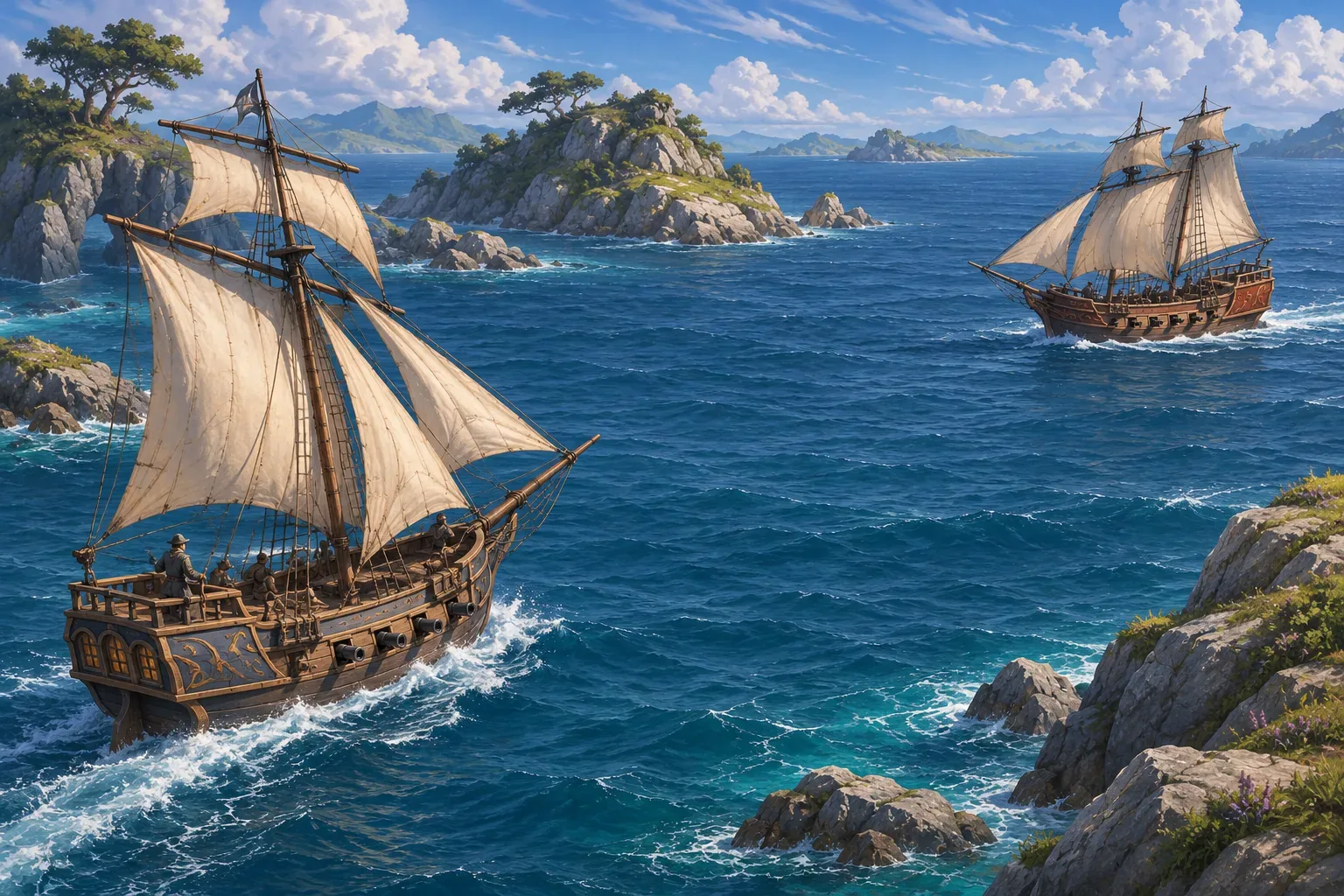
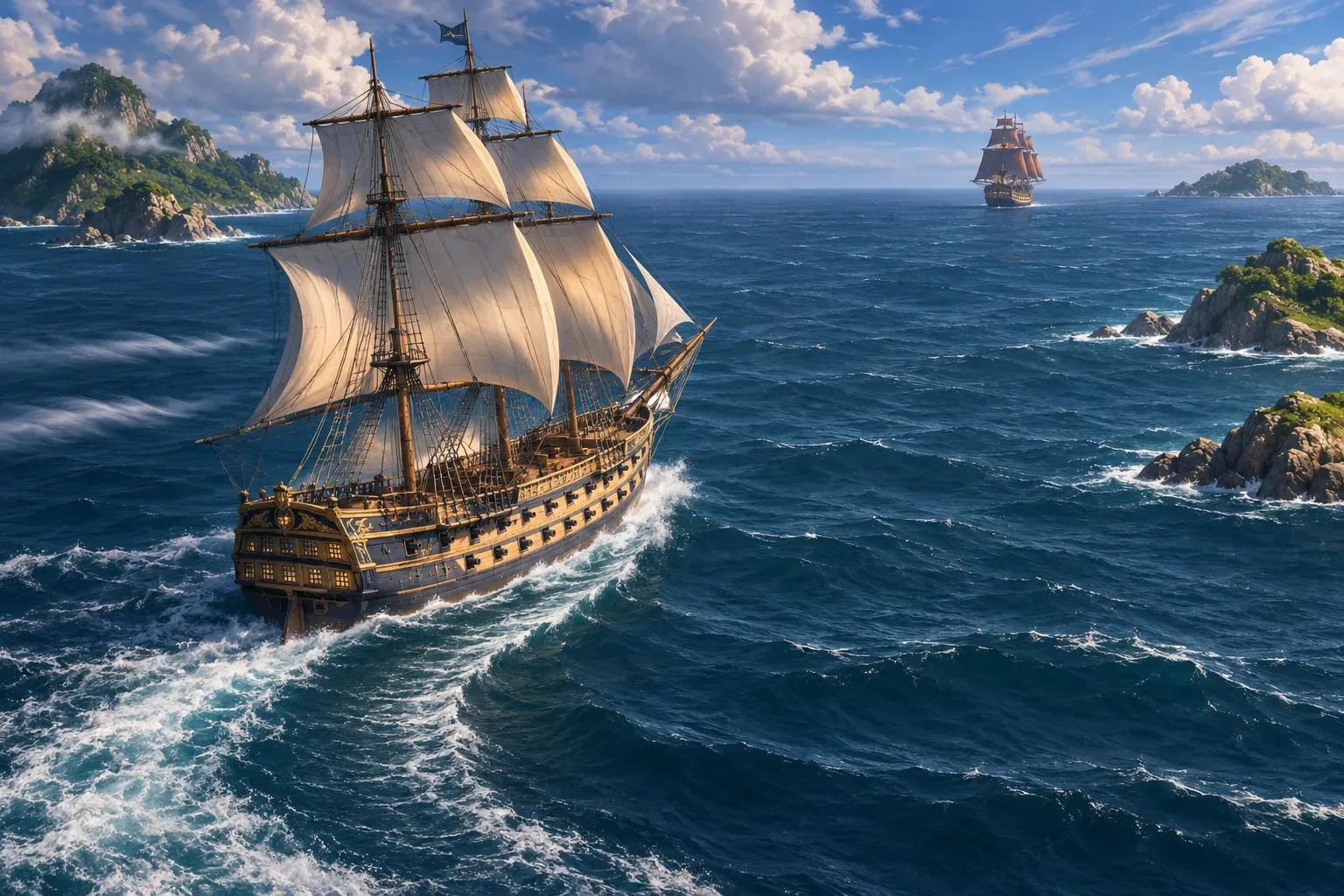
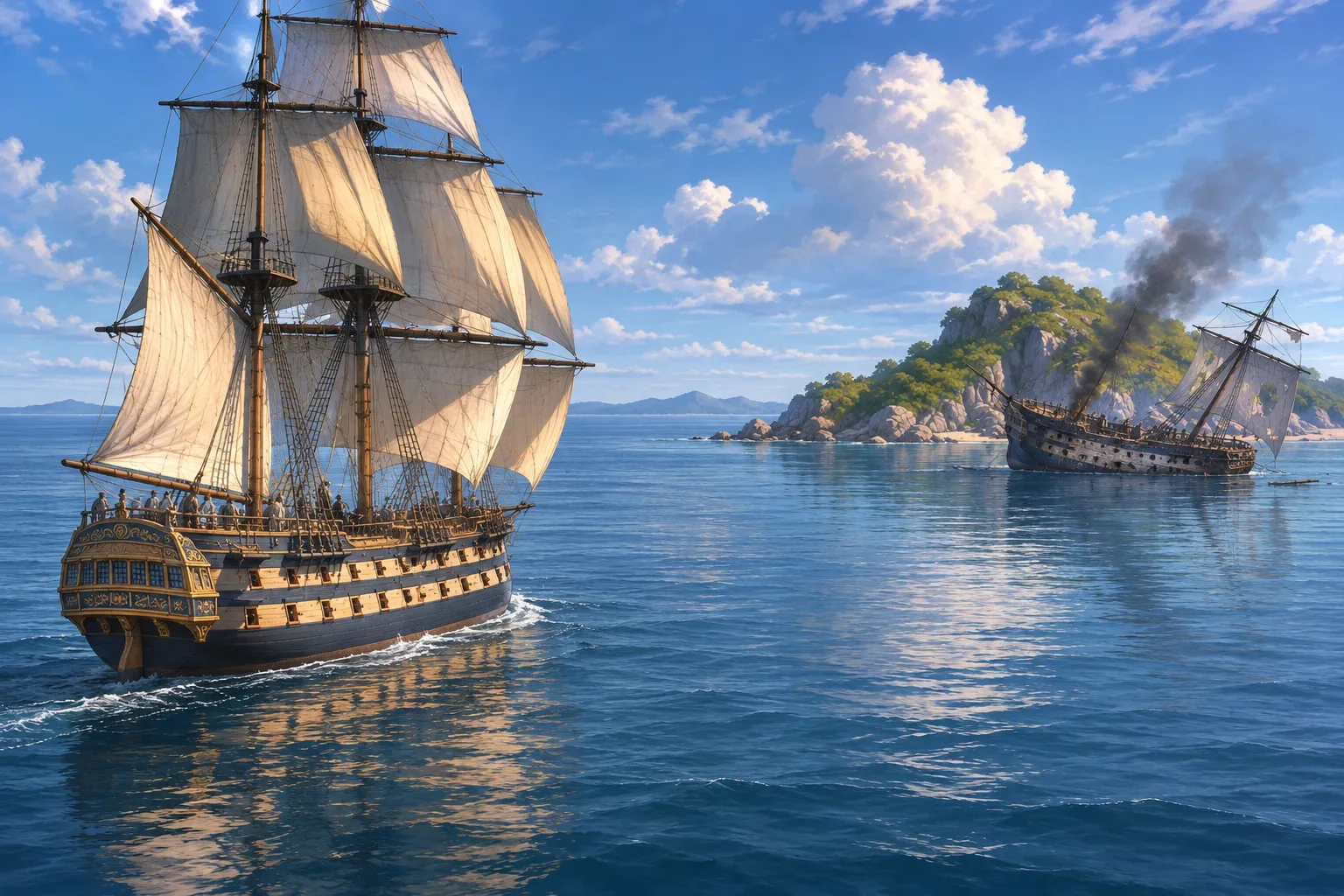
No real game run, browser test or measured result is available for this fictional example. The illustrations are original concept art and are not screenshots.
Frequently asked questions
What should a naval tactics prompt define?
Set wind, movement distance, facing, weapon arc or range, obstacles, enemy phase and hull rules.
How far does Windward Line sail with the wind?
It moves two cells east with the fixed east wind and one cell in other directions.
Can Fire pass through an island?
No. The ray stops at the first island before reaching a target behind it.
Were these naval prompts tested in a playable game?
No. Windward Line is fictional, and its turn sequence is a rules trace rather than observed gameplay.
When does the enemy counterattack?
After moving, if it shares a row or column with the player within three cells.