Define the Driftwake engagement
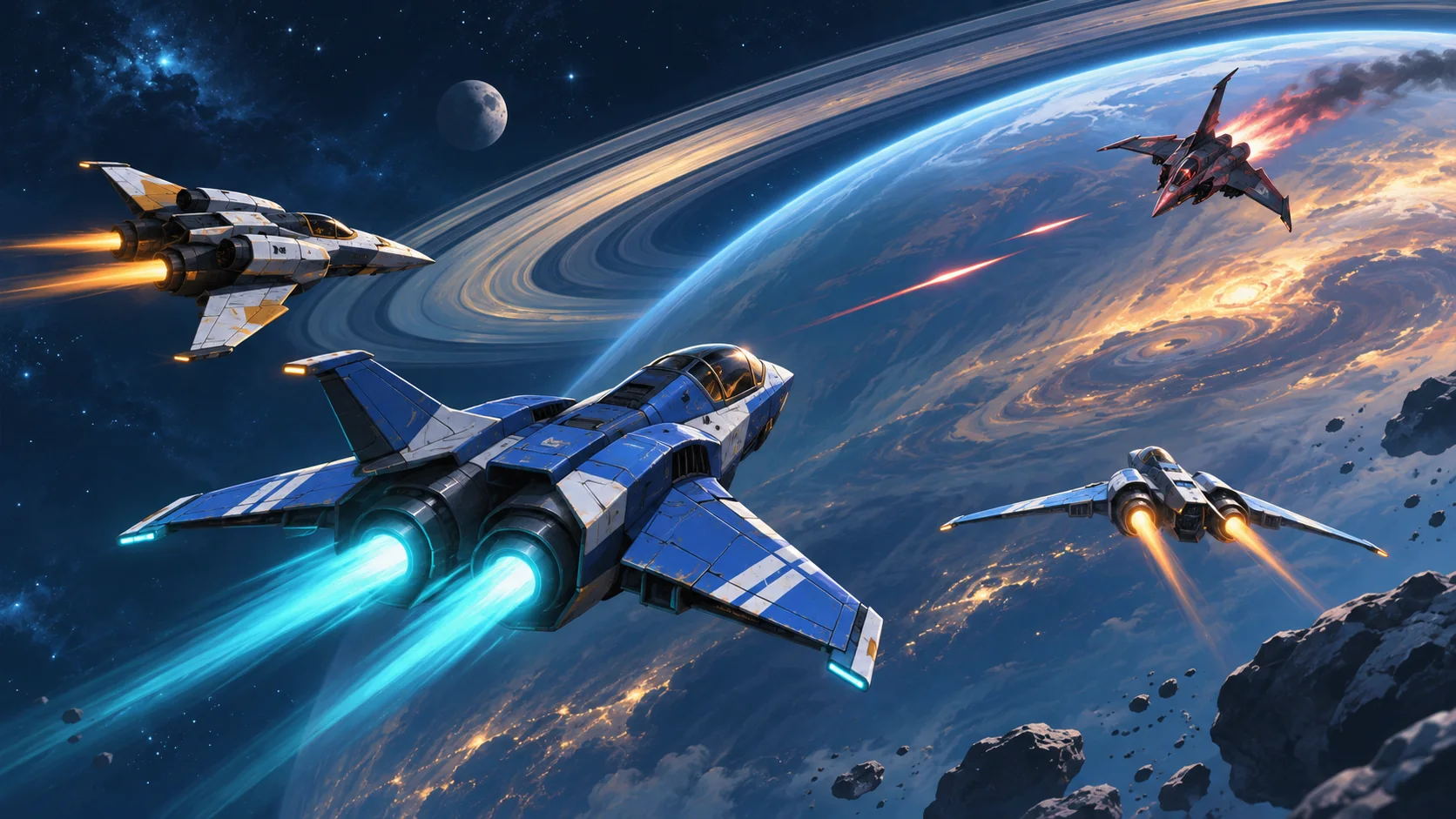
A space dogfight prompt should tell the prototype how ships face, how they move and what blocks a shot. Driftwake is a fictional 8-by-8 encounter with one player craft, one enemy and two asteroid cells. The player begins at (1,4), facing east with three shields; the enemy starts at (6,4) with two.
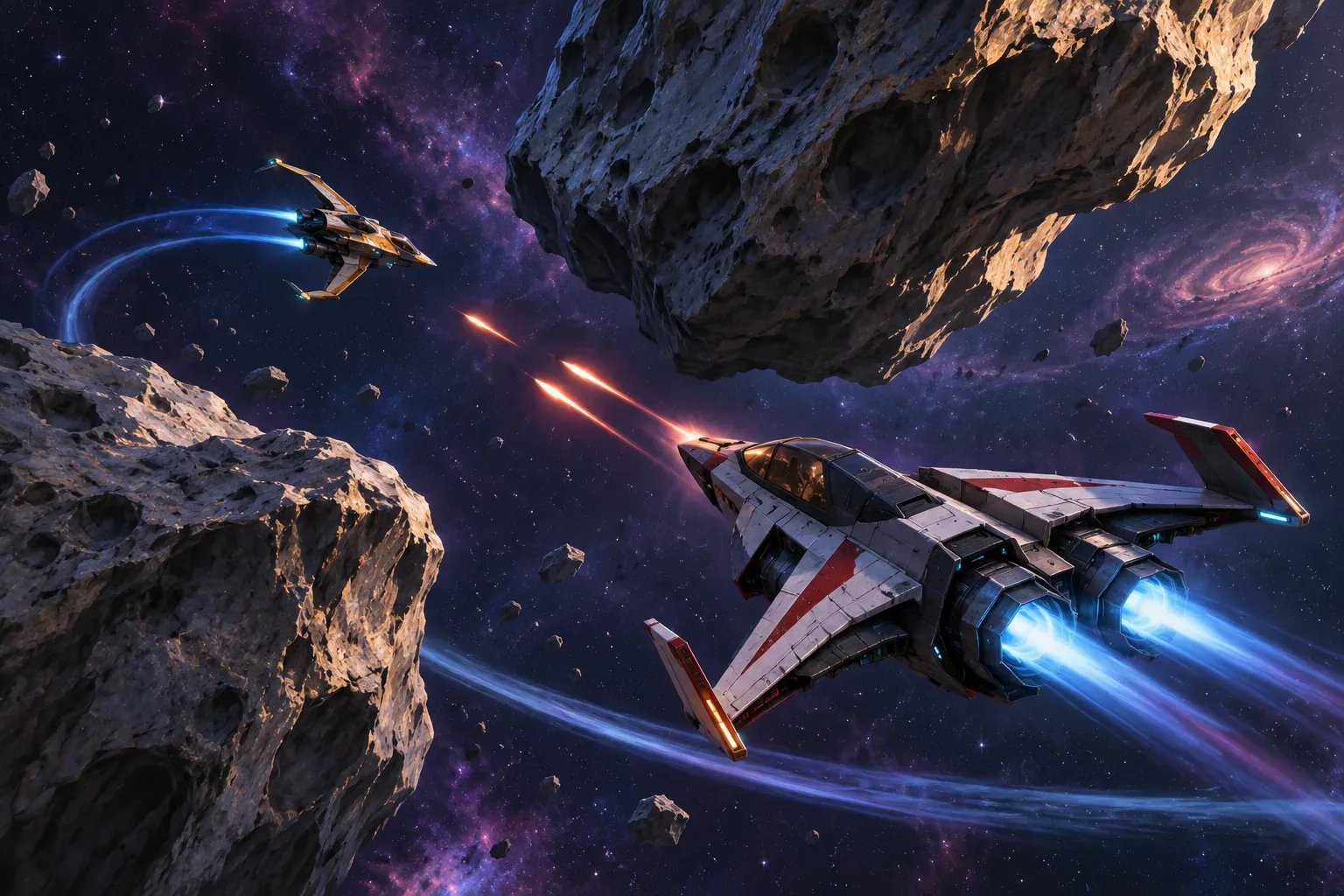
Each turn the player chooses Rotate, Thrust or Fire. Rotate changes facing 90 degrees clockwise. Thrust moves one cell in the current direction if the destination is open. Fire checks up to four cells ahead, stopping at the first asteroid; if the enemy is on the ray it loses one shield.
After the player action and any shot, the enemy moves one cell toward the player along the axis with the larger separation. If distances tie, it moves horizontally. After movement, it fires when it shares a row or column with the player within three cells. A hit removes one player shield.
Resolve facing, weapons and enemy movement
Resolve turn phases consistently: validate the player action; apply it; resolve a player shot; move the enemy; resolve an enemy shot; then check whether either ship has zero shields or the turn limit is reached. A blocked Thrust is rejected without moving. A Fire action still consumes the turn if an asteroid blocks its ray.
The player wins when the enemy reaches zero shields. The player loses at zero shields or after turn 12 without defeating the enemy. Restart returns both ships, facing, asteroid positions, shields and turn number to the initial state.
This first encounter does not include homing missiles, upgrades, fuel, multiple weapon types or stochastic AI. Keeping one shot and one chase rule makes a future action log easier to inspect.
Trace the example
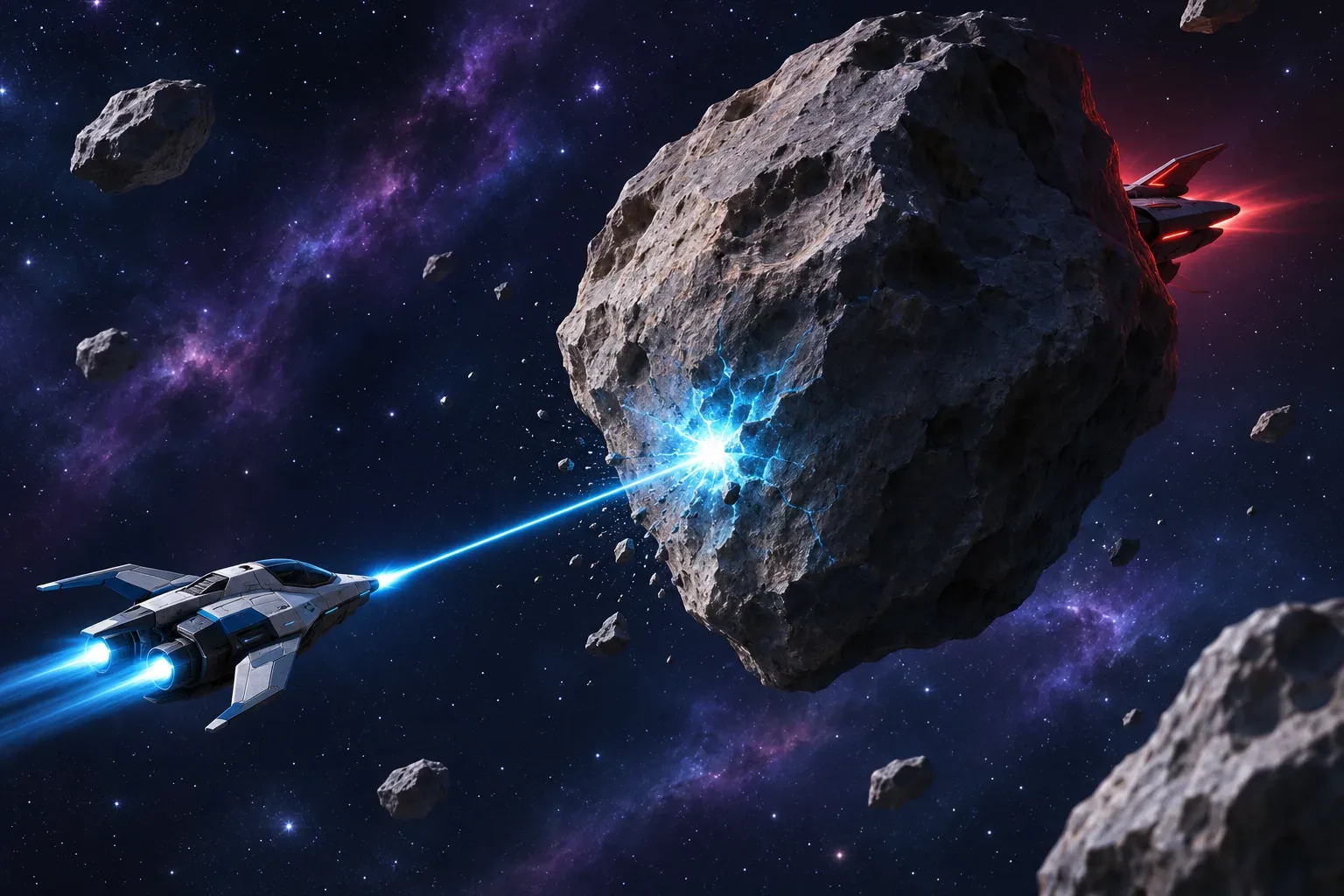
At the start, the asteroid at (4,4) blocks the direct eastward line from (1,4), so Fire cannot hit the enemy at (6,4). The player can rotate north and Thrust to (1,3); the enemy then moves one cell along its larger horizontal separation, from (6,4) to (5,4). No enemy shot occurs because they do not share a row or column.
A later aligned state can produce a valid shot: if the player faces east on row4 and the enemy is at (5,4), with no asteroid between them, Fire scans cells one through four and removes one enemy shield. The enemy then moves and may fire if its post-move position meets the line-and-range rule.
This is a fictional state trace, not an observed dogfight. A real build must log coordinates, facing, ray cells and enemy action order to verify shots and shield loss.
Write the six prompts
Use one prompt per design decision so later checks have a clear source of truth. These drafts describe Driftwake; they have not been run and do not represent a generated playable game.
Prompt 1: place ships and asteroid field
Create an 8×8 grid dogfight. Player starts (1,4), facing east, 3 shields; enemy starts (6,4), 2 shields. Place asteroids at (4,4) and (4,5). Limit match to 12 turns.Prompt 2: define ship controls and shot
Player chooses Rotate clockwise 90°, Thrust one open cell in facing, or Fire. Blocked Thrust changes nothing. Fire scans up to four cells, stops at the first asteroid, and removes one enemy shield if the enemy is on the ray.Prompt 3: move and fire the enemy
After player action and shot, move enemy one cell toward player along the axis with larger separation; ties choose horizontal; if that cell is blocked by an asteroid, it stays. A defeated enemy skips the enemy phase. Then a surviving enemy fires if same row or column within3, removing one player shield.Prompt 4: resolve outcomes
Resolve outcome after enemy phase. Player wins at enemy shields0; loses at player shields0 or after turn12. Restart resets ships, facing, asteroids, shields and counter.Prompt 5: show combat state
Display coordinates, facing, shield counts, ray path, asteroid block and turn phase after every action. Do not add other weapons or random movement.Prompt 6: prepare future checks
For future checks log action, positions, facing, ray, blocked cell, enemy move, shots, shields and turn. Check asteroid block, range edge, tie movement, hit, defeat, loss and reset. Do not report checks passed without a build.SEELE’s official page describes general plain-English prompting, a playable first version, browser testing and refinement; it does not verify Driftwake. See Free AI game maker for workflow context only.
Prepare future build checks
Record both ships' coordinates before and after a turn. Test a ray stopped by an asteroid, an unobstructed shot at four cells, enemy movement on tied distances and the post-move firing window. These are future checks, not passed tests. Record the before and after state so a later build can be compared with the specification.
| Future check | Expected rule | Evidence to capture |
|---|---|---|
| Facing and thrust | Rotate clockwise; move one open cell | Facing and coordinates |
| Shot ray | Scan up to four cells; asteroid stops it | Ray cells, target and blocker |
| Enemy move | Choose largest separation axis; horizontal tie | Distance and destination |
| Enemy fire | Same row/column within three after movement | Range and shield count |
| End/reset | Shield or turn limit ends match; restart restores state | Outcome and snapshot |
No real game run, browser test or measured result is available for this fictional example. The illustrations are original concept art and are not screenshots.
Frequently asked questions
What should a space dogfighting prompt define?
Specify facing, thrust, weapon range, line of sight, obstacle cover, enemy movement and shield outcomes.
Can Fire pass through an asteroid?
No. The ray stops at the first asteroid before reaching any target behind it.
How does the enemy choose a move?
It moves one cell along the axis with the larger separation; ties prioritize horizontal movement.
Were the Driftwake prompts tested in a playable game?
No. Driftwake is a fictional rules example, not an observed or tested dogfight.
What if the enemy’s chosen cell contains an asteroid?
It stays in place for that beat; the movement rule does not route around the obstacle.