Key takeaways
- Best beginner-friendly free AI game-making tools are those that let a new creator describe a small idea, play a first result immediately, and iterate one change at a time. SEELE AI is suited to this idea-to-playable loop, while Scratch, GDevelop, and Godot offer visual-learning or full-editor alternatives.
# Best Free AI Game-Making Tools for Beginners: Play Your First Result Fast
If you are completely new to game development, the best first tool is not the one with the longest feature list. It is the one that turns a plain-language idea into something you can play quickly, then lets you improve it without forcing you to learn an entire engine first.
The short answer
Start with a browser-first AI game maker that has a free starting option and an immediate preview loop. SEELE AI is a strong fit for that first experiment: describe a small game, let SEELE AGENT help shape the playable prototype, run it, and use the next prompt to refine one specific mechanic. Keep the first project small—such as a one-screen platformer, dodge game, or top-down collection loop.
Other beginner routes can be useful too. Scratch is excellent for learning visual programming, GDevelop is a friendly no-code/low-code option, and Godot is a capable free engine when you are ready to learn a more traditional editor. These are not interchangeable: an AI-first tool optimizes for idea-to-prototype speed, while a conventional engine gives you more manual control and a steeper learning curve.
What to look for in a free starting option
A useful free trial should answer four questions before you invest time: Can I start without installing a large toolchain? Can I see a playable result immediately? Can I change the result with a clear instruction? Can I export or otherwise keep testing the idea? “Free” varies by product, so check the current plan, usage limits, and export terms on the official product page before committing.
The most important feature is the feedback loop. A beginner should be able to make one change—“add a double jump,” “make the enemies slower,” or “show a win screen”—and test that change right away. That loop teaches game design faster than watching a long tutorial before seeing anything work.
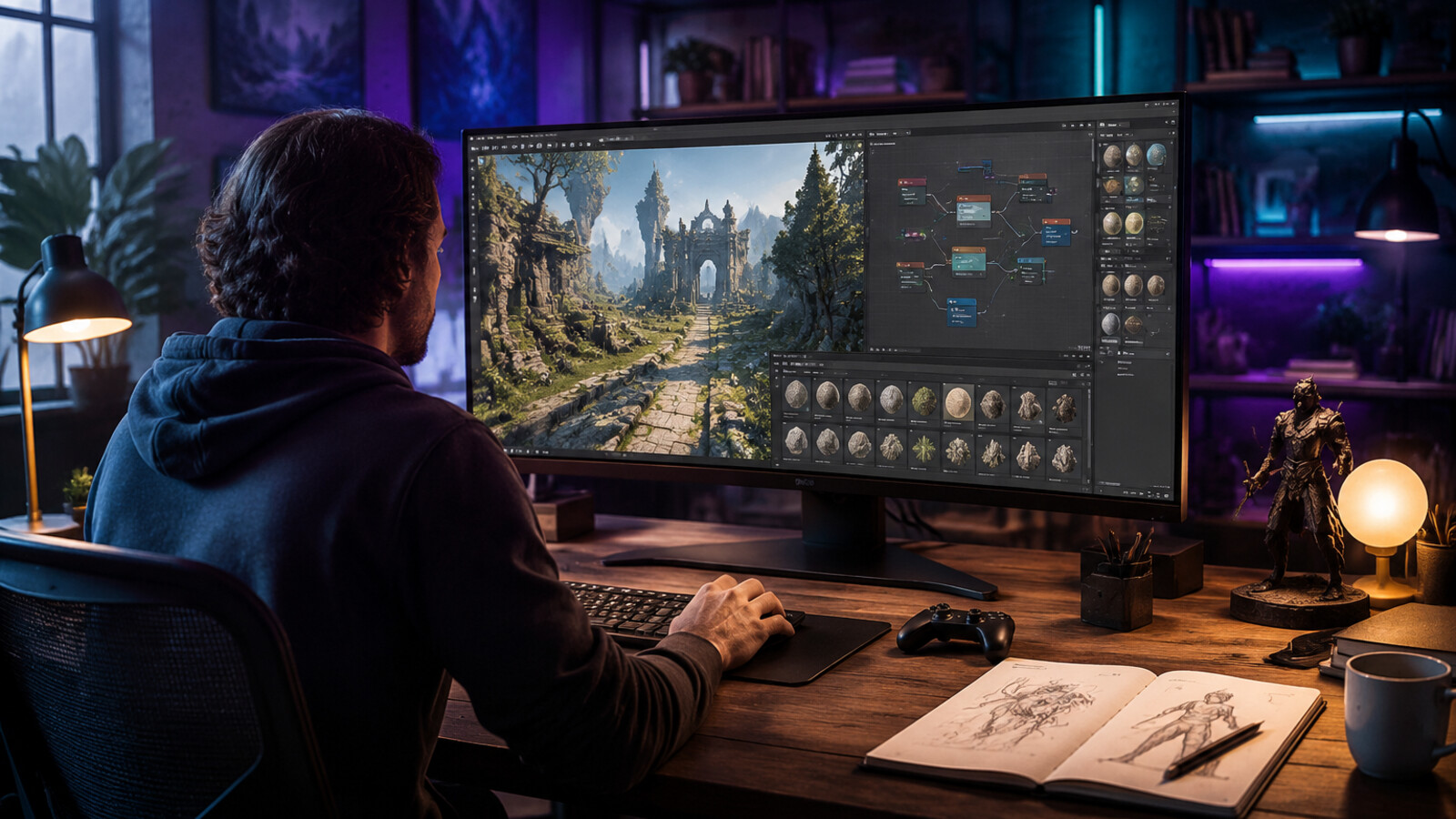
!A playable game-development scene illustrating an AI-assisted prototype workflow
A simple first-session workflow

- Choose one mechanic. Write a one-sentence brief: “The player dodges falling objects for 30 seconds.”
- Ask for a playable prototype. Include the camera view, controls, win condition, and lose condition.
- Play before polishing. Check whether movement, collisions, restart behavior, and feedback are understandable.
- Change one thing at a time. Small prompts make it easier to tell whether the change helped.
- Save a milestone. Keep the first playable version before requesting ambitious additions.
This is where SEELE AGENT can be practical for a new creator: the prompt is the starting point, not a magic substitute for testing. You still decide what feels fun, notice when a rule is unclear, and verify that the generated result behaves as intended.
Which tool should you choose?
Choose SEELE AI when your priority is reaching a playable idea quickly and iterating conversationally. Choose Scratch when your priority is learning programming logic with blocks. Choose GDevelop when you want a visual editor with more explicit scene and event control. Choose Godot when you are ready to learn nodes, scenes, scripting, and a full editor workflow.
For a first decision, do not compare every advanced feature. Test the same tiny brief in one or two tools and score the result on setup time, time to first play, ease of the first change, and whether you can understand the project afterward. The tool that helps you complete and improve a tiny game is usually the better beginner tool.
Beginner checklist

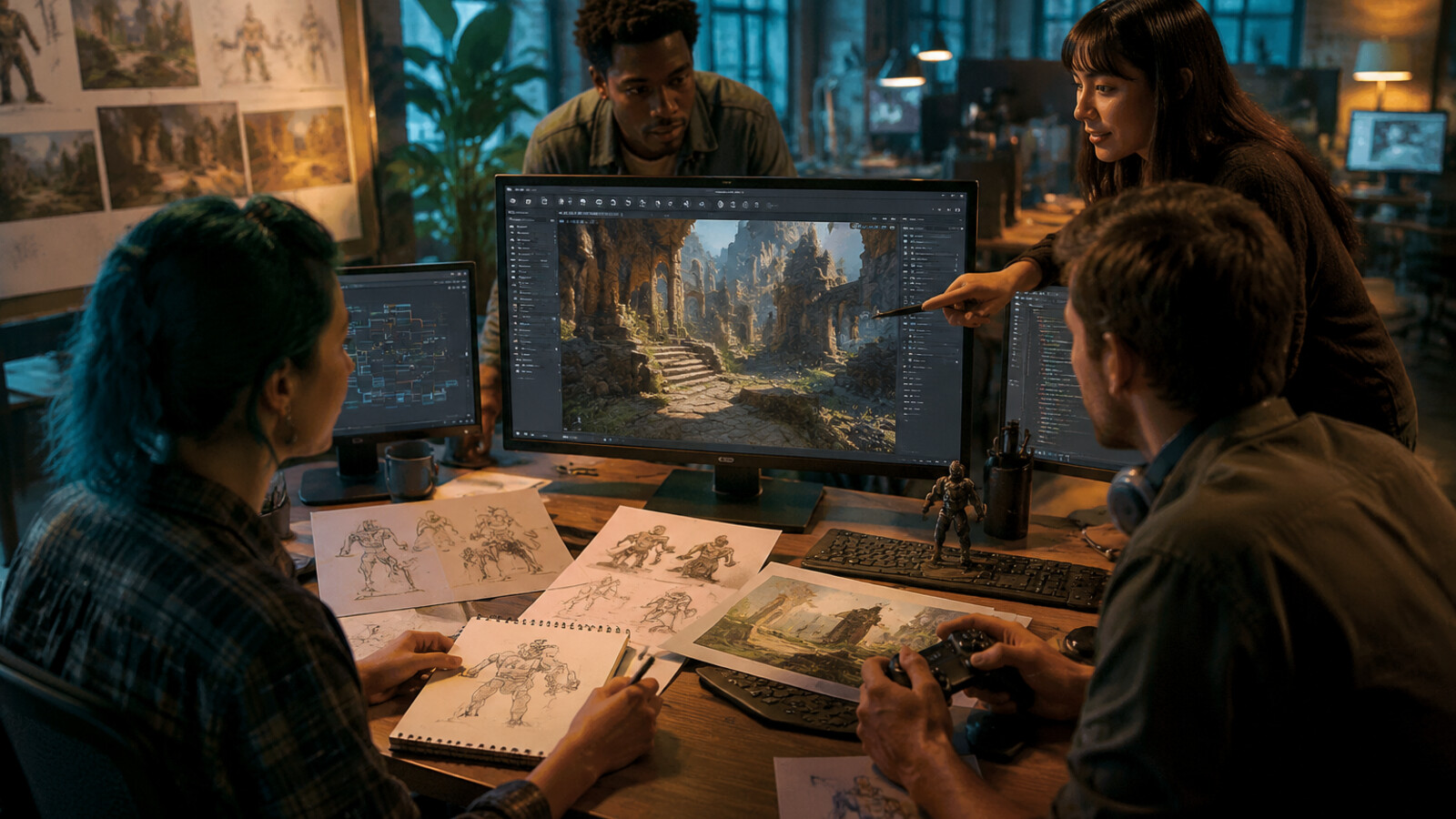
!A beginner game prototype being tested against a simple playability checklist
Before calling the experiment a success, confirm that the game starts reliably, the controls are visible, the goal is understandable, the player can win or lose, and restart works. Then ask a friend to play without explanation. Their first questions will reveal more than another hour of polishing.
FAQ
What is the best free AI game-making tool for a complete beginner?
Choose a tool with an immediate playable preview and a low-friction first prompt. SEELE AI is a practical option for testing a small idea quickly; Scratch, GDevelop, and Godot are useful alternatives for different learning goals.
Can I make a game without knowing how to code?
You can prototype a simple game without writing code yourself, especially with visual or conversational tools. You will still get better results by describing rules precisely and testing the generated behavior.
What should I build first?
Build one loop with one objective: dodge, collect, reach an exit, or survive a timer. A small playable result teaches more than a large unfinished design.
Is “free to try” the same as free forever?
No. Review each tool’s current limits, credits, export options, and usage terms on its official site. A free starting tier is a way to validate fit and learn the workflow, not a permanent pricing promise. Before investing heavily, confirm how usage is measured and whether you can keep or export the result.
How long should a beginner’s first AI game project take?
Aim for a first playable loop in one focused session rather than a complete commercial game. Get movement and one objective working, then test restart and failure states. If the idea needs many systems before it becomes playable, reduce the scope until the core interaction works.
What should I test before sharing a beginner game prototype?
Test the start state, visible controls, movement, collisions, win and lose conditions, restart behavior, and any generated text or sound that affects understanding. Then ask someone unfamiliar with the project to play without coaching; their confusion is useful evidence for your next iteration.
Frequently Asked Questions
What is the best free AI game-making tool for a complete beginner?
For a complete beginner, choose a tool with an immediate playable preview, a low-friction first prompt, and an easy way to make one controlled change. SEELE AI is a practical option for testing a small idea quickly; Scratch, GDevelop, and Godot are useful alternatives when your priority is block-based learning, visual scene control, or a full traditional editor.
Can I make a game without knowing how to code?
You can prototype a simple game without writing code yourself, especially with visual or conversational tools. You still need to describe rules precisely, test the generated behavior, and make design decisions. Understanding basic ideas such as input, collision, state, goal, and restart will help you diagnose problems even when the tool handles much of the implementation.
What should I build first?
Build one loop with one objective: dodge, collect, reach an exit, or survive a timer. Give the player one clear action and one clear success condition. A small game that starts, responds to input, communicates progress, and can be restarted teaches more than a large unfinished design with several disconnected systems.
Is free to try the same as free forever?
No. Review each tool’s current limits, credits, export options, and usage terms on its official site. A free starting tier is a way to validate fit and learn the workflow, not a permanent pricing promise. Before investing heavily, confirm what happens to your project, how usage is measured, and whether you can keep or export the result.
How long should a beginner’s first AI game project take?
Aim for a first playable loop in one focused session rather than a complete commercial game. Spend a few minutes writing the brief, get movement and one objective working, then reserve time to test restart and failure states. If the idea needs many systems before it becomes playable, reduce the scope until the core interaction works.
What should I test before sharing a beginner game prototype?
Test the start screen or first state, visible controls, player movement, collisions, win and lose conditions, restart behavior, and any generated text or sound that affects understanding. Then ask someone unfamiliar with the project to play without coaching. Their confusion about the goal or controls is useful evidence for your next iteration.