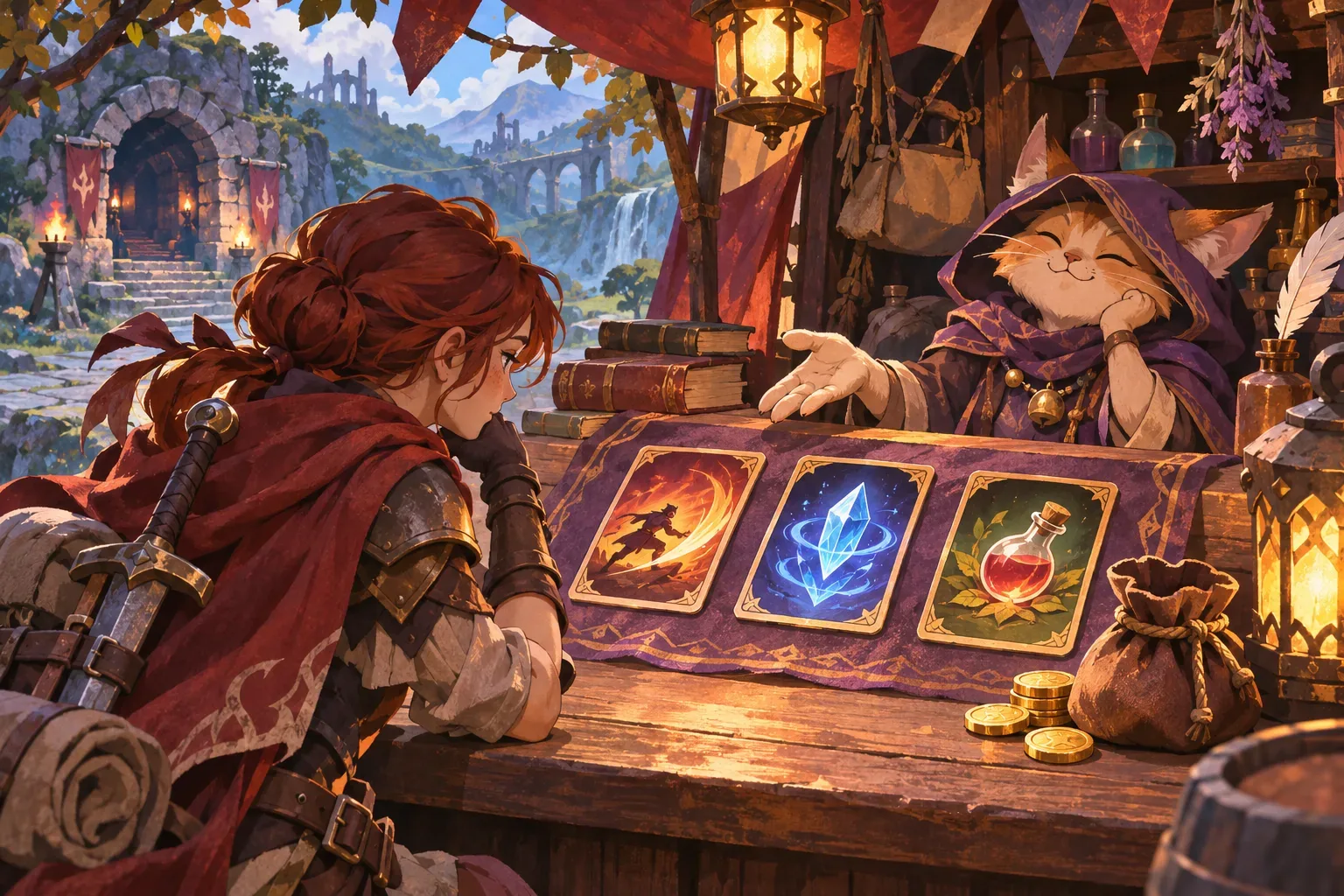
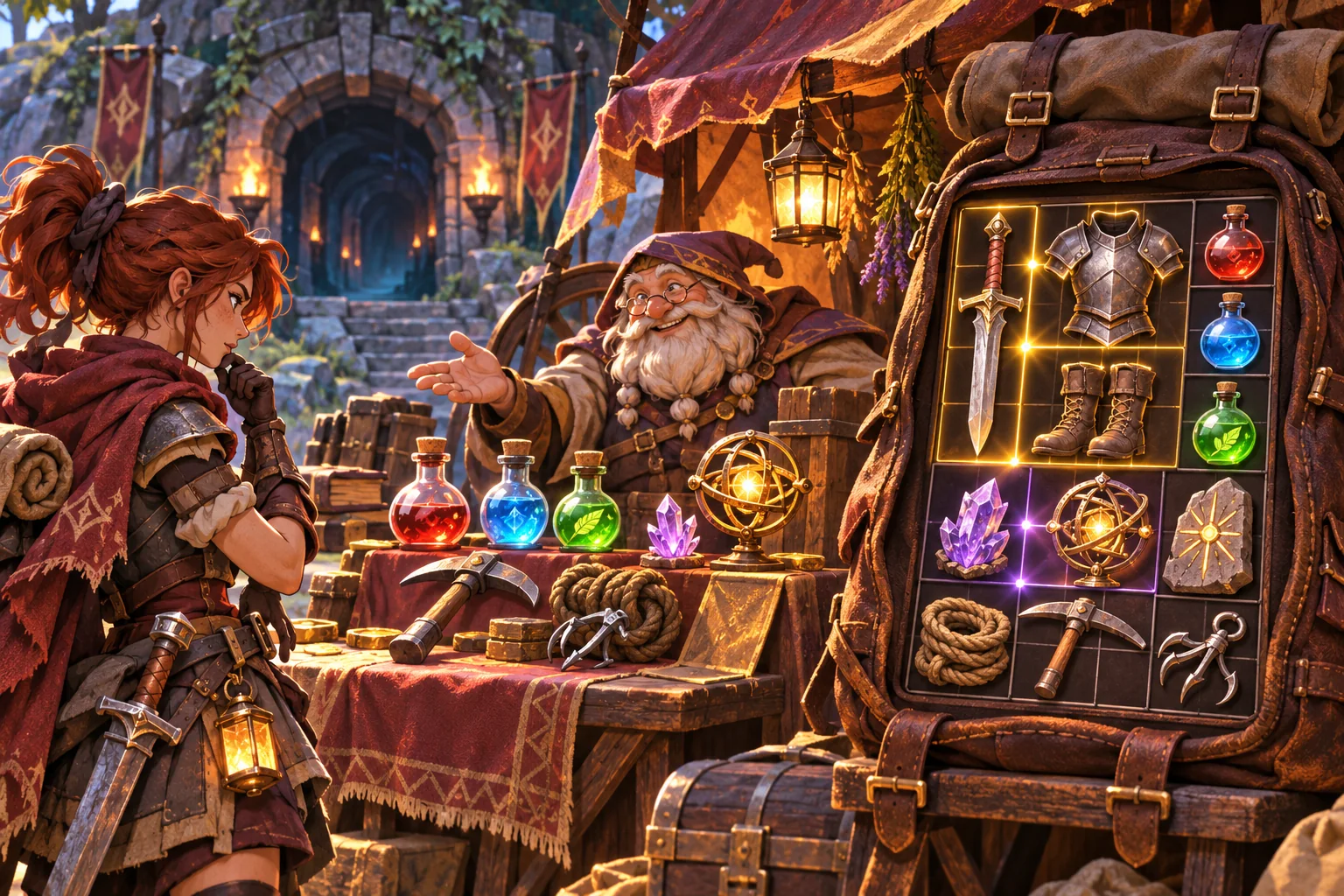
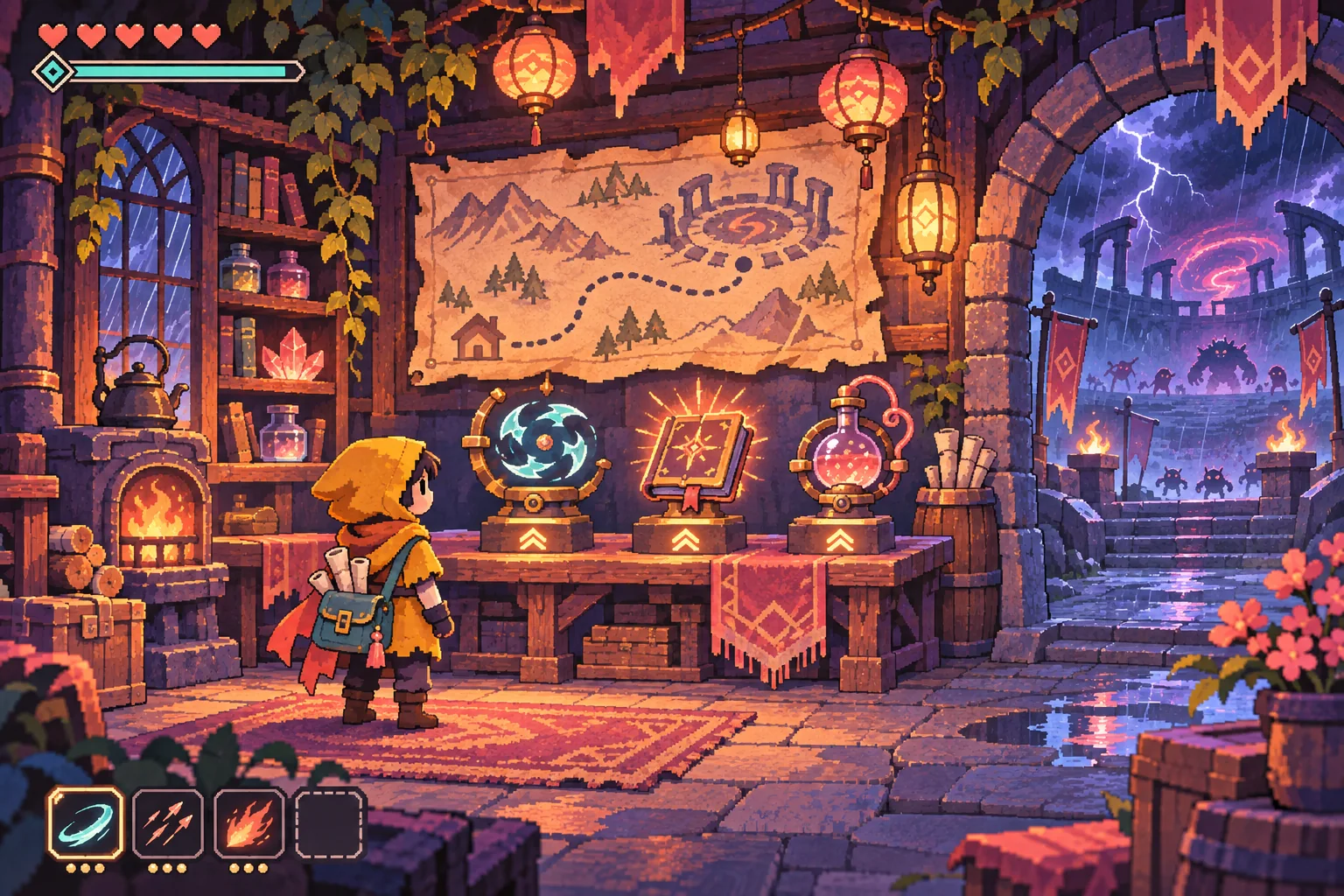
A between-round shop can make a card survival game feel more strategic, but only if players understand what each choice buys and how long it lasts. Separate random battle rewards, shop offers, purchase transactions, and persistent unlocks. Then build the next round from a clear snapshot so temporary effects do not leak forward.
This guide is for an existing card-based survival game. No deck, economy, round flow, or save file was inspected. Treat the sample currency and cards as design prompts, then verify the rules in the actual project.
Make the shop a decision point
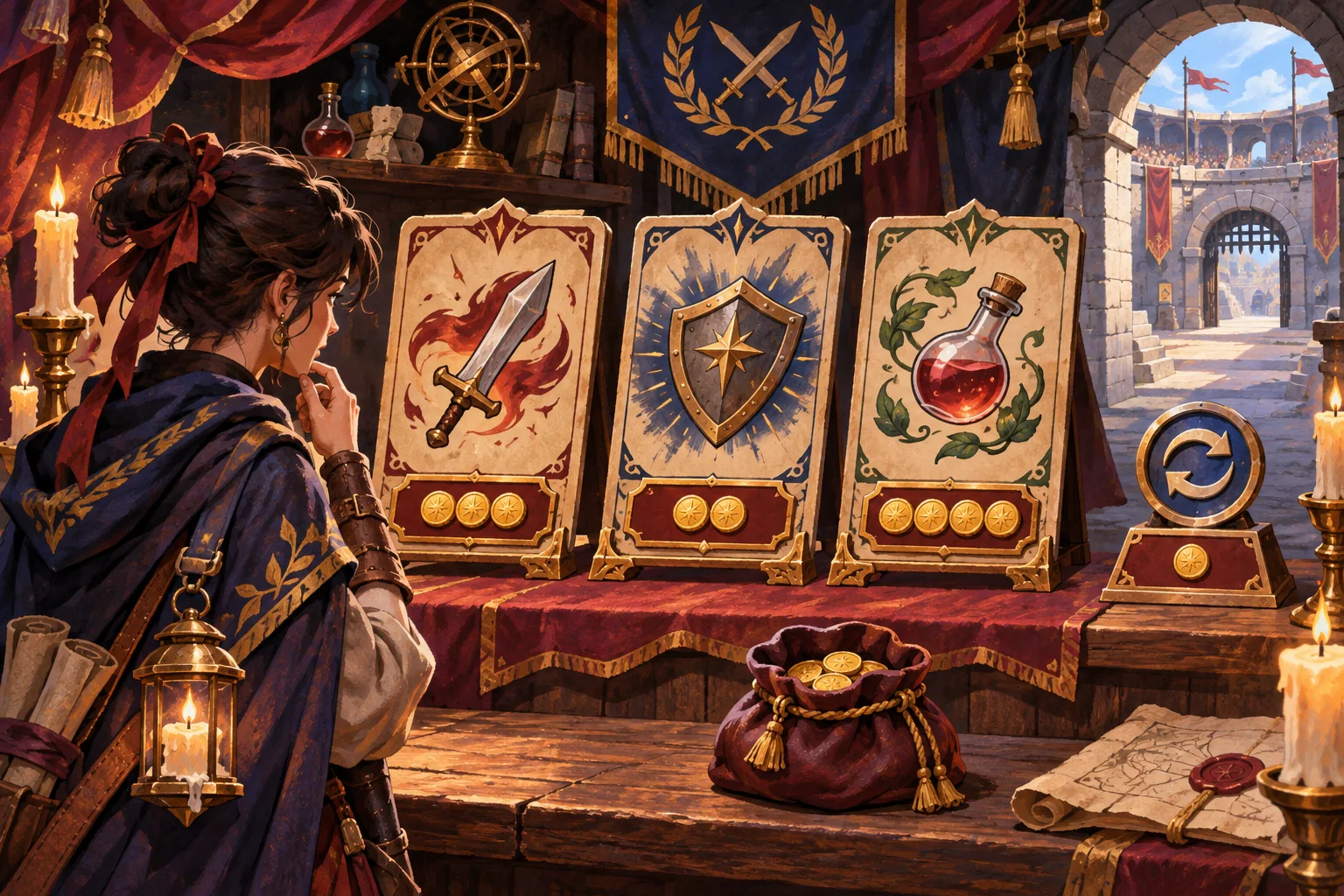
When a round ends, the shop should help answer: what should I change before the next one? A player might buy a card, remove a weak card, reroll an offer, or save currency for a later round. The screen should make the cost, effect, and lifetime of each choice legible before purchase. Keep the offer set small enough to compare without obscuring the next step.
| Choice | Possible purpose | Lifetime to disclose |
|---|---|---|
| Buy a card | Change the next round's deck | One round, current run, or profile? |
| Remove or transform | Improve deck consistency | Does the deck change persist? |
| Reroll | Trade currency for new options | Does the new offer set survive reload? |
| Save currency | Keep flexibility for later | Does unspent balance carry over? |
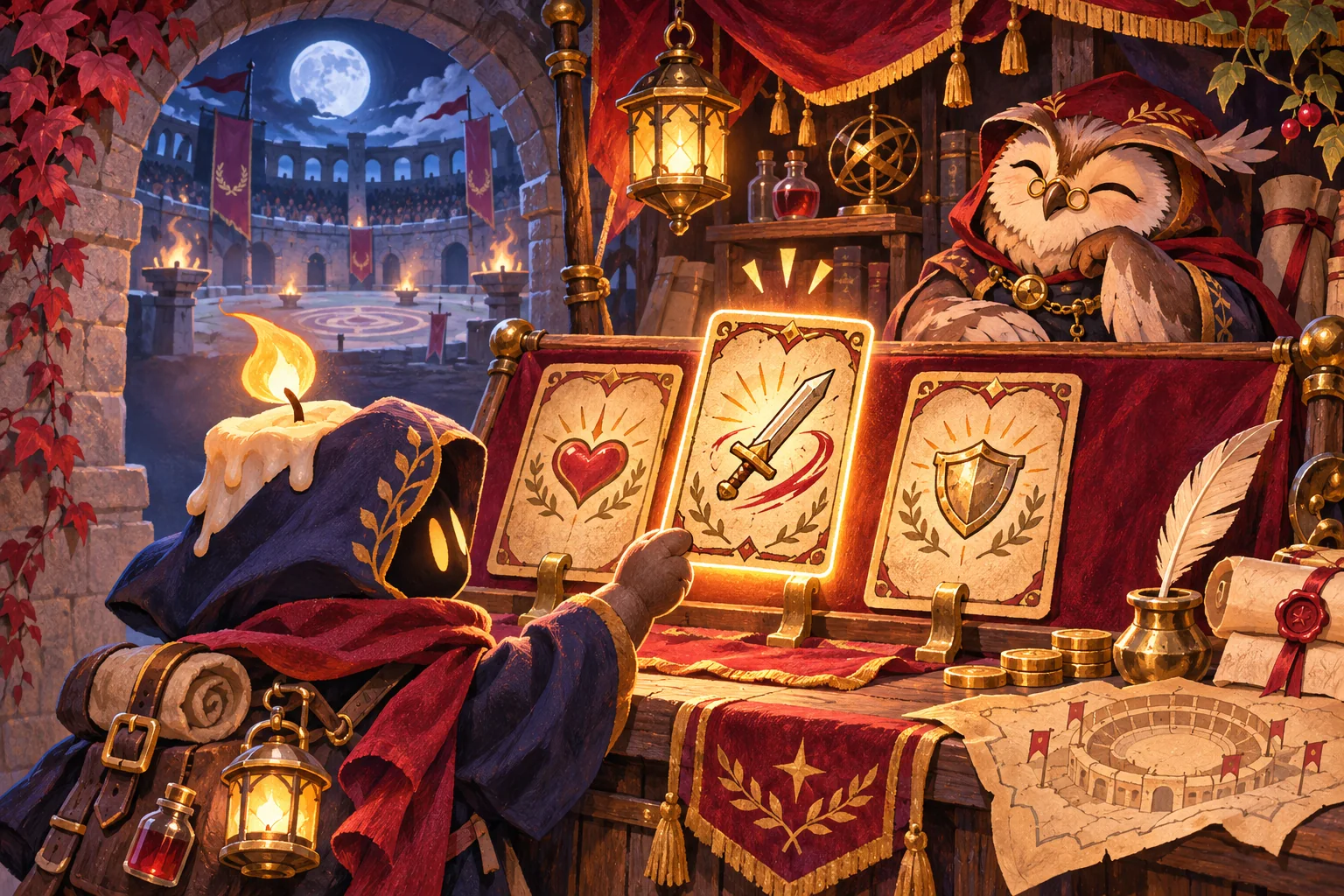
In the fictional candle-keeper example, a purchased shield card lasts for the next round, while a discovered recipe remains unlocked for the run. These rules are invented. A real game may choose different lifetimes; write them down in the offer data and communicate them in the shop interface.
Separate offer generation from purchase
Generate an offer set from a known input: current run state, eligible card pool, round, and any existing rarity or unlock rules. Save enough information to reproduce or validate that set if the player can leave and reopen the shop. Otherwise, returning to the screen may silently reroll offers or change prices.
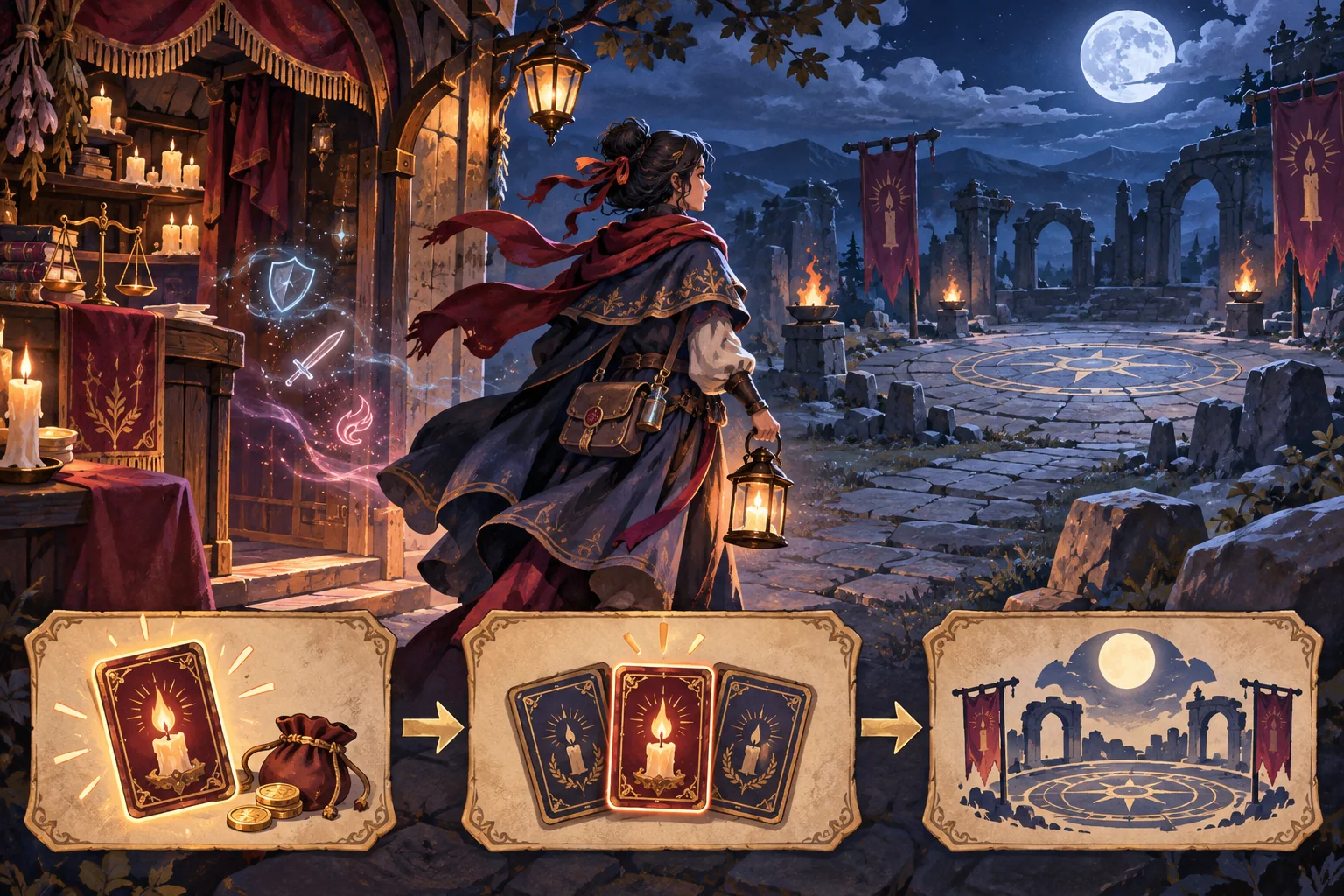
When a player buys, validate the offer and available currency, apply the cost, then apply the card effect as one logical transaction. Give the purchase a stable offer or transaction ID so reopening the screen cannot apply it twice. Avoid a flow where the currency is deducted but the card fails to enter the deck, or the card is granted without the cost being recorded.
| Transition | State to update | Failure to prevent |
|---|---|---|
| Generate offers | Current offer IDs and costs | Offers change unexpectedly on re-entry |
| Purchase | Balance and card destination | Cost and effect diverge |
| Reroll | Reroll cost and new offers | Repeated action avoids the cost |
| Start round | Snapshot of deck and run state | Temporary shop state leaks into battle |
Keep the existing progression system as the source of truth. Trace how the game already handles battle drops, deck edits, currency, and round starts. A second shop inventory or balance field can disagree with the combat system and create hard-to-reproduce state.
Set lifetimes before adding persistence
Label each offer effect as round-only, run-long, or profile-persistent. A temporary shield can disappear at round end. A card unlocked for a run may remain available until death or restart. A profile-level card pool may survive sessions. Make those categories explicit and reuse the project’s current reset flow.
For a Godot project, the official saving tutorial shows an example of identifying data that should persist and serializing relevant fields. That does not decide this game's card lifetimes or prove a shop implementation. Follow the existing save model and confirm the current engine version and target platform before adding fields.
Use a copied save to think through old data. If the new shop fields are absent, should the player receive the old balance, an empty offer state, or a one-time conversion? Specify defaults and schema version. Keep a recoverable source copy until the migration passes in the actual project.
Ask AI to trace the current loop first
Provide the files or project areas that own round completion, rewards, currency, deck editing, and save state. Ask AI to map those responsibilities before proposing code. Bound the change: preserve combat rules, deck draw order, existing card IDs, round pacing, and restart behavior. Request changed files, transaction assumptions, migration defaults, tests, and rollback steps.
Inspect the existing card survival round, reward, currency, deck, and save flow before editing. Add a small between-round shop that uses the current progression owner. Preserve battle rewards, draw rules, card IDs, and restart behavior. Make each purchase apply cost and effect once. First list files, state transitions, old-save defaults, edge cases, and rollback steps. Do not claim the shop passes until tested in this project.
SEELE’s current catalog describes creating a game from an idea and exploring playable game categories. That can help sketch a separate card survival concept or shop direction. It does not establish that SEELE modifies an existing repository or preserves player saves.
Test the whole round transition
Test a normal purchase and the paths likely to interrupt it: close the screen, reload, press back, or re-enter the same result. Then check the next round and the intended reset. The illustration below shows an invented transition, not an observed game result.
| Test | Action | Verify |
|---|---|---|
| Insufficient balance | Choose an offer that costs more than available | No card or partial cost is applied |
| Purchase | Buy one offer and reopen the shop | Cost and effect apply once |
| Reroll | Reroll, then reload the shop | Offer set and cost follow the chosen rule |
| Round start | Begin the next battle | Purchased state transfers; temporary state resets |
| Restart/death | End the run using supported path | Run and profile unlocks reset or persist as designed |
| Older save | Load a duplicate from before the shop | Defaults and migration preserve a playable run |
Record build, run ID, round, offer ID, currency before and after, and observed card destination. If the expected result fails, locate the broken transition—offer generation, purchase, persistence, or round initialization—instead of broadly rewriting the economy.
Frequently asked questions
What should a between-round shop do in a card survival game?
Present a small set of choices that turn the last round into a decision about the next one. Show cost, effect, and whether a card is temporary or permanent. Then start the next round from an explicit state snapshot rather than carrying every previous effect forward.
How many offers should a survival shop show?
Choose the smallest offer set that creates a meaningful decision for the current screen and economy. More options are not automatically better if players cannot compare them quickly. Test offer variety and reroll rules with the actual deck and round pacing.
Should bought cards stay in the deck forever?
That depends on the run design. A purchased card may last one round, one run, or across sessions; label that lifetime and store it with the matching state owner. Keep shop purchases separate from random battle rewards so duplicate grants and reset behavior are easy to inspect.
How can I prevent the shop from granting duplicate purchases?
Give a purchase a stable offer or transaction identity and apply its cost and effect as one validated operation. Reopening the shop should not apply the same transaction again. Test interruption, reload, and back-button paths with a copied save before changing the live progression system.
What should I test after adding a between-round shop?
Test insufficient currency, one purchase, reroll, leaving and reopening, round start, death, restart, and an older save. Record build, run ID, round, offer ID, and observed state. A mock shop screen can explain the choices but cannot prove the economy or save behavior works.
Keep the offer and the next round connected
A strong shop makes its tradeoffs clear, applies each purchase once, and starts the next round from the intended state. Define lifetimes before adding save fields, keep one progression owner, and verify reload and restart behavior with copied saves. That gives the shop room to grow without muddying the survival loop.
To explore a separate playable card survival idea, try SEELE AI Game Maker. It is a concept tool, not an existing-project editor.