Place the shop between battle reward and the next encounter
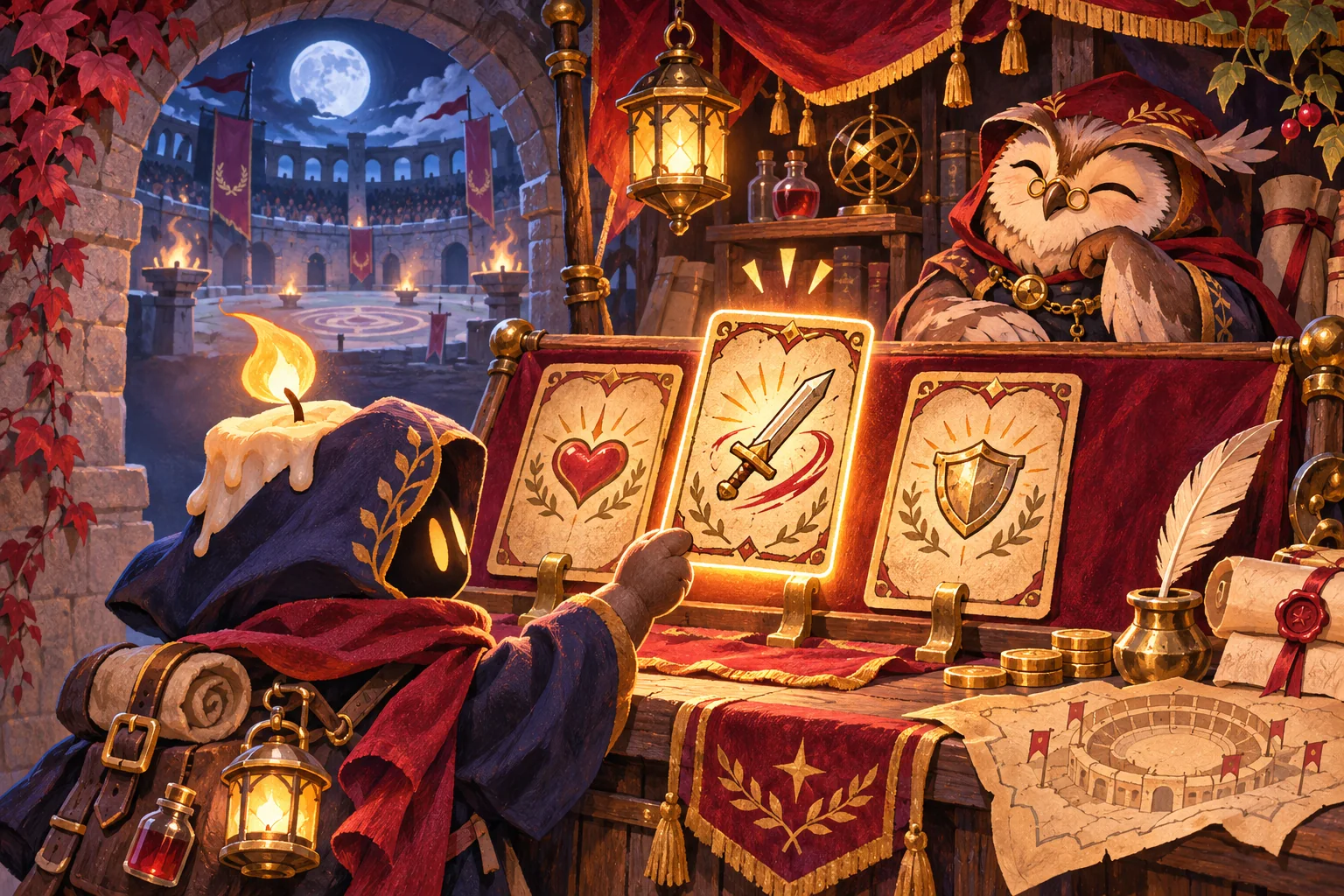
A between-round shop can add a useful decision without turning a deckbuilder run into a second game. Start by fixing where it fits in the existing loop. The fictional Cinder Index deckbuilder has three battles per run. A cleared battle grants five coins, then opens one shop before the next battle. A failed battle ends the run without a shop. This example is a design model, not an implemented feature.
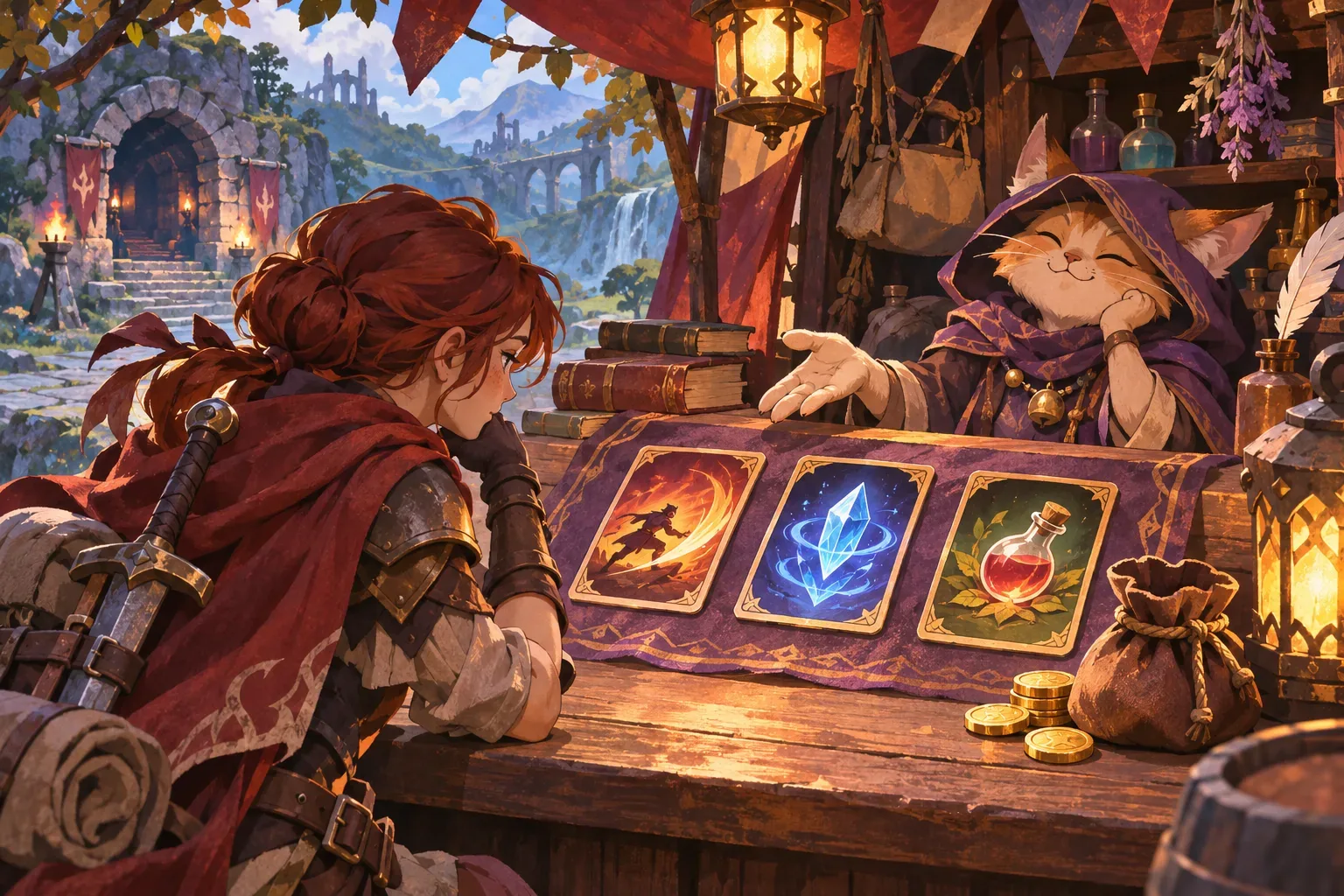
The shop offers three cards at fixed prices of four, five and six coins. The player may buy at most one card or skip. There are no rerolls, selling, debt or permanent unlocks in this first version. A purchase adds the card to the run draw pile, not the player's current hand. This avoids changing combat state while the player is making a between-round decision.
Show the battle reward before rendering the shop. The available coin count must include the five-coin reward for the round just cleared. Display each card's price and whether it can be bought, and make skip an explicit action that costs nothing. Once the player buys or skips, close that shop and advance to the next battle setup.
Keep the offer, purchase and run deck consistent
Give each shop a stable ID based on the run and cleared round. Generate its three-card offer once, save the offer and prices with the run, and reuse them if the player reloads before deciding. This prevents a reload from rerolling the choices. Reject a second buy event for the same shop ID.
When the player buys a card, validate that the shop is open, the offer contains that card, no purchase has already been made, and the run coin balance covers the price. Then subtract the price and add the card to the run draw pile as one transaction. If any condition fails, keep both balance and deck unchanged and show a clear message.
At run end, discard run coins, offer state and all acquired cards. The player's collection or permanent unlocks remain outside this feature. Keep the first implementation focused on one shop per cleared battle, three stable offers and one purchase-or-skip decision. Add rerolls or multiple buys only after this loop is clear.
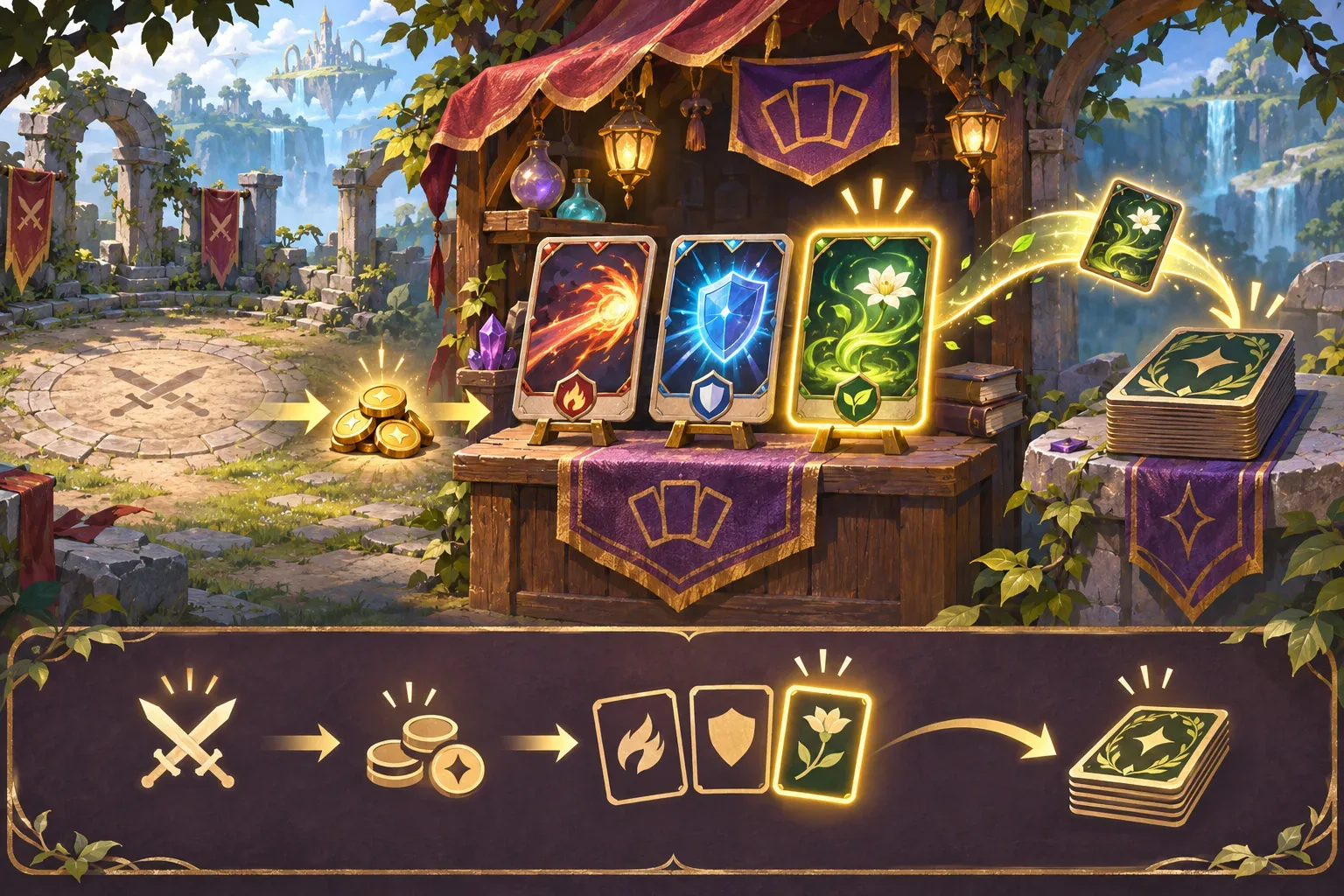
Trace the example
Cinder Index starts with ten coins. After clearing battle one, the reward phase adds five, leaving fifteen. The stable shop displays three offers priced at four, five and six. The player buys the five-coin card, leaving ten; the card enters the run draw pile and does not appear in the current hand.
The player proceeds to battle two. If that battle is cleared, five more coins are granted and a new shop ID produces the next offer. Reloading before the first shop decision would show the original three cards and prices, not generate a fresh set.
At run end, remaining coins, shop offers and acquired cards are removed from the temporary run state. This is a fictional sequence; no shop implementation, battle run, reload behavior or balance test is available for Cinder Index.
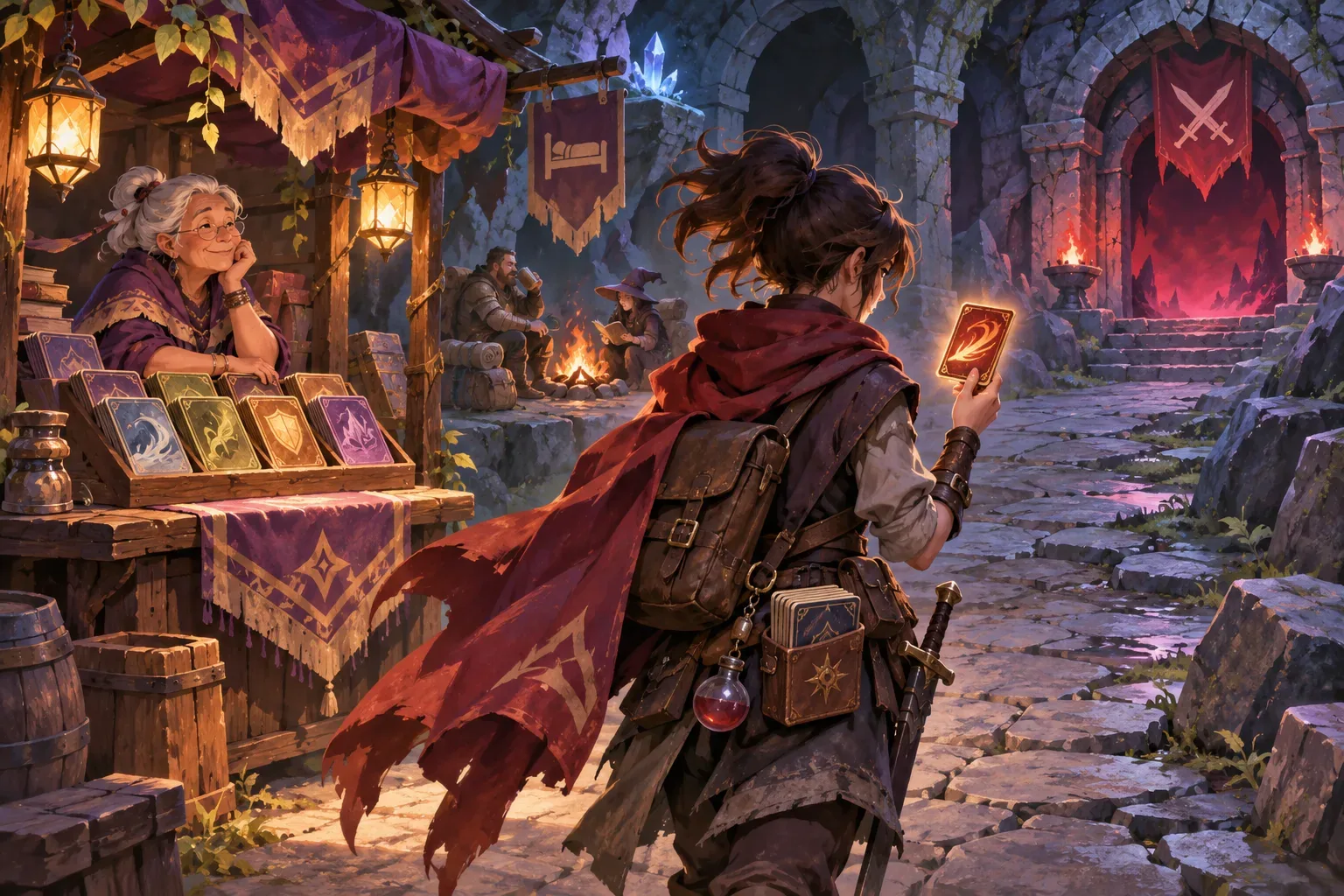
Write the six prompts
Use one prompt per design decision so later checks have a clear source of truth. These drafts describe Cinder Index; they have not been run and do not represent a generated playable game.
Prompt 1: inspect battle and deck flow
Inspect the supplied deckbuilder read-only. Locate battle-clear rewards, currency, card definitions, run draw pile, hand, between-round flow, run save and end-run reset. Cite paths and map the current sequence.Prompt 2: place shop in round order
Specify one shop after each cleared battle: apply five-coin reward first, show three offers priced 4/5/6, permit one purchase or skip, and do not open after a failed battle. Identify where this fits the existing flow.Prompt 3: keep offers stable across reload
Generate and persist three offers once per run-and-round shop ID. Ensure reload before decision shows the same cards and prices; do not add rerolls or unrelated economy changes.Prompt 4: validate one run-only purchase
Implement purchase as one validated transaction: shop open, offered card, no prior purchase and sufficient coins; subtract price and add card to run draw pile, not hand. On failure, leave both states unchanged.Prompt 5: clear temporary shop state at run end
On run end, clear run coins, shop state and acquired cards while preserving unrelated permanent profile data. Show the reset boundary and exact diff.Prompt 6: prepare shop boundary checks
Prepare future checks for reward ordering, price affordability, one purchase, skip, stable reload offer, draw-pile placement, failed battle and run-end reset. Do not claim a build or balance test without running it.SEELE’s official page describes general plain-English prompting, a playable first version, browser testing and refinement; it does not verify Cinder Index. See Free AI game maker for workflow context only.
Prepare future build checks
Reward timing, offer stability and run-only deck changes define this shop. These are future checks for a real build, not passed results. These are future checks, not passed tests. Record the before and after state so a later build can be compared with the specification.
| Future check | Expected rule | Evidence to capture |
|---|---|---|
| Reward order | Five coins arrive before the shop opens after a clear | Balance at battle clear and shop entry |
| Offer stability | Three cards/prices remain fixed for a shop ID across reload | Saved offer and reloaded offer |
| Purchase | At most one offered card is bought for its price into draw pile | Coins, purchase marker and draw pile |
| Skip/failure | Skip costs nothing; failed battle opens no shop | Transition reason and balance |
| Run reset | Coins, shop state and acquired cards clear at run end | Run state before/after reset |
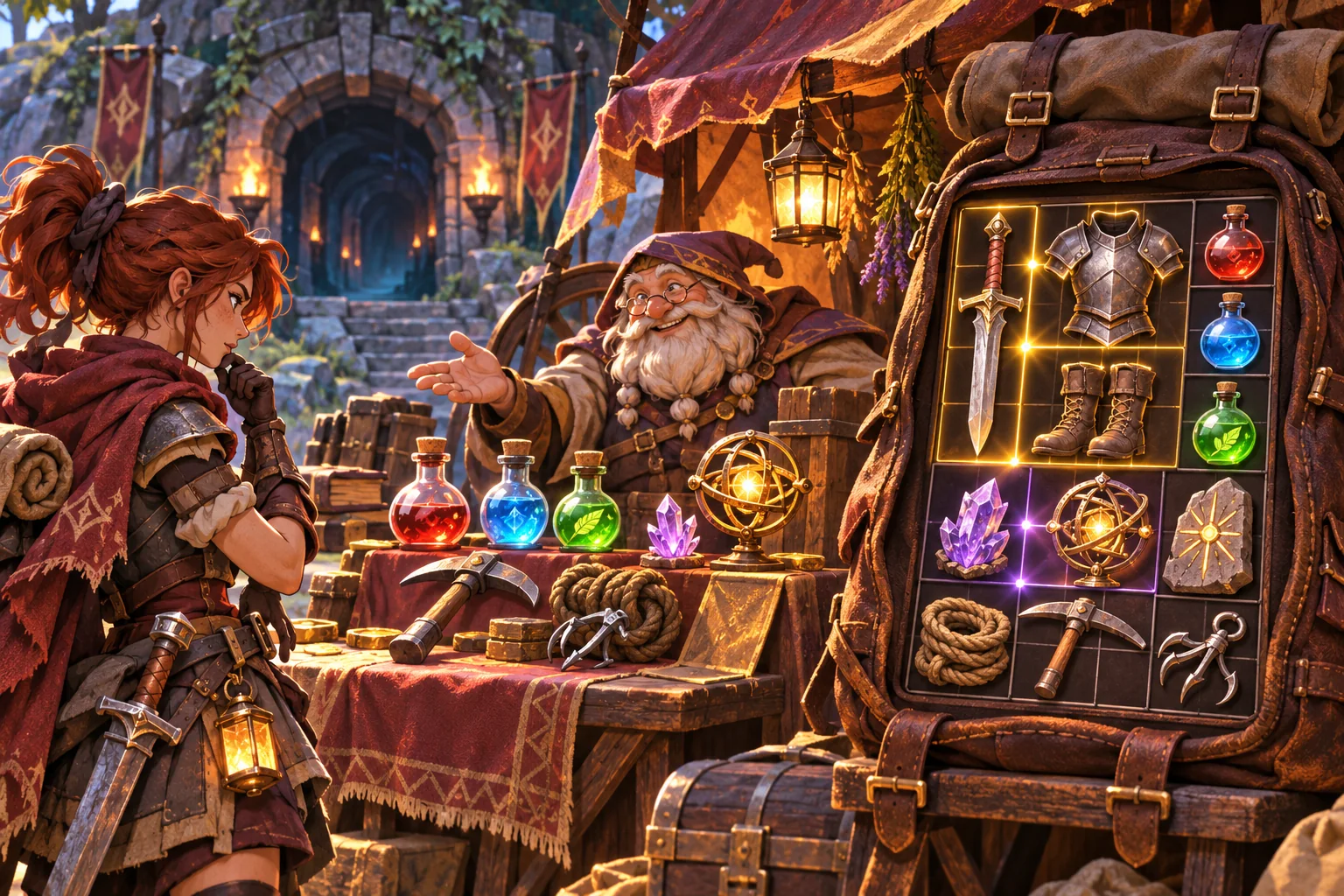
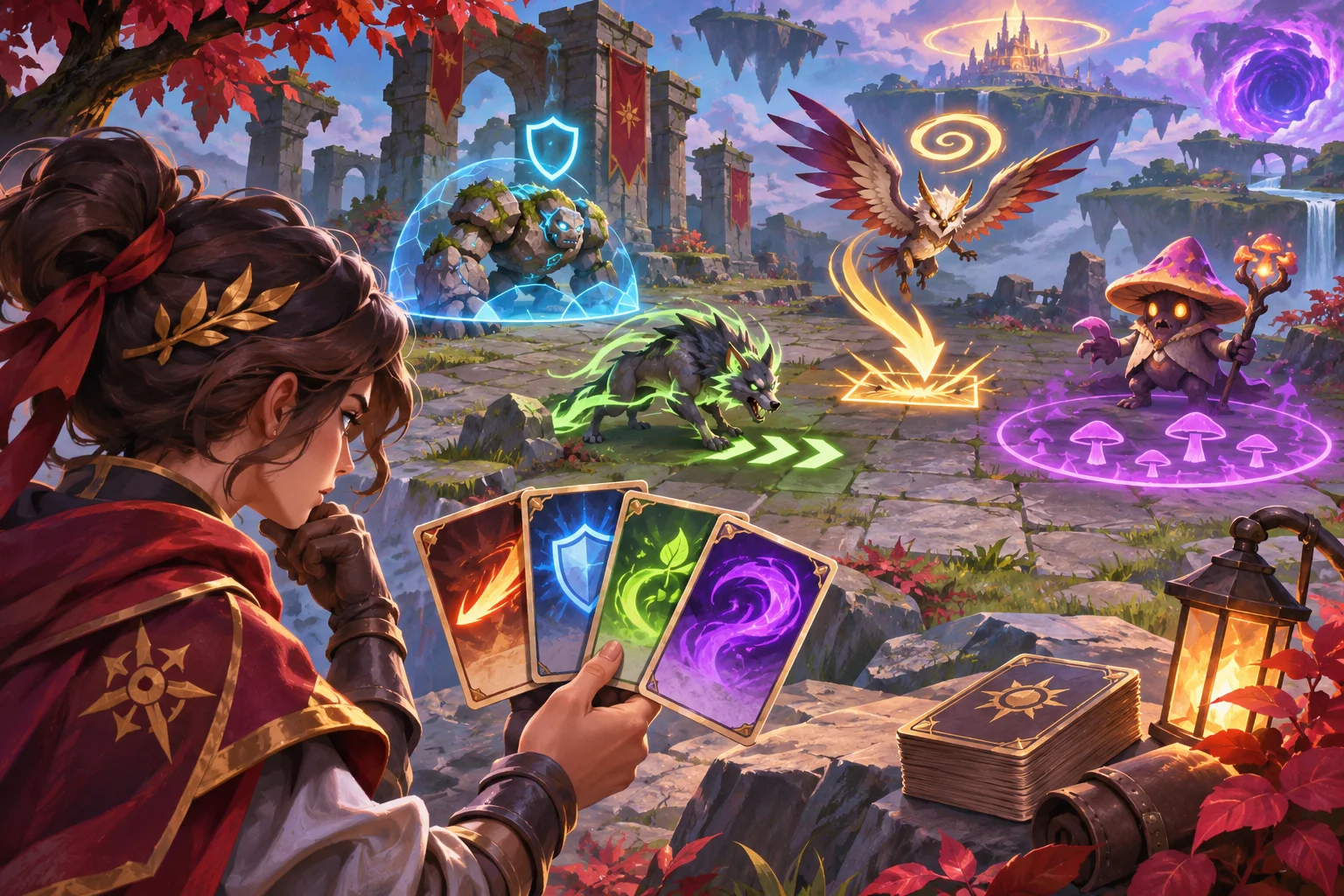
No real game run, browser test or measured result is available for this fictional example. The illustrations are original concept art and are not screenshots.
Frequently asked questions
When should a roguelike deckbuilder shop appear?
The fictional Cinder Index flow grants the battle reward first, then opens one shop before the next battle.
Does the purchased card go straight into the hand?
No. In this example it enters the active run's draw pile and is not drawn immediately.
Can the player reroll or buy several offers?
Not in the first version described here; the player buys at most one of three cards or skips.
Was Cinder Index's shop implemented or balanced?
No. Cinder Index is fictional; no code, run, reload test or balance tuning is claimed.
Should the offer change after a reload?
A stable shop ID lets the saved run reuse the same three cards and prices until the player decides.