Show enough enemy intent for players to plan a card response while preserving uncertainty through encounter patterns and run choices. Start with one bounded prototype, make its rules visible, and connect player choices to outcomes the team can observe. Expand the system only after the core loop works in a short repeatable test.
Map the encounter and card baseline
Map what the player currently knows before committing cards: visible enemies, status effects, turn order, and any uncertain elements. Decide which intent cue each enemy can show and whether it describes a target, attack class, or exact value. The official Slay the Spire developer patch notes say players and monsters update while the card selection screen is open so enemy intent is visible; this confirms telegraphing context only, while the proposed encounter system is original.
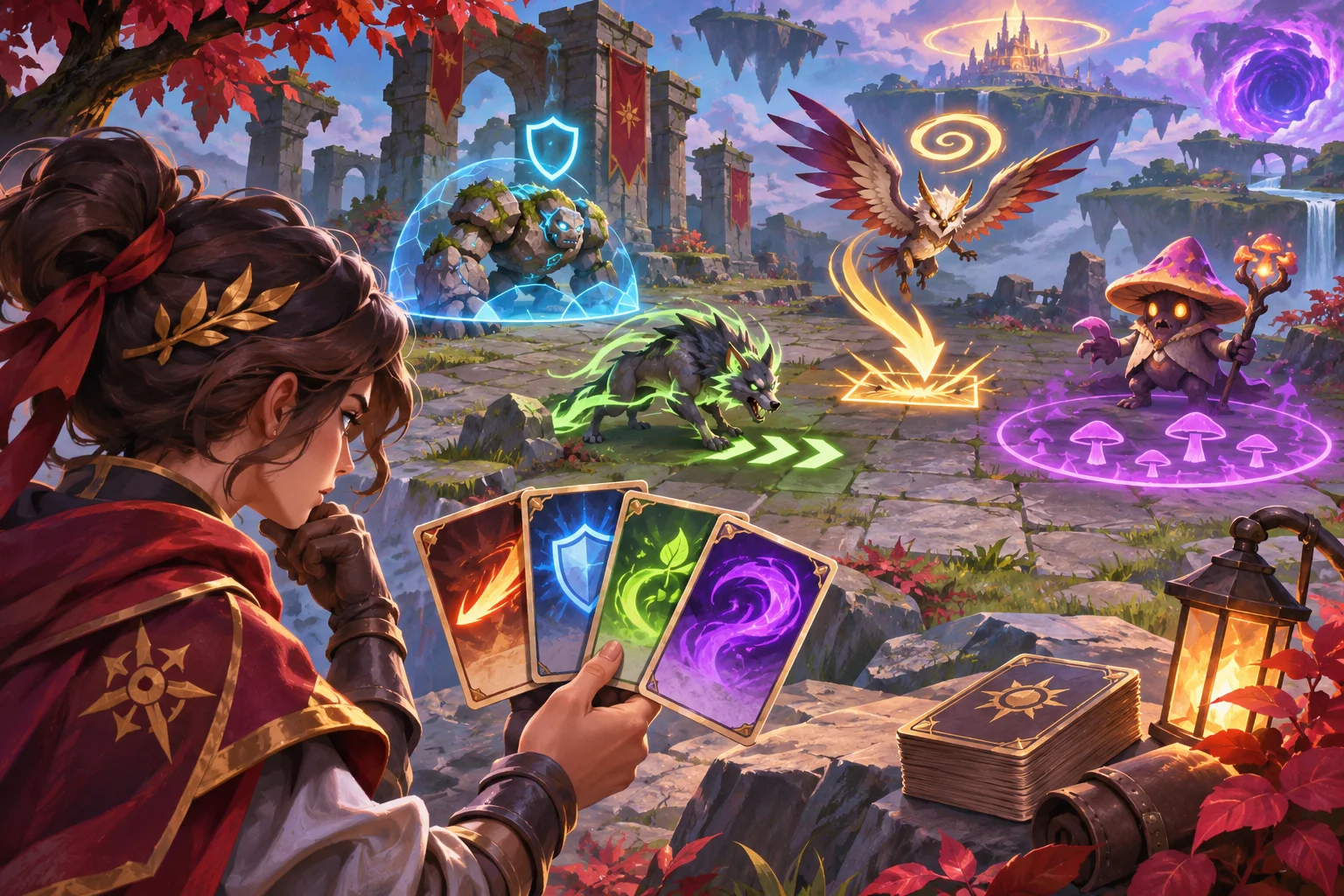
Keep the cue stable through the planning window. If an enemy changes its action because the player selected a card, make the transition obvious and explain the rule. Avoid false precision: show a category or target when exact damage remains uncertain, and use a consistent icon vocabulary that can be learned over multiple encounters. See the Mega Crit official Slay the Spire Steam announcements for the scoped genre context.
Choose what enemy intent reveals
Design enemy patterns around meaningful responses. A wind-up attack can invite defense or an interrupt, a guard stance can reward repositioning or setup, and a support action can prompt target prioritization. Each pattern should have more than one reasonable answer so the visible intent informs choice without dictating one mandatory card.
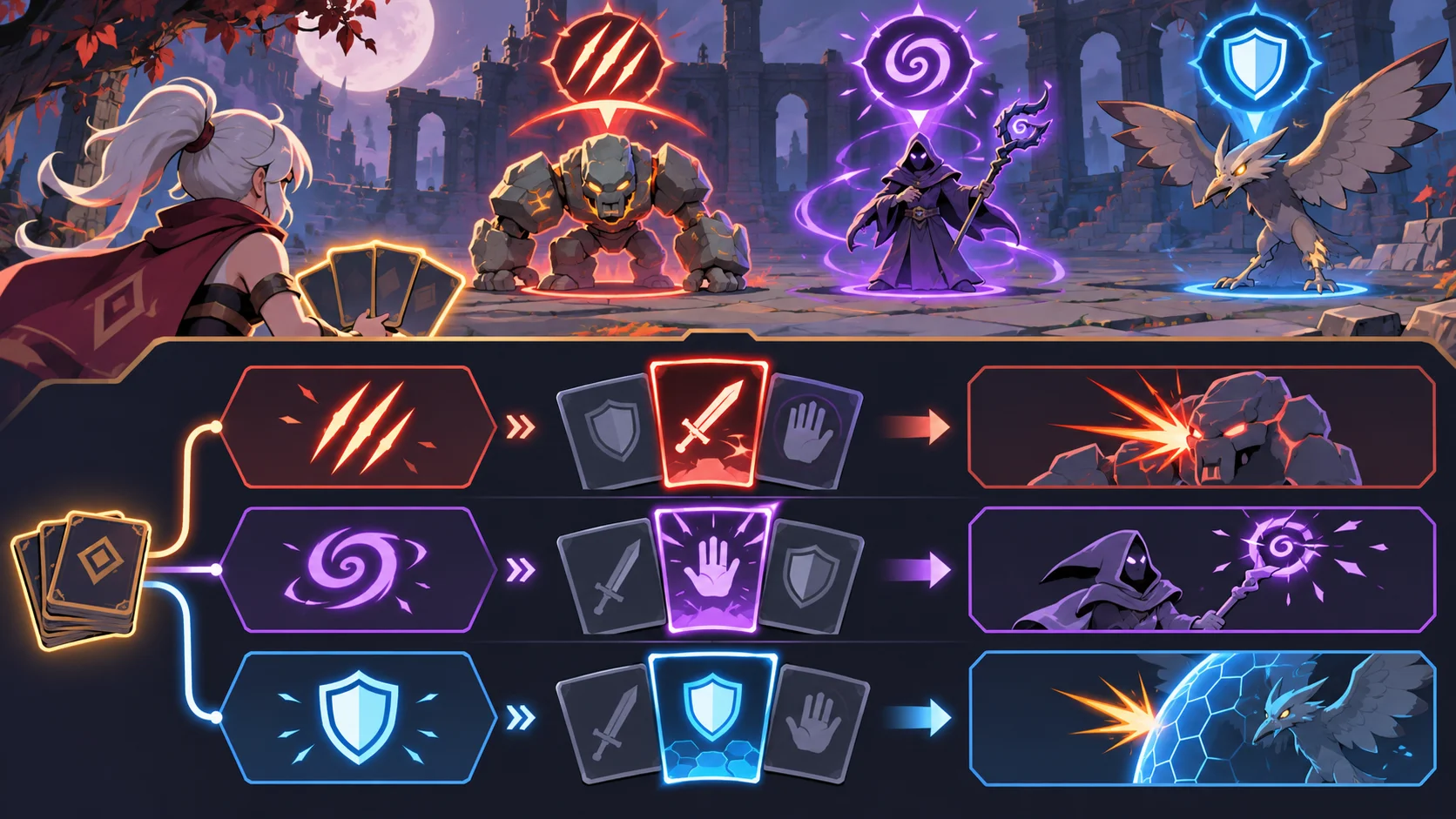
Communicate multi-enemy timing and targeting. When an attack hits a specific character or lane, show that target. If several enemies coordinate, distinguish their cues and order. Include accessibility options such as text labels or adjustable cue contrast, while ensuring the information remains understandable without color alone.
Connect telegraphs to card decisions
Let card costs, hand limits, and run resources interact with the telegraph. A player might block now, spend a scarce interrupt, or accept a controlled hit to preserve energy for a stronger turn. Make the consequences visible where possible and keep uncertainty in enemy selection, future encounters, or rewards rather than obscuring the current cue.
Connect encounter resolution to a reward choice that supports deck direction. A defensive answer might preserve health but spend a resource; a risky attack might shorten the fight. Offer rewards that reinforce different strategies, and ensure the next encounter does not punish players for using the system as taught.
Test clarity, uncertainty, and rewards
Test a short sequence with new players and ask them to predict enemy actions before they play a card. Track correct interpretation, time spent scanning, and whether the cue changes the decision. Repeat with multiple enemies, varied targets, and a card that changes an intent. Tune for understandable uncertainty rather than perfect prediction.
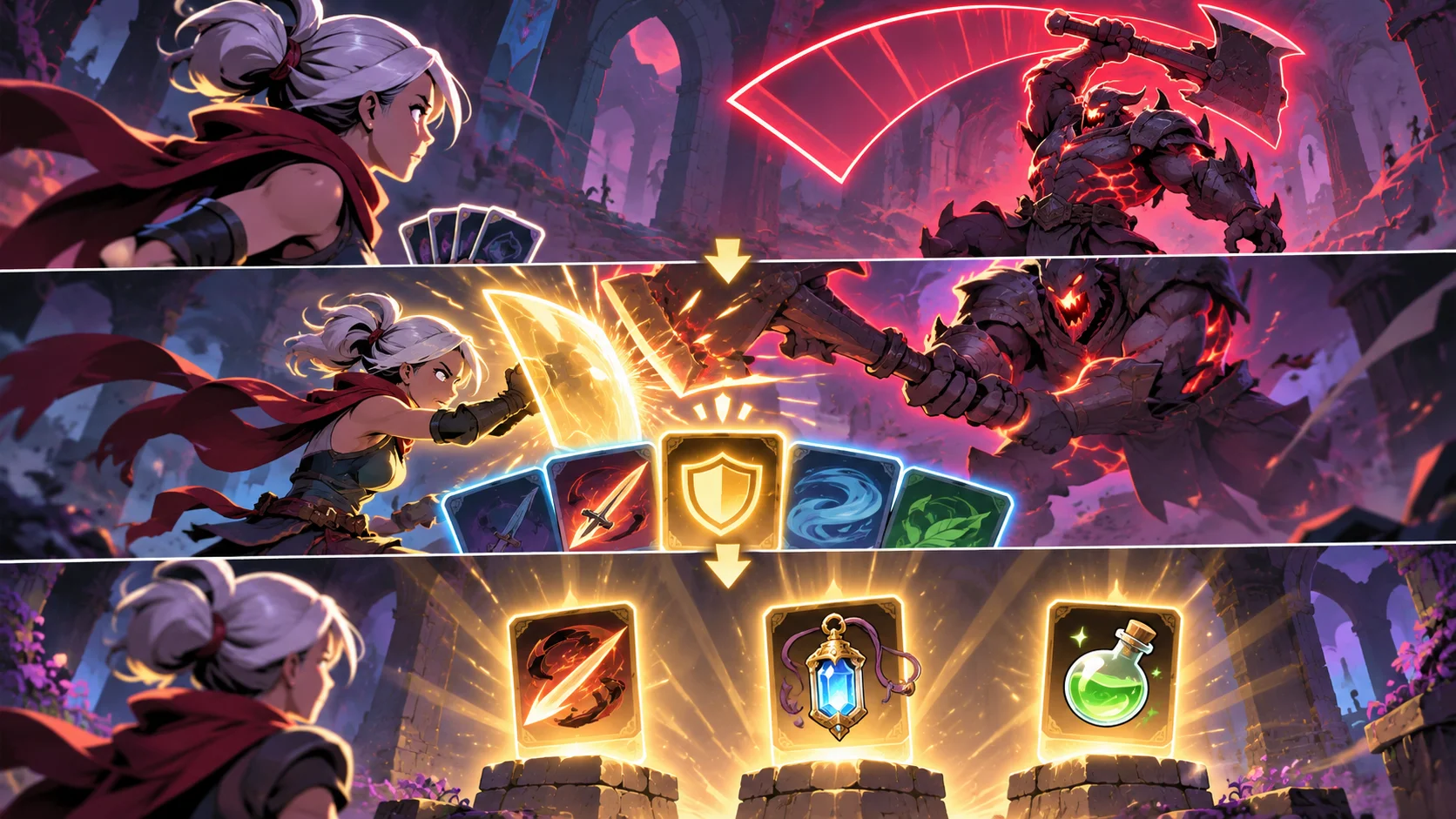
The acceptance case is a visible intent that leads to a deliberate response, followed by feedback that confirms the rule. See a branching deckbuilder campaign guide for a related run-structure approach. SEELE AI can help brainstorm patterns; card balance, accessibility, and encounter playtests remain necessary.
FAQ
What should visible enemy intentions communicate?
An intent cue should show the information needed to make a deliberate response, such as an attack type, target, or timing. Keep icons consistent and distinguish uncertainty from hidden rules. After the action resolves, provide feedback so players can learn whether their interpretation and response matched the cue.
How much should a deckbuilder reveal before a turn?
Reveal enough about current enemy actions to support a card decision, while preserving uncertainty in future patterns, target selection rules, or later encounters. If exact damage or targets can change, label that uncertainty clearly. Test whether players can explain what is known and what remains unpredictable.
How do enemy intentions affect card choices?
Telegraphs make cards compete by purpose: defense, interrupt, setup, or attack. A visible threat can make a costly block worthwhile, while a weaker cue may invite a faster offensive turn. Give each intent more than one reasonable response so the information informs strategy without dictating a single card.
What should you test in an intent-based encounter system?
Ask new players to predict the next action before committing a card, then compare predictions with the result. Test several enemies, target types, and rules that can alter intent. Track interpretation accuracy and decision time, and check that players can distinguish a changed cue from a misleading or inconsistent one.