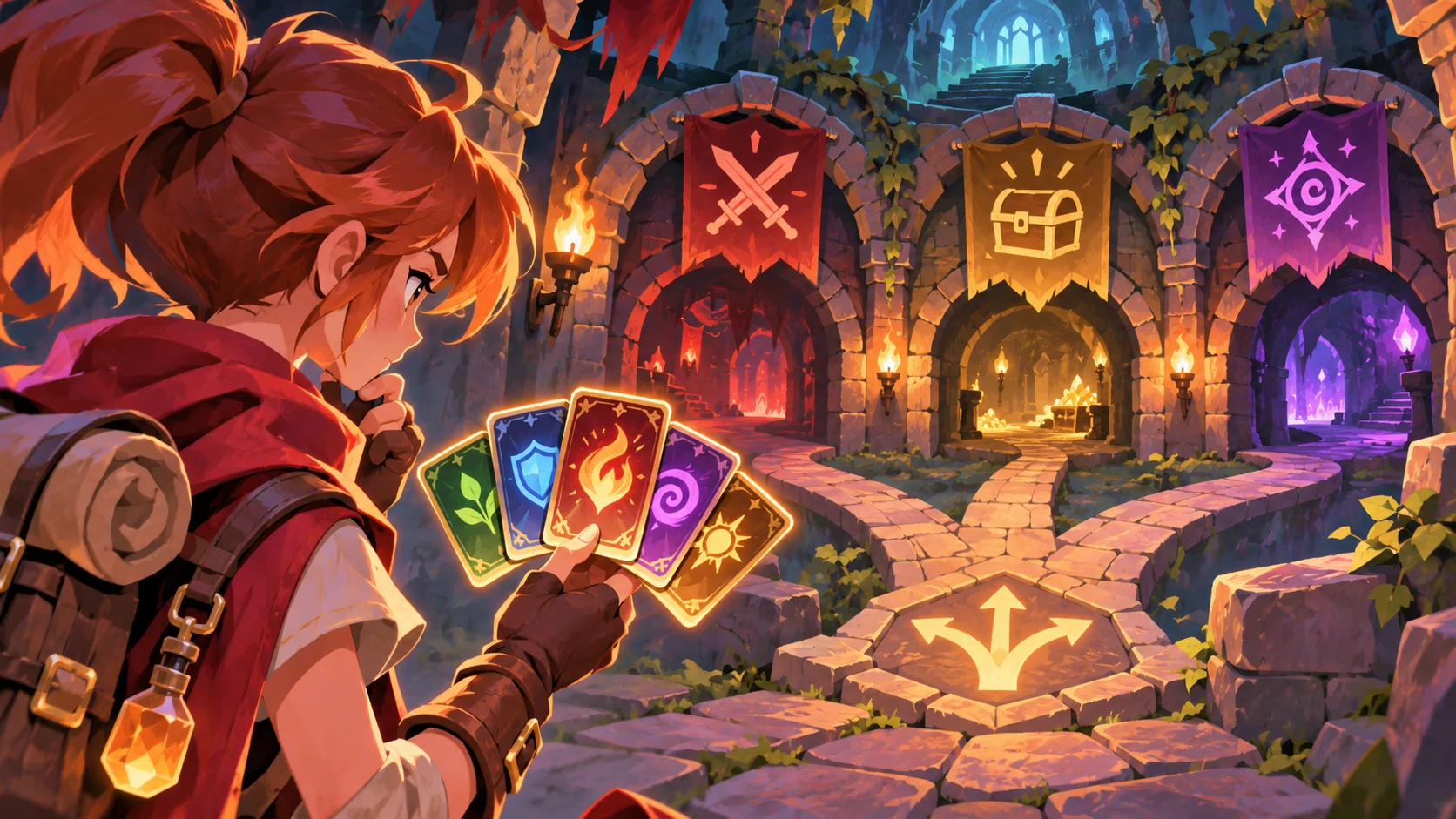
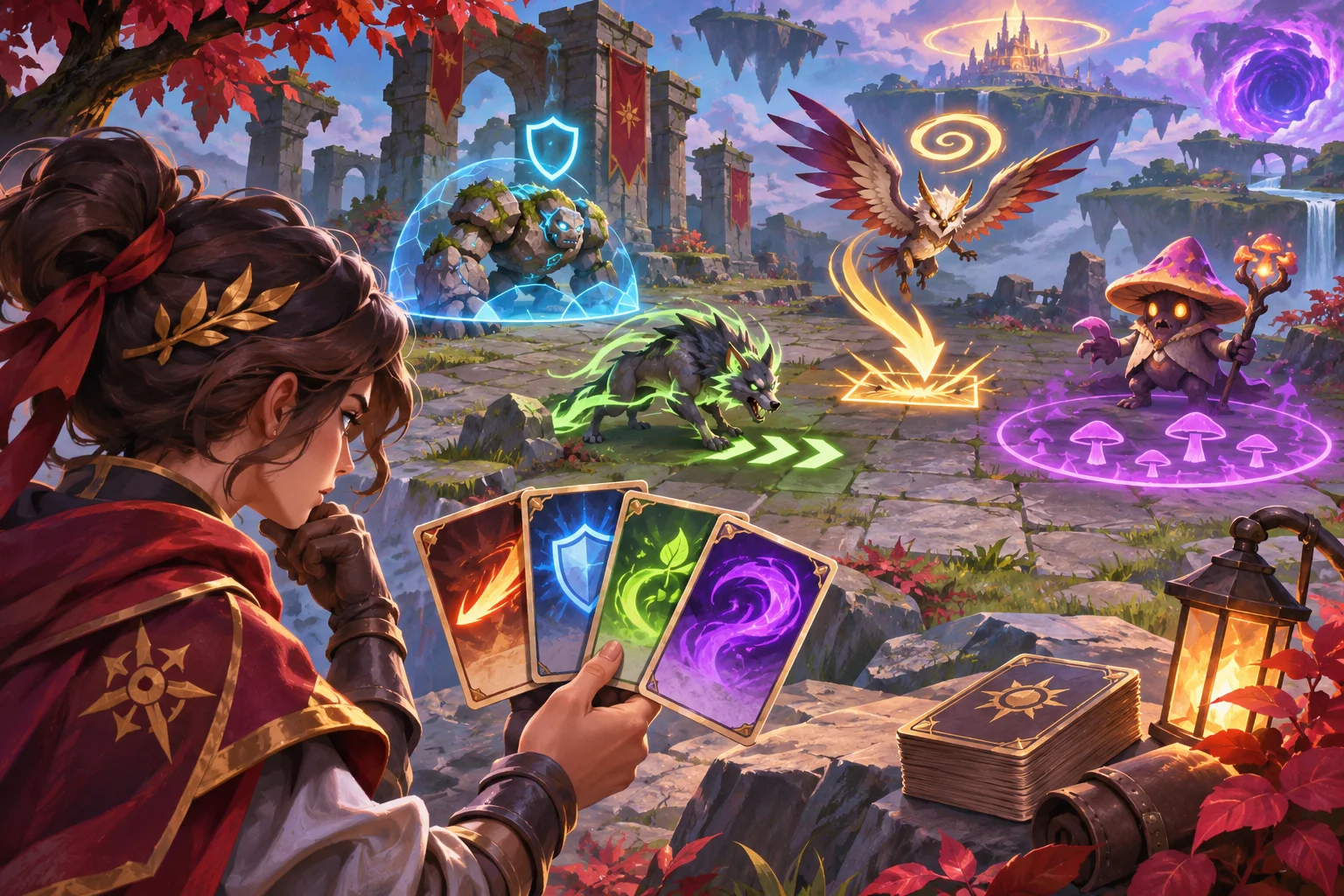
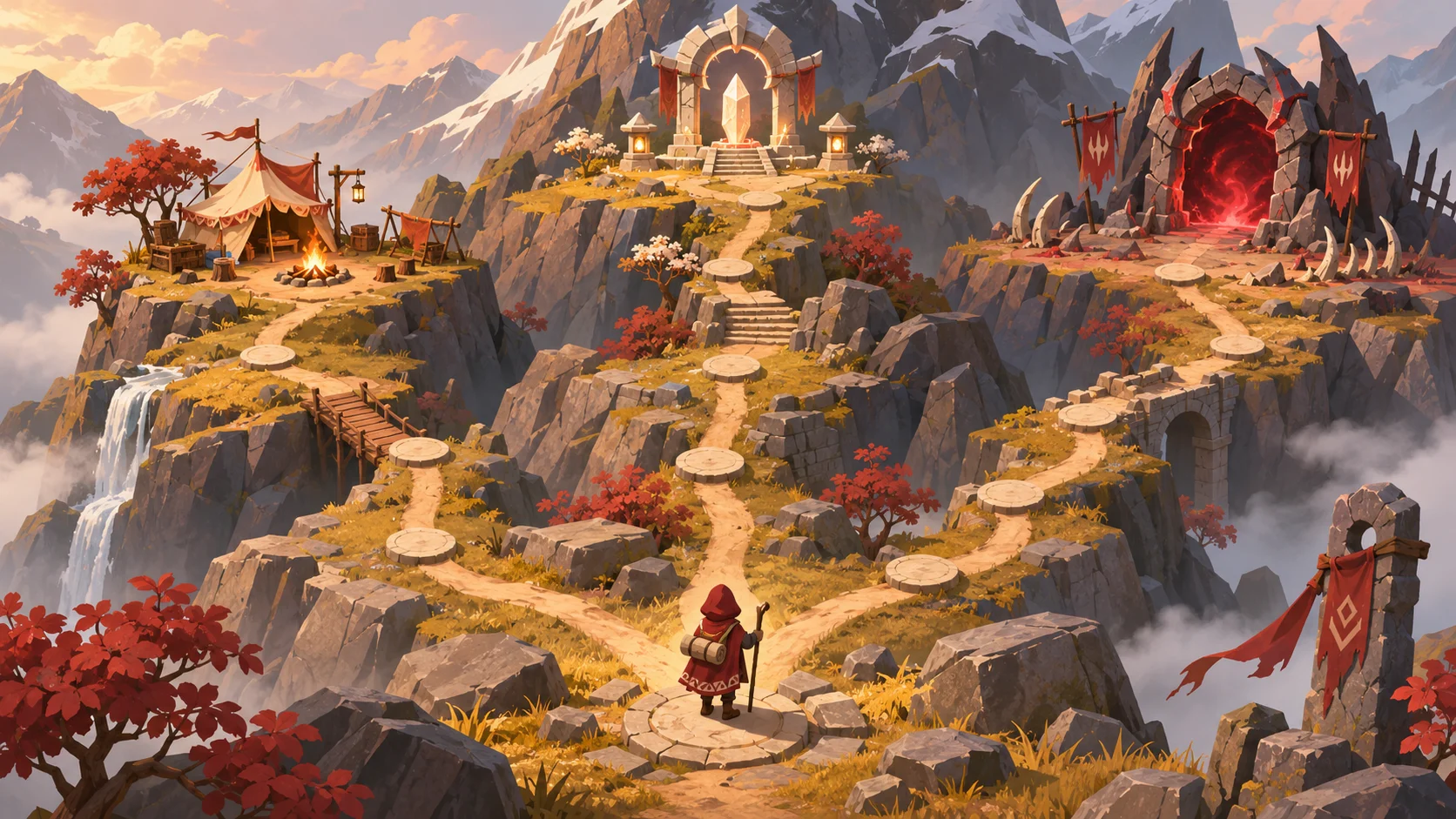
Start with a campaign spine and route nodes
A run feels like a campaign when its encounters build toward a recognizable goal. Give the player an opening problem, two or three milestones, and a final encounter. The map can branch, but each path should still connect to the larger objective. For example, learning why a route is blocked could lead to a later decision about who controls the crossing.
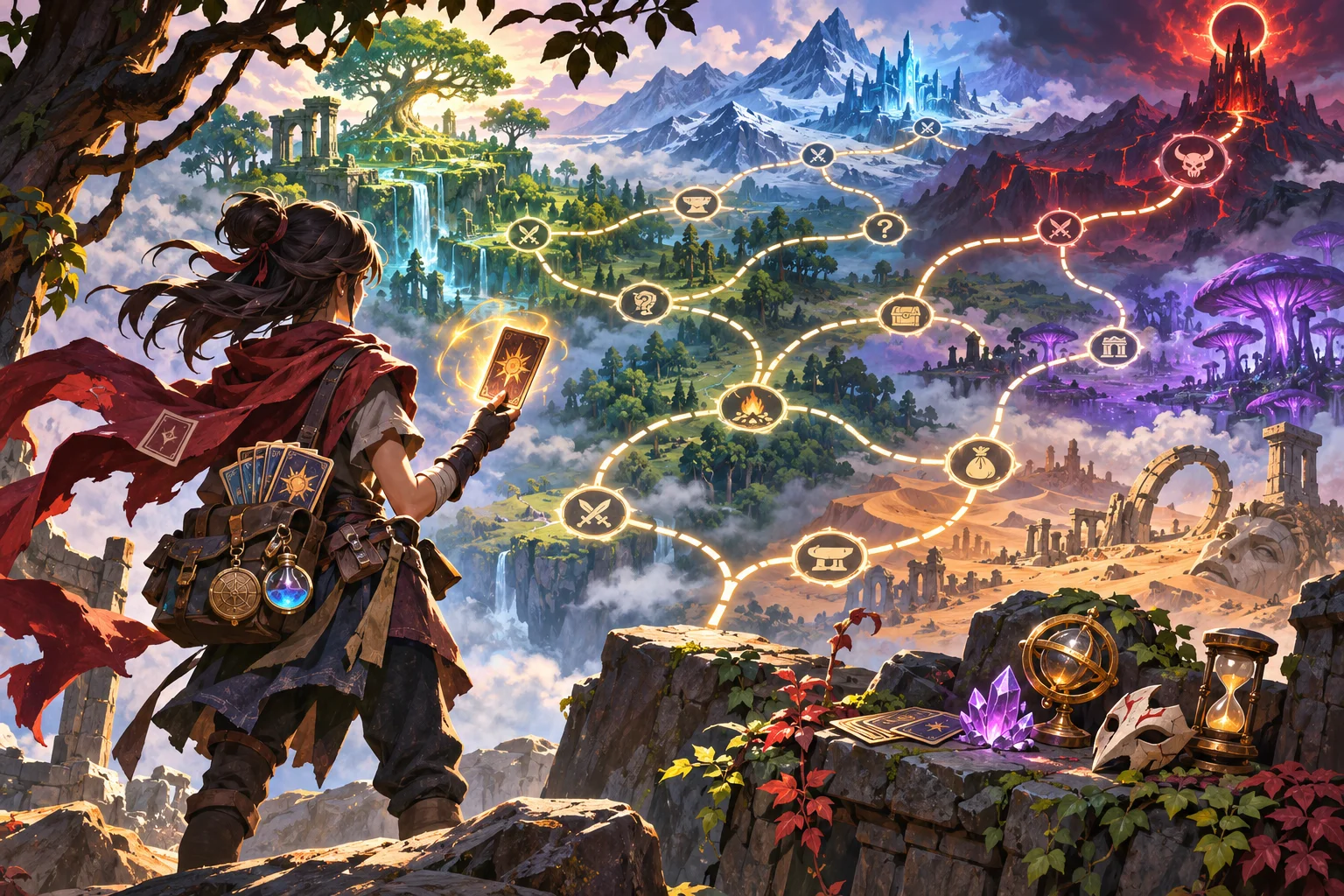
Separate campaign milestones from encounter flavor. A milestone might record that the player found a guide or recovered a map fragment; an individual node can then present a battle, rest, event, or reward. Keeping these layers distinct helps the route remain coherent when the player skips optional scenes.
Write the route graph before writing all of its dialogue. Mark where paths split, where they rejoin, and what state carries through. The goal is not to make every path a completely different campaign. It is to make the chosen route feel acknowledged while keeping the run finishable.
Make route choices affect deck and risk
A branch matters when it changes the player’s mechanical situation. A dangerous battle might offer a card removal, a safer detour might provide recovery, and an event could trade a resource for a rare card. Tell the player what kind of risk and reward to expect, even if the exact outcome remains uncertain.
Keep route options viable for different decks. A fight that is fair for a fast damage build may overwhelm a slower defensive deck unless the player can see the warning and prepare. Use enemy intent, route icons, or a short preview to explain what a node tests. Avoid making one path the universally best choice.
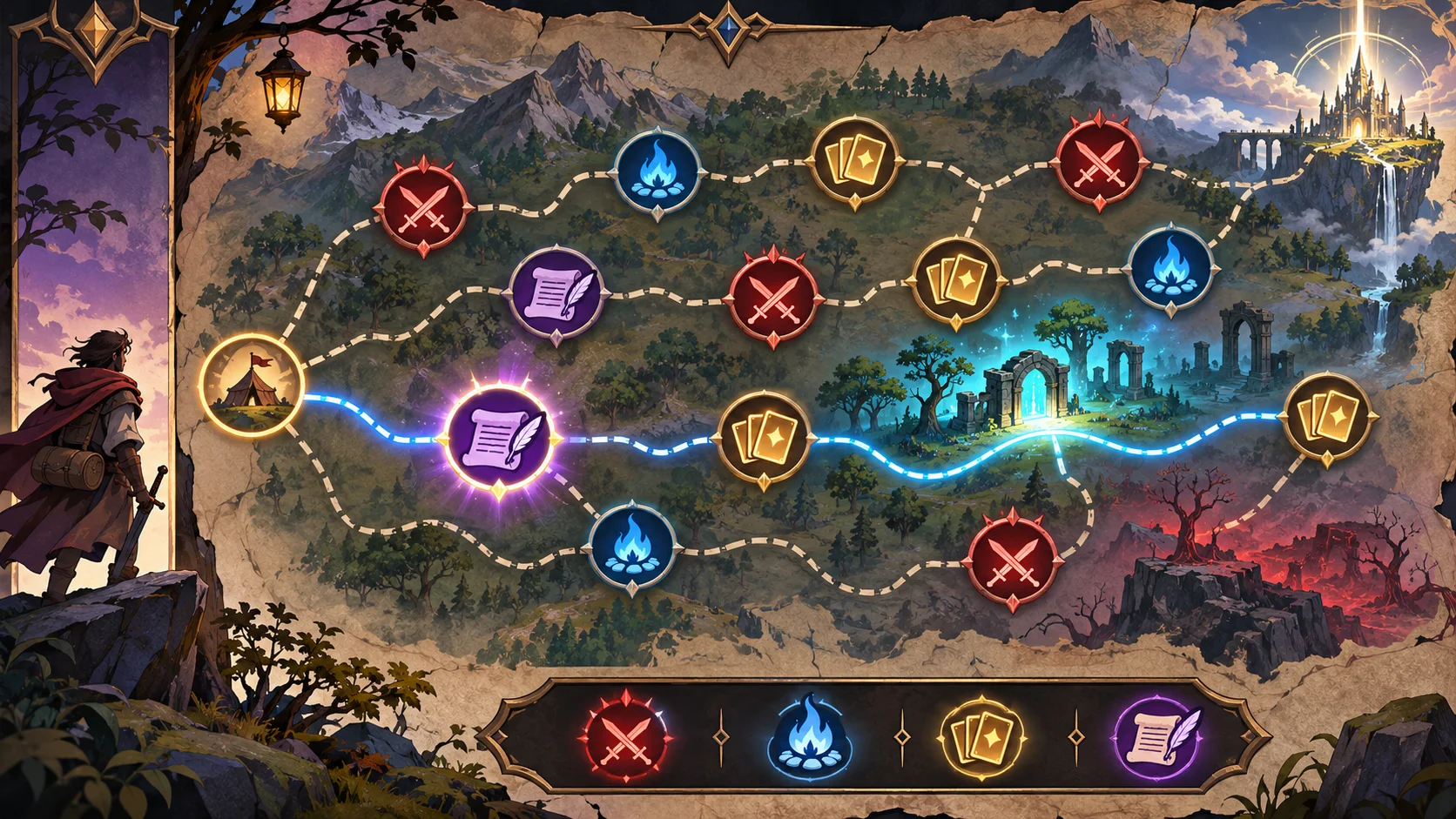
Let deck building remain central. A story decision can change which cards are offered, but the player still needs to assemble combinations and manage resources. If a route grants a unique card, make its role legible and ensure it is not the only way to survive a later fight. The campaign should add context to tactical choices rather than replace them.
Carry choices into later encounters
Use a small number of flags to create callbacks. Rescuing a guide may reveal a safer branch; spending a rare key may open a shortcut but remove a later treasure option. A callback should be specific enough that the player remembers the earlier action. Avoid recording every sentence as persistent state; store only outcomes that affect later scenes or play.
When paths rejoin, preserve some difference in the next encounter. The same boss can have a different support enemy, opening condition, or reward based on the route. This lets the campaign reconverge without erasing the choice. Explain the change through the scene or combat setup rather than relying on an invisible difficulty modifier.
Write defaults for skipped events and failed checks. If a player never meets the guide, the next map still needs a sensible route. If an optional battle is lost, decide whether the campaign continues with a cost or ends the run. Explicit rules prevent contradictions across branches and make the content easier to validate.
Test path coverage and deck fairness
Replay several routes using different deck archetypes. Compare a risk-heavy path with one that includes recovery and events. Record completion, health and resource state, card acquisition, and whether players understood why the later encounter changed. A path can be balanced on paper and still fail if the player cannot anticipate its cost. " alt="A fantasy adventurer considers branching encounter routes across varied regions." width="1536" height="1024" loading="lazy">
Use a route matrix listing each branch, required state, later callback, reward, and completion condition. Test every major combination from a fresh run. If one combination cannot be completed, determine whether the issue is intended challenge or an accidental dead end. Branch coverage is about checking player-facing outcomes, not just verifying that each node loads.
The official Slay the Spire listing describes a changing deckbuilder map with risky or safe paths, enemies, cards, and relics. That supports the genre and branching-run context only; the story campaign in this article is original. Start from the roguelike deckbuilder guide for the core run loop. SEELE AI can help outline an original campaign, but route logic, combat fairness, and card balance need implementation and playtesting.
FAQ
How do you add branching encounters to a roguelike deckbuilder campaign?
Define a main campaign goal, a small number of milestones, and a route map with meaningful branch choices. Let branches change risk, recovery, rewards, or a later encounter, then allow paths to rejoin without losing every callback. Test each route with multiple deck types and verify the campaign remains completable.
What should a branching encounter change?
A branch can affect enemy composition, recovery, card rewards, resources, or the next available route. Make the likely tradeoff visible before the player commits. Keep each option viable for more than one deck strategy so the map does not collapse into a single optimal path.
How can story choices affect a deckbuilder run?
Use a few persistent flags to change later scenes, route access, encounter setup, or rewards. A story choice should have a specific callback that players can recognize. Keep card strategy and combat decisions central, and define defaults for skipped or failed optional events.
What should you playtest across campaign paths?
Replay each major branch from a fresh run with different deck archetypes. Check completion, resource state, later callbacks, card rewards, and player understanding of route risks. Use a route matrix to catch missing states and unintended dead ends before adding more branches.