Define a small set of audience segments
A customer demand system becomes useful when the player can understand who wants what. Start with two or three audience segments and give each a small set of priorities. One group may prefer short sessions and clear onboarding; another may value depth, customization, or a long campaign. These are design assumptions for your original simulation, so present them as readable tendencies rather than universal facts about real players.
Separate the size of a group from its preference intensity. A small segment with a strong match can be worthwhile if the player is building a focused game, while a large group may be harder to satisfy. Use a short profile card or a few icons to show the difference. Avoid dozens of hidden attributes that make audience results impossible to predict.
Give the player a way to learn. Early market reports can reveal broad preferences; later research can clarify a tension or estimate segment size. Keep uncertainty visible as a range rather than pretending the simulation knows the exact future. Research should help the player decide what to build, not become a button that removes uncertainty entirely.
Connect preferences to concept choices
Map audience priorities to decisions the player actually makes: genre, theme, platform, scope, features, and release timing. A narrative feature could improve fit for one group but increase production time; a simple control scheme may help one audience while reducing the depth another expects. Show the likely effect before the player locks a project, and explain it afterward in the report.
Do not reduce the concept to one total popularity score. Two projects can earn a similar forecast for different reasons. A segment breakdown helps the player see whether a concept has broad moderate appeal or a strong match with one group. It also allows a player to choose a niche strategy intentionally rather than treating every market as a puzzle with one correct answer.
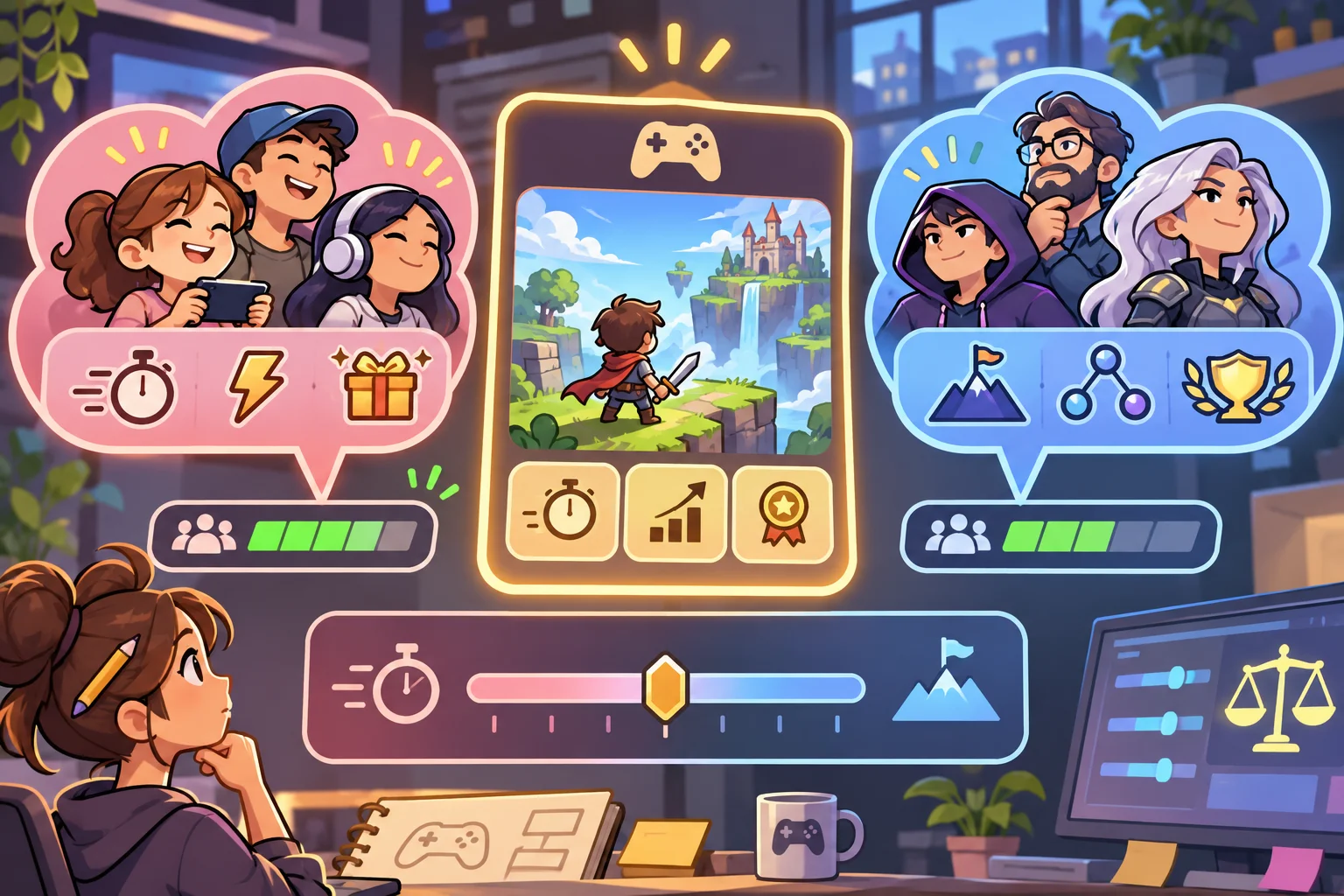
Make the tradeoff meaningful but not punitive. A focused project might have a smaller potential audience and stronger loyalty, while a broad project may require additional scope or marketing. Tie that difference to visible development costs and the studio’s resources. The player should be able to decide whether a likely fit is worth the extra work.
Make market feedback actionable
After launch or a playtest, report what happened in terms of the preferences the player saw earlier. If a group responded poorly to long tutorials, show that the onboarding decision was a mismatch. If another segment liked customization, explain how that feature affected its response. This creates a learning loop from research to design to outcome.
Keep feedback diagnostic, not prescriptive. The report can say which groups were served, what feature mattered, and where your estimate was uncertain. It should not simply announce “make this genre next.” The studio simulation is more interesting when the player chooses whether to follow the feedback, target a different audience, or take a creative risk.
Use the same vocabulary in profiles, project planning, and reports. If the player sees “short sessions” during research, do not describe the result later as “low commitment entertainment” without connecting the terms. Consistency helps people form a mental model and lets playtesters tell you when a rule itself is confusing.
Compare audience strategies in a prototype
Create a repeatable test market with the same studio size, budget, and release window. Build one concept for broad appeal and another for a focused segment. Ask players to predict the audience response before they see the report, then compare their reasoning with the result. If a surprising outcome is not explainable from visible information, revise the model or the feedback.

Track which audience players target, how often they change a concept after research, whether their predictions match outcomes, and how different strategies perform. Avoid tuning only for maximum sales. If every test group converges on the same feature set, preferences may not be distinct enough or the costs may not create a real tradeoff.
The official Game Dev Tycoon listing describes developing games, making genre and topic choices, using game reports, and growing a studio. That supports the simulation context only; the customer segments and preference rules here are an original proposal. See the game-studio management guide for the core development loop. SEELE AI can help outline an original studio concept, but demand rules and balance need implementation and playtesting.

FAQ
How do you model competing customer preferences in a game studio game?
Create a few audience groups with visible priorities, then connect those preferences to concept decisions such as genre, features, scope, and platform. Show likely fit before the project and explain results afterward. Test focused and broad strategies in the same market so players can understand the tradeoffs.
What should audience segments care about?
Give each segment two or three priorities that can affect player decisions, such as session length, customization, onboarding, or narrative depth. Keep audience size separate from preference strength, and communicate uncertainty. The profiles should be distinct enough to create choices without implying that every person in a real group behaves the same way.
How can market feedback guide game development?
Reports should connect outcomes to preferences and visible project choices. Explain which segment responded, which feature or tradeoff mattered, and where the forecast was uncertain. This helps players learn while leaving room to ignore feedback, take a creative risk, or target a different audience.
What should you playtest in a demand system?
Use a repeatable market and compare concepts aimed at different groups. Ask players to predict results before launch, then check whether the report explains what happened. Track audience choices, prediction accuracy, concept changes, and strategy variety; investigate if everyone converges on one best option.