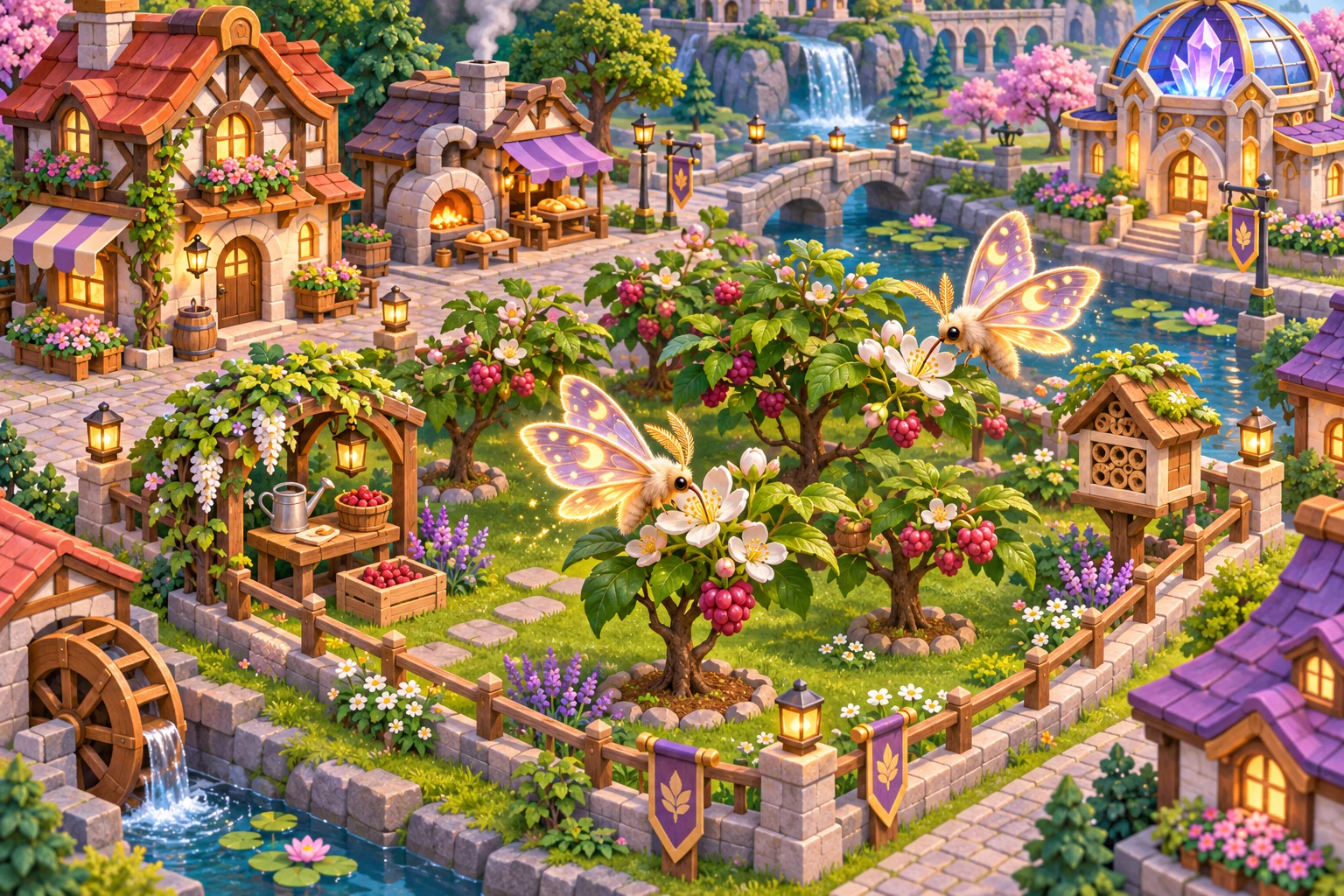
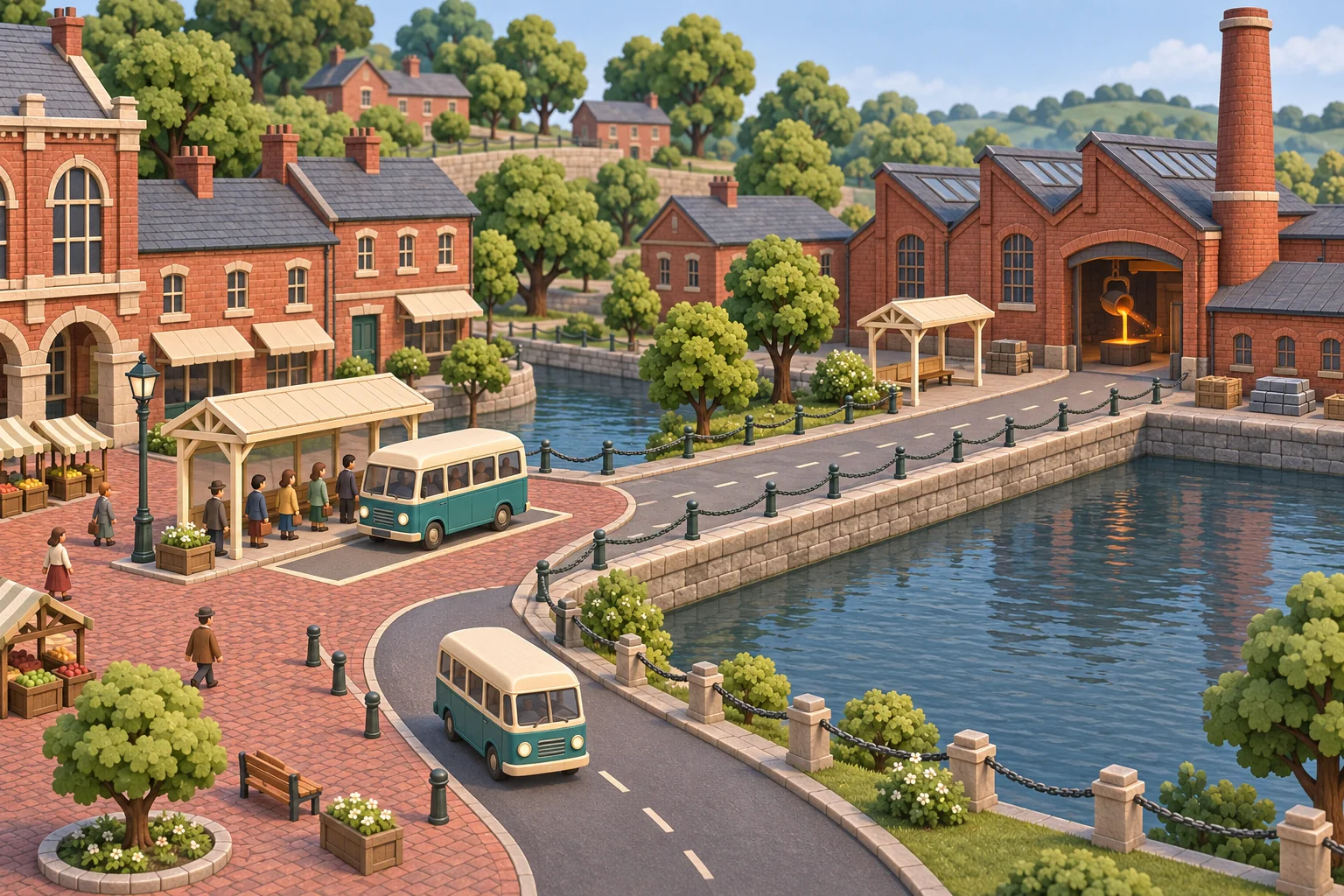
A city-building game can make restoration visible through the routes that keep neighborhoods supplied. Households produce organic waste, a shared compost hub processes it, and nearby farms use compost to grow food. Reconnecting those districts changes the city from a one-way flow into a loop players can plan and expand.
Begin with one neighborhood, one compost hub and one farm. Keep each building's output and recipe fixed, then compare production when routes are disconnected and when the cycle is complete. This small throughput check confirms that resources can travel through the system; it does not prove that a real city would be sustainable.
Connect households, compost and farms
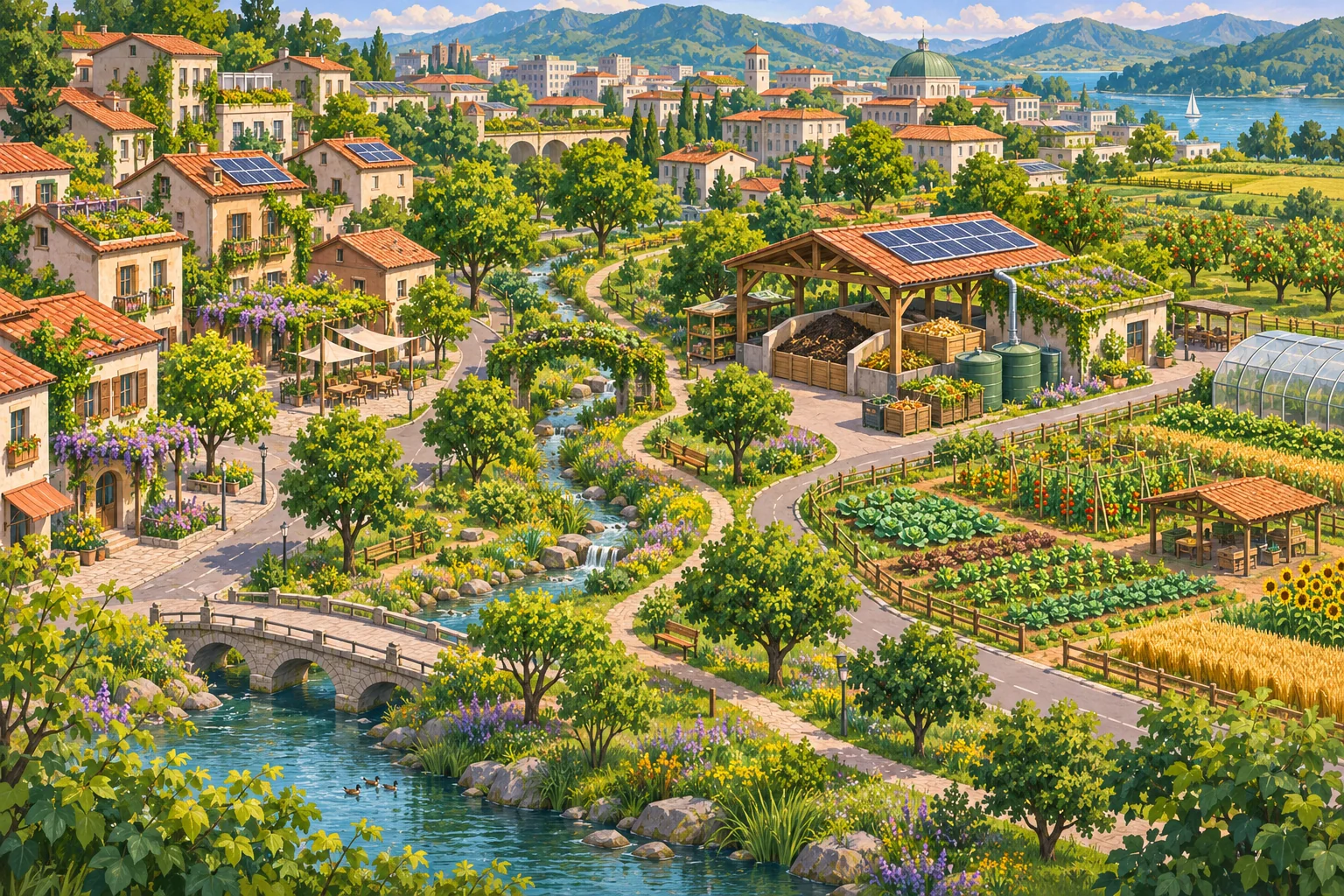
Give each district a clear role. Households produce two organic units per turn; a compost hub converts those units into two compost; the farm consumes two compost to produce three food. Food returns to the neighborhood store. Display both the resource and its destination so the cycle is easy to trace.
Represent roads, pipes or service links as explicit connections. If a route is missing, the resource should remain at its source or appear as unused capacity rather than teleporting to the farm. A visible delivery state helps players distinguish production problems from routing problems.
Start with one cycle and a fixed turn length. Hold population, building rates, farm recipe and map constant while checking the first delivery. After the cycle works, add storage, seasonal output or extra neighborhoods. Introduce those variables one at a time so players can see why the city changes.
Reconnect one district to its food source
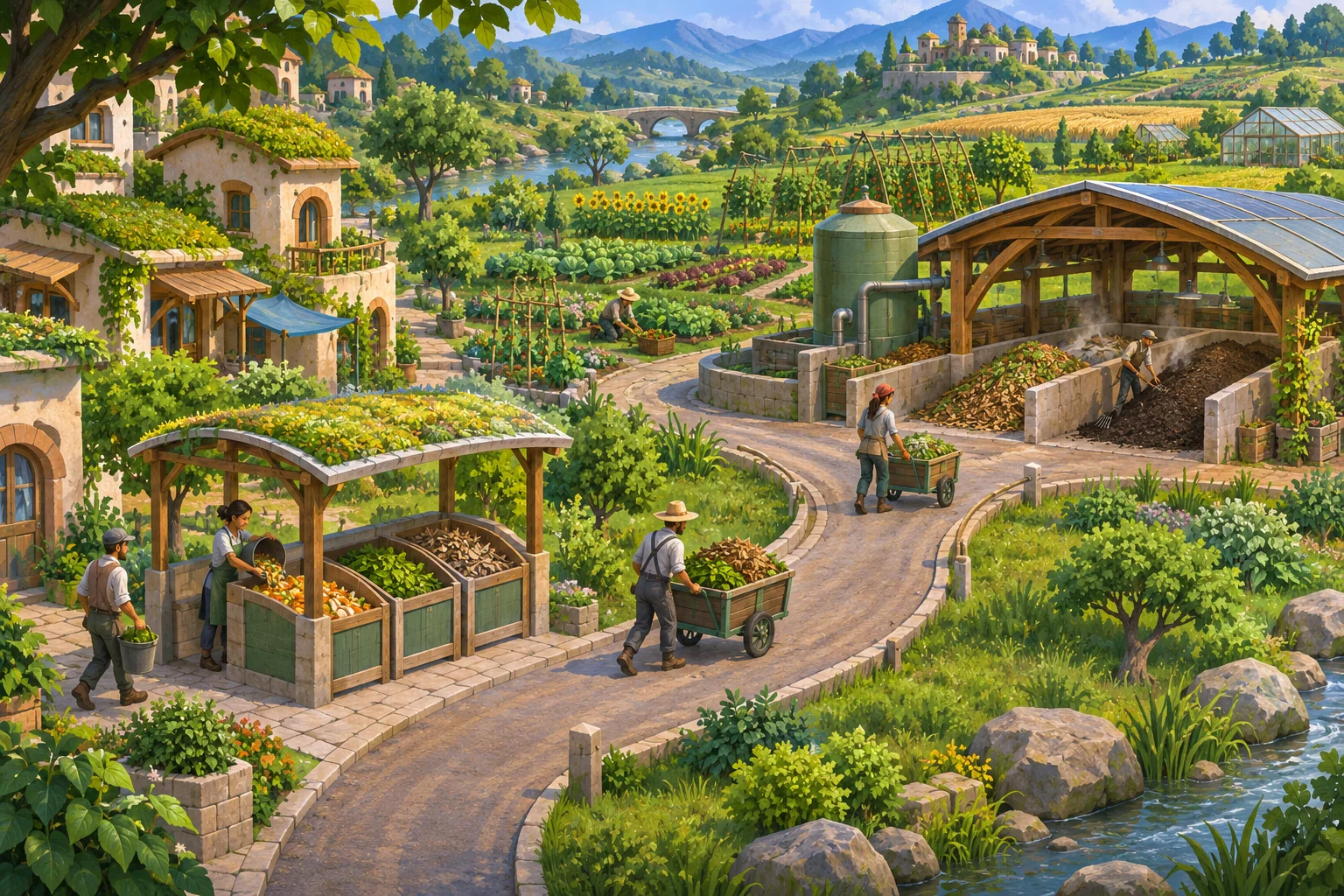
The neighborhood creates two organic units, but its road to the compost hub is disconnected. The hub receives zero; the farm has no compost and produces no food for the neighborhood store. Keep population, turn length and building rates fixed.
Now reconnect only the neighborhood-to-hub route and the hub-to-farm route. Two organics reach the hub, become two compost, and satisfy the farm's recipe for three food. Return that food to the neighborhood store through the existing link. The city has completed one resource cycle for this turn.
This deterministic model verifies resource throughput under a fixed recipe. It does not measure soil quality, emissions, transport cost, food access or whether the system remains sustainable over many seasons. Playtest those effects separately before treating the fictional loop as a balanced city simulation.
Ask AI to prototype a connected city resource loop
Show the household output, route state, compost conversion and food delivery each turn.
Change only whether the neighborhood-to-hub and hub-to-farm routes are connected.
Create a small ecological city-builder prototype with one neighborhood, a compost hub and a farm. Each turn the neighborhood produces 2 organic units; the hub converts 2 organics into 2 compost; the farm consumes 2 compost to make 3 food; food returns to the neighborhood store. Compare disconnected routes, which deliver no food, with both routes connected. Keep map, population, recipes and turn length fixed. Show resource quantities and route status. Do not claim this throughput check proves real-world sustainability.
Let connected districts restore a useful cycle
A resource cycle gives city restoration a visible cause and effect: households produce organics, shared infrastructure processes them, and farms return food. Verify the route and recipe in one small district before adding larger networks. Then test storage, seasonal changes and access with separate measures; throughput alone cannot establish environmental sustainability.
Prototype an ecological city builder with SEELE's AI game maker
Frequently asked questions
How do resource cycles make a city builder more readable?
Give each resource a visible source, route, processor and destination. A player can follow household organics to compost and then to farm food, seeing where a broken link stops the cycle. Start with one district loop before adding more buildings.
What should happen when a city route is disconnected?
Keep the resource at its source or show it as undelivered. Avoid silently moving goods across missing links. Clear route feedback lets players tell whether a problem comes from production, processing capacity or transport. Track the queue at each building.
Does a closed resource loop prove a city is sustainable?
No. A fixed throughput model only checks whether resources meet a recipe and reach a destination. It does not estimate emissions, soil health, transport costs or food access. Use separate measures and longer simulations to assess those outcomes. Check several seasons.