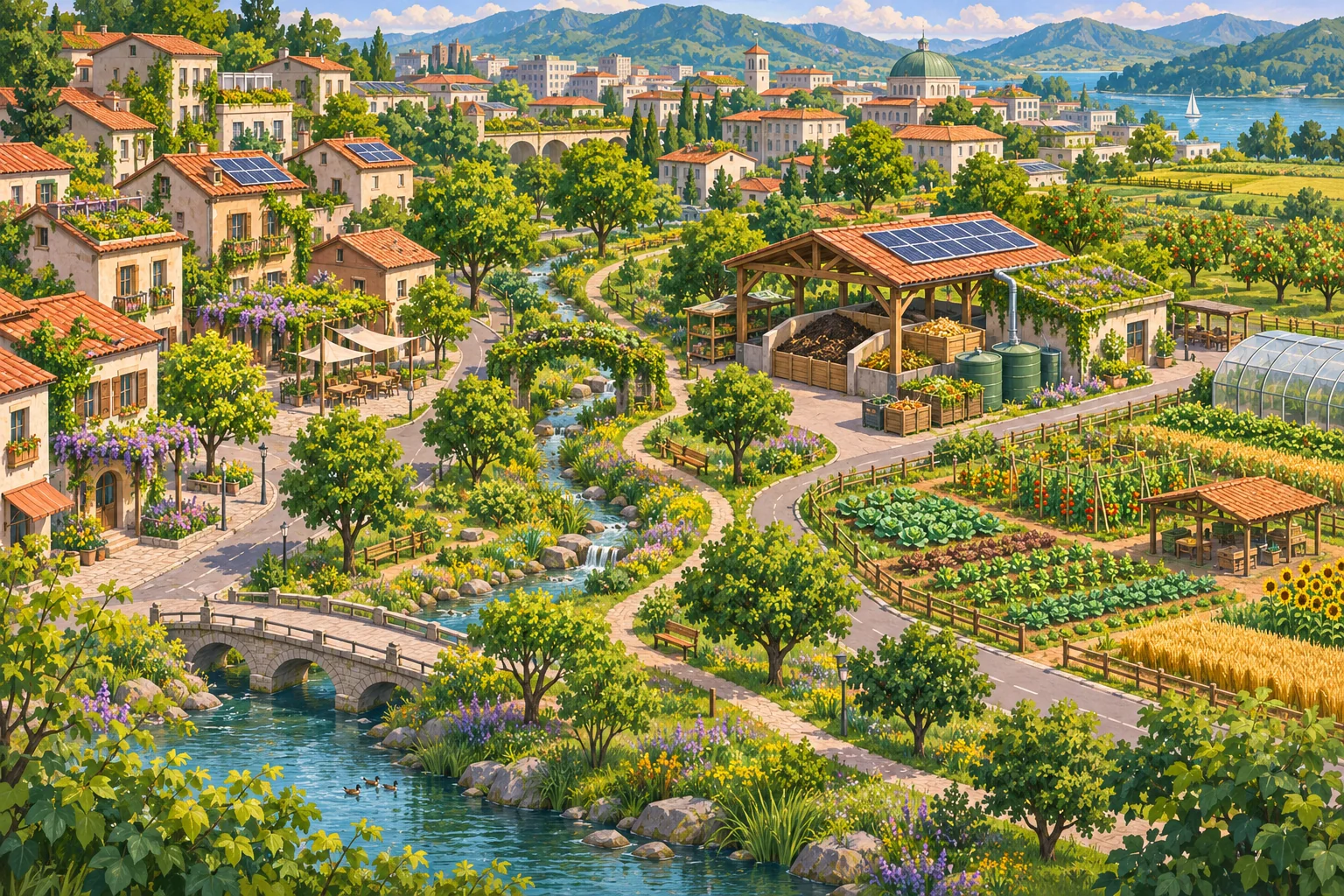
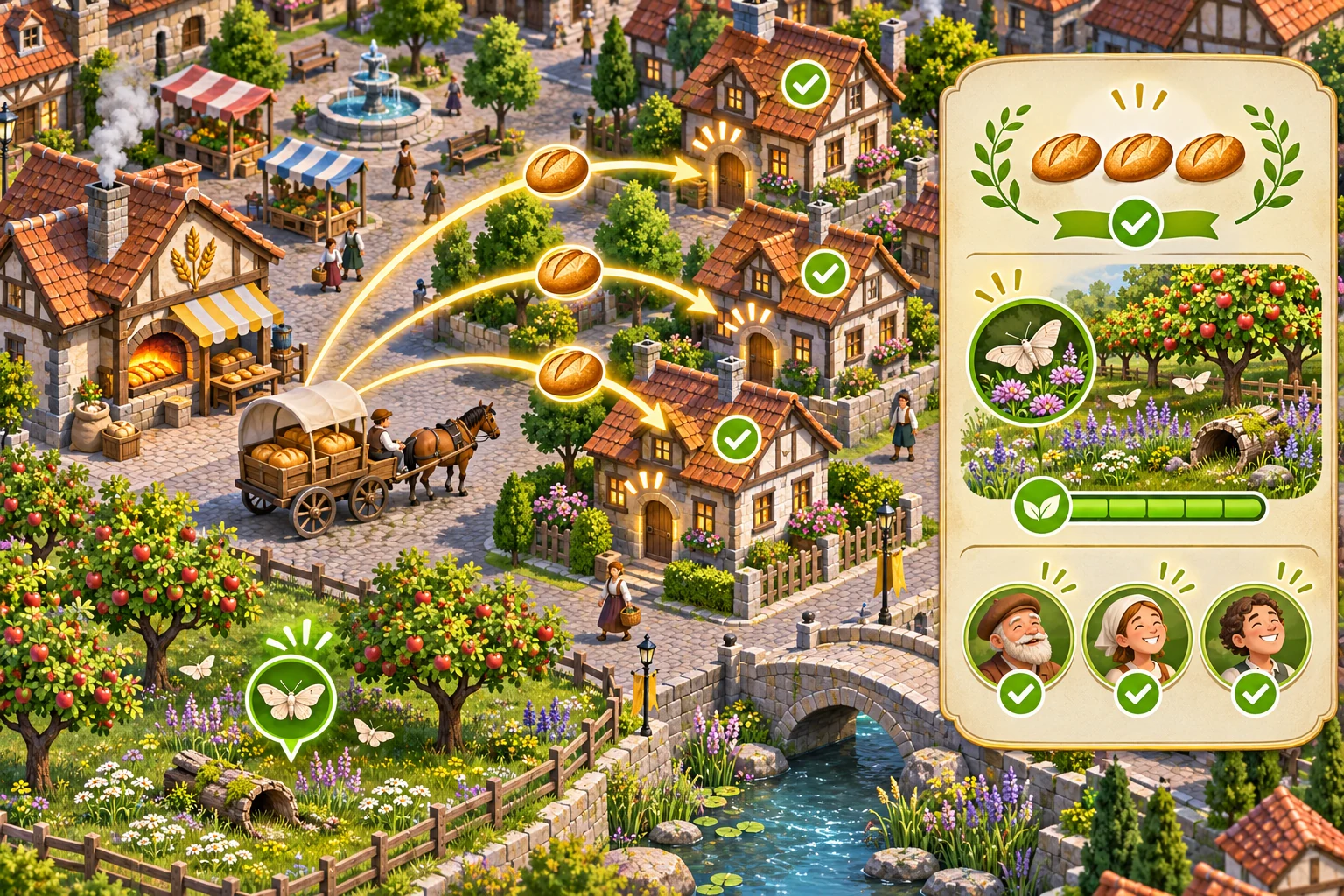
In fictional Bramblewick, two pollinator moths live in an orchard habitat and directly increase berry production. A bakery turns berries into loaves for nearby homes, so the creatures affect a visible city supply chain rather than serving as decoration. Keep the orchard, bakery, staff, demand, and day length fixed. Compare the chain with and without the moth habitat to see how creature activity changes output and whether the city receives enough bread.
Give creatures a working role in the city
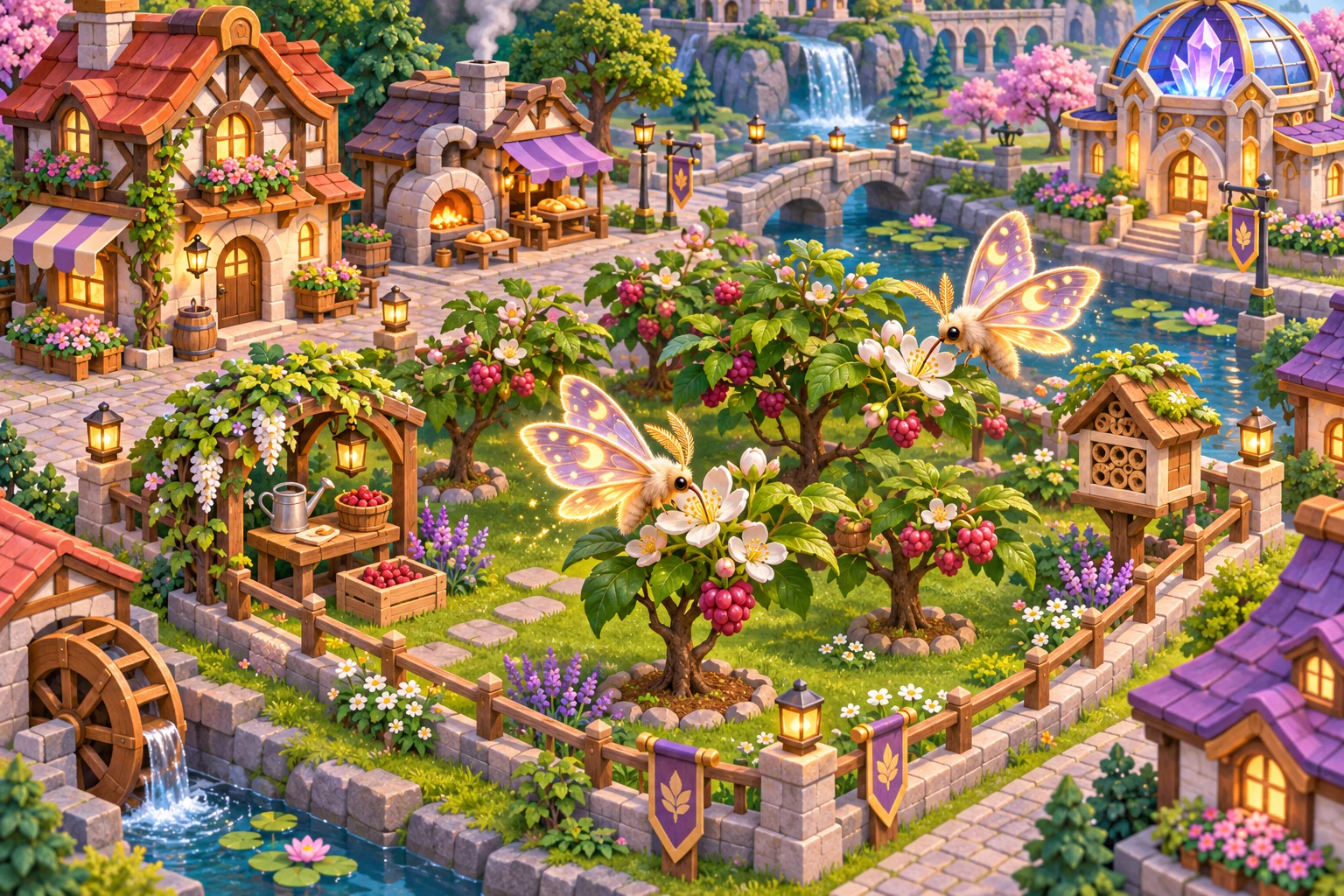
Place two pollinator moths in a habitat beside one berry orchard. Without the moths, the orchard produces two berries per day. With both moths active, pollination adds four more berries for a total of six. Show the creatures visiting blossoms and connect their habitat to the orchard’s production status so the player can see why output changes.
Keep the bakery, staff, city demand, and day length identical in both conditions. The moths should affect the orchard through a stated rule, not through a hidden bonus or a change in building count. This makes their contribution part of the production chain and gives habitat placement a practical city-planning purpose.
Connect creature activity to bakery output
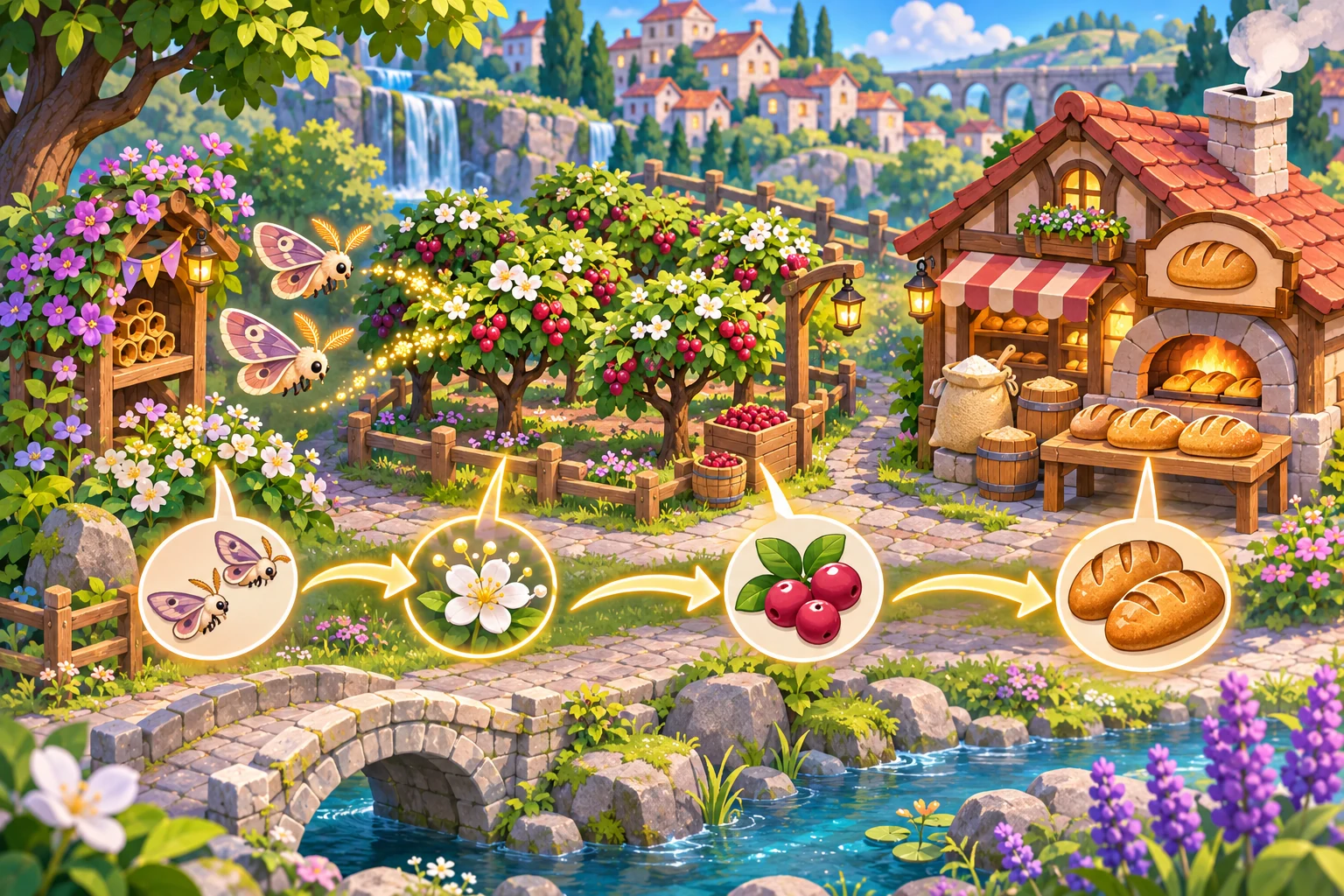
Set the bakery to use two berries for each loaf, with capacity for three loaves per day. With no active moth habitat, two berries become one loaf and two household orders remain unmet. With the two moths, six berries support three loaves, meeting all three orders. Show berries entering the bakery and loaves moving to homes as separate steps.
Godot Resources can hold authored data for the orchard yield rule, bakery recipe, and capacity. Keep the live creature count and daily inventory in the city state. This separates stable production definitions from the current day’s output and makes it easier to check what changes when habitat is added or removed.
Compare supply with the same city demand
Run one day twice with the same orchard, bakery, workers, three household orders, and building capacity. The baseline has no moth habitat: two berries produce one loaf, leaving two orders unmet. The revised city houses two active moths: six berries produce three loaves, leaving no unmet orders. Keep the creature state visible so the supply difference has a clear cause.
Report creature count and condition, berries produced, loaves baked, and unmet orders separately. This fixture checks whether creatures participate in production and whether the bakery chain uses the extra resource. The fictional result does not prove that every creature habitat improves a city; other costs and needs would belong in a later test.
Give the AI a fixed creature-production test
Create a city-building game in fictional Bramblewick. Include one berry orchard, one bakery, two household workers, three household orders for bread, and two pollinator moths that can live in an orchard habitat. Keep buildings, staff, demand, and day length fixed. Without moths, the orchard produces two berries. With both moths active, it produces six. The bakery uses two berries per loaf and can bake up to three loaves per day. Compare the chain with and without the habitat. Report creature count and condition, berries, loaves, and unmet orders separately.
If building count, staff, demand, or day length changes, restore the same fixture. Confirm no habitat yields two berries, one loaf, and two unmet orders; two active moths yield six berries, three loaves, and zero unmet orders.
FAQ
How can creatures become part of a city production chain?
Give each creature a defined role that changes a resource or production step. For example, pollinators can increase an orchard’s berry yield, which then feeds a bakery. Show the habitat, creature state, and resulting output so players can trace the effect through the city.
What should stay fixed when testing creature production?
Keep buildings, staff, demand, and the production period the same. Change only the creature habitat or activity rule, then compare resources entering and leaving each building. This helps reveal whether the creature changes the chain instead of merely coinciding with a busier city.
What should I measure in a creature-based city builder?
Track creature count and condition, resource production, processed goods, and unmet demand. Report each stage separately so a shortage at the orchard is not confused with a bakery limit. A small fixed test can confirm the chain before adding more species or city needs.