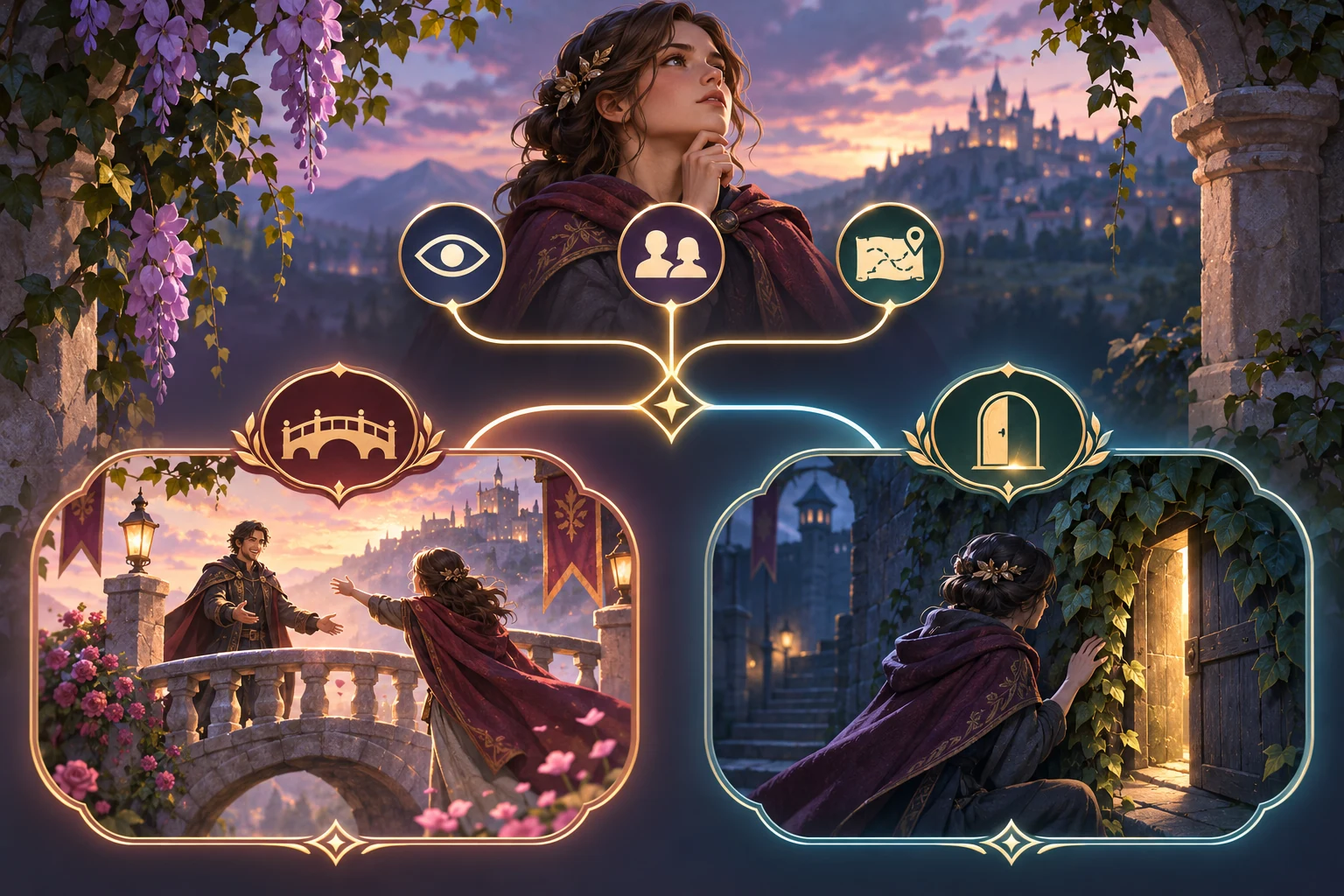
In fictional Lumen House, the same room changes when the player moves to a marked viewpoint. From the west, separated platforms align into a bridge and reveal a reunion route. From the east, a hidden side door and a different clue become visible, opening an escape route. The room’s geometry and clue set stay fixed; only the viewpoint changes what can be seen. A small comparison can check whether switching positions reveals a meaningful story branch rather than just a cosmetic camera effect.
Give the room two marked viewpoints
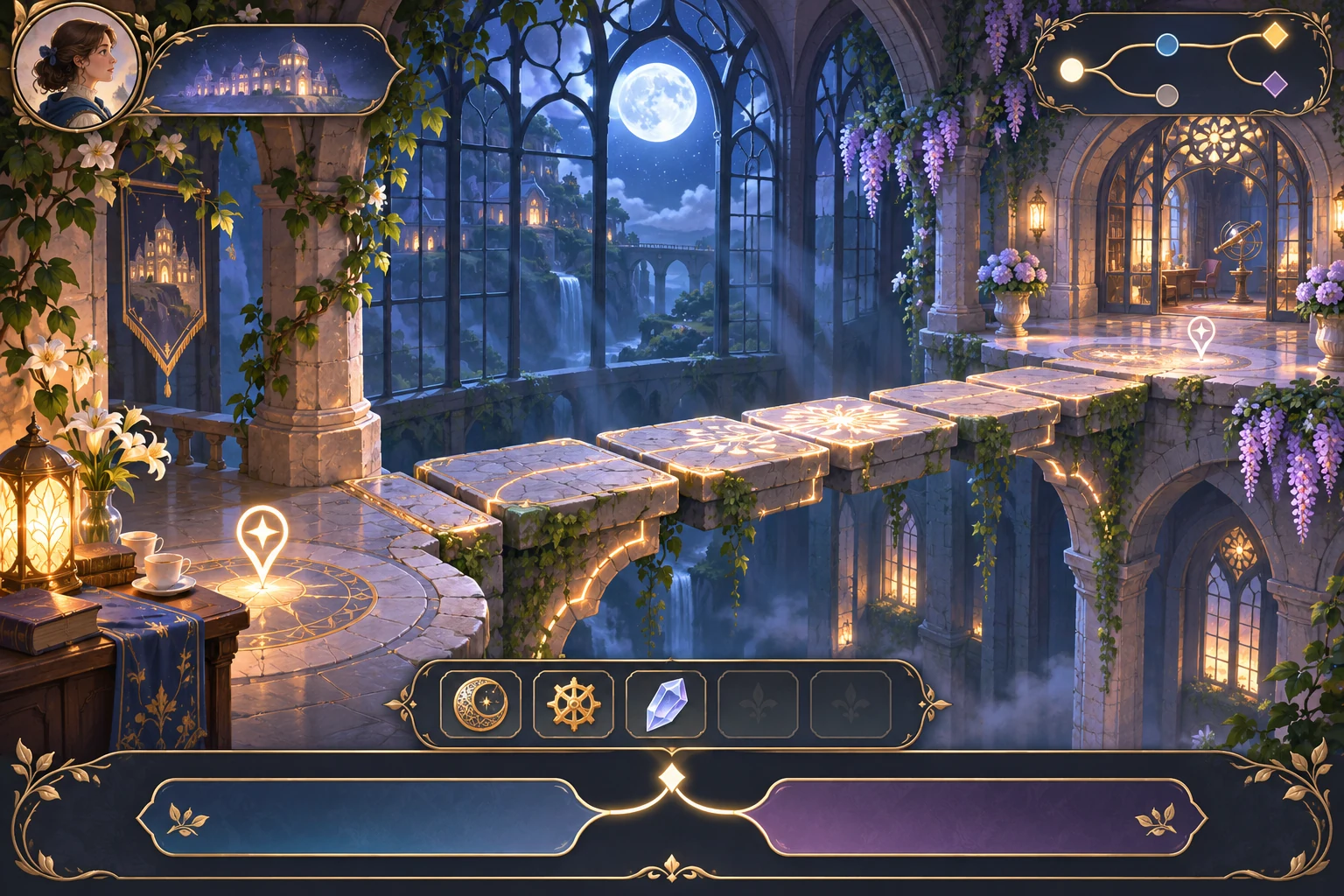
Build one room with stable geometry and two floor markers. At the west marker, align the separated platforms into a bridge and reveal a clue about a character waiting across it. At the east marker, shift the perspective so a side door and a different clue line up. Keep the door and bridge parts in the same room data; the view changes which elements appear connected.
Make the change legible with a short transition and a persistent viewpoint indicator. The player should understand that moving changes the room’s readable layout, not its physical contents. Keep the clue set and chapter state fixed so the player can compare both views without losing progress.
Make viewpoint changes affect story access
Attach a narrative consequence to each view. The west clue unlocks a reunion branch, while the east clue opens an escape branch. The player can inspect both and decide which route to follow at the chapter ending. Show the clue discovered, the branch it enables, and any unresolved route before asking for that final choice.
Godot Resources can hold authored room-state or clue definitions, while the active chapter can store which clues the player has discovered. Keep geometry, clue identity, and branch rules separate from the camera position. This makes it easier to test whether perspective changes visibility and story access without quietly changing the underlying room.
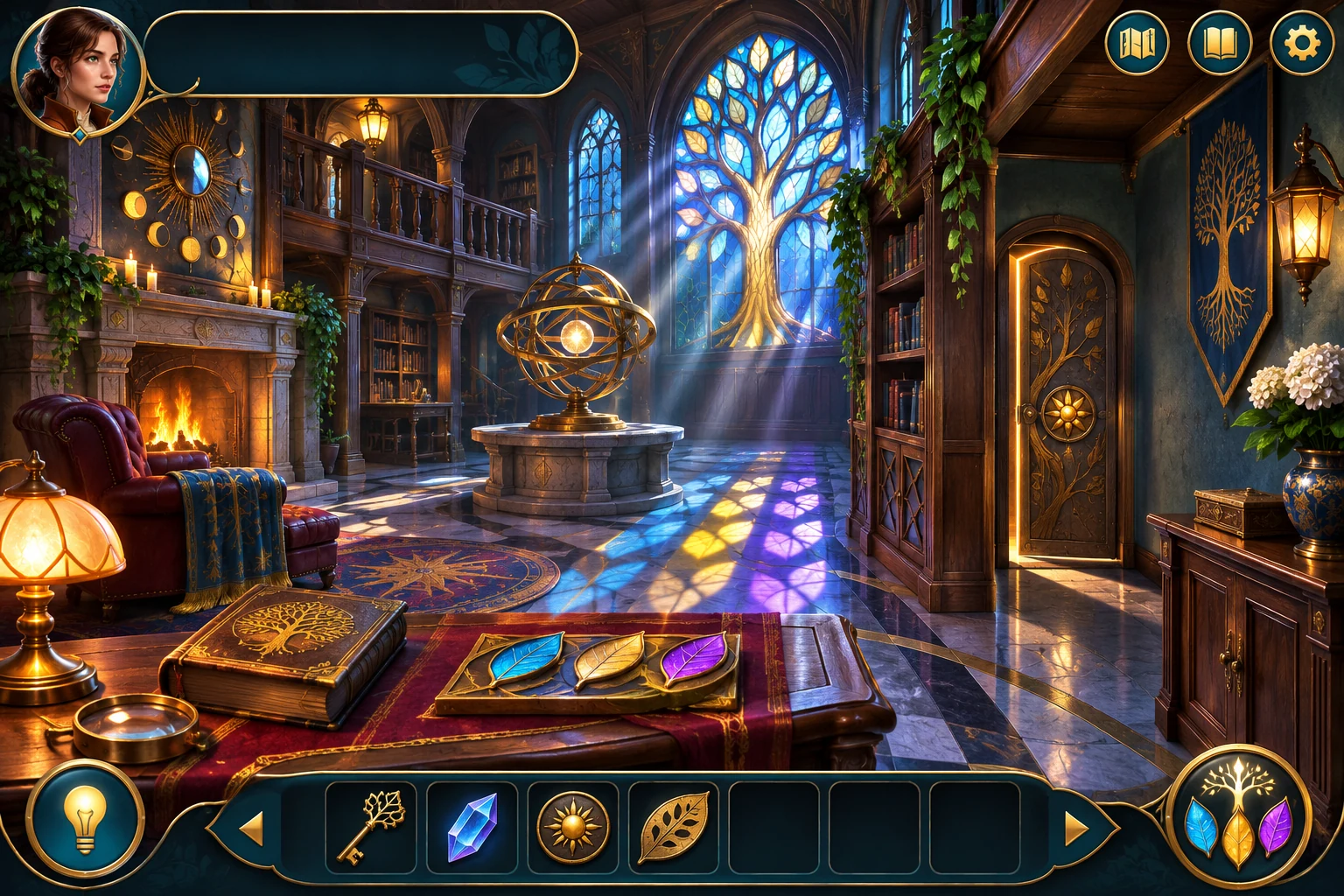
Compare one view with a viewpoint-switching run
Use the same room, two markers, two clues, and chapter state in both runs. In the baseline, the player stays at the west marker: one clue and the reunion branch are visible, while the escape route stays locked. In the revised run, the player visits both west and east markers: both clues and both branches become available, so the chapter-ending choice can be made.
Report clues visible, branches unlocked, and whether the ending choice is available separately. This fixture checks that changing viewpoint reveals the intended story options. It does not show that every player will discover both markers or prefer one ending; those questions need a broader playtest after the interaction works.
Give the AI a fixed viewpoint-branch test
Create a branching narrative game in fictional Lumen House with one room and two marked viewpoints. From the west, separated platforms align into a bridge and reveal a reunion clue and branch. From the east, reveal a hidden side door and an escape clue and branch. Keep the room geometry, two clues, and chapter state fixed. Compare a baseline where the player stays west with a revised run that visits both markers. Report clues visible, story branches unlocked, and whether the chapter-ending choice is available. Do not change room contents or remove discovered clues when the player switches viewpoints.
If moving the viewpoint changes room geometry or removes a discovered clue, restore the same room data. Confirm west reveals one reunion clue, east reveals one escape clue, and visiting both makes both branches and the ending choice available.
FAQ
How can a room change from another viewpoint?
Keep the room’s underlying geometry stable and use marked positions to change which surfaces or objects line up. A bridge can appear connected from one side while a hidden door becomes visible from another. Show a brief transition and a viewpoint marker so players understand why the room reads differently.
How can viewpoint changes create branching narrative?
Connect each view to a clue or story option instead of treating it as only a visual effect. Let the player discover the reunion clue from one position and an escape clue from another, then present both at a later choice if both were found.
What should I measure in a viewpoint puzzle prototype?
Track which clues appear from each position, which story branches those clues unlock, and whether the final choice becomes available. Keep room contents and chapter state fixed between runs. This checks the rule before testing whether players notice or enjoy the mechanic.