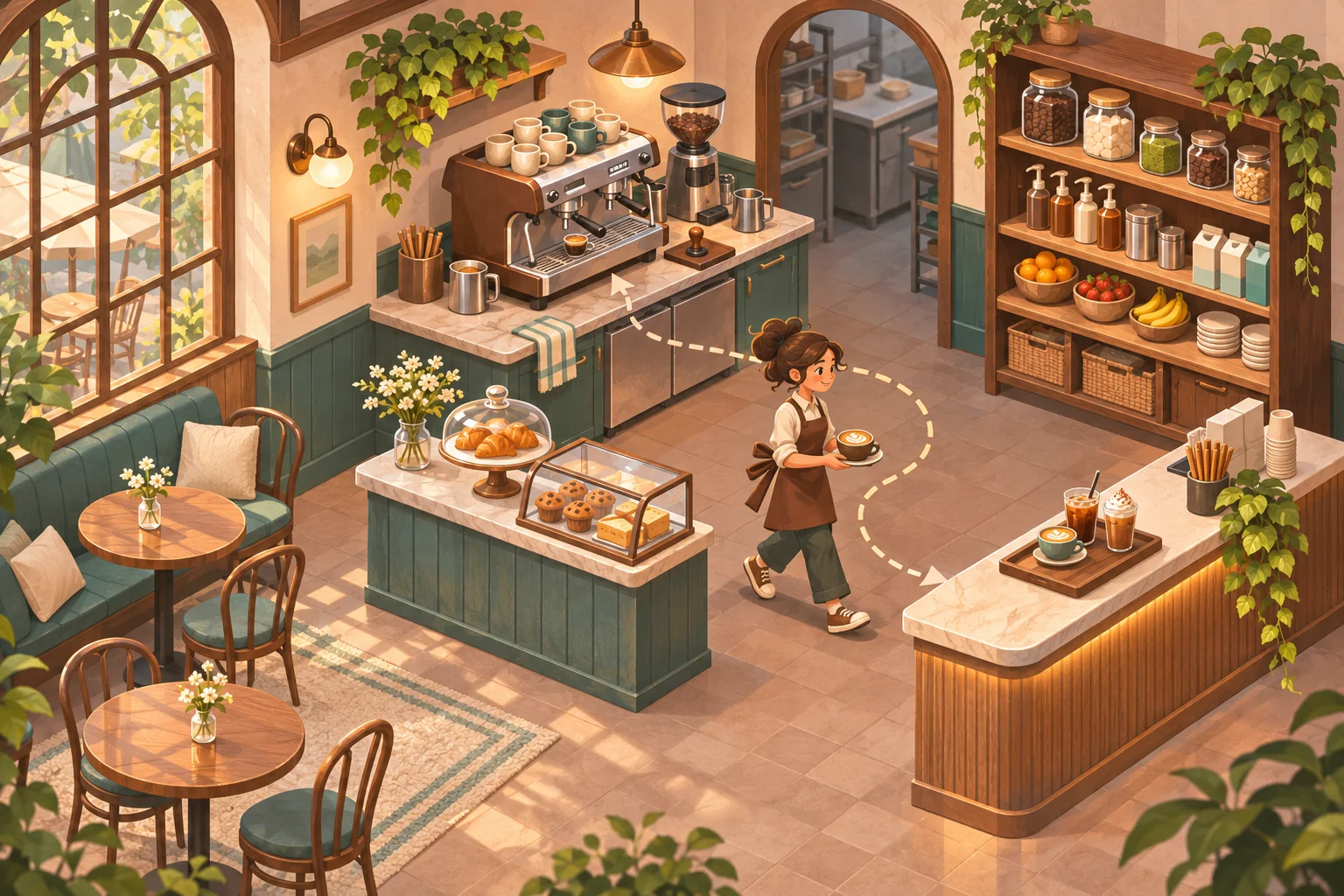
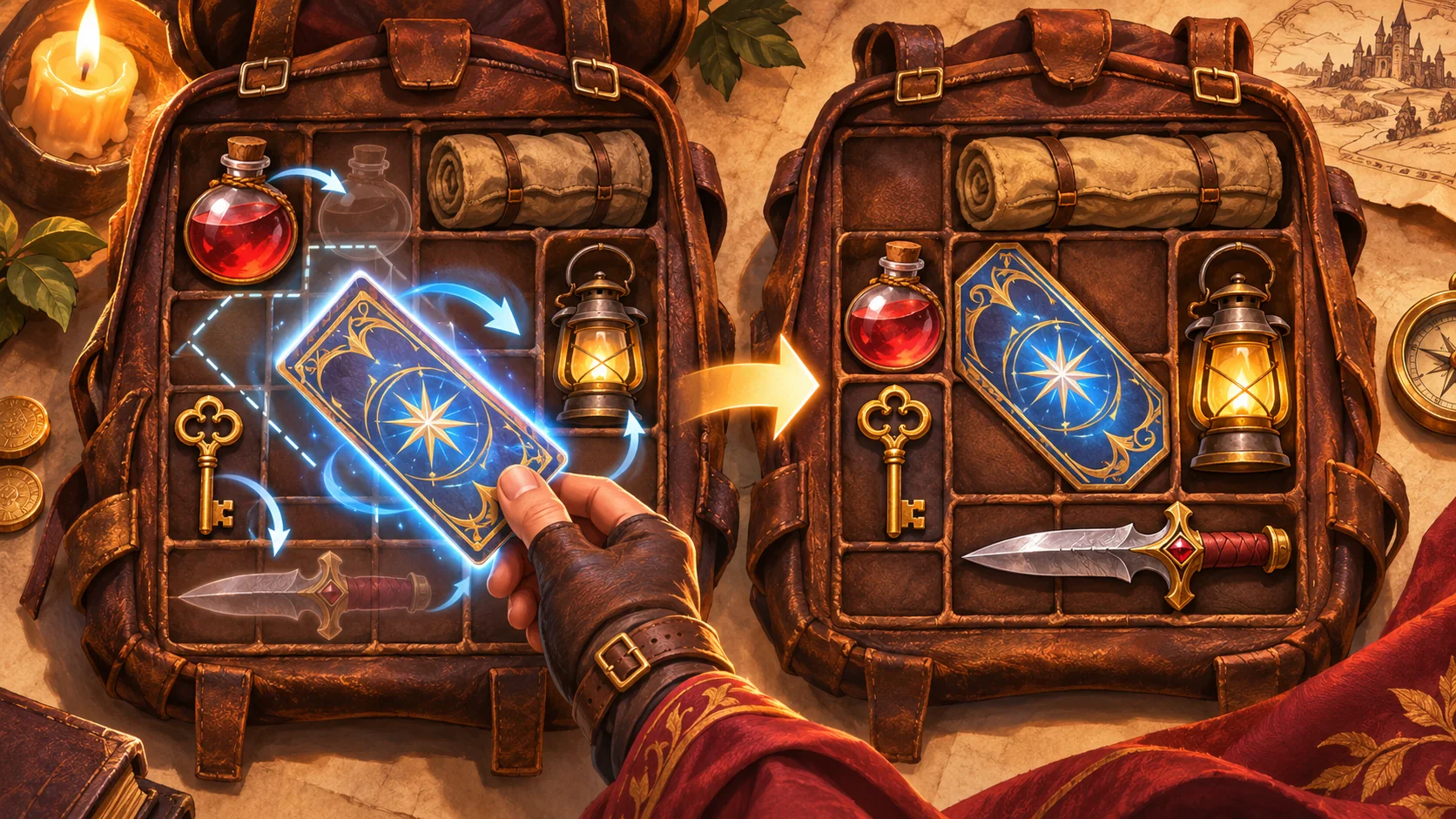
A Metroidvania world can respond to boss victories through shared environmental state. Instead of opening only the door behind an arena, defeating a guardian can drain a canal, move a lift or change how hazards behave across several connected rooms. Returning to an earlier space then reveals a consequence of the fight, not just a new key gate.
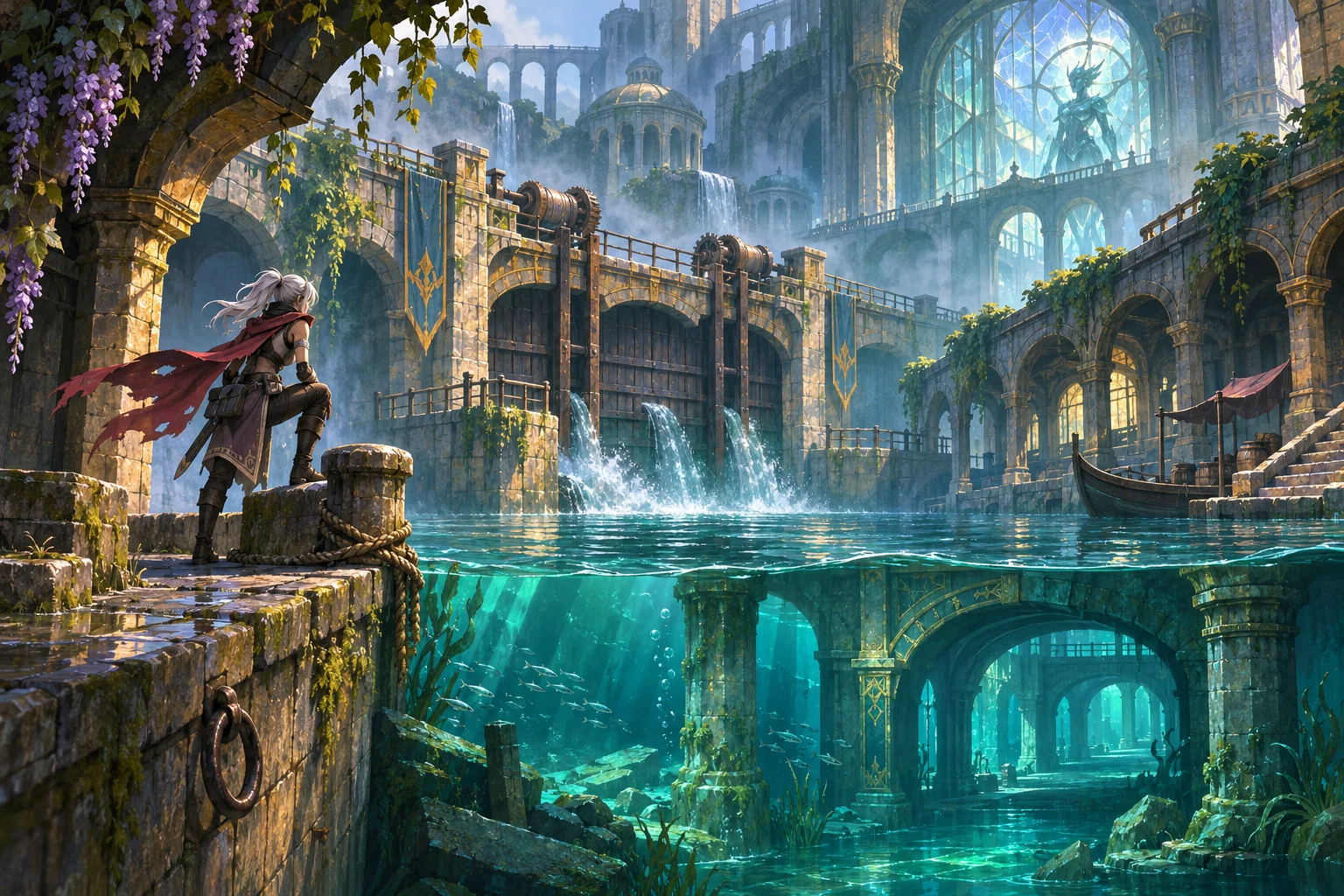
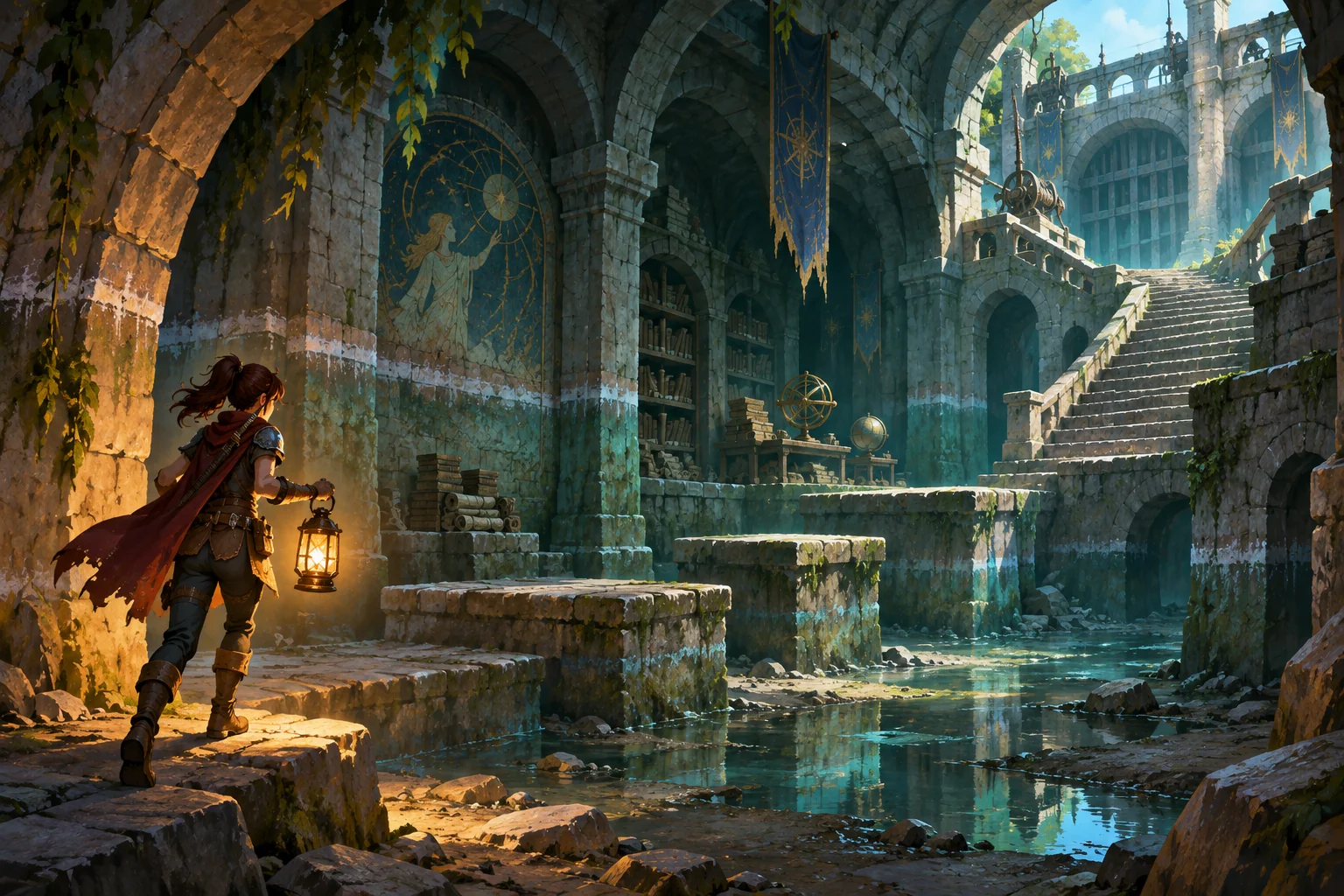
Start with one boss and one regional change. The Glass Warden controls the flooded quay; defeating it lowers the water and exposes a passage to the lower archive. This state model checks whether the change reaches every connected room and opens the route. It does not prove the map's pacing or boss difficulty is balanced.
Make a boss victory update more than its arena
Represent a region-wide condition such as water level, power or wind as shared world state. Rooms read that state when they load: high water may hide a floor passage, while low water exposes it and leaves floating platforms grounded. Keep the room geometry stable and change the features that depend on the condition.
After a boss fight, update the regional flag and show a visible landmark response in every connected room. A drained canal, changed lift or new enemy route helps the player understand that defeating the guardian changed the region. The map can mark newly available connections without replacing the player's memory of the old layout.
Keep ability gates and boss rewards separate from environmental changes. The victory may open the lower archive through the water-state update, while a later movement ability unlocks a different route. Test the region state with the same room graph before adding more bosses or alternate world phases.
Propagate the flood change through every room
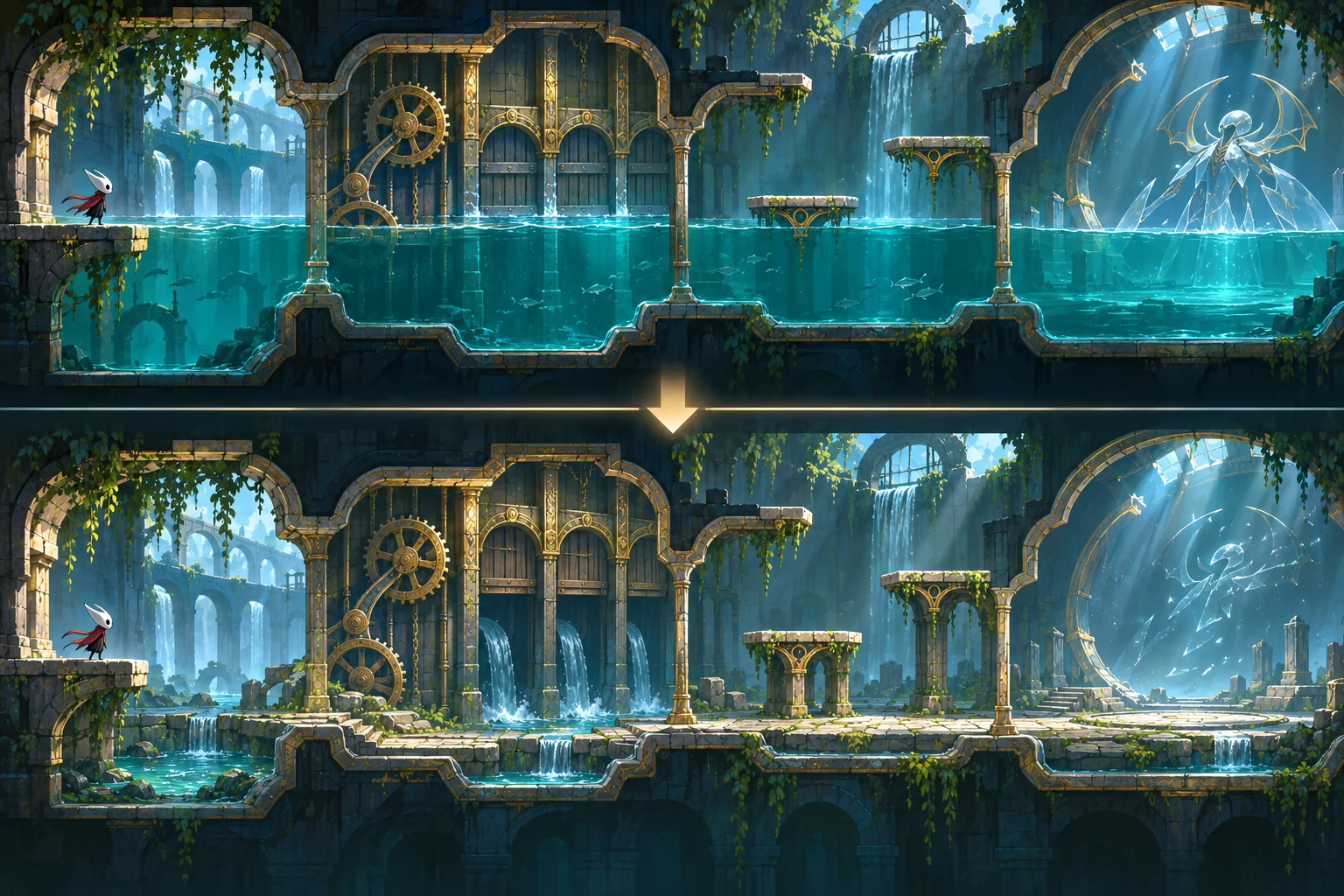
Before the boss fight, the quay, sluice and lower archive use high-water state. The passage from the sluice to the archive is submerged, so the route graph stops at the flooded threshold. In the first implementation, defeating the Glass Warden changes only the arena room; the neighboring sluice still reads high water and remains blocked.
Change only the update scope: set the region's water state to low when the boss is defeated. The quay and sluice now refresh their dependent features, exposing the lower passage and connecting the route to the archive. Keep room links, boss fight and player abilities fixed.
This deterministic state check verifies that one boss flag propagates and changes reachability. It does not test whether backtracking is enjoyable, whether the water change is visually clear or whether the boss is fair. Playtest the region in both states before building a longer chain of world transformations.
Ask AI to prototype a boss-shaped world region
Show the boss flag, regional water state and room connections before and after the fight.
Change only local versus region-wide state propagation while keeping the map graph fixed.
Create an original Metroidvania region with a flooded quay, sluice and lower archive. High water blocks the passage from sluice to archive. Defeating the Glass Warden should set the region water state to low and expose that passage in every connected room. Compare a flawed local-only update that changes the boss arena but leaves the sluice flooded with a corrected region-wide update. Keep room connections, boss and player abilities fixed. Show the route map before and after. Do not claim the model proves exploration pacing or boss balance.
Let boss victories reshape familiar routes
Boss-driven world changes make progression visible across places the player already knows. Start with one shared environmental condition that changes several connected rooms and reveals a useful route. Once the transition is consistent and legible, add more bosses whose victories alter different parts of the world, then playtest the return paths and pacing.
Prototype a Metroidvania with SEELE's AI game maker
Frequently asked questions
How can a boss victory change a Metroidvania world?
Connect the boss flag to a shared regional condition such as water level or power. Multiple rooms can update their dependent paths and hazards when the condition changes. Show a landmark response so players recognize the same world in a new state.
Should every boss open a new area?
A victory can also change an existing route, enemy pattern or environmental hazard. Use a new doorway when it helps navigation, but let other wins reshape familiar spaces so progression has more consequences than a sequence of locked gates. Use old landmarks to signal each state.
Does a world-state model prove the map is well paced?
No. It verifies that a flag reaches connected rooms and changes a route under fixed conditions. It cannot tell whether backtracking is enjoyable, whether players notice the change or whether the boss is balanced. Playtest both map states and the return path.